

惯性聚合 高效追踪和阅读你感兴趣的博客、新闻、科技资讯
阅读原文 在惯性聚合中打开

推荐订阅源

Google Online Security Blog
S
Security @ Cisco Blogs
Recent Commits to openclaw:main
人人都是产品经理
人人都是产品经理
The Hacker News
The Hacker News
W
WeLiveSecurity
freeCodeCamp Programming Tutorials: Python, JavaScript, Git & More
OSCHINA 社区最新新闻
OSCHINA 社区最新新闻
The Cloudflare Blog
博客园 - 司徒正美
雷峰网
雷峰网
L
LINUX DO - 最新话题
博客园 - 叶小钗
云风的 BLOG
云风的 BLOG
The Last Watchdog
The Last Watchdog
V2EX - 技术
V2EX - 技术
S
Security Affairs
有赞技术团队
有赞技术团队
月光博客
月光博客
T
Threatpost
T
Tor Project blog
O
OpenAI News
cs.AI updates on arXiv.org
cs.CL updates on arXiv.org
V
V2EX
Know Your Adversary
Know Your Adversary
Project Zero
Project Zero
博客园 - 三生石上(FineUI控件)
D
Docker
AWS News Blog
AWS News Blog
AI
AI
P
Proofpoint News Feed
K
Kaspersky official blog
H
Hackread – Cybersecurity News, Data Breaches, AI and More
D
Darknet – Hacking Tools, Hacker News & Cyber Security
www.infosecurity-magazine.com
S
Securelist
F
Fortinet All Blogs
F
Full Disclosure
cs.CV updates on arXiv.org
量子位
Hacker News - Newest:
Hacker News - Newest: "LLM"
CTFtime.org: upcoming CTF events
P
Palo Alto Networks Blog
Cyberwarzone
Cyberwarzone
Cisco Talos Blog
Cisco Talos Blog
美团技术团队
N
News | PayPal Newsroom
T
The Blog of Author Tim Ferriss
MyScale Blog
MyScale Blog

Flight Plan News | The HinduBusinessLine

Boeing bids farewell to ‘Queen of the skies’ Why do planes dump excess fuel in the sky? Compliance with regulation: Staying ahead is key Why has private capital not been taken to Indian aviation Global shipping lines look skywards Why opening the emergency door mid-flight is not possible Reviving businesses will benefit from air cargo’s growth How do commercial aircraft navigate? Air India’s roadmap can be tricky to pull off Navigating newer disruptions with maximum agility Why do plane crashes happen? Embraer expects capacity dynamics to tilt demand in its favour Post-pandemic, OTAs are coming of age Air infrastructure plans should be future-proof Airlines’ performance metrics may need an overhaul Why do planes leave a white trail behind them? Hope you never get into a ‘coffin corner’ while flying Mission to Net Zero: Aviation’s focus on making sustainable connections Blockchain: Piloting the future of aviation Chicken gun test: Saving jets from bird strikes Will Akasa Air’s contra bet on Boeing 737 Max instead of Airbus pay off? Slots scarcity hits Indian airlines’ flight roadmap Cabin crew with an invisible cape Yoke vs. sidestick: Jury still out on what works best for pilots Redressing flaws: IndiGo needs to tweak its way The art of avoiding accidents in air Travel now, pay later Thrust reversal in aircraft Regaining momentum during turbulent times Mishandled baggage rates spike UDAN flies high despite the odds Decarbonising flying Airlines test willingness to pay higher airfares Do pilots really need to be good at maths? Electric aircraft set to transform urban mobility Leisure travel seeing a V-shape recovery How cabin pressure plays a key role Evolution of security in aviation Sustainable aviation fuels could be a game-changer Deep diving into design philosophies Insolvency of aircraft operator: default remedies. Domestic airline industry may face a rejig First-ever gravity-defying plane swap set for April 24 In case the engine gives out Corporate travel is unlikely to reach pre-Covid levels Aviation industry shifts focus to digital Short-haul flights redefining air travel No turning back Another tough year for airlines Unmanned Flying Objects, at your service Women who fly Making a comeback Profits offer hope of soft landing to Spicejet From geopolitics strife to a war of words between two aviation giants Air crew at higher risk Next order of business for Tata Sons Breaking down airline engineering and maintenance As India builds its newest airports, it needs robust, fail-proof SOPs Lost your baggage in transit? You might find it in Alabama Deep tech is helping airlines sustain operations during Covid Demand for more flight schools soars Robust flight plans can keep airlines afloat 2022 holds promise for the airline sector Omicron: Airlines on a wing and prayer A380: How Airbus forecast misfired Those magnificent flying machines Start-up founders onboard pvt jets A frequent flier’s tip on flying Greenfield airports on a slippery runway Air India sale: Who will bag the Maharaja's crown? Tech adoption will not lead to loss of jobs Reskilling of airline workforce needed Airbus responds to COP26 IFSC: Aircraft leasing gets a big boost Pick the rear seats to fly safe India ahead in tech to make airports safer Pandemic: Contactless technology on an overdrive Domestic air travel leads airline recovery: Boeing Gearing up to fly twice as fast as sound Where an aircraft goes to rest Indian aviation: A study in paradox Walking through a new airport experience The making of ‘agile’ airlines ‘The challenge was in getting the aircraft’s custom clearance’ No low-cost airline in India Bad flying conditions Regional airlines ailing despite UDAN scheme As the price of aviation turbine fuel soars, airlines’ finances spin out of control Becoming Atmanirbhar Why Mount Everest is a no-fly zone Distance training for Air Asia pilots IndiGo and SpiceJet Q4 results Covid-19 compliant airlines Wanted: A booster dose for airlines A lift for MRO A time when hijackings were dime-a-dozen in the US Opening up Indian skies to drone technology What commercial airlines can do to extend the longevity of their fleet Empathy is the need of the hour
5 things Indian airlines must do to break their way out of pandemic blues
By K Giriprakash · 2022-08-21 · via Flight Plan News | The HinduBusinessLine

The last of the restrictions imposed during the pandemic will come to an end with the removal of the airfare cap on domestic airlines from August 31.   

This should pave the way for airlines to regain most of the lost ground. According to various estimates, domestic airlines have suffered losses of around $4.1 billion in 2021-22 and are expected to reach the pre-pandemic level by the end of FY2024. 
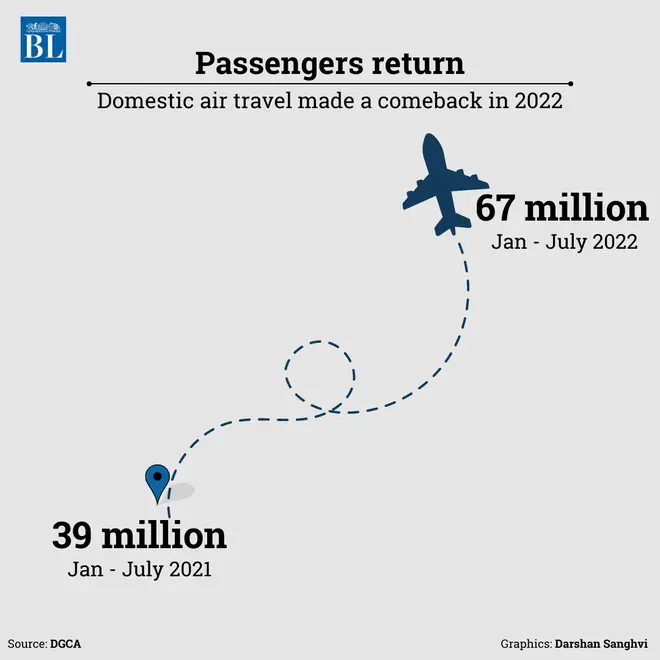
But what are the building blocks that the airlines should put together to recover from the worst crisis the airlines have suffered? Here are a few key areas domestic airlines should focus on. 

1. Return on invested capital

It is the amount of money a company makes above the average cost it pays for its debt and equity capital. According to the airline analyst, Pankaj Narayan Pandit, IndiGo and Tata Group airlines are in a safe place compared to others. While IndiGo has paid-off most of its debt, Vistara, AirAsia India and Air India are better placed because the parent Tata Sons is well-capitalised.

2. Revenue Management
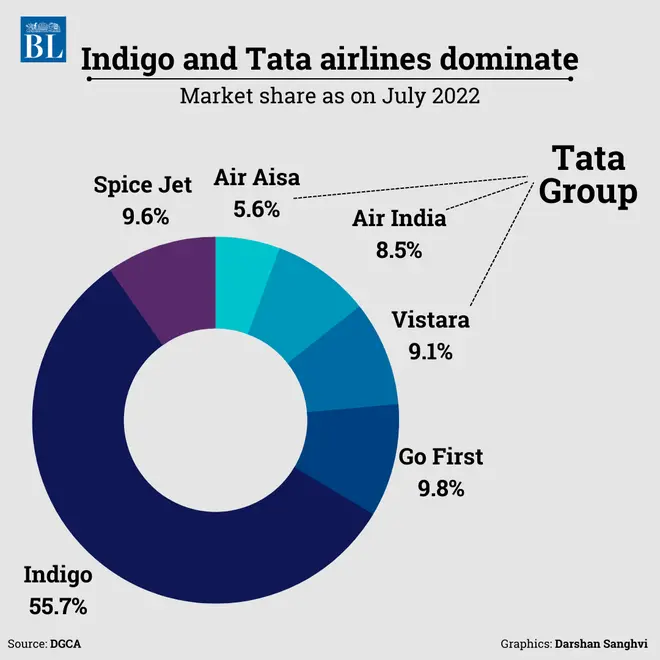
The two critical parameters of revenue management are ‘stifle’ and ‘spill’. In aviation, spill refers to passengers being turned away from a flight because demand has exceeded capacity. Pandit, who runs the airline consultancy firm Plusmetrix Business Solutions, said the airfares are pretty high, even at the lower end of the airfare cap. But such a scenario should play out only when the demand outstrips supply. Otherwise, it will end up stifling the flights. He pointed out that during the last few months, Air India has been increasing its airfares; on occasions, they are even higher than IndiGo. With such high fares and probably for reasons such as reduction in capacity, Air India’s market share has reduced to 7.5 per cent from 14.9 in January-June. Added to this, the possibility of cannibalisation among the Tata Group’s portfolio of airlines cannot be ruled out. “Reckless increase in fares will only kill whatever demand there is in the market. It would be unrealistic for the airlines to recover losses incurred during the last two years within six months,” a former director with Air India said. Hence, he observed, domestic airlines need to increase airfares gradually and only when demand exceeds supply. 

3. The Four Cs: Calendar, Clock, Capacity and Cost.

The calendar here refers to a particular year’s seasonality of traffic (year-wise seasonality). During the peak season, the airlines should hold capacity and not offer all of them at lower fares, which is when revenue management kicks in. 
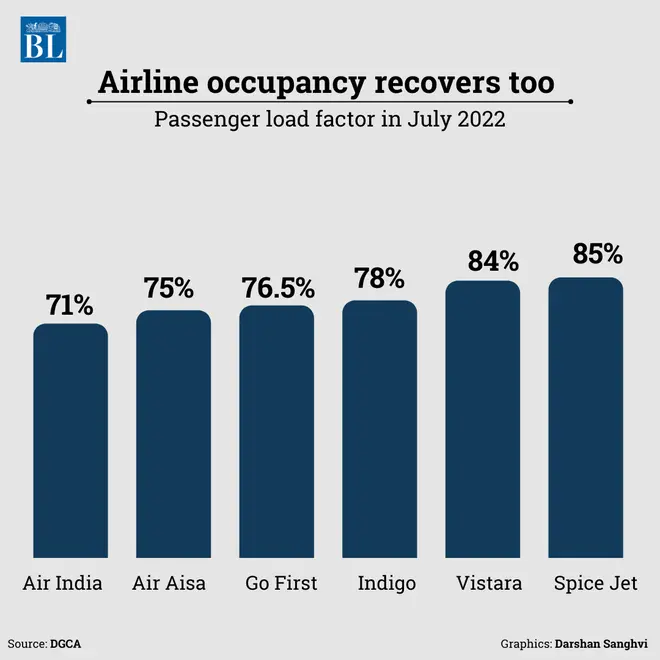
Clock: The 7 AM and 9 AM slots (day-wise seasonality) at airports are the most sought after by airlines. Therefore, the airlines must make the most of it and maximise aircraft utilisation because an aircraft sitting on the ground can be an expensive water asset. 

Capacity: The airlines should be careful in deploying capacity on specific routes. There is no point in deploying a 200-seater aircraft when the demand, even at its peak, is not more than half of that. 

CostThe airlines should be able to select the correct aircraft type with the proper configuration. Some analysts now believe that the Cost per Available Seat Kilometer (CASK) parameter doesn’t always yield the right results because of changing costs. According to Steve Saxon and Mathieu Weber of the global consulting firm McKinsey & Company, CASK neither gives companies deep insight into their costs nor identifies concrete levers to reduce them. The only real way for airlines to learn how cost differentials add up is to build a bottom-up view of their cost buckets’ unit costs, volumes, and productivity, the co-authors, said in the paper, “A better approach to airline costs.

4. Constructive collaboration

 The airlines should work along with the Government to solve their problems. For example, they should negotiate with various states to lower excise duty on aviation turbine fuel for domestic flights. As a first step, the airlines have succeeded in getting the Government’s nod on exempting them from paying 11 per cent basic excise duty on ATF for refuelling aircraft for international flights. 

5. Reputation management: The airlines should not only manage the airline’s reputation among the passengers but also internally. Dissatisfied employees can completely derail the airline’s revenues or bleed it to such an extent that turning it around might become extremely difficult later. 

Post-pandemic, most domestic airlines are fighting for survival even as financial institutions watch from the sidelines on the measures they are taking to turn around. Those that will survive will be the ones who deploy best business practices in running their operations and not resort to short-term measures. 

Published on August 21, 2022