

惯性聚合 高效追踪和阅读你感兴趣的博客、新闻、科技资讯
阅读原文 在惯性聚合中打开

推荐订阅源

F
Fortinet All Blogs
让小产品的独立变现更简单 - ezindie.com
有赞技术团队
有赞技术团队
www.infosecurity-magazine.com
大猫的无限游戏
大猫的无限游戏
爱范儿
爱范儿
Threat Intelligence Blog | Flashpoint
T
Threatpost
V
Visual Studio Blog
Apple Machine Learning Research
博客园 - Franky
人人都是产品经理
人人都是产品经理
cs.AI updates on arXiv.org
The Cloudflare Blog
N
News and Events Feed by Topic
L
Lohrmann on Cybersecurity
cs.CL updates on arXiv.org
酷 壳 – CoolShell
酷 壳 – CoolShell
V
V2EX
AWS News Blog
AWS News Blog
S
SegmentFault 最新的问题
T
Tailwind CSS Blog
Hugging Face - Blog
Hugging Face - Blog
钛媒体:引领未来商业与生活新知
钛媒体:引领未来商业与生活新知
Spread Privacy
Spread Privacy
J
Java Code Geeks
博客园 - 聂微东
T
Tor Project blog
宝玉的分享
宝玉的分享
博客园 - 叶小钗
Webroot Blog
Webroot Blog
博客园 - 【当耐特】
freeCodeCamp Programming Tutorials: Python, JavaScript, Git & More
H
Heimdal Security Blog
Y
Y Combinator Blog
T
The Blog of Author Tim Ferriss
MongoDB | Blog
MongoDB | Blog
I
InfoQ
Security Latest
Security Latest
Martin Fowler
Martin Fowler
Hacker News: Ask HN
Hacker News: Ask HN
P
Privacy International News Feed
C
CERT Recently Published Vulnerability Notes
Latest news
Latest news
雷峰网
雷峰网
D
Darknet – Hacking Tools, Hacker News & Cyber Security
C
Cisco Blogs
H
Help Net Security
L
LINUX DO - 最新话题
L
LINUX DO - 热门话题

Flight Plan News | The HinduBusinessLine

Boeing bids farewell to ‘Queen of the skies’ Why do planes dump excess fuel in the sky? Compliance with regulation: Staying ahead is key Why has private capital not been taken to Indian aviation Global shipping lines look skywards Why opening the emergency door mid-flight is not possible Reviving businesses will benefit from air cargo’s growth Air India’s roadmap can be tricky to pull off Navigating newer disruptions with maximum agility Why do plane crashes happen? Embraer expects capacity dynamics to tilt demand in its favour Post-pandemic, OTAs are coming of age Air infrastructure plans should be future-proof Airlines’ performance metrics may need an overhaul Why do planes leave a white trail behind them? 5 things Indian airlines must do to break their way out of pandemic blues Hope you never get into a ‘coffin corner’ while flying Mission to Net Zero: Aviation’s focus on making sustainable connections Blockchain: Piloting the future of aviation Chicken gun test: Saving jets from bird strikes Will Akasa Air’s contra bet on Boeing 737 Max instead of Airbus pay off? Slots scarcity hits Indian airlines’ flight roadmap Cabin crew with an invisible cape Yoke vs. sidestick: Jury still out on what works best for pilots Redressing flaws: IndiGo needs to tweak its way The art of avoiding accidents in air Travel now, pay later Thrust reversal in aircraft Regaining momentum during turbulent times Mishandled baggage rates spike UDAN flies high despite the odds Decarbonising flying Airlines test willingness to pay higher airfares Do pilots really need to be good at maths? Electric aircraft set to transform urban mobility Leisure travel seeing a V-shape recovery How cabin pressure plays a key role Evolution of security in aviation Sustainable aviation fuels could be a game-changer Deep diving into design philosophies Insolvency of aircraft operator: default remedies. Domestic airline industry may face a rejig First-ever gravity-defying plane swap set for April 24 In case the engine gives out Corporate travel is unlikely to reach pre-Covid levels Aviation industry shifts focus to digital Short-haul flights redefining air travel No turning back Another tough year for airlines Unmanned Flying Objects, at your service Women who fly Making a comeback Profits offer hope of soft landing to Spicejet From geopolitics strife to a war of words between two aviation giants Air crew at higher risk Next order of business for Tata Sons Breaking down airline engineering and maintenance As India builds its newest airports, it needs robust, fail-proof SOPs Lost your baggage in transit? You might find it in Alabama Deep tech is helping airlines sustain operations during Covid Demand for more flight schools soars Robust flight plans can keep airlines afloat 2022 holds promise for the airline sector Omicron: Airlines on a wing and prayer A380: How Airbus forecast misfired Those magnificent flying machines Start-up founders onboard pvt jets A frequent flier’s tip on flying Greenfield airports on a slippery runway Air India sale: Who will bag the Maharaja's crown? Tech adoption will not lead to loss of jobs Reskilling of airline workforce needed Airbus responds to COP26 IFSC: Aircraft leasing gets a big boost Pick the rear seats to fly safe India ahead in tech to make airports safer Pandemic: Contactless technology on an overdrive Domestic air travel leads airline recovery: Boeing Gearing up to fly twice as fast as sound Where an aircraft goes to rest Indian aviation: A study in paradox Walking through a new airport experience The making of ‘agile’ airlines ‘The challenge was in getting the aircraft’s custom clearance’ No low-cost airline in India Bad flying conditions Regional airlines ailing despite UDAN scheme As the price of aviation turbine fuel soars, airlines’ finances spin out of control Becoming Atmanirbhar Why Mount Everest is a no-fly zone Distance training for Air Asia pilots IndiGo and SpiceJet Q4 results Covid-19 compliant airlines Wanted: A booster dose for airlines A lift for MRO A time when hijackings were dime-a-dozen in the US Opening up Indian skies to drone technology What commercial airlines can do to extend the longevity of their fleet Empathy is the need of the hour
How do commercial aircraft navigate?
By Our Bureau · 2022-10-02 · via Flight Plan News | The HinduBusinessLine
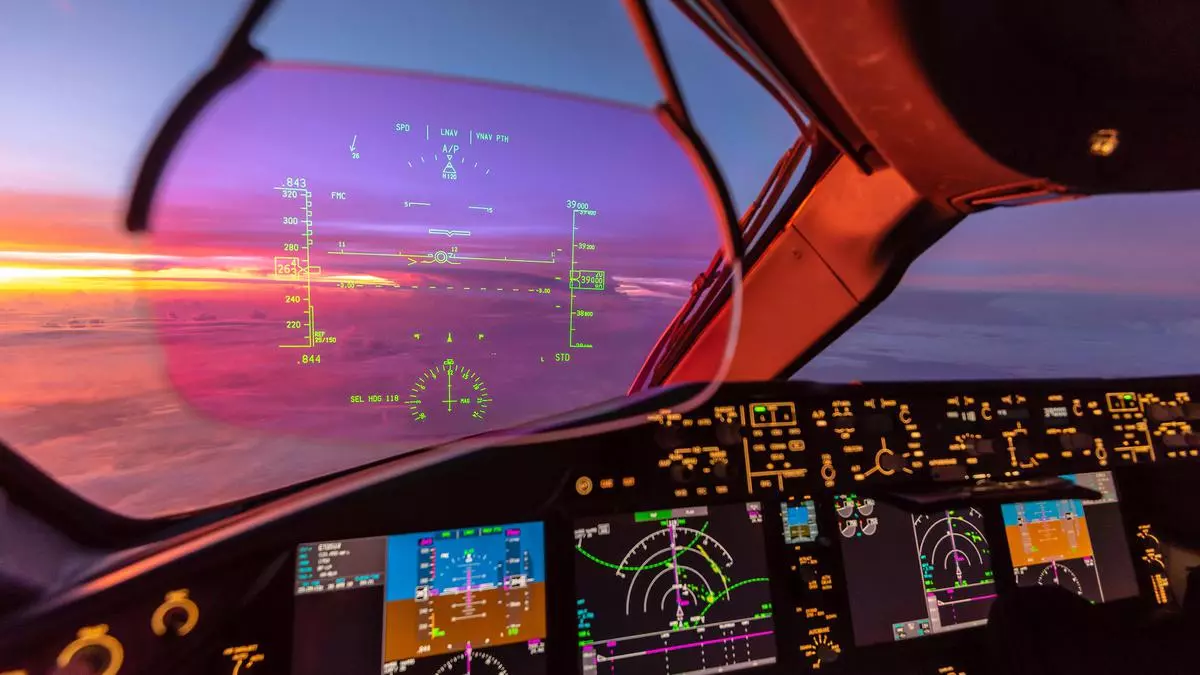
FMS: Creates a moving map of the flight route

FMS: Creates a moving map of the flight route

Airliners navigate utilising GPS, Radio Aids, and onboard Inertial Reference Systems. The systems vary in precision, with GPS being the most accurate (like a car’s Sat Nav). Still, internal navigation systems don’t utilise external references and radio beacon receivers used for specific phases of flight, such as departure, arrival, and approach.

Before takeoff, pilots load a specified route into the Flight Management System or Computer (FMS) or (FMC). This creates a moving map of the flight route that pilots can monitor on their screens. Pilots can view other airports, aircraft, high terrain, and poor weather on their screens. The aircraft’s navigation systems compare its location to the predetermined itinerary. They include: The GPS, the IRS, RADAR

Global Positioning System (GPS)

The aeroplane monitors its GPS position as one of its key navigation sources. This is the most accurate navigation system on current commercial aircraft, allowing manoeuvres down to 0.1 nautical miles. If the aircraft's receivers fail or the GPS/satellites go offline, it can still navigate reasonably.

Inertial Reference System (IRS)

The IRS can track an aircraft’s position without an external reference. Accelerometers and gyroscopes calculate aircraft movement and acceleration along all the three axes. At the beginning of the trip, when the pilots are setting the aircraft up, readying the flight, the crew tells the IRS, the aircraft’s latitude and longitude. It then senses acceleration along any axis and estimates the aircraft’s position. It needs only to know where the plane is before take-off. It is not as accurate as GPS, but it allows the aircraft to navigate with respectable accuracy if all other navigation references are lost.

RADAR

Radio beacons on land send out radio beams that signal aircraft range and direction. This lets the plane’s computers calculate its location. More radio signals mean more accurate position estimates.

Source: HowStuffWorks & flightdeckfriend.com

Published on October 2, 2022