
惯性聚合 高效追踪和阅读你感兴趣的博客、新闻、科技资讯
阅读原文 在惯性聚合中打开

推荐订阅源

F
Fortinet All Blogs
S
Secure Thoughts
月光博客
月光博客
美团技术团队
雷峰网
雷峰网
Exploit-DB.com RSS Feed
奇客Solidot–传递最新科技情报
奇客Solidot–传递最新科技情报
N
News and Events Feed by Topic
freeCodeCamp Programming Tutorials: Python, JavaScript, Git & More
Forbes - Security
Forbes - Security
W
WeLiveSecurity
P
Proofpoint News Feed
阮一峰的网络日志
阮一峰的网络日志
爱范儿
爱范儿
G
GRAHAM CLULEY
cs.AI updates on arXiv.org
AI
AI
Last Week in AI
Last Week in AI
Google Online Security Blog
Schneier on Security
云风的 BLOG
云风的 BLOG
Threat Intelligence Blog | Flashpoint
Recent Announcements
Webroot Blog
Webroot Blog
T
Tor Project blog
Cisco Talos Blog
Cisco Talos Blog
N
News and Events Feed by Topic
罗磊的独立博客
The Register - Security
Blog — PlanetScale
Blog — PlanetScale
T
Threat Research - Cisco Blogs
博客园 - 【当耐特】
Apple Machine Learning Research
人人都是产品经理
人人都是产品经理
T
The Exploit Database - CXSecurity.com
www.infosecurity-magazine.com
B
Blog
腾讯CDC
Microsoft Azure Blog
酷 壳 – CoolShell
酷 壳 – CoolShell
H
Hacker News: Front Page
Application and Cybersecurity Blog
Engineering at Meta
Engineering at Meta
Latest news
Latest news
IT之家
IT之家
D
DataBreaches.Net
博客园 - 司徒正美
N
Netflix TechBlog - Medium
V
V2EX
钛媒体:引领未来商业与生活新知
钛媒体:引领未来商业与生活新知

Flight Plan News | The HinduBusinessLine

Boeing bids farewell to ‘Queen of the skies’ Why do planes dump excess fuel in the sky? Compliance with regulation: Staying ahead is key Why has private capital not been taken to Indian aviation Global shipping lines look skywards Why opening the emergency door mid-flight is not possible Reviving businesses will benefit from air cargo’s growth How do commercial aircraft navigate? Air India’s roadmap can be tricky to pull off Navigating newer disruptions with maximum agility Why do plane crashes happen? Embraer expects capacity dynamics to tilt demand in its favour Post-pandemic, OTAs are coming of age Air infrastructure plans should be future-proof Airlines’ performance metrics may need an overhaul Why do planes leave a white trail behind them? 5 things Indian airlines must do to break their way out of pandemic blues Hope you never get into a ‘coffin corner’ while flying Mission to Net Zero: Aviation’s focus on making sustainable connections Blockchain: Piloting the future of aviation Chicken gun test: Saving jets from bird strikes Slots scarcity hits Indian airlines’ flight roadmap Cabin crew with an invisible cape Yoke vs. sidestick: Jury still out on what works best for pilots Redressing flaws: IndiGo needs to tweak its way The art of avoiding accidents in air Travel now, pay later Thrust reversal in aircraft Regaining momentum during turbulent times Mishandled baggage rates spike UDAN flies high despite the odds Decarbonising flying Airlines test willingness to pay higher airfares Do pilots really need to be good at maths? Electric aircraft set to transform urban mobility Leisure travel seeing a V-shape recovery How cabin pressure plays a key role Evolution of security in aviation Sustainable aviation fuels could be a game-changer Deep diving into design philosophies Insolvency of aircraft operator: default remedies. Domestic airline industry may face a rejig First-ever gravity-defying plane swap set for April 24 In case the engine gives out Corporate travel is unlikely to reach pre-Covid levels Aviation industry shifts focus to digital Short-haul flights redefining air travel No turning back Another tough year for airlines Unmanned Flying Objects, at your service Women who fly Making a comeback Profits offer hope of soft landing to Spicejet From geopolitics strife to a war of words between two aviation giants Air crew at higher risk Next order of business for Tata Sons Breaking down airline engineering and maintenance As India builds its newest airports, it needs robust, fail-proof SOPs Lost your baggage in transit? You might find it in Alabama Deep tech is helping airlines sustain operations during Covid Demand for more flight schools soars Robust flight plans can keep airlines afloat 2022 holds promise for the airline sector Omicron: Airlines on a wing and prayer A380: How Airbus forecast misfired Those magnificent flying machines Start-up founders onboard pvt jets A frequent flier’s tip on flying Greenfield airports on a slippery runway Air India sale: Who will bag the Maharaja's crown? Tech adoption will not lead to loss of jobs Reskilling of airline workforce needed Airbus responds to COP26 IFSC: Aircraft leasing gets a big boost Pick the rear seats to fly safe India ahead in tech to make airports safer Pandemic: Contactless technology on an overdrive Domestic air travel leads airline recovery: Boeing Gearing up to fly twice as fast as sound Where an aircraft goes to rest Indian aviation: A study in paradox Walking through a new airport experience The making of ‘agile’ airlines ‘The challenge was in getting the aircraft’s custom clearance’ No low-cost airline in India Bad flying conditions Regional airlines ailing despite UDAN scheme As the price of aviation turbine fuel soars, airlines’ finances spin out of control Becoming Atmanirbhar Why Mount Everest is a no-fly zone Distance training for Air Asia pilots IndiGo and SpiceJet Q4 results Covid-19 compliant airlines Wanted: A booster dose for airlines A lift for MRO A time when hijackings were dime-a-dozen in the US Opening up Indian skies to drone technology What commercial airlines can do to extend the longevity of their fleet Empathy is the need of the hour
Will Akasa Air’s contra bet on Boeing 737 Max instead of Airbus pay off?
By K Giriprakash · 2022-08-07 · via Flight Plan News | The HinduBusinessLine
Hopeful beginnings: In an industry with a highly competitive market, the airline must work very hard to sustain itself.

Hopeful beginnings: In an industry with a highly competitive market, the airline must work very hard to sustain itself. | Photo Credit: PTI

During the Dubai Air Show in November last year, the latest entrant in the Indian commercial aviation space, Akasa Air, made one of its bravest decisions: placing orders for Boeing 737 MAX 8.

Whether this was borne out of the fact that the Airbus A320 neos were not available or because Boeing's offer came with freebies and discounts, it still goes to the credit of the airline management to go with the US plane maker for its fleet. Now that its done, the airline will have to live with it, as having a mixed fleet of Airbus and Boeing for its operations can be quite daunting. It is something that they must have taken into consideration before placing the order for 72 aircrafts powered by CFM's LEAP-1B engines from Boeing for a list price of nearly $9 billion.

BusinessLine’s Aviation Editor, K Giriprakash, analyses ‘Big Bull’ Rakesh Jhunjhunwala’s chances of making Akasa Air a success in a sector plagued with losses

The order consists of the initial delivery of 18 aircraft by March 2023, followed by delivery of the remaining 54 over the next four years. The order will have a mix of MAX8-189 seats, and high-capacity MAX8-200s with 197 seats. The airline plans to add two aircrafts per month in its first year.

Given the aircraft's record, choosing Boeing over the others showed that the airline management was willing to go against the tide. With its first flight taking off on August 7, Akasa Air's boldest move yet will see it compete in an industry where one airline has an overwhelming market share of 58 per cent while the other players split the rest among themselves. But that is only one part of the challenge. The country's newest airline, in which billionaire investor Rakesh Jhunjhunwala owns a 46 per cent stake, will have to contend with issues such as galloping ATF prices and the airfare cap. Even though it may not directly impact Akasa Air, the industry is grappling with safety issues, aborted take-offs, disgruntled pilots, cabin crew and maintenance technicians. What was seen as a problem only state-owned airlines faced in the eighties and the nineties is now hurting the private airlines too.

Flight No. 2 (of 3) this weekend was special as it was @AkasaAir's inaugural.
The legroom was decent; USB charging a plus (subtle reminders about it in the cabin); tasty meals (all pax got a free meal); brilliant souvenirs and ♥️the certificate.
Over all , brilliant !#AvGeekpic.twitter.com/80kMMHAQFz

— VT-VLO (@Vinamralongani) August 7, 2022

Boeing order

The 737 MAX was grounded in 2019 after the two deadly crashes that killed 346 people. Since then, Boeing claims it has worked hard to return the aircraft to the tarmac. These include coming together of engineers, scientists, researchers, mechanics, and pilots in a thorough process involving more than a thousand tests and check flights. In addition, the Boeing’s website points out that pilots of more than 80 airlines tested the enhancements firsthand in a full-motion flight simulator.
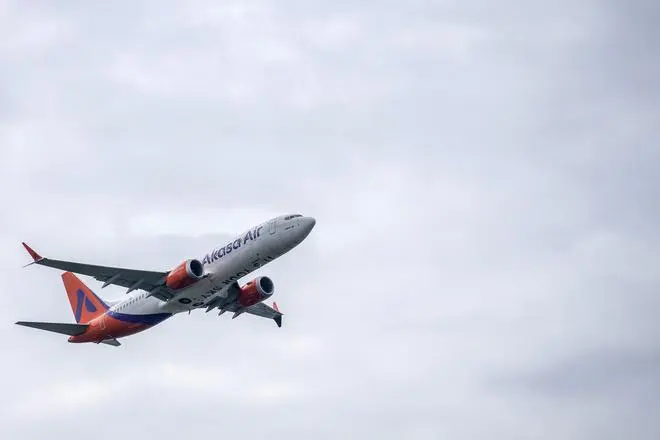
An aircraft of India's newest airline Akasa Air takes off on its first flight in Mumbai, India, Sunday, Aug. 7, 2022. The Mumbai based low-cost airline Sunday made its inaugural flight to Ahmedabad.(AP Photo/Rafiq Maqbool)

An aircraft of India's newest airline Akasa Air takes off on its first flight in Mumbai, India, Sunday, Aug. 7, 2022. The Mumbai based low-cost airline Sunday made its inaugural flight to Ahmedabad.(AP Photo/Rafiq Maqbool) | Photo Credit: RAFIQ MAQBOOL

According to Boeing, the entire Max family consisting of 737 MAX 8 and 9, has one single engineering blueprint that spans the short, medium and long haul aircraft that helps the customer to scale up its operations rapidly without compromising on profitability and efficiency. It also claims that the 737 MAX family is the most fuel-efficient on the planet, providing the lowest seat-mile costs for a single-aisle aeroplane.

"In India, given the price-sensitive nature of the market, it is imperative that any aircraft has to deliver superior economics. This is usually measured by the lowest seat-mile costs and total cost of ownership. Therefore, Boeing offered Akasa a product with the range, fuel consumption and configurations that bode well for their business model," Satyendra Pandey, Managing Partner at aviation advisory firm AT-TV said.

Akasa Air’s crew uniform, with their fabric specially made using recycled polyester fabric, made from pet bottle plastic salvaged from marine waste.

Akasa Air’s crew uniform, with their fabric specially made using recycled polyester fabric, made from pet bottle plastic salvaged from marine waste. | Photo Credit: -

In earlier interviews, Akasa Air's Founder, CEO and Managing Director, Vinay Dube, has pointed out that the aviation industry is a game of pennies and that an airline must work hard to sustain itself in a highly competitive environment.

Akasa Air begins operations in the Mumbai-Ahmedabad sector with 26 weekly flights followed by 28 weekly flights between Bengaluru and Kochi from August 13. Mumbai and Bengaluru will initially be its bases, having one aircraft each. The Bengaluru-Mumbai flight will commence on August 19.

Shareholders

The shareholding pattern of the airline is quite widespread, with Jhunjhunwala holding nearly 46 per cent. The Vinay Dube family is the next biggest shareholder owning slightly over 31 per cent. The entire shareholder group comprises 15 members in the parent SNV Aviation Pvt. Ltd which adds strength to the management, as each brings varied experience to the airline's operations.

Akasa Air's website points out that the 'sky belongs to everyone; it embraces all, clearly indicating that there is space for everyone in the Indian aviation sector. Hopefully, the newest airline startup in the country will find that space easier to navigate.

Published on August 7, 2022