







The market for AI software development has grown substantially more specific over the past few years. Today, the companies are no longer just want someone who can write codes, but they are looking for a partner who can understand where the AI can create value in their products and operations. They also want someone who can ship something that holds up in production.
That shift has made vendor selection harder. Most providers claim AI expertise. Far fewer have proven it on complex, real-world projects. The companies on this list were selected based on publicly verifiable track records, documented technical capabilities, and suitability for different types of clients and projects.
This article covers ten companies worth evaluating in 2026, starting with a close look at Artkai, which leads this list, followed by objective descriptions of nine alternatives across different segments and specializations.
| Company | Main expertise | Key strengths | Best for |
| Artkai | AI application development, Business process automation, UI/UX design | Economics-first approach, AI-native delivery, senior engineering with enterprise governance | Mid-market and enterprise companies automating processes or building AI into products |
| 10Pearls | Digital product development, AI integration | Strong product thinking, US-based leadership, nearshore delivery | Product companies seeking agile delivery with business alignment |
| BairesDev | Software engineering, staff augmentation | Large talent pool, Latin America-based, flexible engagement models | Teams scaling engineering capacity quickly |
| Ciklum | Digital engineering, data and AI | Strong Eastern European engineering base, long enterprise relationships | Large enterprises with complex digital transformation programs |
| DataArt | Custom software, data engineering | Domain depth in fintech, healthcare, and travel; thoughtful architecture | Organizations with domain-specific complexity requiring bespoke solutions |
| LeewayHertz | AI development, generative AI, blockchain | Specialist AI focus, early GenAI adoption, consulting-led approach | Companies exploring generative AI and agentic systems |
| N-iX | Software development, data and AI, cloud | Strong engineering culture in Ukraine, solid delivery track record | Enterprises extending engineering teams with proven senior talent |
| Simform | Cloud-native development, AI/ML integration | React-focused front end, strong DevOps, startup-friendly pricing | Startups and growth-stage companies building modern applications |
| SoftServe | Enterprise software, AI/ML, data platforms | Scale, delivery consistency, broad technical portfolio | Large enterprises with multi-year programs and high compliance requirements |
| Thoughtworks | Technology consulting, software delivery | Deep XP culture, global delivery, strong engineering practices | Organizations driving broad digital transformation with heavy process rigor |
Overview
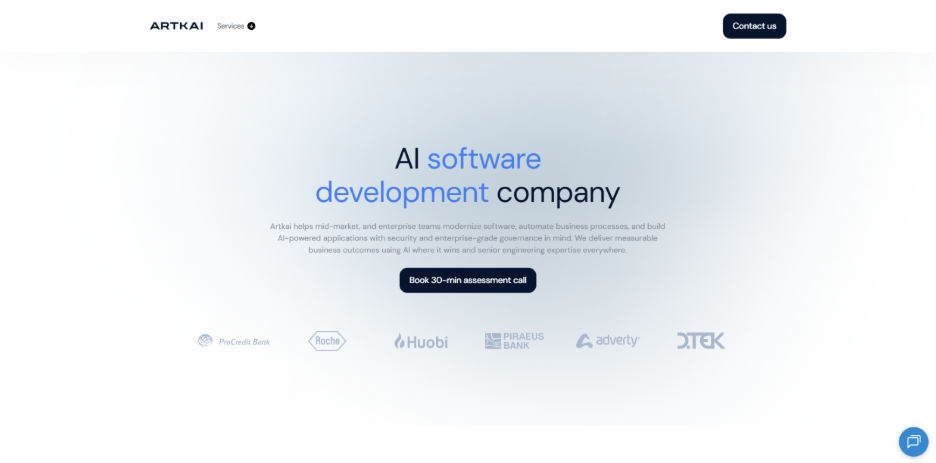
Artkai is an AI-native software development company, working with mid-market and enterprise clients. The company is a part of the Euvic Group and employs over 6,000 engineers. The company focuses on three major areas: business process automation, AI application development, and AI-powered UI/UX design. The team also operates from central and Eastern Europe, with its client based primarily in the US, UK, and Europe.
The company has also completed over150 projects, and holds over 4.9 rating in clutch based on 53 reviews. In 2005, the company appeared in the Clutch Top 1000 Global ranking, with a total coverage in TechCrunch, Bloomberg, Forbes, and other major publications.
The engineering stack of Artkai covers the full range of modern development, which includes TypeScript, Reach, Vue, and Angular on the front end, and Node.js, .NET, and Python on the back end. The platform uses AWS, Azure, and GCP for infrastructure, and the team works with Anthropic and OpenAI models for AI. The company also uses LangGraph, LangChain, and Qdrant for vector search. For automation work, they combine RPA tooling with custom AI agent development.
The company has developed an internal agentic delivery system called AE_OS that integrates AI into the software development lifecycle itself. This allows teams of four to five senior engineers to operate with ten to thirty AI agents running in parallel, with human oversight at every stage. According to Artkai’s published data, this approach delivers up to 77% lower cost and time per feature compared with conventional delivery.
One of the two primary services Artkai actively promotes is business process automation. The approach starts with an economics assessment: documenting where manual processes drive cost before any technology decision gets made. The target outcome is 40% lower operating costs on automated workflows, with payback in three to six months.
Rather than automating individual tasks, Artkai redesigns entire workflows. The team covers finance operations, HR, supply chain, compliance, and customer service functions. Sub-services include intelligent document processing, AI agents and copilots, RPA, and system integration.
A published case reference for this work is an FX Transfers App built for a financial services client: 80% reduction in manual payment processing, 90% reduction in errors, with the platform serving 200+ B2B customers.
The second primary pillar covers building AI into existing software products or creating new AI-powered applications. Artkai’s process starts with a working prototype in approximately two weeks, built on the client’s own data and stack. From there, the team moves to build and integration, then scaled production.
Published metrics from this work: 3x faster time to market, an average of $3.70 returned per $1 invested in AI development.
A few things differentiate this team from others in this category.
The economics-first approach is consistent and specific. Before scoping any project, Artkai measures the cost baseline and models the ROI. This is not a talking point; it shows up in how they structure assessments and proposals, and in the fact that they publish specific payback windows rather than generic efficiency claims.
Their position as an AI-native delivery organization, rather than a conventional firm that has added AI to existing processes, changes how projects actually get executed. The AE_OS delivery layer means AI is embedded in how Artkai writes, tests, and reviews code, not just in the software they deliver to clients.
The company has also built an enterprise-grade governance as a default, which features access controls, auditability, data privacy, and human-in-the-loop safeguards as part of delivery from the start. For the clients, the company utilizes these features especially for the clients in financial services, healthcare, or other regulated sectors, for whom these matters the most.
Artkai also treats vendor neutrality as a principle. Technology decisions are made based on economics and fitness for purpose, not platform relationships. Clients get solutions designed around their specific context.
Businesses evaluating AI development partners who want measurable outcomes from day one, rather than discovery phases that drift into open-ended engagements, may find Artkai a strong fit.
Overview
10Pearls is a digital product development company with US-based leadership and delivery teams across Pakistan and Latin America. The firm covers product strategy, software engineering, and AI integration services.
Strengths
10Pearls is known for combining product thinking with technical delivery. The company has worked with enterprises, growth-stage startups, and government clients, with particular experience in healthcare, fintech, and enterprise software. Their teams have handled substantial digital transformation programs.
Best for
Companies that want business-aligned product development from a partner with US-market experience and nearshore delivery economics.
Overview
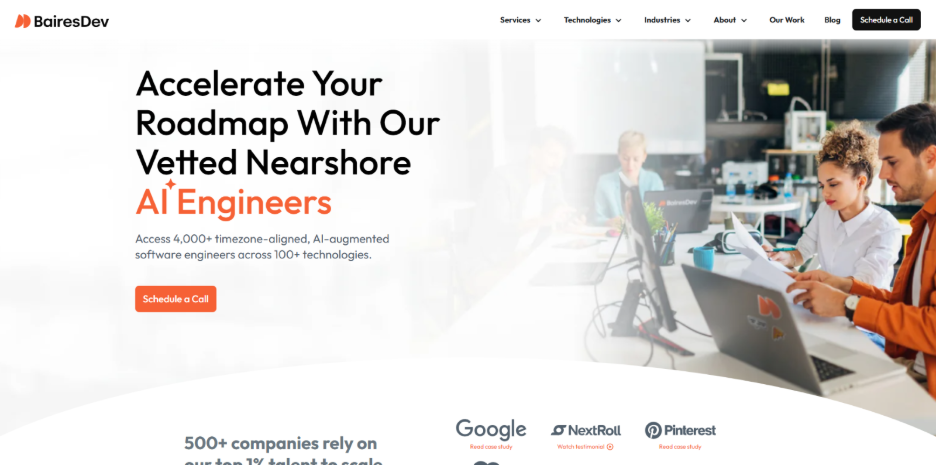
BairexDev is a large-scale software engineering company, which includes primary delivery based in Latin America. The company offers staffs augmentation, dedicated teams, and project-based development across web, mobile, AI, and cloud engineering.
Strengths
BairesDev has a substantial talent network, which allows it to scale teams quickly. The primary value prospecting of the company is to pre-vetted senior engineers across a broad range of technologies, at a competitive rate for the US-based clients. The company also offers flexibility in engagement to the clients.
Best for
Technology companies or enterprises that need to expand engineering capacity on relatively short timelines, particularly when cost efficiency is a priority alongside quality.
Overview
Ciklum is a digital engineering company with roots in Eastern Europe and a significant enterprise client base across Western Europe and North America. The company covers software engineering, data and analytics, AI, and cloud services.
Strengths
Ciklum has maintained long-standing relationships with large enterprise clients and has demonstrated the ability to run sustained, multi-year delivery programs. Their engineering talent base, particularly in Ukraine and Poland, is technically strong. The company has invested in AI and data capabilities, including ML engineering and intelligent automation.
Best for
Large enterprises with complex, multi-year digital transformation programs that require a stable long-term delivery partner with proven organizational depth.
Overview
DataArt is a custom software development firm with deep domain expertise in financial services, healthcare, and travel. The company works across the full stack and has specialized practices in data engineering, AI, and cloud architecture.
Strengths
DataArt’s domain specificity is its clearest differentiator. Rather than positioning as a generalist, the firm has built genuine depth in regulated, complex industries. This translates to fewer surprises when working through compliance requirements or industry-specific architecture challenges. Client feedback consistently points to the quality of technical architecture and the team’s willingness to engage with complicated problems.
Best for
Organizations with domain-specific complexity, particularly in fintech, insurance, or healthcare, where generic solutions fall short.
Overview
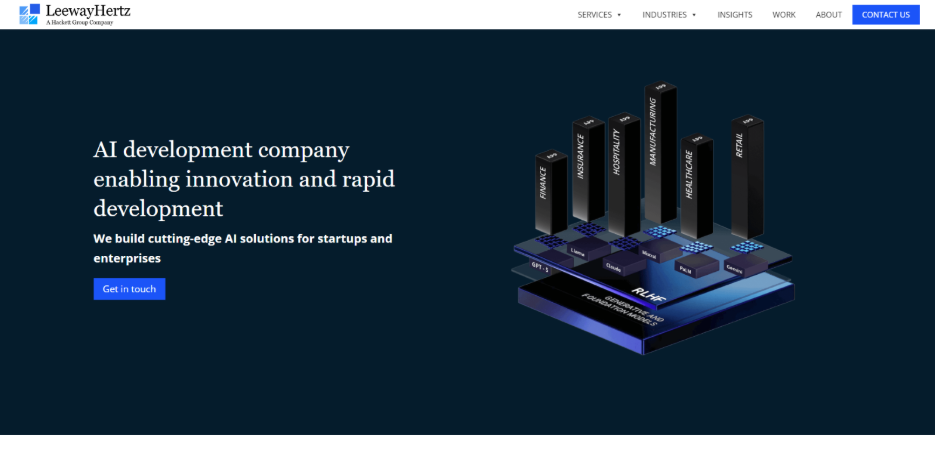
LeewayHertz is a software development firm that has positioned itself around AI and Web3. The company is US-headquartered with development teams in India, and has been active in generative AI and agentic AI systems since relatively early in the current wave.
Strengths
LeewayHertz’s focus on AI-first development, including LLM integration, AI agents, and generative AI applications, gives it a relevant profile for clients specifically seeking specialist AI expertise. The company also has documented experience in blockchain and decentralized applications, a differentiator for clients in that space.
Best for
Companies actively exploring generative AI, autonomous agents, or blockchain integrations who want a vendor with deep specialization rather than a broad portfolio.
Overview
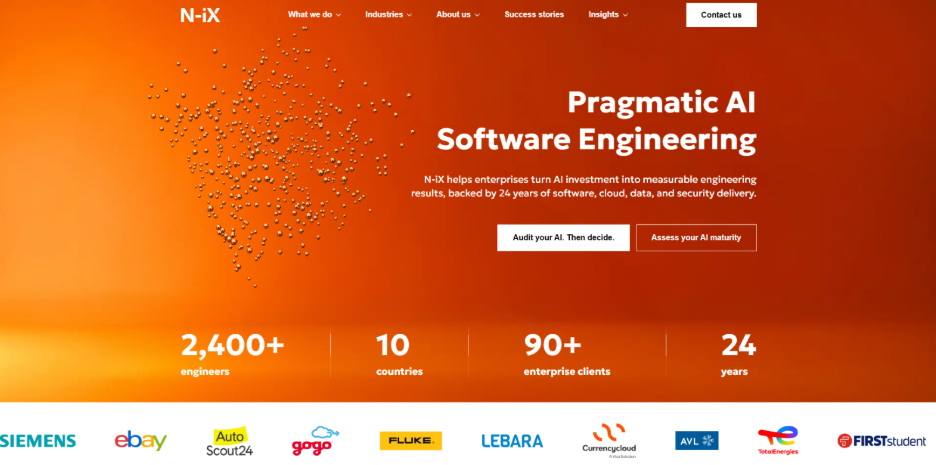
N-iX is a software development company headquartered in Ukraine with a strong delivery track record across Eastern European engineering talent. The firm covers software engineering, data and AI, cloud services, and QA.
Strengths
N-iX has maintained delivery consistency through challenging operating conditions, which clients have noted as evidence of organizational resilience. The company’s engineering culture emphasizes quality and seniority, and it has built out competency centers in data engineering, machine learning, and cloud-native development.
Best for
Enterprises looking to extend their engineering teams with senior, specialized talent, particularly in data, AI, and cloud-native development.
Overview
Simform is a software development company based in the US with delivery teams in India. The company focuses on cloud-native development, mobile and web applications, and AI/ML integration.
Strengths
Simform has built a reputation for accessible engagement models and pragmatic delivery, making them a practical choice for startups and growth-stage companies. The company has strong competencies in React, React Native, and cloud-native architecture, and has added AI/ML capabilities as client demand has grown.
Best for
Startups and growth-stage technology companies building modern applications where cost-effectiveness and development speed are the main constraints.
Overview
SoftServe is a large-scale technology services company with delivery teams across Eastern Europe, Latin America, and Asia. The firm operates across enterprise software, AI/ML, data platforms, and cloud services, working with Fortune 500 clients.
Strengths
SoftServe brings significant scale. For large enterprises running complex, multi-workstream programs, their depth of talent and process maturity can absorb requirements that smaller vendors cannot. The company has built specialized practices in AI and ML, and their quality assurance capabilities are well regarded.
Best for
Large enterprises with sustained, high-volume development programs and compliance-heavy environments where organizational depth and process consistency are non-negotiable.
Overview
Thoughtworks is a global technology consultancy with an engineering culture built around Extreme Programming, continuous delivery, and distributed agile. The company operates in 49 countries and has decades of documented work on complex enterprise digital transformations.
Strengths
Thoughtworks combines deep software engineering practice with strategic consulting capabilities. Their Technology Radar, published semi-annually, is widely read across the industry.
Best for
Organizations going through large-scale digital transformation who need a partner combining strategic input with hands-on delivery, and who are prepared for the process investment that model requires.
The most common mistake companies make is assembling a vendor shortlist before clearly defining the business problem. AI software development is not a single category. Automating finance workflows, building an AI recommendation system into a product, and modernizing a legacy platform require fundamentally different skills and approaches.
Define specifically :
Most vendors in this market have updated their websites to include AI. That says nothing about actual capability. When assessing any company, ask for examples of AI work that has shipped to production: what the system does, what technology it uses, and what outcome the client measured. Vague examples or work that never got past prototype stage is worth noting.
Enterprise AI projects carry real compliance and governance requirements. Data privacy, access controls, auditability, and model monitoring are not optional. A partner who treats these as afterthoughts creates problems downstream. Look for companies that raise governance in the initial conversation rather than treating it as a procurement checkbox.
Reputable AI development partners should be able to estimate the business value of a proposed engagement before asking for a commitment. That requires them to understand your cost baseline and what outcomes you are targeting. Partners who jump straight to technical specifications without establishing the business case are more likely to deliver technically correct work that does not solve the actual problem.
Not every AI project requires the same structure. Short assessment phases, prototype builds, and full-scale product development have different requirements. Some vendors specialize in one type of engagement; others cover the full range. Match the engagement model to where you are in the project, rather than signing a full build contract when an assessment is the right first step.
Agentic systems are moving into production. Companies that were running experiments with AI agents in 2024 are now deploying them in real operations. Vendors who have delivered production-grade agentic systems are meaningfully ahead of those still describing the category theoretically.
Delivery speed expectations have shifted. Working prototypes in two weeks, early production releases within months. Vendors who cannot move at that pace are increasingly difficult to work with for clients under competitive pressure.
ROI modeling is becoming expected. The expectation that AI investments should show measurable business outcomes, not just technical progress, has moved from sophisticated buyers to the mainstream. Vendors who cannot model ROI before the build are losing deals.
Governance is getting regulated. New regulatory frameworks around AI are taking shape across major markets. Companies building AI into products or operations in financial services, healthcare, or other regulated sectors need partners who understand compliance implications, not just technical ones.
此内容由惯性聚合(RSS阅读器)自动聚合整理,仅供阅读参考。 原文来自 — 版权归原作者所有。