




惯性聚合 高效追踪和阅读你感兴趣的博客、新闻、科技资讯
阅读原文 在惯性聚合中打开

推荐订阅源

K
Kaspersky official blog
Martin Fowler
Martin Fowler
CTFtime.org: upcoming CTF events
V
Visual Studio Blog
博客园_首页
Engineering at Meta
Engineering at Meta
The Cloudflare Blog
MongoDB | Blog
MongoDB | Blog
Blog — PlanetScale
Blog — PlanetScale
T
The Blog of Author Tim Ferriss
雷峰网
雷峰网
D
Docker
博客园 - 司徒正美
S
SegmentFault 最新的问题
M
MIT News - Artificial intelligence
博客园 - 叶小钗
博客园 - 三生石上(FineUI控件)
U
Unit 42
J
Java Code Geeks
A
About on SuperTechFans
N
Netflix TechBlog - Medium
freeCodeCamp Programming Tutorials: Python, JavaScript, Git & More
S
Security Affairs
I
Intezer
Cisco Talos Blog
Cisco Talos Blog
C
Cyber Attacks, Cyber Crime and Cyber Security
Threat Intelligence Blog | Flashpoint
B
Blog RSS Feed
P
Privacy & Cybersecurity Law Blog
T
Tenable Blog
T
Threatpost
H
Hacker News: Front Page
G
Google Developers Blog
博客园 - 【当耐特】
Hugging Face - Blog
Hugging Face - Blog
Apple Machine Learning Research
L
Lohrmann on Cybersecurity
大猫的无限游戏
大猫的无限游戏
Google DeepMind News
A
Arctic Wolf
S
Secure Thoughts
GbyAI
GbyAI
NISL@THU
NISL@THU
S
Security @ Cisco Blogs
Exploit-DB.com RSS Feed
Webroot Blog
Webroot Blog
C
CXSECURITY Database RSS Feed - CXSecurity.com
O
OpenAI News
Spread Privacy
Spread Privacy
Application and Cybersecurity Blog

Raspberry Pi Foundation

Celebrating over 15,000 young creators at the Coolest Projects 2026 online showcase - Raspberry Pi Foundation How to design and present clear computing lessons - Raspberry Pi Foundation What students and teachers in England want from a computing curriculum - Raspberry Pi Foundation Support your young people with our AI literacy resources Building confidence to teach AI in the classroom Can AI support creativity? What educators can learn from creative machine learning Celebrating young tech creators at Coolest Projects Ireland 2026 Beyond content: Helping teachers feel ready to teach AI Start small, dream big with Code Club: Become an Incubator Partner AI is not neutral: What recent research says about bias, identity, and power A day of big ideas at Coolest Projects USA Minnesota 2026 Why localisation matters for AI literacy: Lessons from Uzbekistan Professional development: How to stay ahead in a fast-changing subject What does ‘thinking’ mean now? An astronomical anniversary: Young people’s code heads to the International Space Station
Young people’s computer programs get data from space
Fergus Kirkpatrick · 2026-06-11 · via Raspberry Pi Foundation

An amazing 25,707 participants had their code run on the International Space Station (ISS) this year, marking the European Astro Pi Challenge’s 10th anniversary in style.

Yesterday, Astro Pi teams and their mentors received their official certificates and data — the final stage of this year’s challenge. On each certificate, participants can see the exact time and the location of the ISS when their program was run.

Congratulations to every student, teacher, volunteer, and parent involved. Your support made this historic year possible. We are also thrilled to share a special message from our 2025/26 Astro Pi Ambassador, ESA Astronaut Sophie Adenot.

The European Astro Pi Challenge is an ESA Education project run in collaboration with the Raspberry Pi Foundation, implemented by ESEROs at a national level. It offers young people the amazing opportunity to conduct scientific investigations in space by writing computer programs that run on Raspberry Pi computers on board the International Space Station.

Mission Zero: Art in orbit

Mission Zero invites young people to create nature-inspired pixel art to display for the astronauts aboard the ISS. This year, we ran a total of 17,170 programs created by 24,408 participants.

By using the Astro Pi’s colour sensor to set their background colours, these programs combined live data from the station with each team’s unique artwork. The results brought a vibrant reminder of nature and Earth to the crew. You can explore these creations on our interactive mosaic — can you find your team’s pixel art on the mosaic?
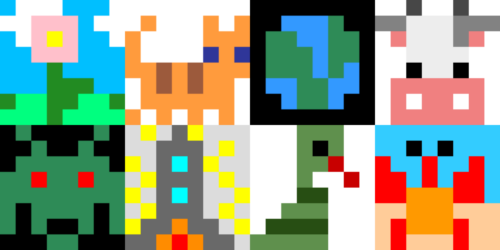
Pixel art creations made by young people who participated in Mission Zero.
A selection of Mission Zero pixel art submissions

Mission Space Lab: The speed of light (and cameras)

In Mission Space Lab, teams wrote Python programs to calculate the speed of the ISS. Using the Astro Pi sensors and Raspberry Pi High Quality cameras, 387 teams (representing 1,299 young people) achieved the prestigious ‘flight status’ and had their programs run in space.

These teams are now receiving their raw data sets, which include images of Earth’s surface captured from 400km above.
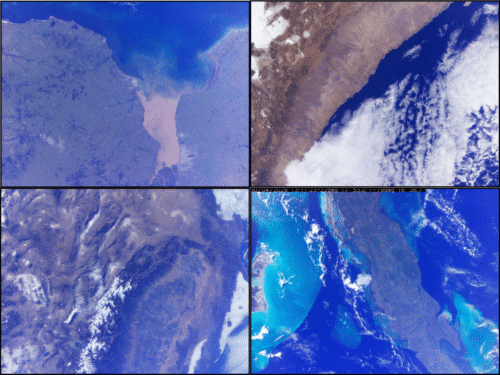
Photos of the Earth’s surface that Mission Space Lab teams captured with their programs
Earth observation images captured from the ISS by Mission Space Lab teams

Doing science in space: The ‘blue shift’ mystery

Science in orbit often brings surprises. This year, we noticed the colour balance in some ocean images was shifting toward a bright blue. After investigating, we found the camera’s white balance algorithm was reacting to ‘blue shift’.

This occurs when the spectrum of light compresses as the Earth turns toward the camera at dawn. It’s a fantastic example of the real-world physics our participants encounter when dealing with orbital data!
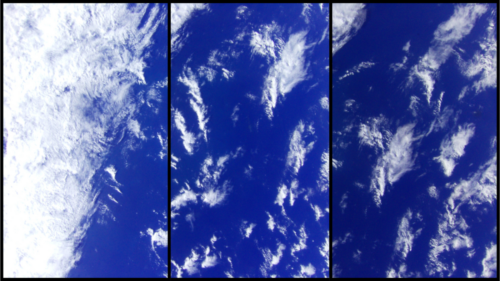
Photos of the ocean with varying range of blue brightness.
A selection of images showing the ‘blue shift’ effect

Inspiring even more young people and communities

We know what a great opportunity Astro Pi is and how much of an impact it can have on participants and their communities. So we constantly challenge ourselves to widen our reach and bring the challenge to communities around the UK and Ireland, especially those that don’t normally get the chance to send code to space. This year, we visited schools, clubs, and science events. We also trained teachers and volunteers to help us share the challenge.
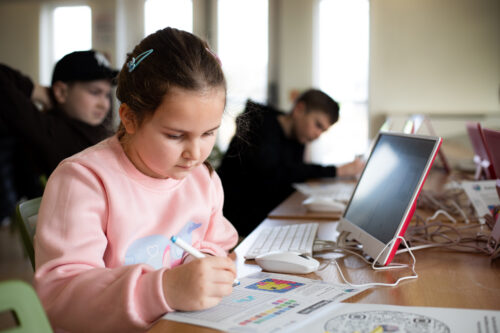
A young person colouring a pixel art design.
A young person designing Mission Zero pixel art

What’s next?

That’s a wrap for the 2025/26 challenge, but the journey doesn’t end here.

  • On Friday 12 June, ESA astronaut Pablo Álvarez Fernández will answer questions submitted by the Mission Space Lab teams. You can watch the livestreamed event on YouTube.
  • Save the date: Astro Pi 2026/27 launches Monday 14 September 2026
  • Mission Zero: We’ll be selecting new code examples from this year’s Mission Zero submissions for our next project guide
  • Mission Space Lab: We have some exciting technical updates coming for the next cohort of Space Lab teams

In the meantime, stay curious, space travelers. The journey has only just begun!