







Experience AI has grown into a global effort to build AI literacy in schools, supporting educators and young people around the world to better understand and critically engage with AI technologies. We recently brought Experience AI to Uzbekistan through a new collaboration with UNICEF.
Together, we are integrating Experience AI into the Tinkering with Tech programme, which supports Uzbekistani educators and learners to develop 21st-century skills, including computational thinking, and digital and AI literacy skills.
As one of the Learning Managers on the Foundation’s AI literacy team, I travelled to Uzbekistan to lead the AI literacy part of the programme, working closely with local trainers and educators and introducing them to Experience AI.
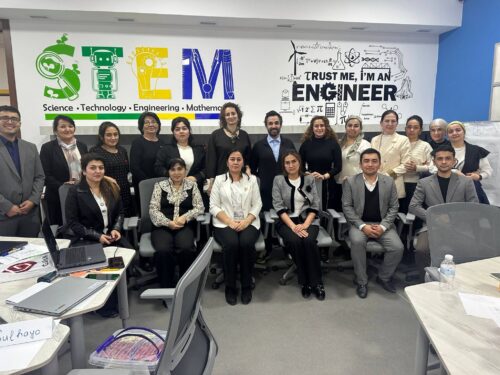
On the plane to Tashkent, Uzbekistan, I found myself wondering about the level of engagement with AI tools among teachers and educators in Uzbekistan: how interested are teachers and students in AI technologies? Are they more excited or hesitant about AI technologies?
My questions were answered within minutes of the start of the training session in Tashkent. The teachers and trainers, who had travelled from cities and rural areas across the country, were enthusiastic, inquisitive, and already experimenting with AI technologies in their daily lives.
The training session created space for educators to deepen their understanding of both technical concepts like classification and accuracy, but also ethical considerations, including data representation, bias, and the implications of inaccurate AI tools.
One particularly powerful example of how AI systems can be inaccurate came from a trainer who shared video footage from a local cattle market, where an AI tool classifies animals and monitors traffic. In the video, a human was misclassified as a horse, and a goat misclassified as a human.
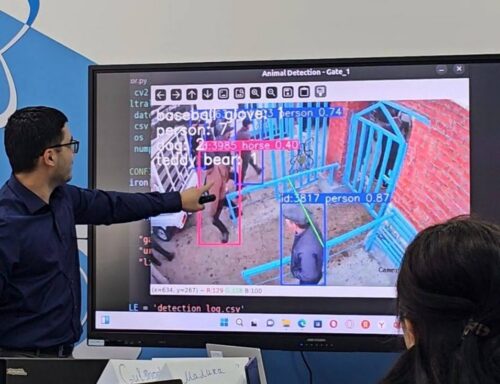
While the example was funny and showed a harmless error, it quickly became a meaningful learning opportunity. Together, we used it to have a wider discussion around the implications of these errors. For example, what happens when AI tools fail in higher stakes situations? Would we trust a self-driving car that might misclassify a person in a long, dark coat as a lamp post, or a child in an orange-and-white coat as a traffic cone?
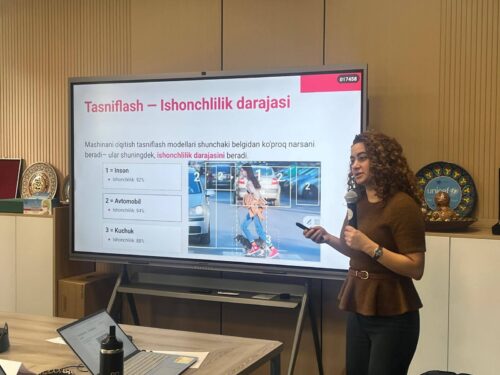
Working closely with the partners and trainers, we used localised examples in the training to explore other AI literacy concepts, particularly representation and bias.
In one activity, we used an AI tool to generate an image of Gulistan, a beautiful city in eastern Uzbekistan. The result sparked a range of reactions — while Gulistan is known for its flat landscape and mosques, the AI-generated image showed mountains and churches.


This led to a rich discussion about how AI systems represent places and cultures, and what it means when those representations are inaccurate. I asked them: why did the tool produce this image? What data might the underlying model have been trained on? And how do these inaccuracies shape perceptions, especially for those unfamiliar with the place being represented?
This example resonated strongly with the trainers, particularly because it reflected their own context. After a short break, I returned to find everyone still engrossed in a deep discussion around the lack of neutrality of AI tools, and what that meant for them, their students and communities. As one trainer reflected, “I have changed my mind about AI and now I have a better understanding of it.”
Spending time with educators in Uzbekistan was also a reminder that classrooms are far from uniform. In some Uzbekistani settings, learners have access to laptops and interactive whiteboards; in others, teaching happens with limited electricity, lower levels of digital literacy, or shared devices among many students.
As we continue to expand Experience AI globally, localisation remains crucial. From South Africa to Saudi Arabia, and from Ukraine to Uzbekistan, flexible, context-aware resources are key to ensuring that all learners have the opportunity to develop a meaningful and critical understanding of AI.
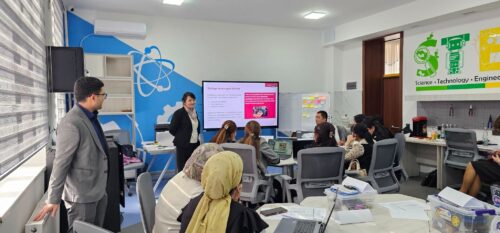
In our ongoing collaboration on the Tinkering with Tech programme with UNICEF, the Micro:bit Educational Foundation, and Arm, we’re supporting teachers to develop the confidence and skills they need to teach AI in ways that are engaging, relevant and grounded in real-world contexts for their students. Together, we aim to equip young people with the knowledge and confidence to shape how these technologies affect their lives and communities.
For more information about Experience AI, visit our website, experience-ai.org.
About Tinkering with Tech and AI: UNICEF is co-developing new learning materials, enhancing AI literacy, and scaling the Tinkering with Tech and AI initiative to reach more learners and education systems worldwide. The initiative benefits from the continued strategic support from Arm and the Government of Finland, along with technical partners the Raspberry Pi Foundation and Micro:bit Educational Foundation. Learn more here.
此内容由惯性聚合(RSS阅读器)自动聚合整理,仅供阅读参考。 原文来自 — 版权归原作者所有。