








Coolest Projects UK returned to Bradford in May, with more than 200 young people showcasing digital projects they had designed and built themselves.
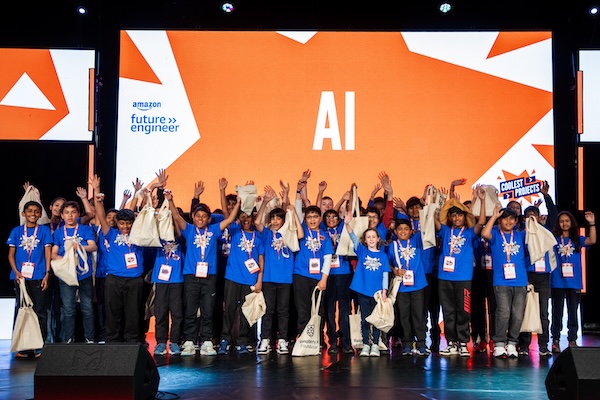
Visitors at the showcase event had the chance to explore an amazing range of projects across categories, from Scratch and Python to AI, hardware, web design, and game development. Every participant had the opportunity to speak with judges and industry professionals, receive personalised feedback, and connect with other young people passionate about technology and creativity.
Throughout the day, participants also got stuck into hands-on digital activities designed to encourage collaboration and creative thinking.
This year’s creators came from a wide range of backgrounds, including Code Clubs, schools, Scout groups, CoderDojos, and independent learning environments. Some had spent months refining their projects, while others had only recently started their coding journey. What connected them all was a shared excitement for creating with technology.
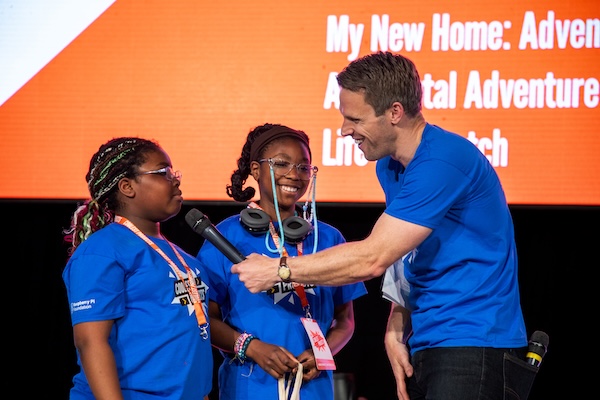
Ahead of the event, local workshops held in Bradford gave young people additional opportunities to explore digital making, develop project ideas, and gain confidence ahead of showcasing their work publicly. These sessions helped many first-time participants take their first steps into coding and creative technology.
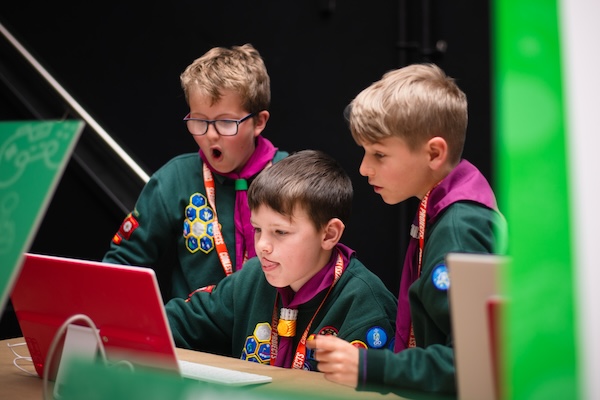
A key part of this year’s event was the involvement of 57 Scouts from across the region. Young people from six Yorkshire-based Scout groups attended digital making workshops. During the sessions, they learned how to create their own selfie filters using Scratch’s AI-facial recognition tools, earning their DM1 Digital Maker badges. After developing their own ideas and projects during the workshops, they exhibited a selection of them in the Coolest Projects showcase alongside the wider community of young creators.
For many of the Scouts attending, this was their first experience of presenting a technology project to the public. It gave them a fantastic opportunity to build confidence, talk about their ideas, and see how digital making turns imagination into reality.
Throughout the event, Greg Foot, BBC science presenter, brought energy and enthusiasm to the stage, interviewing creators, celebrating achievements, and highlighting the stories behind the projects on display. The day concluded with a celebration ceremony where every participant received recognition for their work, with creators of the judges’ favourite projects also receiving additional awards.
The showcase featured an inspiring range of ideas and inventions created by young people from across the UK. Here are just a few of the projects presented during the event:
This project is a robotic reminder system that recognises people’s faces and plays a personalised reminder message. Using sensors, lights, sounds, and moving parts, the robot reacts when someone comes close and activates a camera for face recognition. Seth built the robot using boxes and tubes, while also using AI face recognition and recorded audio messages to create an interactive experience. Seth shared some of the challenges he faced with the facial recognition system.
“Our facial recognition system kept getting confused, so we took more photos to help it recognise better. We used different backgrounds, clothes and lighting to help it recognise our faces better, but we also took new photos when we got to Coolest Projects, so it would work better in front of the judges.”
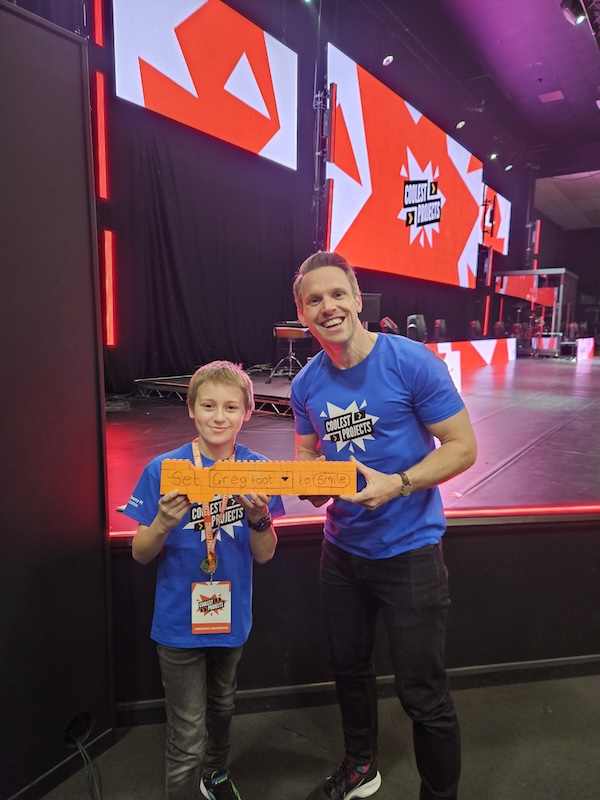
Seth wasn’t just excited to share his project with his fellow creators, but with host Greg Foot too, bringing a little surprise along for Greg on the day.
“I have always wanted to go to an event which has lots of people and showcases everyone’s work, and wanted to meet Greg Foot too. I built a giant Scratch block made from Duplo and Lego to give to Greg Foot. I didn’t have all the right sizes so I made a custom part with modelling clay and I reinforced it using sticky back plastic, then I asked my mum to write on it so that it looked like it coded Greg to smile.”
Immune System Defence is a Roblox game where players protect the human heart from waves of incoming viruses. Using white blood cells, vitamin boosts and other defensive towers, players must stop the spread of infection while learning about how the immune system works. The game is designed to be both fun and educational, combining strategy and science in an exciting gameplay experience.
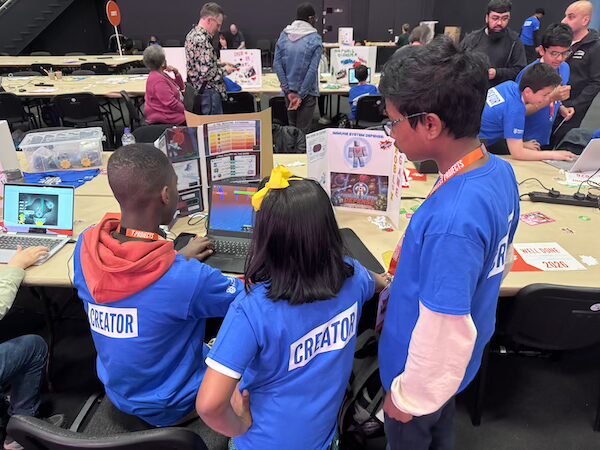
“I got the idea for the project from my Science lessons at school — specifically the ones where we’d learned the parts of blood and the functions of the heart as a related topic on how white blood cells and the immune system protects the body. One of my favourite parts was seeing people scan my QR code and actually play my game live during the showcase.”
Gabriel created a Scratch game that teaches players how rare the fossilisation process is. Players choose between an ammonite, belemnite, or trilobite and then spin three roulette wheels representing different stages of fossilisation. Gabriel was inspired by a board game he saw at the Fossil Festival in Lyme Regis and adapted the idea into his own interactive game with new features such as the roulette wheels.
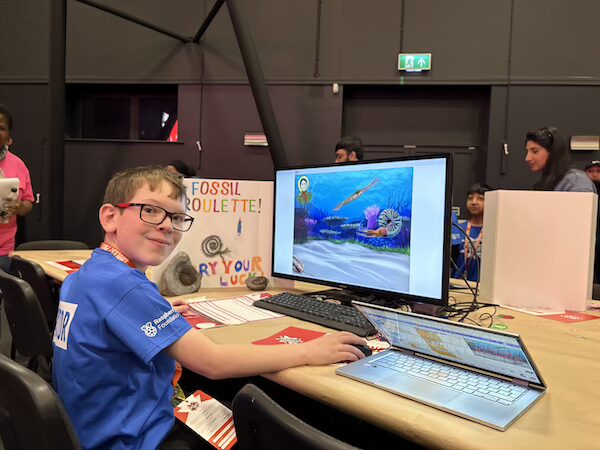
“The roulette wheel was the hardest to code because I had to make it spin faster at the beginning and then slow down. I found the event [Coolest Projects] very exciting because at one point I had a queue of people wanting to try out my game!”
More Coolest Projects showcases
Each year, Coolest Projects highlights the creativity, curiosity, and technical skills young people bring to digital making. From games and AI experiments to interactive hardware builds, the event continues to inspire more young people to see themselves as creators of technology, not just consumers of it.
While the UK event has now wrapped up for 2026, Coolest Projects showcases continue around the world throughout the year.
Coolest Projects is part of our wider work to help every young person gain access to computing and digital creativity opportunities. At thousands of free Code Clubs running across the UK, Ireland, and around the world, young people can continue building projects, learning new skills, and creating alongside others in supportive community spaces.
To find a local club or learn how to volunteer, visit the Code Club website.
此内容由惯性聚合(RSS阅读器)自动聚合整理,仅供阅读参考。 原文来自 — 版权归原作者所有。