


Hayley McKechnie is a computing lead at a primary school in the East of England, who shares in this blog how she supports her students and her fellow teachers to build confidence around artificial intelligence (AI). She developed her skills through training delivered by Parent Zone, our partner for Experience AI in the UK.
Artificial intelligence is part of everyday life for young people, but teaching students what AI is, how it works, and why it should be used responsibly can still be a challenge.
As a computing lead at a school in the East of England, the Experience AI programme has played a central role in building my confidence, as well as that of my colleagues, when it comes to teaching AI in the classroom.
Through professional development, practical classroom materials, and a strong focus on ethics, the programme has helped me bring AI to life in a way that feels accessible, age-appropriate, and responsible.
I began my AI education journey by attending training sessions hosted by Parent Zone to strengthen my own understanding of artificial intelligence. This felt like an important first step, because many teachers are learning about AI alongside their students.
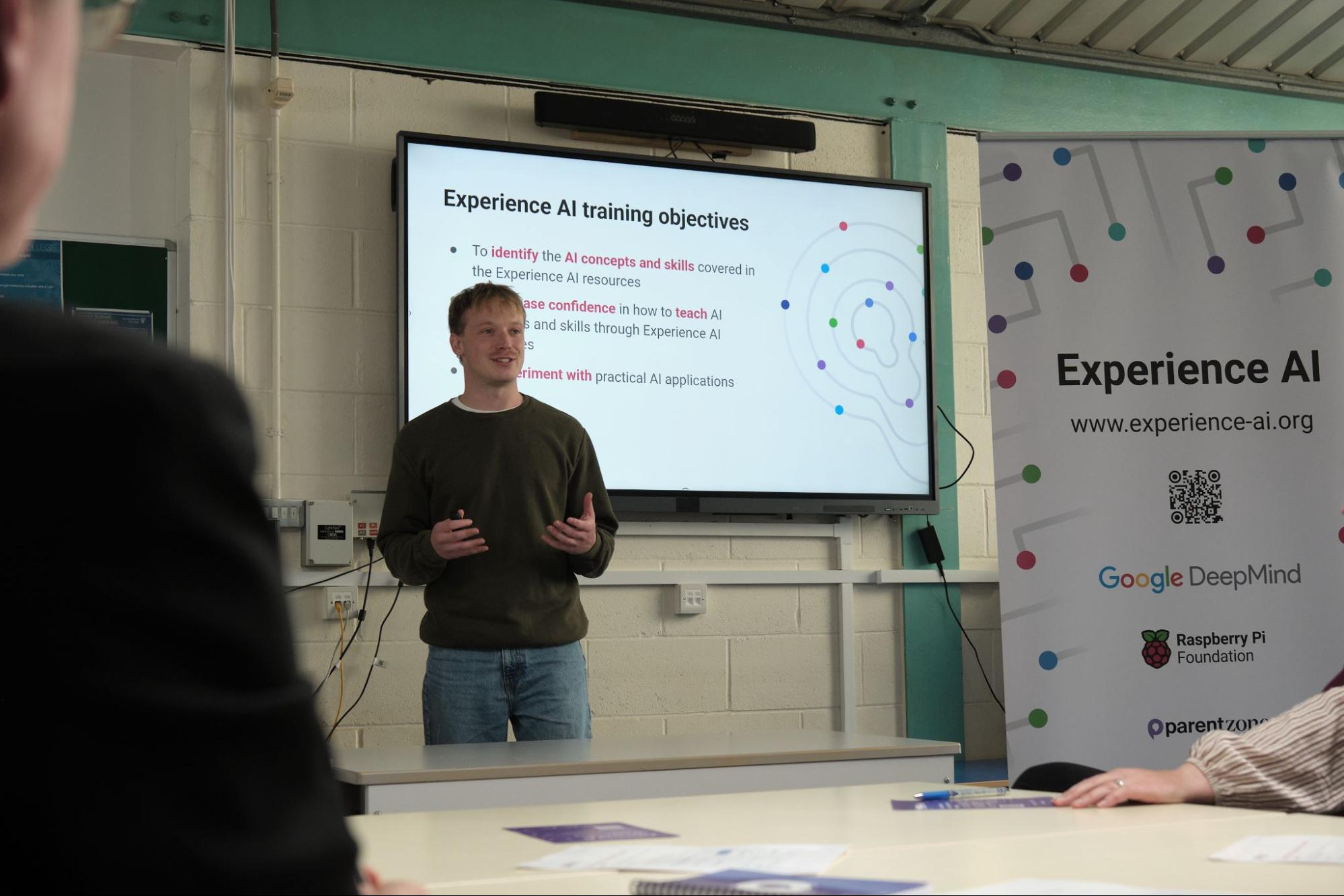
The training really helped me understand how AI actually works. That’s so important, because if you’re not confident in your own understanding, it’s very difficult to explain it clearly to children.
At first, I trialled one or two lessons with my students, introducing concepts gradually as AI tools became more visible in everyday life. As my confidence grew, I started using more of the materials, and this year I plan to deliver the full six-week unit as a dedicated part of our computing curriculum.
What I particularly like is how clear and straightforward the programme is. The training makes it easy for teachers to pick up, while still giving students a solid foundation in how AI works.
Before starting AI lessons, I always ground learning in familiar examples, such as voice assistants, search engines, and design tools. This helps students see that AI isn’t abstract; it’s already part of their everyday lives.
One of the biggest strengths of the Experience AI training, in my view, is its strong emphasis on ethics and critical thinking. Rather than presenting AI as something to trust automatically, it encourages students to question and evaluate the technology they use.
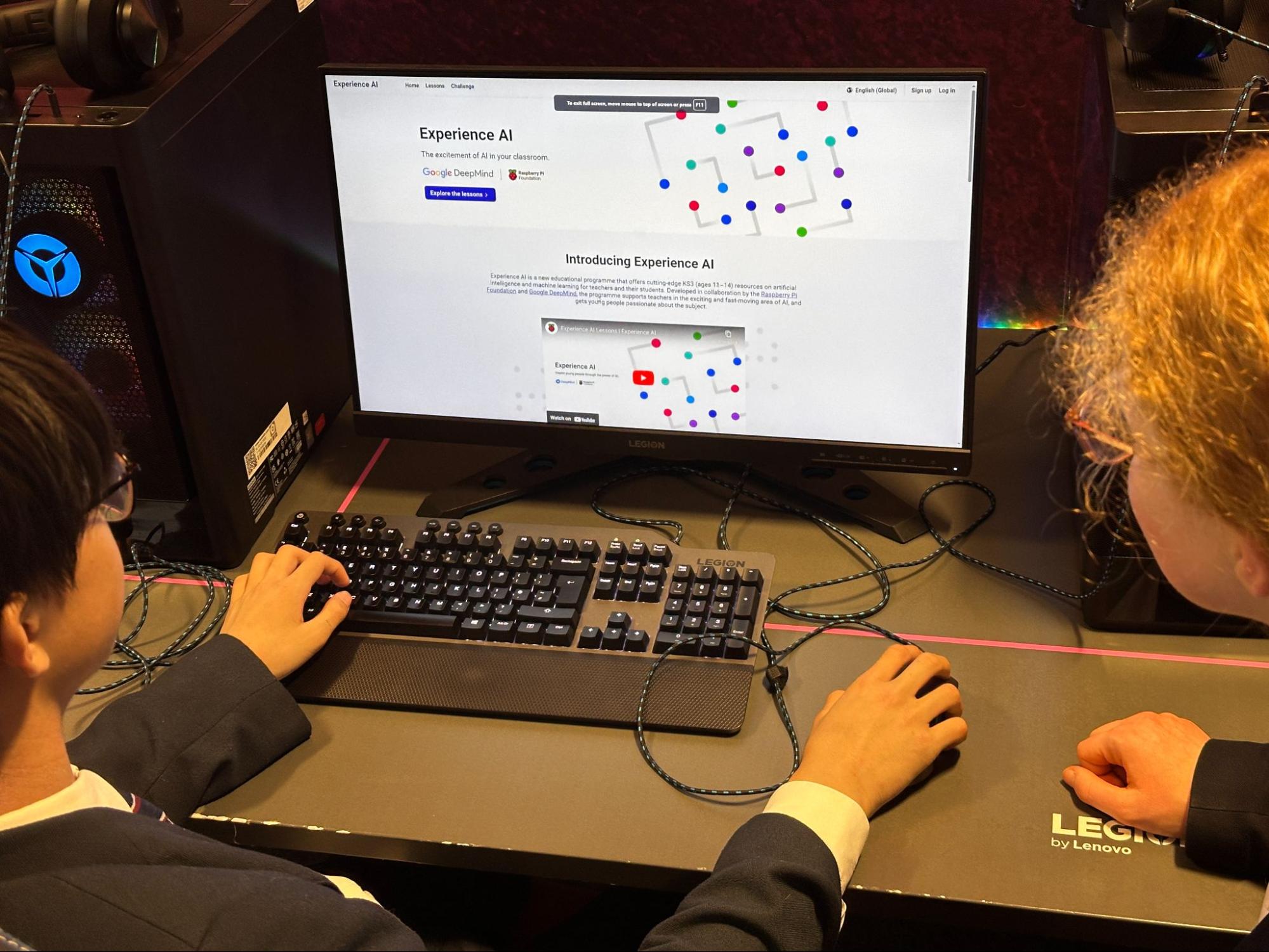
I want my students to understand that AI can be helpful, but it isn’t infallible and shouldn’t be relied on blindly.
For example, I’ve shown students how AI-generated search results can sometimes be inaccurate. It’s a simple but effective way to demonstrate why human judgement still matters. These kinds of discussions help students understand both the potential and the limitations of AI, reinforcing the idea that technology should support thinking rather than replace it.
Beyond my own classroom, I’ve also used Experience AI training to support other teachers. As part of my role coordinating computing across schools in my region, I organised a cluster meeting for 20 computing leads from across Essex, Suffolk, and Norfolk.

The session gave teachers the opportunity to share experiences, explore how AI could be introduced in age-appropriate ways, and discuss how to embed ethical considerations across the curriculum. A Parent Zone trainer led the session and helped deepen our understanding.
Many computing teachers are still getting to grips with AI themselves. The training helped me feel more confident, and that’s something I’ve been keen to pass on to others.
You can access all of our AI literacy and safety resources for free via the Experience AI website. Start exploring today and discover classroom-ready lesson plans, slide decks, and activities.
Interested in joining the next group of teachers to be trained on Experience AI? If you’re a UK teacher, visit Parent Zone’s website to enrol in the next cohort of educators. Or if you’re outside the UK, visit our Partners page to find out about teacher training sessions in your country.
此内容由惯性聚合(RSS阅读器)自动聚合整理,仅供阅读参考。 原文来自 — 版权归原作者所有。