




Obviously, video content is in trend, which means that the competition in this area is simply wild. Therefore, the task of the author is not only to create posh material but to engage a proper promotion of their videos.
Video SEO optimization is a great way to promote a video and draw the attention of the target audience, get to the top of YouTube and become popular, and make your video visible to everyone.
In this article, we will discover how to effectively optimize your clips to boost audience reach.

According to statistics, search engines rank videos more readily than text pages. A video is 50 times more likely to rank in search results than an article on the same topic. The CTR of videos is 41% higher, and thanks to this format, users spend an average of two minutes longer on the page than on text-based sites. To achieve this, you need to make high quality and well-optimized videos.
So, how do you properly optimize a video?
8 out of 10 videos that appear in search engines are uploaded to YouTube. So, for better ranking, you should choose the right hosting. And YouTube is just such an option.
If the task is to bring visitors to your site, and not to the hosting platform, use the built-in video players, and embed the video on the site via code.
Optimize your video title and description for keywords that are popular with users and relevant to your product. Get ideas for queries in Wordstat, Google Trends, search auto-suggestions, and competitors. Check the frequency of requests (the higher it is, the more massive demand, but also fierce competition).
By the way, keywords will help not only write well-ranked titles and descriptions but also come up with ideas for videos.
Keywords and phrases should be spoken out loud during the video. It also has a positive effect on video rankings. Large services like YouTube offer built-in automatic subtitles, that is, they automatically “read” the video and translate it into text form. And search engines are guided by this function, track the mention of the keyword and compare the user’s search query with the content of the video.
Fill in metadata – “invisible” information about the video (author, genre, creation date). Search engines use them to properly index videos. You can fill in the metadata correctly with the help of special SEO tools.
It’s not just that many people watch videos without sound (although this is also the case). Search engines also rank subtitle texts, so your video can be found by more queries.
To learn how to add a file with subtitles to a video, read Google help. You can also use video editors that support adding subtitles, simple cutting, merging videos, etc. like Movavi Video Editor and Shotcut.
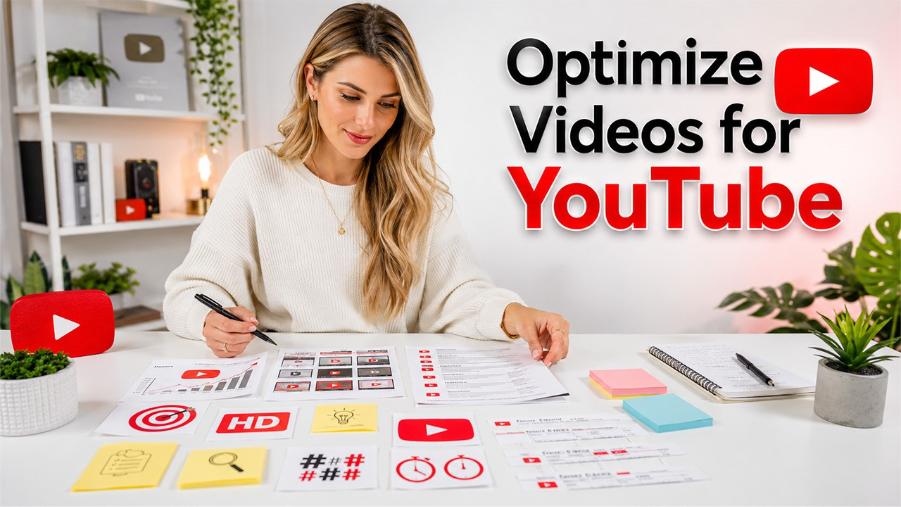
Thumbnails should draw attention. Test images to see which one is more popular with users and attracts more traffic.
Experts believe the best are those showing real people. The cover should reflect the content of the video as much as possible: don’t create superficial clickbait and mislead users. You can also add a video title to the thumbnail itself so that people can read it right from the picture. The text should be large enough.
YouTube figures show that users watch 70% of videos thanks to the recommendations block. Therefore, it is important to optimize the video so that the platform algorithm shows the content to people – similar to what they watched.
Here are some tips to help you rank better in YouTube recommendations and searches, and get on the first page of social media.
As marketers say, spend 20% of your resources on creating content and the other 80% on promoting it. Optimizing your video may elevate it to new heights. For sure, well-designed videos will attract views from a marketing standpoint, but optimizing clips alone is not enough. They should be part of a larger online marketing strategy that redirects visitors from other platforms and expands reach. Just keep this in mind while you create new material.
此内容由惯性聚合(RSS阅读器)自动聚合整理,仅供阅读参考。 原文来自 — 版权归原作者所有。