









We work with partners globally to promote AI literacy through Experience AI, our programme created in collaboration with Google DeepMind. With resources available in 19+ languages and a network of partners in over 38 countries, a key part of our work is translating and localising our materials so as many young people around the world as possible build the confidence to engage with AI critically and responsibly.
But localisation introduces a unique hurdle: sometimes, languages are divided into ‘small languages’ and ‘big languages’.
As a speaker of Croatian, a ‘small language’, I think about this divide often. What makes a language small? A small language has a small number of speakers and is usually not considered a key market. Practically, this means resources for translation are often directed towards ‘big languages’. This makes sense from an impact perspective: translating into languages with more speakers maximises reach.
That is why, as a localisation coordinator at the Foundation, I am delighted that we partnered with Croatian organisation Suradnici u učenju to ensure that for Experience AI, Croatian is not treated as a small language — it is simply a language.
But translating into Croatian can present hurdles. When I got my first computer in Croatia, the user interface was in English. As a result, I never learned how to say “copy/paste” in Croatian. Those types of menus and tools had simply not been translated yet when I lived there. This happens a lot, especially with software and fast-emerging technologies like AI. Native speakers have no other choice but to use English words: the English words enter the language, and sometimes they stay.
As a result, translating key Experience AI terms into Croatian wasn’t easy. Even terms like ‘AI’ went through several rounds of discussion. Should we use the English ‘AI’ (artificial intelligence) or the Croatian ‘UI’ (umjetna inteligencija)? How should we pronounce ‘AI’ or ‘UI’ in spoken language?
Sometimes, it can be hard to know what the right thing to do is. While the English terms have been normalised, the Croatian word can seem foreign and out of place. When making a decision about how we translate terms for Experience AI resources, we also have to think about fairness and accessibility. Is it fair to assume that all young people and educators understand English words? If we assume incorrectly, we are preventing some learners from fully accessing and understanding our materials.
That’s why our in-country partners are a big part of our translation process. When we aren’t sure about whether we are making the right choice for educators and learners, we can rely on their expertise. They are not only native speakers, but also subject matter experts. For Croatian specifically, Suradnici u učenju did a very thorough review of the translation.
Beyond AI terminology, localisation also meant aligning resources with the terminology and conventions already used in Croatian schools and curricula. This ensured that the resources felt familiar to teachers and reflected the language they already use in classrooms, textbooks, and educational guidance.
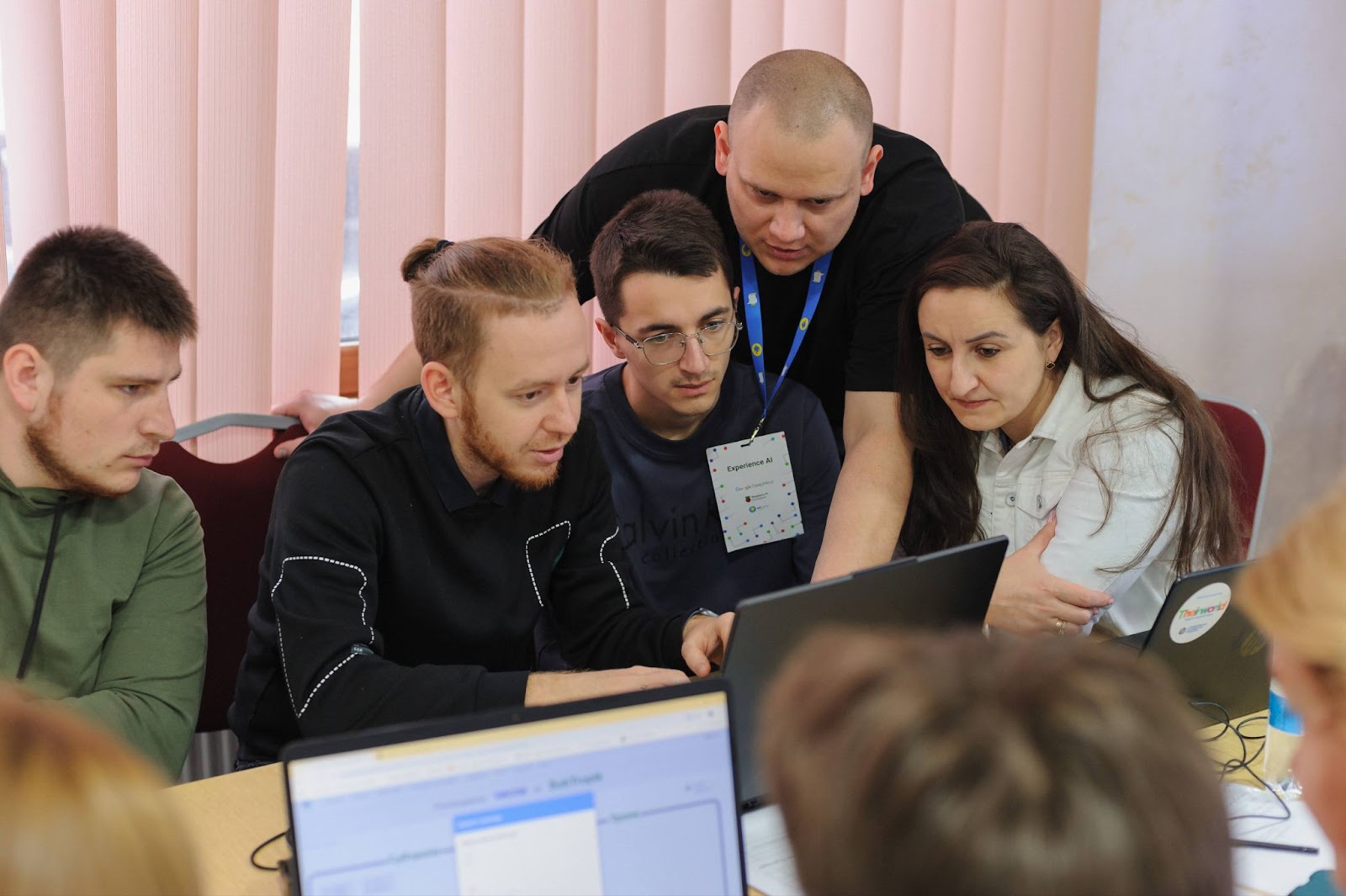
As Lidija Kralj, from Suradnici u učenju explained:
“It was very important that an Informatics subject expert worked together with a Croatian language expert, and that both of us are teachers. We discussed whether to use the English abbreviation ‘AI’ or the Croatian ‘UI’, and ultimately felt it was our responsibility as educators to use Croatian terms where they already exist. We also wanted to be consistent with terminology that teachers already know from textbooks and the Croatian education system.
This combination — a subject expert, a language expert, and a Raspberry Pi Foundation localisation expert who understands our language — helped us create resources that feel natural and ready for classroom use. The response from participants in our first Experience AI course in Croatian has already shown us how much teachers value having fully localised materials.”
We opted for the approach where, if a Croatian word exists, we will use the Croatian word. Personally, I enjoyed seeing words like ‘offline activity’ slowly disappear from our resources and get replaced with Croatian words like “aktivnost bez računala” (activity without a computer).
As a result, the Croatian translation of our resources now flows very naturally, is accessible, and doesn’t read like a translation. You can check out our Croatian resources online.
We work with partners worldwide to bring AI literacy education to millions of young people. Discover all Experience AI partners here.
And to learn more about our resources and to see what other languages we translate into, check out the Experience AI website.
此内容由惯性聚合(RSS阅读器)自动聚合整理,仅供阅读参考。 原文来自 — 版权归原作者所有。