


惯性聚合 高效追踪和阅读你感兴趣的博客、新闻、科技资讯
阅读原文 在惯性聚合中打开

推荐订阅源

Martin Fowler
Martin Fowler
OSCHINA 社区最新新闻
OSCHINA 社区最新新闻
IT之家
IT之家
美团技术团队
酷 壳 – CoolShell
酷 壳 – CoolShell
Y
Y Combinator Blog
T
Tailwind CSS Blog
D
Docker
博客园 - Franky
freeCodeCamp Programming Tutorials: Python, JavaScript, Git & More
Google DeepMind News
腾讯CDC
Vercel News
Vercel News
Engineering at Meta
Engineering at Meta
U
Unit 42
The Cloudflare Blog
S
SegmentFault 最新的问题
WordPress大学
WordPress大学
爱范儿
爱范儿
Recent Announcements
博客园 - 聂微东
博客园 - 叶小钗
H
Help Net Security
MyScale Blog
MyScale Blog

Raspberry Pi Foundation

Bring AI literacy into every classroom with our new themed resources - Raspberry Pi Foundation Join the UK Bebras Challenge 2026 - Raspberry Pi Foundation Experience AI evolves with flexible resources for every classroom - Raspberry Pi Foundation Supporting a technical AI-focused qualification for young people in England - Raspberry Pi Foundation Keep coding when your internet drops: Offline support in the Code Editor - Raspberry Pi Foundation How to improve students’ problem-solving skills using subgoal labels - Raspberry Pi Foundation Celebrating the community: Douglas and Oasis Mathare - Raspberry Pi Foundation Supporting AI education for 150,000 learners in Aotearoa New Zealand and Australia - Raspberry Pi Foundation Bringing the global Bebras community together in Cambridge - Raspberry Pi Foundation From one club to a global movement: Celebrating 15 years of CoderDojo! - Raspberry Pi Foundation Robots, games, AI, and more at Coolest Projects UK 2026 - Raspberry Pi Foundation Building education technology that children can trust - Raspberry Pi Foundation AI literacy begins with data literacy: An example from healthcare - Raspberry Pi Foundation Hello World #30 out now: Critical thinking in the age of AI - Raspberry Pi Foundation Empowering global AI literacy: Translating Experience AI resources into Croatian - Raspberry Pi Foundation Enhancing your enrichment offer? Code Club is the answer - Raspberry Pi Foundation Joy in learning computer science with Experience CS - Raspberry Pi Foundation Celebrating over 15,000 young creators at the Coolest Projects 2026 online showcase - Raspberry Pi Foundation How to design and present clear computing lessons - Raspberry Pi Foundation What students and teachers in England want from a computing curriculum - Raspberry Pi Foundation Young people’s computer programs get data from space Support your young people with our AI literacy resources Building confidence to teach AI in the classroom Can AI support creativity? What educators can learn from creative machine learning Celebrating young tech creators at Coolest Projects Ireland 2026 Beyond content: Helping teachers feel ready to teach AI Start small, dream big with Code Club: Become an Incubator Partner AI is not neutral: What recent research says about bias, identity, and power A day of big ideas at Coolest Projects USA Minnesota 2026 Why localisation matters for AI literacy: Lessons from Uzbekistan
Launching Astro Pi 2026/27: Code your way to the Internat...
Fergus Kirkpatrick · 2026-09-14 · via Raspberry Pi Foundation

Strap yourselves in for an out-of-this-world journey! The European Astro Pi Challenge 2026/27 officially launches today, 14 September 2026!

Young people across Europe and Canada are invited to participate in two fun coding missions, offering them the amazing opportunity to run their programs on the Astro Pi computers aboard the International Space Station (ISS). Every successful team will receive official certificates complete with runtime details and orbital coordinates, along with their very own space data and image sets to download and keep.

The European Astro Pi Challenge is an ESA Education project run in collaboration with the Raspberry Pi Foundation, and implemented by ESEROs at a national level. It gives young people the chance to learn how to code and conduct real space science in orbit.

Which mission will your teams launch this year?
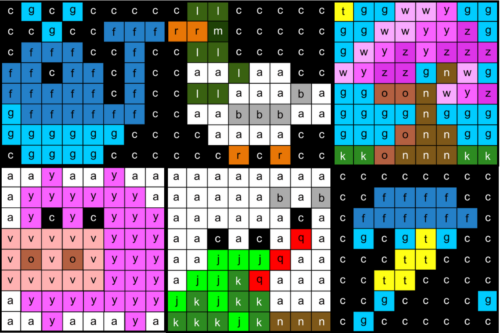
Pixel art images from the Mission Zero project guide for this year’s Astro Pi challenge.
New Mission Zero code examples

Mission Zero: Art in orbit

Send your art to orbit and create colorful pixel art with code! Mission Zero is a beginner-friendly Python activity, perfect for young people aged 9 to 16 with no prior coding experience.

Participants use our web-based code editor to set image colors and capture live light readings to adapt their artwork. In our step-by-step project guide, you’ll find a selection of starter examples to modify and make your own, all chosen directly from entries from the 2025/26 season.

Because so many teams love bringing their artwork to life, Mission Control has included step-by-step worked code examples in our project guide: one that creates a static image, and another that outputs a two-frame animation. Your team can modify the colours, add extra frames, or design an entirely original piece. We can’t wait to see what participants create.
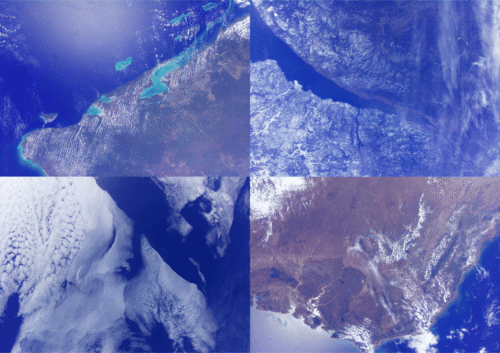
Photos of Earth’s surface captured by Astro Pi cameras on board the ISS.
Earth observation images captured by Mission Space Lab teams

Mission Space Lab: Real orbital science

Calling all aspiring space scientists! Mission Space Lab gives young people aged 12 to 19 the chance to capture real sensor data and Earth observation images while the ISS orbits 400km above us.

Working in teams of between two and six young people, participants write a Python program to log sensor or camera data to explore life on Earth or orbital mechanics. Teams can design an entirely original space science project or use our ready-made guides to analyse vegetation using NDVI imaging, or calculate the speed of the ISS. Every eligible program is guaranteed a ten-minute flight slot on the ISS.

This year, you’ll find a template for a basic data capture submission in the Mission Space Lab Creator Guide. It provides a great starting point for teams to predict the output of their program, test their logic, and customise their code. What will your team choose to investigate?
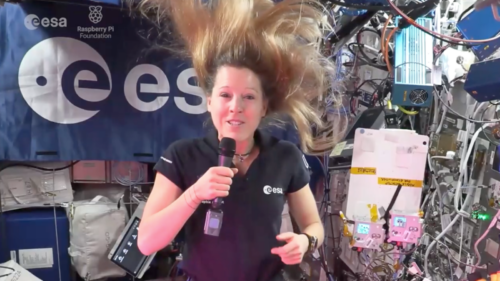
An astronaut operating the Astro Pi computer inside the International Space Station.
Astro Pi computers aboard the ISS

Meet our ambassador

We are excited to announce that ESA astronaut Thomas Pesquet will be the ambassador for the European Astro Pi Challenge this year. Having worked aboard the ISS, Thomas knows how important it is to conduct scientific experiments in space. Plus, Thomas is no stranger to the European Astro Pi Challenge. In fact, he has been our ambassador twice before, during the 2016/2017 and 2020/2021 editions. He is currently preparing for his next mission, having been selected to command a private astronaut mission, planned for 2027.
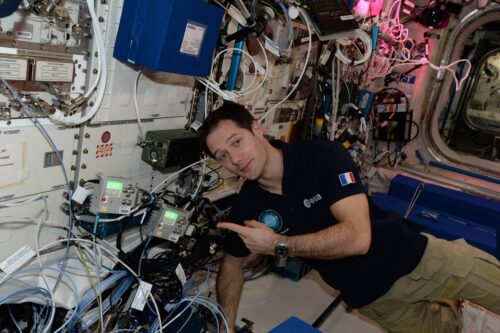
An astronaut inside the International Space Station.
Credit: ESA/NASA

Get in touch with Mission Control

The Astro Pi Mission Control team is here to support you every step of the way. Visit our website to learn how to book a support call with our team, or reach out to us directly at contact@astro-pi.org.

We’ll also be hosting interactive support sessions and livestreams for both missions throughout the year. Make sure you stay connected by signing up for our official newsletter.

In the meantime, look to the stars and see how far your young people can reach!