

惯性聚合 高效追踪和阅读你感兴趣的博客、新闻、科技资讯
阅读原文 在惯性聚合中打开

推荐订阅源

L
LangChain Blog
C
Check Point Blog
博客园 - Franky
V
Visual Studio Blog
云风的 BLOG
云风的 BLOG
aimingoo的专栏
aimingoo的专栏
Microsoft Security Blog
V2EX - 技术
V2EX - 技术
AI
AI
Hacker News - Newest:
Hacker News - Newest: "LLM"
Jina AI
Jina AI
S
Security @ Cisco Blogs
Security Archives - TechRepublic
H
Hacker News: Front Page
H
Hackread – Cybersecurity News, Data Breaches, AI and More
O
OpenAI News
Attack and Defense Labs
Exploit-DB.com RSS Feed
爱范儿
爱范儿
H
Heimdal Security Blog
Threat Intelligence Blog | Flashpoint
G
Google Developers Blog
G
GRAHAM CLULEY
V
V2EX
The Register - Security
人人都是产品经理
人人都是产品经理
B
Blog RSS Feed
Schneier on Security
M
MIT News - Artificial intelligence
Stack Overflow Blog
Stack Overflow Blog
Help Net Security
Help Net Security
大猫的无限游戏
大猫的无限游戏
C
CERT Recently Published Vulnerability Notes
The GitHub Blog
The GitHub Blog
V
Vulnerabilities – Threatpost
The Last Watchdog
The Last Watchdog
J
Java Code Geeks
S
Secure Thoughts
OSCHINA 社区最新新闻
OSCHINA 社区最新新闻
量子位
NISL@THU
NISL@THU
K
Kaspersky official blog
Engineering at Meta
Engineering at Meta
T
Threatpost
Recent Commits to openclaw:main
宝玉的分享
宝玉的分享
Security Latest
Security Latest
T
The Exploit Database - CXSecurity.com
博客园_首页
A
Arctic Wolf

The JetBrains Blog

Kotlin Turns 15: Celebrate the Kotlin Effect - The JetBrains Blog PhpStorm 2026.2 is Now Out - The JetBrains Blog Key Takeaways From PHPverse 2026 - The JetBrains Blog What's New in IntelliJ IDEA 2026.2 - The JetBrains Blog What’s fixed in IntelliJ IDEA 2026.2 - The JetBrains Blog CLion 2026.2 Is Here - The JetBrains Blog DataGrip 2026.2: AI Agent Skills, MCP Tools and CLI Commands for Data Source Management, Bundled JDBC Drivers, and Improved Session Control - The JetBrains Blog Download WebStorm 2026.2: TypeScript 7 Support, AI, and more GoLand 2026.2 Is Now Available! - The JetBrains Blog Code in Space: Redefining Tech Creation with AI and XR - The JetBrains Blog Rider 2026.2 Release Candidate Is Out! - The JetBrains Blog ReSharper 2026.2 Release Candidate Released! - The JetBrains Blog JetBrains GameDev Days 2026 – Call for Speakers - The JetBrains Blog MPS 2026.1 Has Been Released! - The JetBrains Blog IntelliJ Scala Plugin 2026.2 Is Out! - The JetBrains Blog What's New in ReSharper 2026.2 for VS Code-compatible editors  - The JetBrains Blog Debugging for .NET in VS Code and Cursor: The #1 Requested Feature Is Here - The JetBrains Blog dotInsights | July 2026 - The JetBrains Blog The History of Kodee, Kotlin’s Mascot - The JetBrains Blog JetBrains Academy – June Digest - The JetBrains Blog Introducing the Kotlin Benchmark for AI Coding Agents - The JetBrains Blog Best Object Detection Models for Machine Learning in 2026 - The JetBrains Blog What's Next for TeamCity – CI/CD by JetBrains - The JetBrains Blog The Benchmark Meaning Gap - The JetBrains Blog JetBrains AI for Teams and Organizations: From Fragmented AI Usage to Coordinated Software Development - The JetBrains Blog Java Annotated Monthly – July 2026  - The JetBrains Blog Shift-Left with JetBrains Qodana Natvis Comes to Linux and macOS: Visualize Your C++ Types Without Writing a Single Data Formatter - The JetBrains Blog Speaking to AI Agents like Cavemen Saves 65% of Tokens. We Test. In Conversation With the Golden Kodee Winners - The JetBrains Blog Toolbox App 3.6: Smarter Storage Cleanup, Windows installation diagnostics, and More - The JetBrains Blog IntelliJ IDEA 2026.1.4 Is Out! - The JetBrains Blog TeamCity 2026.1.2 and 2025.11.6 Are Now Available - The JetBrains Blog JetBrains Engineering Hiring Process Guide Kotlin Comes to BlueJ - The JetBrains Blog Improving Embedded Software Quality With Parasoft C/C++test, CLion, and AI - The JetBrains Blog Kodee’s Kotlin Roundup: Kotlin Turns 15, Kotlin 2.4.0, and the Kotlin Toolchain - The JetBrains Blog GitHub Copilot now an Integrated Agent in JetBrains IDEs - The JetBrains Blog JetBrains Air lands on Windows - The JetBrains Blog The Role of Static Code Analysis in Fintech Compliance Kotlin Notebook Sunset - The JetBrains Blog Open-Sourcing the LSP Client API in IntelliJ IDEA 2026.2 - The JetBrains Blog The Dev Containers Story: Introducing EelApi for Plugin Authors - The JetBrains Blog Codex is now the recommended agent in JetBrains IDEs - The JetBrains Blog SSH Connections Are Moving to JetBrains Daemon in the Toolbox App 3.6 EAP - The JetBrains Blog Your AI Agent Keeps Missing The Real Bottleneck. JetBrains Rider Can Fix It Now. - The JetBrains Blog Rust Web Development 2026: The Problems Nobody Talks About Our Research on Membership Inference Attacks and Preventing Privacy Leaks - The JetBrains Blog Explicit Lazy Imports Are Coming to Python 3.15 - The JetBrains Blog Kotlin Toolchain 0.11: The Next Step for Amper - The JetBrains Blog YouTrack Helpdesk Now Includes Customer Groups - The JetBrains Blog How to Win a Hackathon: Notes From the Judging Table - The JetBrains Blog How We Measure the ROI of JetBrains IDEs - The JetBrains Blog AWS Image Builder Plugin for TeamCity - The JetBrains Blog PHP Version Migration | Jetbrains Qodana Bamboo End of Life: How to Prepare and Choose the Right CI/CD Replacement - The JetBrains Blog Structuring IntelliJ Plugins with Optional Content Modules - The JetBrains Blog YouTrack Security Update: Upgrade Required for YouTrack Server - The JetBrains Blog Qodana Is a Finalist in the 2026 CODiE Awards for Best DevOps Tool - The JetBrains Blog JetBrains Marketplace Ecosystem Security Update: Addressing Malicious Third-Party AI Plugins - The JetBrains Blog Your JetBrains IDE Expertise, Now on LinkedIn - The JetBrains Blog The JetBrains AI Coding Agent moves to general availability Step Rejection Fine-Tuning: Squeezing More Signal from Noisy Agent Trajectories - The JetBrains Blog The Anthropic Debate - The Qodana Blog dotInsights | June 2026 | The .NET Tools Blog Inside JetPride: How JetBrains Employees Built an LGBTQIA+ Community | The Life at JetBrains Blog MPS 2026.1 Release Candidate Arrives | The MPS Blog Best Python AI Frameworks in 2026 | The PyCharm Blog Contribute to the State of PHP Survey | The PhpStorm Blog The Rules of Zero, Three and Five - The Qodana Blog Modern C++ Support in CLion: What’s New | The CLion Blog Agentic AI Governance: Designing for Accountability and Control | The JetBrains AI Blog JetBrains Plugin Developer Conf 2026 – Call for Speakers | The JetBrains Platform Blog Fewer False Positives in RustRover 2026.2|The RustRover Blog Rider 2026.2 EAP 5: Code Quality Checks for Your AI Agents, and More. | The .NET Tools Blog Why Zig Isn’t 1.0 (Yet) | The JetBrains Blog Java Annotated Monthly – June 2026  | The IntelliJ IDEA Blog IntelliJ IDEA 2026.1.3 Is Out! | The IntelliJ IDEA Blog RustRover at RustWeek 2026 | The RustRover Blog WPF Hot Reload Is Here: Edit Your XAML and Watch It Update Live in Rider | The .NET Tools Blog Kotlin 2.4.0 Released | The Kotlin Blog IntelliJ IDEA 2025.3.6 Is Out! | The IntelliJ IDEA Blog Async VFS Content Writes - What Plugin Authors Need to Know | The JetBrains Platform Blog Top Agentic Frameworks for Building Applications 2026 | The PyCharm Blog Toolbox App 3.5: Better Remote Development Observability, More Reliable Enterprise Configuration, and Smoother Everyday Interactions | The Toolbox App Blog Stop Pasting Tokens: OAuth2 Login for JetBrains IDE Plugins | The JetBrains Platform Blog Fix Common TypeScript Issues | The Qodana Blog Mellum2 Goes Open Source: A Fast Model for AI Workflows | The JetBrains AI Blog What Does It Actually Take for an IDE to Understand Rust? Hibernate 7.4 New Features | The IntelliJ IDEA Blog How We Use AlphaEvolve to Make Complex IDE Algorithms Faster | The JetBrains AI Blog JetBrains Academy – May Digest | The JetBrains Academy Blog TeamCity 2026.1.1 Is Now Available | The TeamCity Blog The Upcoming Sunset of DataSpell | The DataSpell Blog Deprecating dotMemory Unit | The .NET Tools Blog Koog 1.0 Is Out: Stable Core, Better Interop, and Multiplatform Observability | The JetBrains AI Blog Introducing the Cloud9 JetStream Theme for JetBrains IDEs | The JetBrains Blog Build a Live Object Detection App for the Reachy Mini With TensorFlow and PyCharm | The PyCharm Blog IntelliJ IDEA 2026.2 EAP Is Open | The IntelliJ IDEA Blog How AI Agents Can Work with TeamCity | The TeamCity Blog
Cursor's $60B Acquisition - Qodana
Kerry Beetge · 2026-06-25 · via The JetBrains Blog
Qodana logo

The code quality platform for teams

The real winner of Cursor’s $60B acquisition won’t be AI coding assistants

When news broke that SpaceX would acquire Cursor’s parent company, Anysphere, in a reported $60 billion all-stock deal, most of the discussion centered around AI.

This was another milestone and enormous valuation, and signal that AI is still bringing enormous disruption. Those reactions aren’t wrong but they can overshadow the bigger story.

The real significance of Cursor’s acquisition isn’t that AI can now write code. We already knew that. The bigger story is that as AI dramatically increases the volume of code being produced, code quality is becoming the new bottleneck.

In other words, the future of software engineering won’t be defined by who can generate the most code but rather by who can trust it.

The AI coding race has entered a new phase

The acquisition itself is remarkable. SpaceX’s acquisition is widely viewed as an attempt to strengthen its AI capabilities by combining Cursor’s coding expertise with xAI’s models and massive compute infrastructure.

Whether you’re using Cursor, JetBrains AI, GitHub Copilot, Claude Code, Gemini CLI, Codex, or another AI assistant, volume is the remarkable thing – the trend we can’t ignore, even considering cost.

Generating a function, scaffolding an API, writing tests, explaining unfamiliar code, or refactoring thousands of lines happens fast. And, even though many developers dispute AI’s efficacy, there are objective productivity gains. But now that progress is solving one problem, another one is coming to the fore.

Every line of AI-generated code still needs to be checked

AI changes how code is written but it doesn’t change what clean code is. Subjective to some extent or not, every pull request still needs answers to the same questions:

  • Is the code correct?
  • Does it introduce security vulnerabilities?
  • Is it maintainable?
  • Does it follow team conventions?
  • Does it increase technical debt?
  • Will it scale?
  • Will another engineer understand it six months from now?
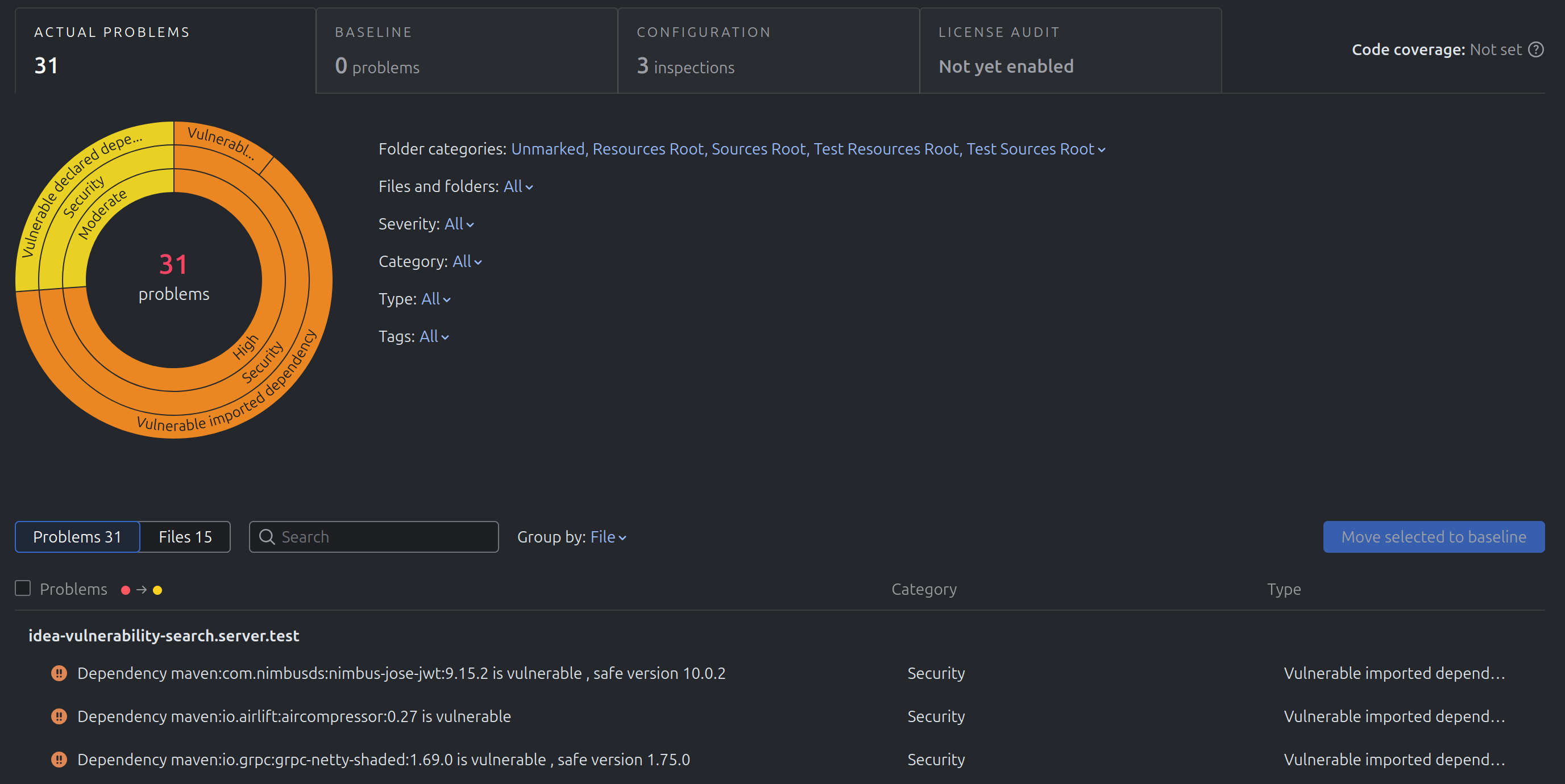
If developers produce two or three times as much code with AI assistance, reviewers aren’t suddenly going to have two or three times more time. You could argue that AI will automate code review too. And it will, up to a point, but AI review is probabilistic, while production quality gates need to be deterministic, repeatable, and enforceable. Teams still need automated checks they can trust every time. Review bandwidth becomes the limiting factor.

More code means more verification

Software engineering has always operated under a simple principle: The cheaper it is to produce something, the more important quality control becomes. Manufacturing learned this decades ago. Publishing learned it with desktop publishing. Photography learned it with digital cameras. Software is learning it now.

Now that code generation is becoming inexpensive (depending on token usage), verification becomes a more scarce resource. This changes where engineering organizations invest.

Instead of optimizing only for code generation, teams increasingly need tools that helps them answer:

  • Which findings actually matter?
  • Which issues are new?
  • Which vulnerabilities should block deployment and be quality gated?
  • Which warnings are simply noise?

Research backs up these claims

Interestingly, academic research is beginning to observe this tradeoff. One large empirical study examining Cursor adoption across GitHub projects found that while AI assistance increased development velocity initially, projects also experienced a persistent increase in static analysis warnings and code complexity. Over time, those quality issues became a contributing factor to slower development.

Another recent study surprised many researchers by finding that experienced open-source developers using frontier AI tools, including Cursor Pro, didn’t consistently complete tasks faster under the study’s conditions. The authors argue that the relationship between AI and productivity is more nuanced than many expect, particularly in mature codebases with high quality standards.

Neither paper argues against AI coding assistants. Instead, they highlight that generating code is only one part of software engineering. Maintaining quality remains equally important.

AI doesn’t replace code review, it changes it

Traditional code review focused heavily on implementation. Did the developer make a mistake? Did they overlook an edge case? Did they forget to handle an exception?

As AI writes more of the implementation, reviewers increasingly shift toward higher-level questions:

  • Is this the right solution?
  • Is the architecture sound?
  • Does it align with our standards?
  • Is the generated code introducing unnecessary complexity?

That makes automated quality analysis even more valuable. Static analysis can continuously inspect thousands of files while human reviewers focus on design and business logic. That’s objectively a much better division of labor.

The rise of the “quality layer”

This is why I believe the next generation of developer tooling won’t consist of isolated AI assistants. It will consist of layered workflows.

An AI assistant generates code, then static analysis validates it. Security scanners identify vulnerabilities. CI/CD enforces quality gates. Developers review only what genuinely needs human judgment.

The organizations that succeed won’t necessarily generate code faster but rather generate trusted code with less effort.

Qodana is part of this story
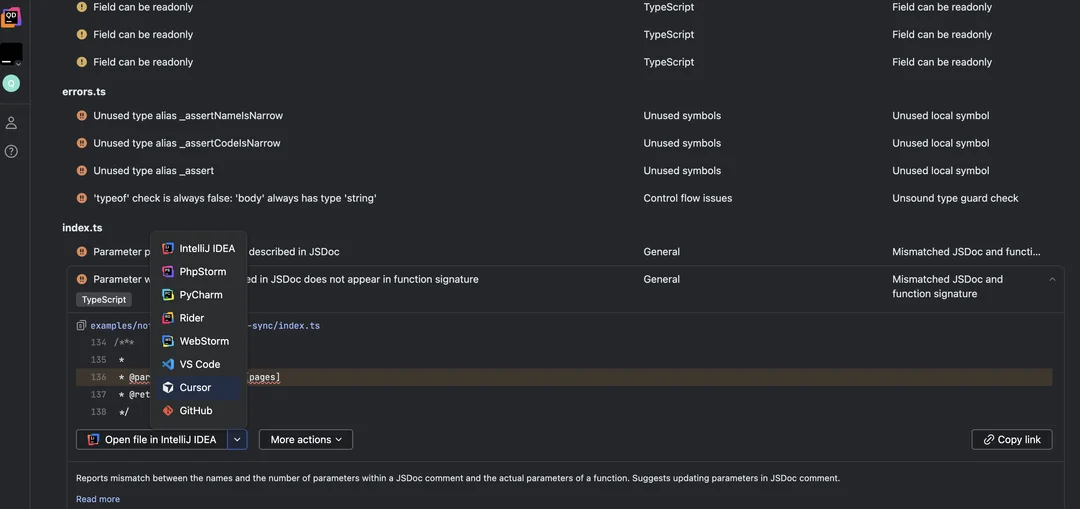
Cursor and Qodana

This is where Qodana becomes more relevant. Our team doesn’t want to replace coding agents but rather to work with them.

As AI accelerates code generation, Qodana helps teams automatically inspect that code for quality issues, maintainability concerns, security problems, and compliance with engineering standards before changes reach production.

We’re working to make sure that you and your team can produce code that’s fit for production without asking you to discard AI.

Try Qodana Ultimate Plus

Subscribe to Qodana Blog updates

Discover more