



惯性聚合 高效追踪和阅读你感兴趣的博客、新闻、科技资讯
阅读原文 在惯性聚合中打开

推荐订阅源

C
Cybersecurity and Infrastructure Security Agency CISA
月光博客
月光博客
Apple Machine Learning Research
量子位
Hugging Face - Blog
Hugging Face - Blog
罗磊的独立博客
小众软件
小众软件
T
Tailwind CSS Blog
博客园 - 聂微东
奇客Solidot–传递最新科技情报
奇客Solidot–传递最新科技情报
OSCHINA 社区最新新闻
OSCHINA 社区最新新闻
IT之家
IT之家
V
Visual Studio Blog
让小产品的独立变现更简单 - ezindie.com
T
The Exploit Database - CXSecurity.com
T
Tenable Blog
博客园 - 叶小钗
宝玉的分享
宝玉的分享
P
Privacy International News Feed
T
Tor Project blog
博客园_首页
AWS News Blog
AWS News Blog
雷峰网
雷峰网
C
Cisco Blogs
Help Net Security
Help Net Security
cs.AI updates on arXiv.org
博客园 - 【当耐特】
T
Threat Research - Cisco Blogs
Last Week in AI
Last Week in AI
K
Kaspersky official blog
人人都是产品经理
人人都是产品经理
Recent Commits to openclaw:main
S
Schneier on Security
博客园 - Franky
W
WeLiveSecurity
L
LINUX DO - 热门话题
freeCodeCamp Programming Tutorials: Python, JavaScript, Git & More
博客园 - 三生石上(FineUI控件)
WordPress大学
WordPress大学
爱范儿
爱范儿
酷 壳 – CoolShell
酷 壳 – CoolShell
P
Proofpoint News Feed
大猫的无限游戏
大猫的无限游戏
腾讯CDC
L
Lohrmann on Cybersecurity
J
Java Code Geeks
美团技术团队
博客园 - 司徒正美
The Cloudflare Blog
V
V2EX

informationweek

2026 tech company layoffs InformationWeek Podcast: CTOs on using AI in regulated spaces How top CIOs are measuring the real ROI of IT automation What AI must learn from Roosevelt, conservation and 1929 Experian's chief innovation officer gleans AI gains with startup collab ETS CIO on competing with AI startups 'running with scissors' Before the next VMware: How CIOs prepare for vendor shocks The strategic alignment powering cyber-resilient organizations The AI infrastructure bottleneck is becoming a CIO problem InformationWeek Podcast: CTOs on reining in rogue AI agents Workplace equity in the age of AI Why and how to implement an AI asset rationalization strategy Why companies are shifting toward private AI models AI agents in automation: When to build, when to buy Navan CTO's bullish AI take: 'Do not use LLMs; use agentic systems' AI on trial: The Workday case that CIOs can't ignore The AI infrastructure boom is coming for enterprise budgets How enterprises can manage LLM costs: A practical guide What CIOs miss when buying vertical SaaS software InformationWeek Podcast: How CTOs balance AI and their teams Whirlpool, Duke Energy and Cleveland Clinic CIOs slow down to scale AI Where CIOs get stuck rebuilding the enterprise: What 'Rewired' reveals As AI makes projects harder to track, will CIOs need new controls? Why disaster recovery plans fail in geopolitical crises A silent erosion of enterprise AI by data poisoning Priceline CTO prioritizes engineers able to 'hold a room and a roadmap' InformationWeek Podcast: When CTOs need to restart IT projects Wayfair CTO maps agentic path across digital and brick-and-mortar commerce The AI contract gaps the Google-Pentagon deal just made visible Non-human identity sprawl is agentic AI's real risk Anthropic's Mythos forces a rethink of vulnerability management Outsourcing contracts weren't built for AI. CIOs are renegotiating now The AI spend hangover companies didn't plan for The power of CIO networking in the competitive AI world Why CIOs see AI projects stall: Speed without structure kills scale IT leaders should never let a good crisis go to waste SFO's digital twin maps airport operations from the curb to takeoff CIOs caught in the middle as AI startups disrupt vertical Saas How to submit an IT leadership column to InformationWeek Podcast: Rightsizing AI frameworks to avoid failure modes The invisible labor crisis inside IT: AI work the org chart can't see Why AI teams treat training data like capital Ask the Experts: How CIOs can identify and overcome cultural barriers to innovation Nobody told legal about your RAG pipeline -- why that's a problem Meta's new 'AI Zuckerberg' is a mirror for every C-suite Will the music stop for AI's funding dance? Rethink tech talent: Local is the smartest play for IT InformationWeek Podcast: Catching errors in AI-powered code CIOs can combat talent scarcity with AI-augmented leadership -- Gartner How Bellevue, Wash., is applying AI to streamline a broken permitting process Ignore the hype: Smarter tech bets at speed of change Who controls the fix? Colorado's repair fight tests CIO power Ask the Experts: The red flags that signal an AI project isn't worth pursuing The hidden high cost of training AI on AI Red Hat's Marco Bill: Resource control is key for AI sovereignty InformationWeek Podcast: New IT architecture, cloud, edge and AI Enterprises need Tier 1 provider relationships to deliver on AI How CIOs run and rebuild the business at the same time in the AI era It's not your tech stack, it's your structure -- fix it Confidential computing resurfaces as security priority for CIOs FinOps: Helpful tool, or a cloud control placebo for CIOs? Cleveland's open data overhaul: From sticky notes to public dashboards As Microsoft expands Copilot, CIOs face a new AI security gap Why build vs. buy doesn't fit modern IT systems InformationWeek Podcast: Is quantum computing slumbering? Your AI vendor is now a single point of failure Vibe coding: Speed without security is a liability A practical guide to controlling AI agent costs before they spiral AI fuels a new wave of technical debt The sunsetting of Sora: A hard lesson in AI portfolio resilience HP pushes broad internal AI use after early productivity gains Why value-based pricing is inevitable InformationWeek Podcast: Safeguarding ecosystems from outsiders Why AI scaling is so hard -- and what CIOs say works Humans are the North Star for AI-native workplaces -- Gartner How IT leaders build a culture for what comes next Compliance costs risk widening the AI gap AI-driven layoffs add new demands on CIOs to prove value AI transformation: Early wins are not enough for CIOs Why CIOs can't let users wait on IT Memory shortage doesn't have to spell disaster for IT budgets Accelerate AI adoption: 3 reasons for adopting MCP How techno-nationalism is complicating IT resilience and supply chains for CIOs InformationWeek Podcast: Compliance crackdown on AI and BYOD Workday’s AI reset: Agents and the race to remake SaaS Why enterprise AI initiatives keep dying before production Metrics of meaning: What do we really measure in AI? Techno-nationalism is reshaping CIO infrastructure strategy Using AI to pick team leaders -- without crossing legal or ethical lines What Oracle's layoffs reveal about running IT with fewer people Chief AI Officer on course-correcting when AI moves too fast Large enterprises need high-performing networks to scale AI InformationWeek Podcast: When do smaller AI models make sense? The future belongs to AI-driven IT Ways AI supercharges risk awareness and data insights for CIOs How automation prepares you for agentic NetOps Should the CIO, CFO or CEO hold the kill switch on AI? The CIO's new mandate: Redesign work itself Ask the Experts: CIOs say they wouldn’t pull workloads back from the cloud How AI is Reshaping the Enterprise
Cisco's Jeetu Patel on overcoming the 'AI trust deficit'
Kelsey Ziser · 2026-06-03 · via informationweek

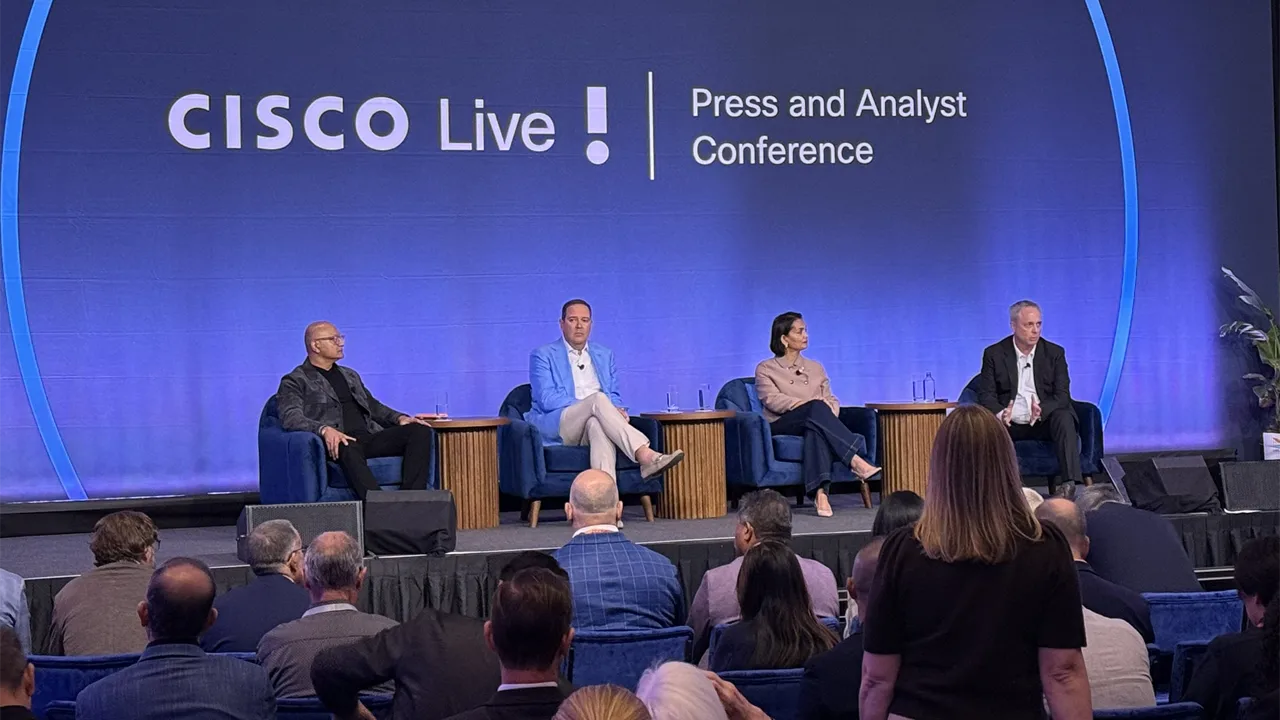
Cisco executives Jeetu Patel, left, Chuck Robbins, Liz Centoni and Steve Clayton on stage

Cisco executives Jeetu Patel, left, Chuck Robbins, Liz Centoni and Steve Clayton speak at a press and analyst conference at Cisco Live.Kelsey Ziser/InformationWeek

LAS VEGAS — Anthropic Mythos put a spotlight on how agentic AI is changing the game for cybersecurity, causing enterprises to rethink how their security teams are structured and how they can prevent AI-based threats. 

"AI changes the speed of defense. The bad corollary to that is it's empowering our adversaries at a pace that we've never seen in our career," said Chuck Robbins, CEO of Cisco, in a keynote Tuesday at Cisco Live. 
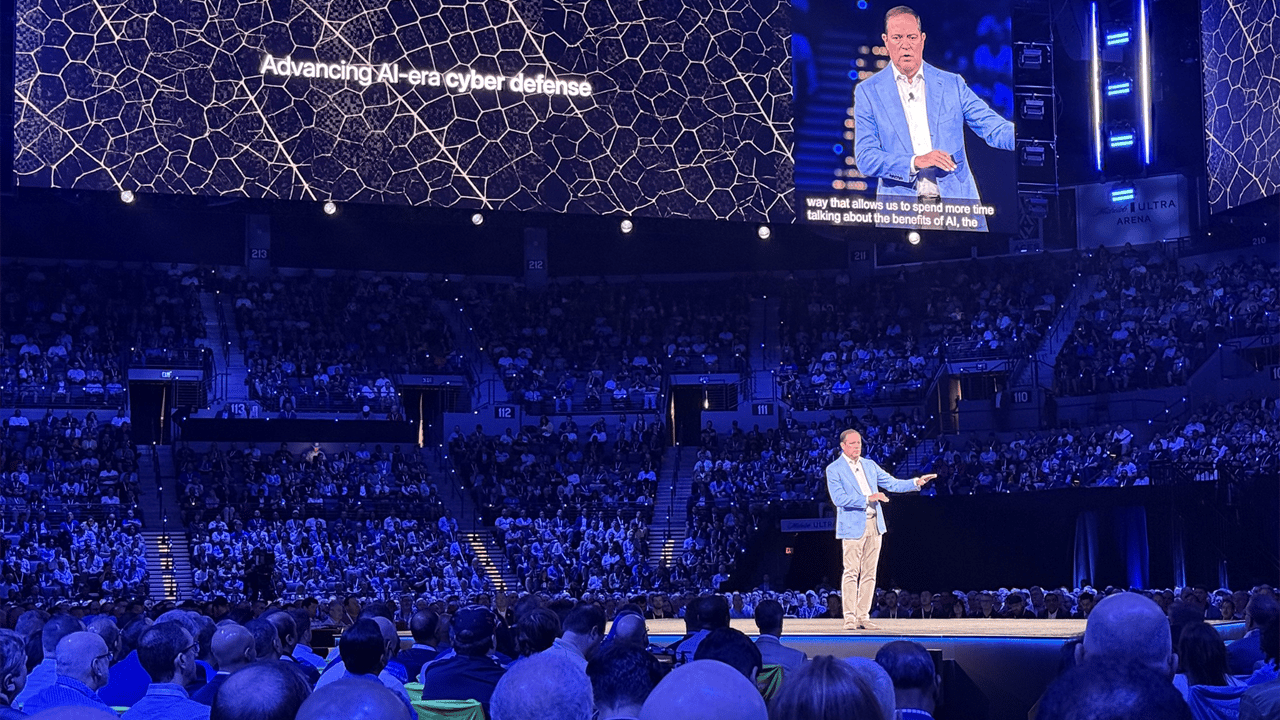
Cisco CEO Chuck Robbins on stage at Cisco Live

Cisco CEO Chuck Robbins presents a keynote at Cisco Live 2026 in Las Vegas Tuesday. KELSEY ZISER/INFORMATIONWEEK

While AI-based threats are on the rise, there's also an opportunity to use AI to thwart cybersecurity threats. But to do so, enterprises will also need to overcome the "AI trust deficit," according to Jeetu Patel, president and chief product officer at Cisco. "One of the biggest challenges people have with [AI] agents right now is they don't trust it, and if you don't trust it, you're not going to delegate work to them to use them," said Jeetu during his keynote Tuesday.

Related:How AI is changing the breadth of cybersecurity roles

Solving the "AI trust deficit" will require observability across the entire AI stack, which includes achieving visibility and insights into application runtime and model performance, Patel explained. That requirement is easier stated than accomplished. 

"AI agents are kind of like teenagers. They're supremely intelligent, but they have no fear of consequence, and sometimes they do stupid stuff. So, you need to make sure that you can protect the world from them," Patel said. 

Cisco is working with other networking and technology companies to examine how enterprise customers can improve their cybersecurity strategies in the AI era. As part of Anthropic's Project Glasswing, Cisco was among the first 50 open source, networking and cybersecurity companies tasked with testing the Anthropic Mythos AI model, which can both identify and exploit zero-day vulnerabilities in open source codebases. 

By participating in Project Glasswing, "Our goal was to understand how we could safeguard our customers, how we could come together as a broader ecosystem to work on AI-powered defense and to stop AI-powered threats," Robbins said. He added that AI-based threats have the potential to have far-reaching implications for businesses, governments and society overall. 

Anthropic said in a statement on Tuesday that it is extending its Project Glasswing partnership to approximately 150 new organizations.

Three-pronged approach to agentic security 

Patel discussed how Cisco is working with enterprises in securing their agentic workforce via three main goals: by protecting AI agents from external threats, preventing AI agents from creating cybersecurity threats, and detecting and responding to threats "at machine speed."

Related:Poor UX undermines security policies, says Texas A&M University System CIO

Cisco's AI threat strategy includes the launch of Cisco Cloud Control this week, available on a limited basis in the U.S. It's currently being used by about 60 organizations, including semiconductor company AMD. 

Cisco Cloud Control expands on last year's launch of Security Cloud Control. The new product is a cloud-based network infrastructure management platform that embeds security services with a number of other IT and networking infrastructure applications — both Cisco applications and 50 third-party vendors' applications — on a single platform. 

Enterprise customers don't want to be system integrators anymore but are looking to vendors to provide these types of integrated platforms, Robbins said during a press and analyst conference after the keynotes.  

Patel said he believes that — with AI — the ability to analyze every security signal/alert is within reach, predicting the emergence of agentic SOCs that can quickly identify and prevent network anomalies. But for SecOps teams to operate at "machine speed and scale," they will need to invest in network visibility, threat validation and security guardrails for AI agents, he said.

Related:Anthropic's Mythos forces a rethink of vulnerability management

About the Author

Kelsey Ziser

Senior Editor, InformationWeek

Kelsey Ziser is a senior editor at InformationWeek, where she covers C-suite dynamics, data strategies and the evolving cybersecurity threat landscape. 

Kelsey also oversees the publication's IT Leaders Fast-5 column, which brings peer insights to IT professionals, and the tech layoffs tracker. She has been with InformationWeek since September 2025. 

Before joining InformationWeek, she spent nine years at sister publication Light Reading, reporting on a broad range of topics including smartphones and devices, AI, satellite connectivity and enterprise networking. Kelsey has a Bronze Regional Azbee Award in the Technical Article category. Outside of work, she enjoys reading four (or 12) books at once, watching movies about space travel, crafting and tending to an ever-growing collection of houseplants. Kelsey has a bachelor's degree in journalism and mass communication from UNC-Chapel Hill and is based in Raleigh, N.C. She can be reached at [email protected] or on LinkedIn