




In this installment of IT Leaders Fast-5 — InformationWeek's column for IT professionals seeking peer insights — Renee Hennessee, partner and CTO at Mission Wealth, talks about the challenges of scaling a technology team inside a fast-growing wealth management firm.
Hennessee took an unconventional path to technology leadership, earning a degree in Portuguese literature before joining Mission Wealth in its earliest days to help run the office and support clients. After leaving the firm to pursue other work — including journalism and energy efficiency management — while raising a family, she returned more than a decade later to build the Santa Barbara, Calif.-based firm's technology organization from one person to 10.
In our conversation, Hennessee explained why getting the right people in the right IT roles can matter more than adding new tools, and what her team learned about discovery when a new buildout failed to gain traction with users. She also discussed how phishing attacks targeting wealth management firms have heightened the urgency around cybersecurity and shared an unexpected leadership lesson about learning to accept success.
Related:Chief AI Officer on course-correcting when AI moves too fast
This interview has been edited for length and clarity.
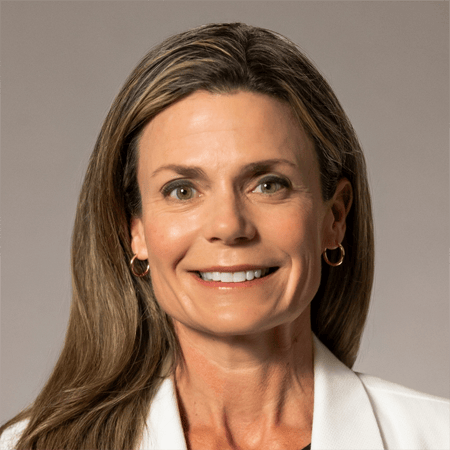
Renee Hennessee, partner and CTO, Mission Wealth
We are growing very rapidly, so the biggest decisions have been organizational: looking at the different roles on my team and breaking them apart when they are overloaded with too many responsibilities. When you're growing fast, people can end up wearing too many hats, doing too many things. So, it's really been about people having clarity of ownership around what they need to be doing.
We broke it down by asking: What is everything we're doing, and who is responsible for what? What we found is that so much of what we were doing was just keeping things running right instead of [focusing on] adviser enablement or client enablement or AI or automations — the things we would want to be working on. But because of the way roles were distributed and certain platforms were being worked on, we were not.
I had to pull the trigger: "OK, you're no longer doing this. If you want to help or have some information, sure, but you're not accountable for this. This person is now accountable."
Once people know exactly what they are supposed to do, that's better than any tool that can be added. When people know what their realm is, that helps to speed up decisions — there are fewer handoffs occurring — and technology then can deliver more on its promise.
Related:IT Leaders Fast-5: Ed Fox, MetTel
I don't want to say specifically what the project was — it was a small buildout, luckily — but it forced us to make changes in how we do things. Anyone who works in tech, when they're building anything, knows about discovery and how important it is. When you are changing a function or process or building a new one, you need to know all the information about it. You need to know everything. You need to know every single step of what's happening now, so you can build something that will satisfy the end user. And you can't build what you think that they want — you need to know what people actually want.
In this particular case, we did not do that well, or well enough, and it became a thing that didn't go as planned. When I went back to do a postmortem, to review why this wasn't being accepted and why this was something that people did not want to use, [I realized] it was because the discovery wasn't fully done to understand the way people wanted to interact with it.
It wasn't necessarily that the process wasn't right, because a lot of work was done — we already had some supporting documents and checklists — but what wasn't done was asking them, "Hey, this is what we're thinking about how we want this to work for you. What do you think?"
Related:Priceline CTO prioritizes engineers able to 'hold a room and a roadmap'
I will, in the future, be pressing the team for more discovery on what the end user actually wants. If people don't like interacting with it, it doesn't matter if you put in every single bell and whistle, and it's super cool, or that you put so much hard work into it, if it makes them feel it's not a better process than it was before.
With people who we want to join Mission Wealth in general and to join the technology team in particular, I am always looking for a spark — for someone who wants more, has an ownership mentality and has something special to offer.
Right now, I am looking for product manager types — someone who works more as a translator and can sit between technology and operations and our end users, the financial advisors. Right now, that's me, but I can't do it for everything. I need more people who can do that.
We do need to hire expertise and technical support people that have chops but also people who are known quantities, who maybe want to move over from a different department and are interested in technology or AI and can bring something — deep knowledge of the investments department or operations.
So, we're branching out — whether that's a person who becomes a part of the department or a subject-matter expert who moonlights with the technology team — we just need to be a lot more integrated in how we're thinking about our next steps and our growth. We need to make sure many, many people are involved in these forward initiatives, because we are not going to create something in a vacuum.
I have also been thinking about new jobs — roles that are being created as we speak — knowledge base administrators, who ensure that the knowledge base being drawn into some AI system to answer questions is accurate and is up-to-date.
I am consciously not looking to fill [existing] roles with additional people. We need someone who's hired to do this different thing.
We've always been highly concerned about cybersecurity, but if possible, even more so now. I don't even know if I want to talk about this, because I'm trying not to get a light shined on me. But there have been some incidents in our industry recently … [involving] phishing attacks. [Attackers] call a bunch of people at the company all at the same time on their personal phones. They make it sound like they're from IT or HR — "I need a password for this," "We need to update something," or "We've been breached" — and they spoof the company phone.
It's been a really big issue, and it's refocused us on cybersecurity and making us change how we operate. Even though we already had things in place, it's now a central focus on a daily basis, and it will continue to be — forever.
We already had a training program on phishing, but we increased the cadence, we upgraded our Microsoft [capabilities]so that it has more functionality with cybersecurity, and we're doing more with data loss prevention. Cloud security, network filtering, everything is being ramped up or bumped up a notch. … We're not going crazy, but we're spending what is needed now, and anything we spend is better than the alternative of something bad happening.
Just recently, I had a conversation I with our CEO that made me think about leadership. We have a check-in every so often, and we were talking about a book he was reading called "The Big Leap." The book [argues] that when someone compliments you on something you've done professionally, you tend to deflect. You say to me, for example, "Renee, you're CTO, you've built this neat thing, gone from 1 to 10 people on your team and you've helped the company grow to a $15 billion firm — great job!" And I say, "Oh well, you know, I've had a lot of help," or "I've been really lucky to be here." Instead, you should say, "Thank you, I'm really proud of that."
I told him I had heard something similar from my tennis coach about [how to react] when you hit a good shot at practice. If you're on the ball machine and hit a great shot, you should actually take a break and let it sink in. Let the goodness or the abundance or whatever be a part of you instead of moving on and then hitting a couple of bad shots.
When you said there would be a question about leadership, I thought about this conversation. You don't have to deflect or say, "I'm actually not that good at what I do." Let the good thing be.

Executive Editor, InformationWeek
Linda Tucci is executive editor of Informa TechTarget's InformationWeek and Data Center Knowledge publications. Previously, she served as executive industry editor at Informa TechTarget, focusing on AI technologies and leading a team that produced comprehensive editorial packages on a wide range of technology topics for IT and business leaders. Her earlier roles include senior executive editor at TechTarget's SearchCIO site, where she oversaw award-winning coverage on digital transformation, emerging tech, and CIO leadership. Prior to becoming a tech journalist, she was a business columnist at the St. Louis Post-Dispatch.
此内容由惯性聚合(RSS阅读器)自动聚合整理,仅供阅读参考。 原文来自 — 版权归原作者所有。