


惯性聚合 高效追踪和阅读你感兴趣的博客、新闻、科技资讯
阅读原文 在惯性聚合中打开

推荐订阅源

Google Online Security Blog
S
Security @ Cisco Blogs
Recent Commits to openclaw:main
人人都是产品经理
人人都是产品经理
The Hacker News
The Hacker News
W
WeLiveSecurity
freeCodeCamp Programming Tutorials: Python, JavaScript, Git & More
OSCHINA 社区最新新闻
OSCHINA 社区最新新闻
The Cloudflare Blog
博客园 - 司徒正美
雷峰网
雷峰网
L
LINUX DO - 最新话题
博客园 - 叶小钗
云风的 BLOG
云风的 BLOG
The Last Watchdog
The Last Watchdog
V2EX - 技术
V2EX - 技术
S
Security Affairs
有赞技术团队
有赞技术团队
月光博客
月光博客
T
Threatpost
T
Tor Project blog
O
OpenAI News
cs.AI updates on arXiv.org
cs.CL updates on arXiv.org
V
V2EX
Know Your Adversary
Know Your Adversary
Project Zero
Project Zero
博客园 - 三生石上(FineUI控件)
D
Docker
AWS News Blog
AWS News Blog
AI
AI
P
Proofpoint News Feed
K
Kaspersky official blog
H
Hackread – Cybersecurity News, Data Breaches, AI and More
D
Darknet – Hacking Tools, Hacker News & Cyber Security
www.infosecurity-magazine.com
S
Securelist
F
Fortinet All Blogs
F
Full Disclosure
cs.CV updates on arXiv.org
量子位
Hacker News - Newest:
Hacker News - Newest: "LLM"
CTFtime.org: upcoming CTF events
P
Palo Alto Networks Blog
Cyberwarzone
Cyberwarzone
Cisco Talos Blog
Cisco Talos Blog
美团技术团队
N
News | PayPal Newsroom
T
The Blog of Author Tim Ferriss
MyScale Blog
MyScale Blog

Check Point Blog

AI Appreciation Day: Let's Be Honest About What We're Appreciating - Check Point Blog AI Security Is Never Finished: Building the Continuous Red Teaming Loop  - Check Point Blog AI Security Threats in 2026: Annual Insights from Check Point Research - Check Point Blog AI Agents are Only As Effective as Their Harness - Check Point Blog Email Agent Hijacking: The Hidden Threat That Breaks Post-Delivery Security - Check Point Blog How Check Point Email Security Stopped a Student Job Scam Before It Reached the Inbox - Check Point Blog Redefining the CISO Contract: From Securing the Business to Securely Doing Business - Check Point Blog A New Ransomware Leader Emerges as June 2026 Attack Volumes Climb Worldwide How Unified Policies Close Security Gaps - Check Point Blog Under Pressure: Insights from the 2026 Exposure Gap Report - Check Point Blog When AI Invents the Attack: Browser-Native Ransomware - Check Point Blog Check Point and the AWS European Sovereign Cloud: Securing Europe’s Digital Future - Check Point Blog Shadow AI Is Not a Tool Problem. It's a Timing Problem. - Check Point Blog AI Is Changing Cyber Careers. NICE 2026 Showed What Students Need Next - Check Point Blog 90% of the World's Businesses are SMEs and MSMEs and AI Is Reshaping Both Their Future and Their Risk - Check Point Blog Prevention Before the Inbox: Reading the Microsoft Defender Benchmark Report in Context - Check Point Blog ClickFix: The Attack That Turns Users Into Their Own Attackers - Check Point Blog From Prompt Testing to AI Red Teaming at Enterprise Scale - Check Point Blog AI Has Moved From Assistance to Action. Is Your Security Model Ready? AI Security Governance: How to Secure AI Agents, Copilots, and Autonomous AI in 2026 - Check Point Blog OpenAI Frontier AI Models Powering Check Point's Leading Cyber Security Solutions The Operational Reality of Zero Trust- And How You Can Change It - Check Point Blog Amazon Prime Day 2026: Bargains Begin June 23 — and So Do the Scams - Check Point Blog Securing AI Agent Behavior with Amazon Bedrock AgentCore and CheckPoint AI Security - Check Point Blog What Successful Exposure Management Deployments Had in Common in 2026 - Check Point Blog From Stars to Upvotes: The Fake Reputation Economy Behind a Crypto Clipboard Hijackers - Check Point Blog AI Red Teaming Makes the Unknowns Known - Check Point Blog Check Point and Illumio Expand Partnership to Secure Hybrid Environments - Check Point Blog The NCSC Patch Wave Is Coming. Do You Know Where Your Risk Lives? - Check Point Blog NCSC Warns of AI-Driven Patch Wave: Is Your Attack Surface Ready? Energy, Healthcare, and Finance: Why Midwest Industries Are Facing Surging Cyber Attacks - Check Point Blog Midwest Cyber Attacks Surge in 2026: Energy, Healthcare, and Finance Under Growing Threat Travel Phishing and Cyber Attacks are Surging in 2026, Growing 122% over the last 3 years. Here's What Cyber Criminals Are Actually Doing - Check Point Blog Travel Phishing Scams Surge 122%: How Cybercriminals Are Targeting Travelers in 2026 The AI Your Security Team Can’t See Is the One You Should Worry About Check Point Engage Public Sector 2026: AI Is the New Battlefield Check Point Joins OpenAI’s Trusted Access for Cyber Program and Daybreak Initiative When Your AI Agent’s Memory Becomes a Security Liability AI Agents Are Becoming Enterprise Workers. Who Secures Them? Global Cyber Attacks Ease in May 2026, But Ransomware Surges 48% As Threats Reorganize Security Advisory – Action Required – Active Exploitation of Check Point VPN Authentication Bypass (CVE-2026-50751) Fraud, Ransomware, and Fake Apps Are Already Targeting FIFA 2026 The AI Defense Plane: Securing the New Enterprise Execution Layer The Meta AI Account Recovery Incident Wasn’t Just a Chatbot Problem Check Point Lays the Groundwork for the Future of AI Factory Security with NVIDIA - Check Point Blog Check ... The 2026 U.S. Midterms Have a Cyber Problem, But it’s Not at the Ballot Box The Server Seizure That Affects Also Iran’s Cyber Operations The Autonomous Security Platform Built for Attacker Speed Check Point Frontier AI Models Readiness Program – Security Update 2026 Cloud Security Report: Why Traditional Network, Cloud, and Security Architecture Are Lagging Behind t ... AI Attacks Are No Longer Experimental: Key Findings from the March-April 2026 AI Threat Landscape - Check ... Protect GenAI Chatbots with Check Point WAF The Network Security Problem No One Could Solve – Until Now. Hacktivists, Ransomware, and a 124% Surge Across DACH The Case for a Vulnerability Operations Center Before the First Whistle: How Cyber Criminals Are Targeting World Cup 2026 - Check Point Blog World Cup 20 ... When the Ransomware Gang Gets Hacked: What the Gentlemen Leak Reveals About Modern Ransomware Risk - Check ... Cyber Threats Spike in April 2026 as Ransomware Expands and Attack Volumes Climb After Short-Lived Moderation Q1 2026 Ransomware Report: Fewer Groups, Higher Impact - Check Point Blog World Password Day 2026: Why "Strong Passwords" Can’t Save You from AI, Infostealers, and the Telegram Underground - Check Point Blog Resilient by Design: When the Network Itself Becomes the Target AI Threat Readiness: Defending Against Attacks Powered by Frontier AI Models Check Point Cyber Security Now Available Across All Levels of U.S. Government - Check Point Blog Check Poi ... VECT Ransomware: Why Paying Won’t Get Your Files Back Check Point WAF Leads Application Security-Validated by Frost & Sullivan Check Point WAF Leads Application ... From Access Control to Outcome Control: Securing AI Agents with Check Point and Google Cloud Experience AI-Powered Check Point Firewall at Google Cloud Next AI Finds Every Gap: How Many Can Your Network Survive? The Gentlemen RaaS Is Surging in 2026 World Quantum Day 2026: The Harvest Has Already Begun, Are You Prepared? Why Manufacturing Cyber Security is Becoming More Complex as Cyber Attacks Accelerate March 2026 Cyber Threat Report: Ransomware & GenAI Risk PS Private Training: Turning Cyber Complexity into Operational Control Tax Season 2026: How Cyber Criminals Are Preparing Their Attacks Months in Advance Claude Mythos Wake-Up Call: What AI Vulnerability Discovery Means for Cyber Defense Iran-nexus Password Spray Campaign Targeting Cloud Environments, with a Focus on the Middle East ROI of Hybrid Mesh Network Security (IDC Study 2026) Operation TrueChaos: TrueConf Zero‑Day Supply‑Chain Attack ChatGPT Data Leak (Fixed Feb 2026): Key Takeaways Spring Cleaning Has Arrived: Meet the New Check Point Portal Experience North America’s Cyber Security Threat Reality in 2026
The Phishing Paradox: The World’s Most Trusted Brands Are Cyber Criminals’ Entry Point of Choice
2026-04-16 · via Check Point Blog

In Q1 2026, Microsoft continued to be the most impersonated brand in phishing attacks, accounting for 22% of all brand impersonation attempts, according to data from Check Point Research (CPR). The results reinforce a long‑standing trend: attackers consistently exploit highly trusted brands to steal credentials and gain initial access to personal and enterprise environments.

Apple climbed to second place with 11%, reflecting attackers’ increasing focus on consumer ecosystems tied to payments, identity, and personal devices. Google followed closely in third place at 9%, while Amazon ranked fourth with 7%. LinkedIn rose to fifth place with 6%, highlighting sustained attacker interest in professional identities and corporate access.

Notably, the top four brands alone accounted for nearly 50% of all observed phishing attempts, underscoring a strong concentration around a small number of globally recognized platforms.

Technology Continues to Dominate Brand Phishing

By industry, the technology sector once again emerged as the most impersonated category in brand phishing campaigns during Q1 2026. This dominance reflects attackers’ strategic focus on credentials that enable access to enterprise email, cloud platforms, collaboration tools, and identity services.

The technology sector was followed by social networks, driven by continued abuse of platforms such as LinkedIn and Facebook, and the banking sector, which remains a prime target for direct financial fraud and account takeover.

As digital identity becomes the backbone of both enterprise operations and everyday online activity, phishing remains one of the most effective and scalable initial access vectors for attackers.

Top 10 Most Imitated Brands in Phishing – Q1 2026

Below are the brands most frequently impersonated in phishing attacks during Q1 2026, ranked by overall share:

  1. Microsoft – 22%
  2. Apple – 11%
  3. Google – 9%
  4. Amazon – 7%
  5. LinkedIn – 6%
  6. Dropbox – 2%
  7. Facebook – 2%
  8. WhatsApp – 1%
  9. Tesla – 1%
  10. YouTube – 1%

The continued prominence of Microsoft, Apple, and Google reflects their central role in authentication, productivity, and digital identity workflows—making stolen credentials particularly valuable to cyber criminals.

Real‑World Phishing Examples Observed in Q1 2026

Microsoft: Subdomain Abuse for Credential Theft

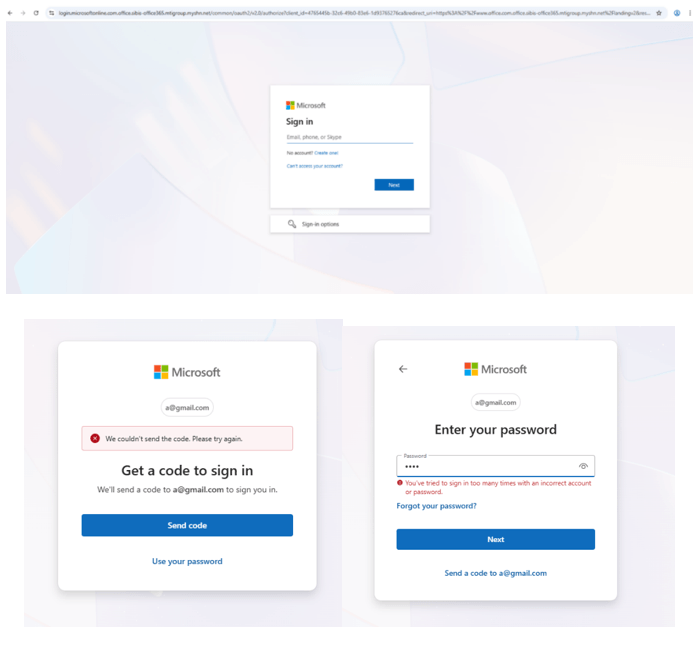
In Q1 2026, Check Point Research identified a malicious website designed to impersonate Microsoft’s legitimate authentication service: login[.]microsoftonline[.]com[.]office[.]sibis-office365[.]mtigroup[.]myshn[.]net. This attack demonstrates a common phishing technique in which the brand name is embedded within a subdomain of an unrelated parent domain, aiming to trick users who do not closely inspect the full URL.

The website presented a Microsoft‑branded login page, prompting users to enter their email address. The authentication flow behaved inconsistently attempting to send a verification code, redirecting users to password input, and ultimately leading to a non‑functional login screen. This behavior strongly indicates a credential‑harvesting phishing attempt rather than a legitimate authentication process.
PlayStation: Fake Online Store and Payment Fraud

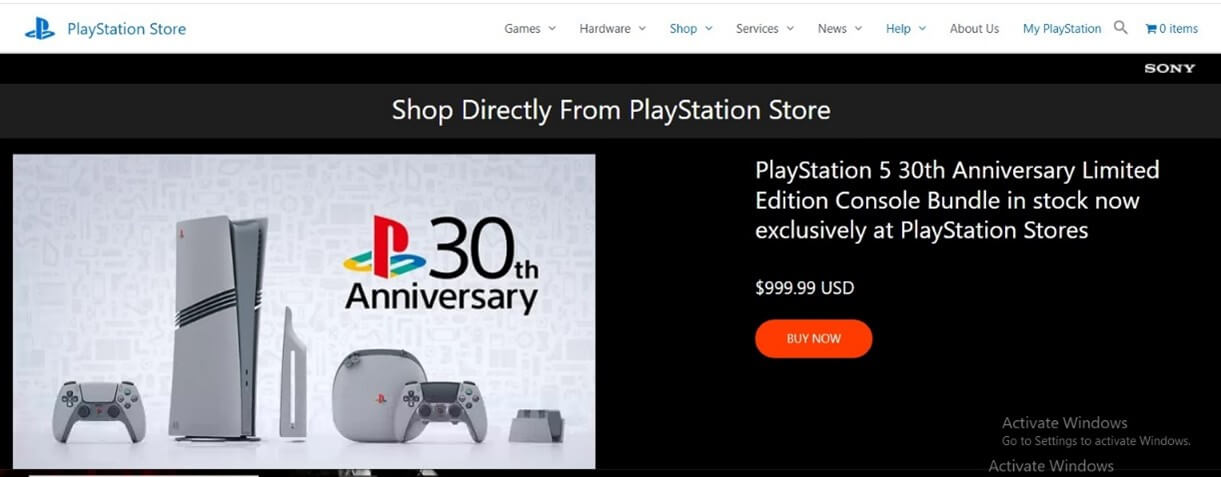
In another campaign, CPR identified a phishing website hosted at: playstation-stores[.]com. The site impersonated the official PlayStation brand and promoted fake discounts, fast delivery, and “guaranteed lowest prices,” despite having no legitimate affiliation with Sony. While the site allowed users to browse products and add items to a shopping cart, multiple red flags were present, including broken links and redirects to the legitimate playstation.com website. During checkout, users were instructed to complete payment via direct bank transfer, a strong indicator of fraud. The campaign highlights how phishing extends beyond credential theft into direct financial scams, particularly in e‑commerce‑themed attacks.
WhatsApp: QR Code Hijacking via Fake Web Login 

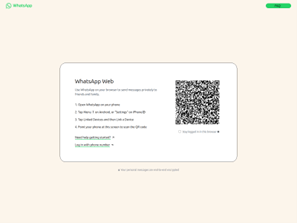
In Q1 2026, CPR also identified a phishing campaign impersonating WhatsApp Web, hosted at: web[.]whatsapp[.]app[.]hl[.]cn. Once again, the attackers relied on brand‑name subdomains under unrelated domains to increase credibility. The site closely replicated the legitimate WhatsApp Web interface and prompted users to scan a QR code to link their device. By scanning the QR code, victims may unknowingly connect their WhatsApp account to an attacker‑controlled session, potentially granting unauthorized access to private conversations and account activity—without the user immediately realizing their account has been compromised.
Adobe: Malware Delivery via Fake Software Download

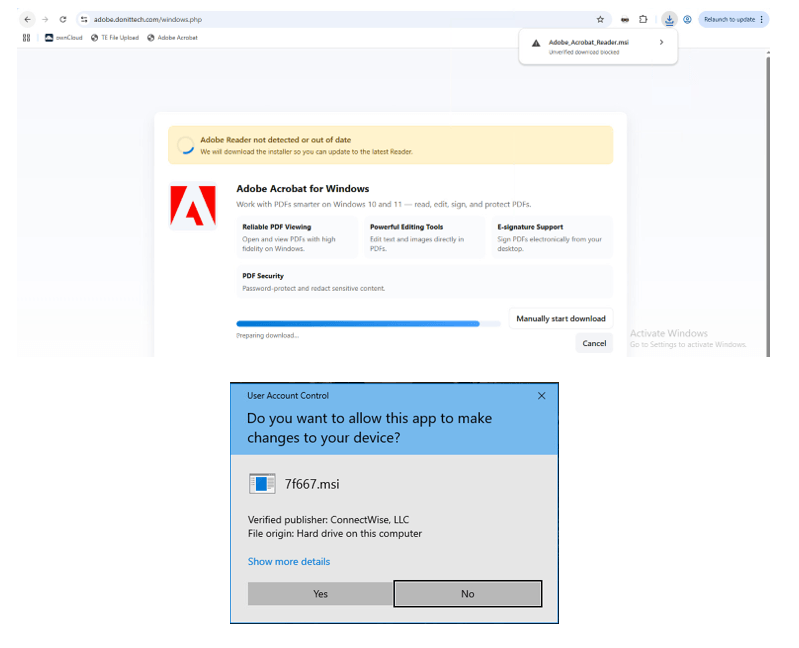
Another campaign observed in Q1 2026 involved a malicious website masquerading as Adobe Acrobat, hosted at: adobe[.]donittech[.]com/windows[.]php

The domain, registered in November 2025, lured users into downloading a malicious MSI installer. Upon execution, the installer deployed ConnectWise, which was abused as a Remote Access Trojan (RAT). This enabled attackers to gain remote control of the infected system, shifting the attack from phishing into full device compromise.
Associated file hash:
cf3933819b811ca0585cd9802d1245ba

Managing Brand Phishing Risk: Why Prevention Has to Come First

Brand phishing isn’t one problem. It’s two. And most organizations only protect against one of them.

The first is when your brand gets weaponized against someone else. Attackers build convincing lookalike domains, spin up fake login pages, and impersonate your company to defraud your customers. You haven’t been breached in the traditional sense (no stolen credentials, no compromised inboxes) but the damage is very real. Customer trust erodes. Your reputation takes a hit. And by the time you find out, the campaign has usually been running for weeks.

This is where Exposure Management comes in. Rather than waiting for reports to surface, it continuously scans the external threat landscape for impersonation campaigns, fraudulent domains, and credential harvesting operations that abuse your brand. More importantly, it shuts the brand abuse down, removing fake pages, profiles, and apps with a >98% takedown success rate. The goal is to find and disrupt these campaigns early, before they scale.

The second problem is the reverse: your employees being targeted through other trusted brands. Someone receives what looks like a Microsoft or DocuSign login prompt, enters their credentials, and hands attackers a way in. These attacks work precisely because the brands being impersonated are ones people use every day and don’t think twice about trusting.

That’s when you’ll need a Workspace Security solution. Email filtering is the obvious starting point, but it can’t catch everything. Layering in controls at the endpoint, identity, and access levels means that when something does slip through, it doesn’t automatically become a full breach.

When the two work together, things get interesting.

Exposure Management knows which third-party vendors and partners are showing signs of compromise. Workspace Security knows which of those vendors your organization actually communicates with. Connect the two and you can automatically tighten how emails and access requests from at-risk partners are handled, in real time, before an incident is declared.

The same logic applies to credential exposure. When Exposure Management picks up employee credentials being traded externally, Workspace Security can act immediately, resetting access, flagging accounts, limiting the window attackers have to move laterally.

The bottom line: brand phishing attacks from both directions. A prevention-first approach that combines external visibility with internal protection isn’t a nice-to-have — it’s how you actually stay ahead of it.