





Brand phishing is when a scammer impersonates a trusted, well known company, through email, a fake website, or both, in order to steal login credentials, payment details, or personal information. It works because trust is transferable. If a message looks like it came from a brand you already use and rely on, your guard drops. You’re not evaluating a stranger’s request. You’re responding to what feels like routine correspondence from a company you already have a relationship with. That single psychological shortcut is the entire business model behind brand phishing.
Microsoft, by a wide margin. In Q2 2026, Microsoft remained the most impersonated brand in phishing attacks, accounting for 23% of all brand impersonation attempts, nearly double the next closest brand. Here’s how the full top ten broke down.
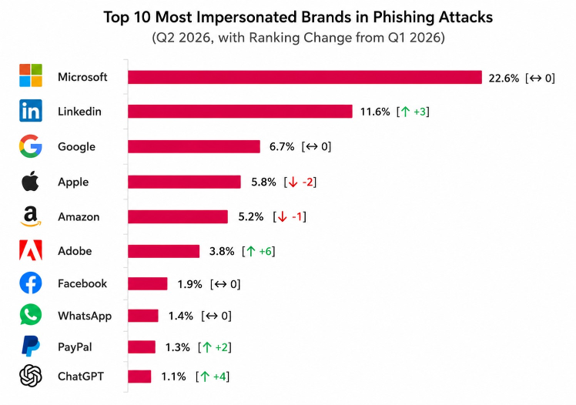
Together, the top five brand names cover more than half of all brand phishing activity this quarter. That concentration is worth sitting with. Scammers aren’t spreading their efforts across thousands of brands. They’re focused on a small set of names that nearly everyone recognizes and uses daily, since that recognition is what makes the con work in the first place.
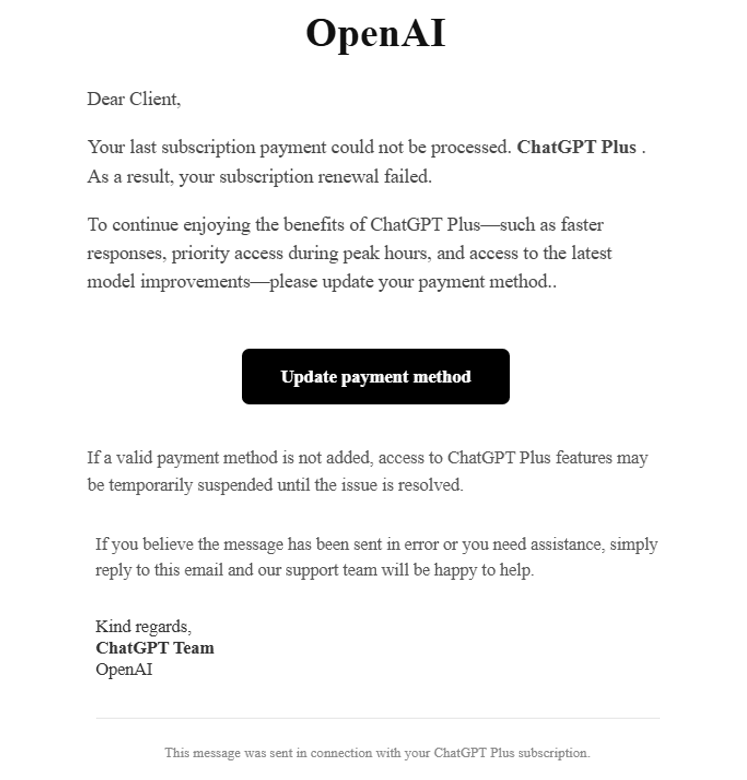
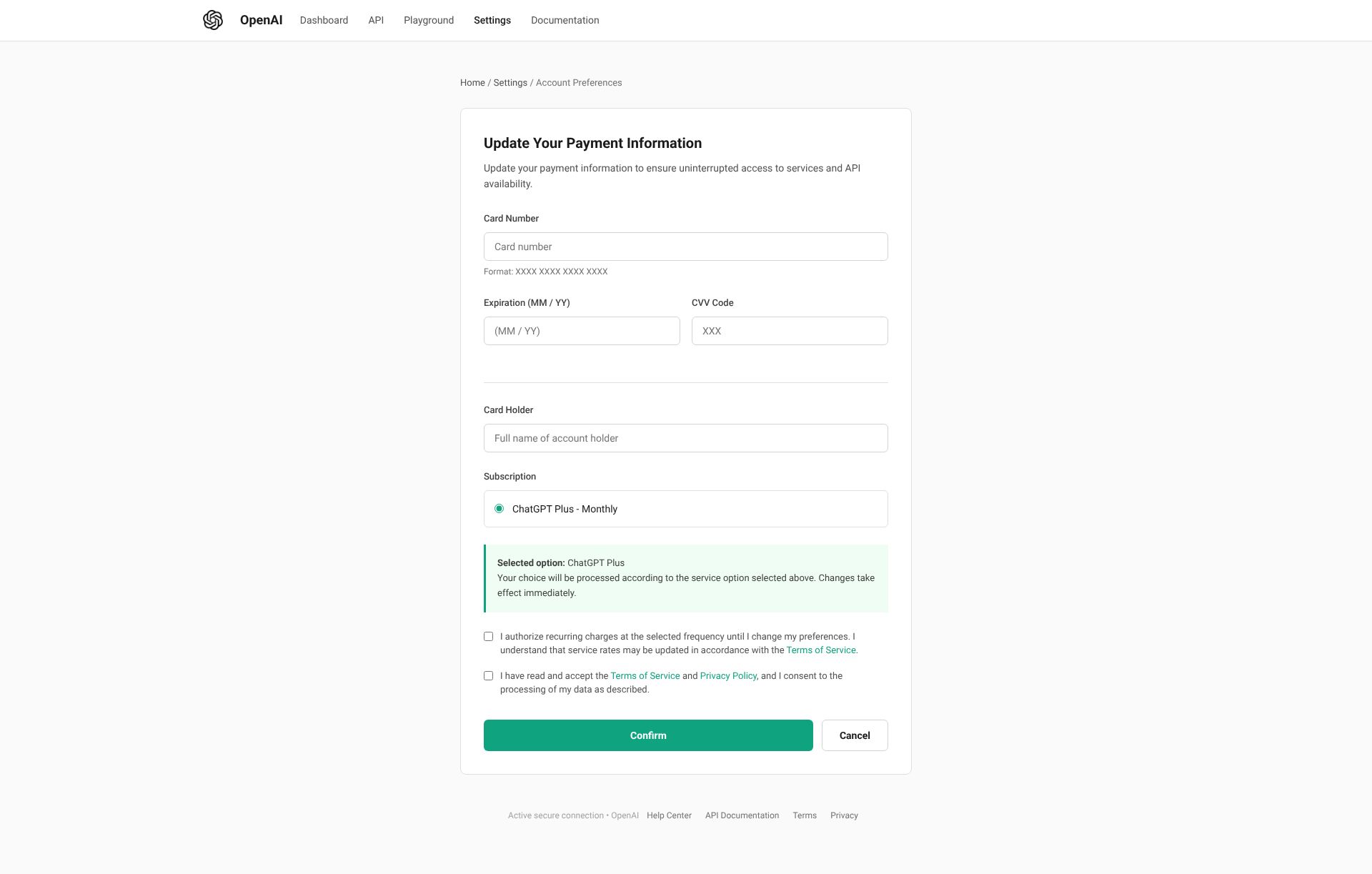
For the first time, the ChatGPT appeared among the ten most impersonated brands tracked in this report. It’s a strong signal of where attacker attention is heading next. As AI tools move from novelty to daily habit for millions of people managing subscriptions, payments, and work tasks through them, they become just as attractive a target as any bank or tech giant. One example from June involved a fake ChatGPT Plus billing email, built to look exactly like an OpenAI payment failure notice, that led to a page designed to harvest full credit card details. Expect AI platforms to keep climbing this list in future quarters.
Technology led as the most impersonated sector overall, with Social Networks and Banking close behind. This lines up neatly with the brand rankings above. The industries under the most pressure are the ones handling our identities, our professional relationships, and our money, which also happen to be the accounts most people would be quickest to protect if only they knew an attack was happening.
The following sample of documented cases from this quarter demonstrate just how varied these schemes can be.
ChatGPT. A fake subscription failure email led to a payment page built to steal credit card details, using an official looking OpenAI subject line and branding.
Michael Kors. A registered lookalike site replicated the entire shopping experience, browsing, cart, and checkout, all designed to capture payment information under the guise of a real purchase.
UNIQLO. A fake regional storefront appeared for a market UNIQLO doesn’t officially operate in. The giveaway was that its social media icons didn’t actually connect to UNIQLO’s real accounts.
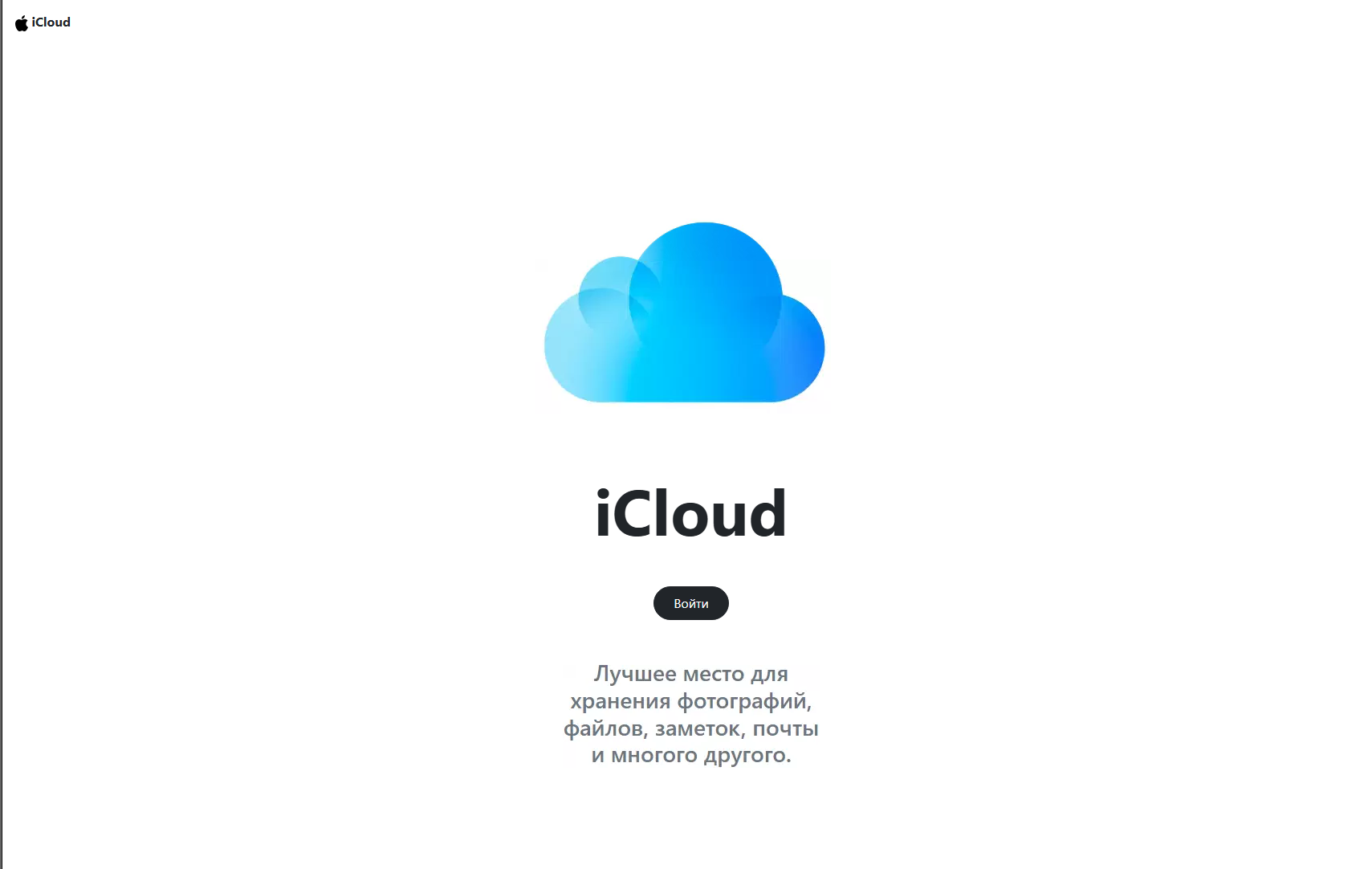
Apple. A fake iCloud login page, presented in Russian, used Apple’s real logo and branding. The sign in button itself didn’t work, suggesting the page was still being tested before a fuller campaign.
PayPal. A near identical login page carried a noticeably distorted PayPal logo, a likely sign it had been produced with an AI image tool rather than lifted from PayPal’s actual assets.
Microsoft. A fake support page pushed an urgent Office security update. Clicking through didn’t install anything from Microsoft. It delivered a disguised executable file, the first step of a malware infection.
A few patterns showed up across nearly every case.
A sense of urgency is doing the work. Payment failures, security alerts, and required updates all push you to act before you stop to think, which is exactly the point.
Small visual flaws are common. A distorted logo, a button that doesn’t respond, icons that lead nowhere. None of these are obvious at a glance, but a more thorough review tends to reveal them.
Domains rarely match the real brand exactly. A slightly off spelling, an unusual extension, or a domain that has no business hosting that brand’s content is a strong signal on its own.
AI-generated assets are starting to leave their own fingerprints. As logos and pages get faked with AI tools, subtle distortions and inconsistencies are becoming one of the more reliable ways to spot a fake.
Type a brand’s web address directly into your browser rather than clicking a link in an email, especially for anything involving billing or account security. Hover over buttons and links before clicking to see where they actually lead. Treat unexpected payment or security emails from any of the top five brands, and increasingly from AI tools like ChatGPT, with a bit of extra scrutiny no matter how convincing the branding looks. Turn on multi factor authentication wherever it’s available, since it remains effective even if a password is compromised. And when something feels slightly off, whether it’s a blurry logo or a button that won’t respond, verify directly with the company through a channel you already know and trust, not through anything provided in the suspicious message itself.
Brand impersonation keeps working because it exploits trust in familiar organizations rather than any weakness in software, and as generative AI helps attackers produce convincing emails and fraudulent websites at scale, both the volume and the sophistication of these attacks are only likely to grow. The strongest defense focuses on prevention rather than cleanup after the fact, which in practice means a few things.
Check Point Email Security brings these capabilities together in a single platform, combining prevention first inline protection with AI powered threat detection and unified workspace security to stop advanced phishing attacks before they reach users.
Most phishing pages also start as a copy of a real one, so detection matters just as much as prevention. Tools that scan the open, deep, and dark web for lookalike domains and cloned login pages, paired with a fast takedown process, close the window of exposure before customers ever land on a fake page and hand over their credentials or card details. See how Check Point’s Exposure Management puts this into practice, catching 66% of phishing attacks built on copied pages and resolving takedown requests with a 99%+ success rate, most within 12 hours.
此内容由惯性聚合(RSS阅读器)自动聚合整理,仅供阅读参考。 原文来自 — 版权归原作者所有。