

惯性聚合 高效追踪和阅读你感兴趣的博客、新闻、科技资讯
阅读原文 在惯性聚合中打开

推荐订阅源

S
Secure Thoughts
P
Proofpoint News Feed
D
Darknet – Hacking Tools, Hacker News & Cyber Security
Project Zero
Project Zero
Cyberwarzone
Cyberwarzone
K
Kaspersky official blog
AWS News Blog
AWS News Blog
cs.AI updates on arXiv.org
N
News | PayPal Newsroom
S
Schneier on Security
O
OpenAI News
S
Security @ Cisco Blogs
K
KPMG report finds enterprise disconnect between AI and its ROI | CIO
月光博客
月光博客
GbyAI
GbyAI
T
Tenable Blog
B
Blog
人人都是产品经理
人人都是产品经理
Engineering at Meta
Engineering at Meta
T
Troy Hunt's Blog
量子位
S
Security Affairs
Security Archives - TechRepublic
The Cloudflare Blog
W
WeLiveSecurity
U
Unit 42
Application and Cybersecurity Blog
cs.CL updates on arXiv.org
The GitHub Blog
The GitHub Blog
Cloudbric
Cloudbric
A
About on SuperTechFans
Hacker News - Newest:
Hacker News - Newest: "LLM"
Exploit-DB.com RSS Feed
Google DeepMind News
博客园_首页
I
Intezer
P
Proofpoint News Feed
N
News and Events Feed by Topic
SecWiki News
SecWiki News
Microsoft Security Blog
TaoSecurity Blog
TaoSecurity Blog
博客园 - 三生石上(FineUI控件)
NISL@THU
NISL@THU
Latest news
Latest news
H
Help Net Security
G
Google Developers Blog
博客园 - Franky
T
The Exploit Database - CXSecurity.com
Cisco Talos Blog
Cisco Talos Blog
Know Your Adversary
Know Your Adversary

Section508.gov

Section508.gov Section508.gov Section508.gov Section508.gov Section508.gov Section508.gov Section508.gov Section508.gov Section508.gov Section508.gov Section508.gov Accessibility Bytes No. 12: Data Tables in Microsoft Word, PowerPoint, Excel, and PDFs Section508.gov
Section508.gov
2026-02-24 · via Section508.gov

Did you know that you can use semi-fictional characters that portray an individual or group of users to improve the design, development and accessibility of your agency’s electronic information or digital service?

These semi-fictional characters, called personas, are primarily used in the research and design phase of a project to ensure that the user experience — including equivalent access to information for people with disabilities — is considered for a service, product, or website.
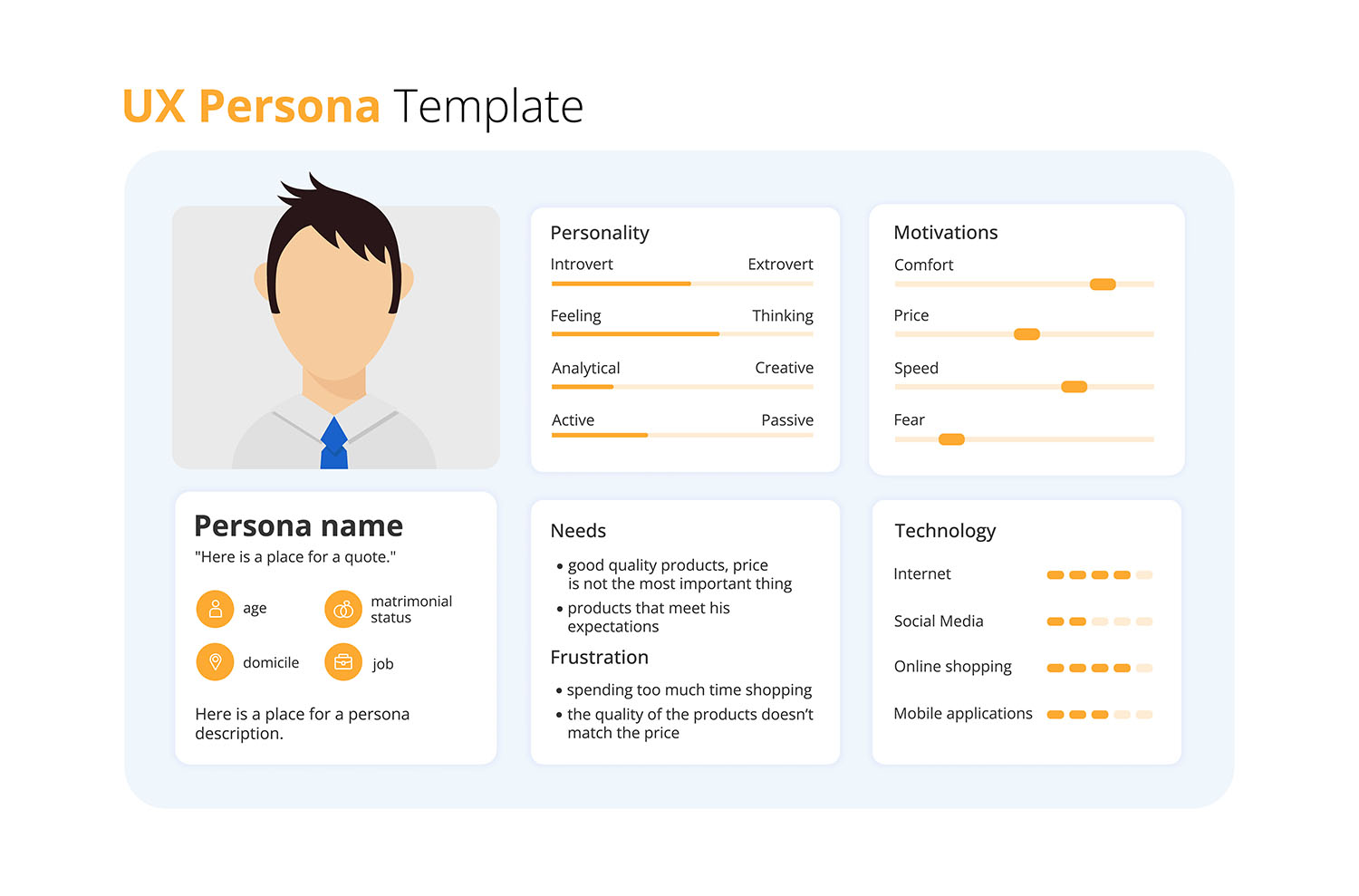
UX Persona template with attributes for personality, motivations, needs and technology.

Figure 1: Generic UX Persona template with attributes for personality, motivations, needs and technology.

  • An african american man sitting on a park bench with dark sunglasses on. He is wearing a beige jacket, a gray scarf and plaid blue pants. He is putting headphones into his ears to listen to his phone while a white cane leans against the bench. Name: Enzo
    Age: 40
    Occupation: Program Analyst at a federal agency
    Location: Billings, Montana
    Disability: Blind since birth
    Assistive Technology: Enzo uses a screen reader and Braille display.
    Home life: Married with four children still at home
    Goals: Complete forms, understand the information being presented, understand summary reports.
    Frustrations: Unable to determine what information is being asked by a form, difficulty reading charts due to missing labels, images that do not have description, things are out of order when navigating with a screen reader.
    Quote: “If it's not properly labeled, I can only make a best guess as to what's on the screen.”
    Design Considerations:

    • Ensure semantic HTML and ARIA labels for form fields.
    • Provide Section 508 conformant data visualizations with text equivalents.
    • Support keyboard and screen reader navigation.

Design Considerations

Using multiple, various personas helps uncover the different needs and expectations — called design considerations — of various user types by illustrating how individuals interact with content and assistive technologies. 

Personas should also reflect attributes that align with functional performance criteria, based on how people use products and services to interact with technology. These criteria include:

  • Without Vision
  • Limited Vision
  • Without Perception of Color
  • Without Hearing
  • Limited Hearing
  • Without Speech
  • Limited Manipulation
  • Limited Reach and Strength
  • Limited Language, Cognitive, and Learning Abilities

Development Considerations

Business analysts and other requirements officials should use persona-based design considerations to develop acceptance criteria for ICT accessibility-centered user stories, ensuring new products or features conform to accessibility standards — minimizing the need for costly remediation.

TIP: Before creating your new personas, check with your agency Web Content Manager or Section 508 Program Manager to see if personas already exist for your users and mission.

For more information on creating personas for accessible ICT—including sample personas for various disability types that you can use in your user stories—visit Sample Personas for Users With Disabilities.

Reviewed/Updated: February 2026