







This week’s Techtonic episode covered an important topic that I’ll say more about in a moment.
But first I’m excited to show off the new Techtonic website, at techtonic.fm, totally redesigned and rebuilt. Big thanks to Todd Mazierski for programming and design.
Each Techtonic episode now has its own page with an embedded audio player, and links and resources below it. There’s also an RSS feed for new episodes. And for anyone who listens to the show as a podcast, here’s the podcast link.
This week’s episode is Widening inequality and Big Tech surveillance, bringing up that important topic I mentioned above.
Disney World, of all places, provides the case study. In the episode, I speak with Dan Currell about his recent New York Times piece called Disney and the Decline of America’s Middle Class (gift link, Aug 28, 2025). Currell writes about the “haves” and “have nots,” separated by a widening gulf – with fewer and fewer people in the middle – and how companies like Disney exploit that inequality, monetizing it through the use of Big Tech surveillance platforms.
First let’s consider the “haves.” Here’s a data point from the article:
In the 2020s, the growing ranks of the affluent presented a profit source that could not be ignored. According to Datos Insights, in 1992 there were 88,000 households worth $20 million or more in 2022 dollars; by 2022, there were 644,000. Those who could pay almost anything for a vacation were becoming their own mass market.
Now that over half a million American households have a net worth over $20 million, companies like Disney feel compelled to offer luxury-level products and services, priced at appropriately exorbitant levels, in order to fully fleece the richies.
In Disney’s case, as Currell writes, that takes the form of a pay-to-play experience in which parkgoers can skip the line at any ride, if they pay thousands more (for a guide, or certain on-property hotels, or per-ride surcharges). Of course, these extra fees aren’t required: you’re still welcome to pay the (already very expensive) Disney World entry fee and stand in lines all day.
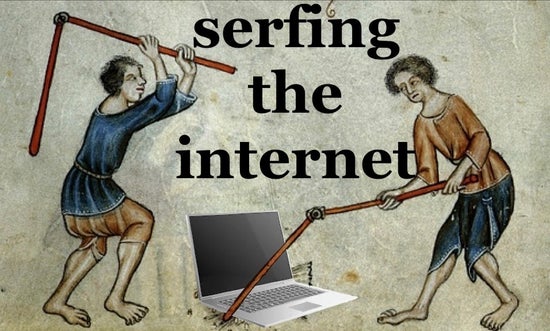
This bifurcated offering produces a curious customer experience. At older rides like Space Mountain, the slow line and the fast line are positioned next to each other. That means that normies standing in line see the wealthy families zip past them to enter the ride. What sort of message does that send to the kids standing still – that this is their place in feudal America? Worse yet, argues Currell during our interview, what sort of damage does it do to the wealthy kids speedwalking past everyone else: are they being taught that this is how life should be?
I don’t mean to pick on Disney, as this is just one of many examples of the split economy. Air travel, sporting events, restaurants, even the cost of basics like food, clothing, and housing seem to be separating, creating a chasm where the vast middle class used to be. No wonder, as the WSJ reports (gift link, Oct 27, 2025), Americans are “experimenting with frugality” due to “ever-ballooning grocery bills.” To save a few pennies, people are watering down their dish soap and buying meat in bulk, 300 pounds at a time.
And plenty of people, it deserves to be said, can’t afford food at all. A wrenching NYT story (gift link, Oct 26, 2025) describes a line of cars at a Maryland food bank. The people in the cars are federal workers, who due to the government shutdown don’t have enough food. Hungry, and waiting in line, in feudal America.
Meantime, private concierges are a booming business (gift link, NYT, Oct 4, 2025) for the growing ranks of the ultra-rich. If you have an extra $50,000 to $75,000 per year that you wouldn’t miss, and can’t think of a worthier cause, why not retain a concierge who can do important things like this:
“Say we’ve booked you at a restaurant and we know you are a sushi fanatic so there’s a tuna tartare waiting for you at the table when you arrive.”
And thus our economy delivers two outcomes: for those aligned with power (Big Tech and its vassal companies), sushi tartare. For everyone else, long lines and diluted dish soap.
Not that I have a problem with creating great experiences around food. In fact, for that special wealthy someone who wants to get food on the table at just the right moment, I’d suggest making it happen by giving to Second Harvest. (Here in New York I’m a fan of both City Harvest and Food Bank for NYC.)
I mentioned the role of Big Tech in the economic split. Dan Currell and I discuss Disney’s use of surveillance and data analytics in its bid to separate out the two classes. Again, this is a strategy not exclusive to Disney but indicative of what companies everywhere are doing to maximally exploit, and push apart, the two sides.
On this point, another recent Techtonic episode I’d recommend is my interview with Megan Greenwell, author of Bad Company: Private Equity and the Death of the American Dream. With case studies from health care, real estate, retail, and newspapers, Greenwell details the financial engineering that is clear-cutting industries and communities across the country. As I say in the episode, we can’t really understand what Big Tech is doing unless we recognize how financial engineering – as practiced by private equity and others – is brazenly exploiting us.
An upcoming Techtonic guest described this brilliantly in a recent NYT piece. Tim Wu, Columbia law professor and past FTC advisor, makes the connection explicit in Big Tech’s Predatory Platform Model Doesn’t Have to be Our Future (gift link, NYT, Oct 25, 2025):
the platform-extraction model [of Amazon, Facebook, and Google] is now spreading from tech to other economic sectors. In health care, private equity firms have sought to reorganize the industry into what they openly call a platform model. What that means in practice is squeezing more work from doctors and nurses while raising prices. Likewise, rental housing has suffered from the rise of a corporate-housing platform: the centralizing of rental homeownership along with steady increases in rents.
The result is not just bad policy but also a cultural blindness: An entire generation has grown up thinking that extraction, as opposed to building, is the path to riches.
Whether it’s Disney World, or a hospital system gobbled up by private equity, or the Big Tech monopoly that controls the surveillance devices in your home, the story is the same: tech-fueled extraction is creating feudal America. In order to fight back, we first have to gain awareness. (So I hope you’ll listen to the Techtonic episodes with Greenwell and Currell.)
We’ll also need each other. I hope you’ll join my Creative Good community, which will give you access to our members-only Forum. You’ll also help support my work on this newsletter.
Until next time,
-mark
Mark Hurst, founder, Creative Good ← please join as a member
Email: mark@creativegood.com
Podcast/radio show: techtonic.fm
Follow me on Bluesky or Mastodon
此内容由惯性聚合(RSS阅读器)自动聚合整理,仅供阅读参考。 原文来自 — 版权归原作者所有。