




I was happy to speak on Techtonic this week with Janet Vertesi, creator of the Opt Out Project – a guide to getting off Big Tech platforms and onto better alternatives.
Listen to the interview:
We discussed how people can get started in their deGoogling process. Janet said that the first step, the easiest step, is to switch web browsers.
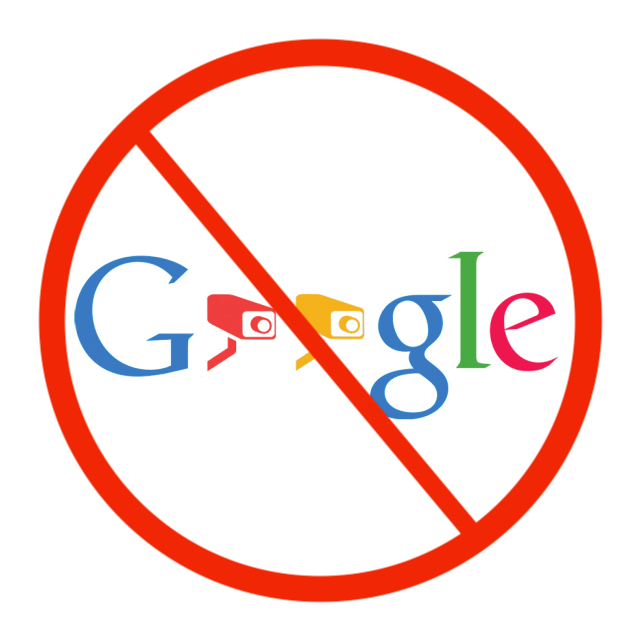
I’ll pause here to say: do not use Google Chrome. Unless you’re forced to use Chrome by your workplace or some other commitment, there is no reason to subject yourself to the intrusive surveillance carried out, constantly, by Google through Chrome. It’s spyware masquerading as a web browser.
Janet suggested three alternative web browsers: the Firefox browser from Mozilla, the Vivaldi browser, and the Duck Duck Go browser. That last one is from the same company that makes the Duck Duck Go search engine; they also created a web browser. I use the DDG browser to watch YouTube videos, as it strips out Google’s surveillance and ads.
Whatever browser you choose, as Janet pointed out, you can make the switch within a few minutes – transferring your passwords, bookmarks, and any other stored data from Chrome to the new, non-spyware browser with just a few clicks.
Another first step toward deGoogling
Switching browsers doesn’t have to be the first step toward deGoogling. You can do something even easier, and quicker, right now: make your next web search on a non-Google search engine. There are lots of alternative search engines out there: certainly Duck Duck Go, as I mentioned above, but also Brave, Ecosia, Mojeek, and Kagi. And that’s not an exhaustive list. Lots of search engines deliver results without doing what Google does: tracking you all around the web and building a secret dossier on your searches, your activities, your preferences, your affiliations, and your relationships.
So: for your next web search, do not use Google Search. The alternatives are right there in the links above, all available with a click. (They’re all free except Kagi, which charges a fee, but has no ads.)
While we’re on the topic of search, I’d like to make another suggestion – a small change that’s easy, costs nothing, and improves everyone’s lives. Let’s stop using “google” as a verb. There’s no reason to refer to a multi-trillion-dollar surveillance monopoly in our everyday language, giving it free advertising, and normalizing its use, when we already have a perfectly good, non-advertised word to use instead. Just say “search.”
Further deGoogling steps
If you’ve switched off of Chrome, and you no longer use Google for search, the next step I’d recommend is a little more involved – but it really pays off. Here it is: do not use Gmail.
Much like Google Chrome, and Google Search, and indeed every other part of the Google empire, Gmail is a surveillance platform – allowing Google algorithms to read your email – all your email, incoming and outgoing! – in order to build up your dossier that Google can monetize in all sorts of ways.
Janet and I discussed alternatives in the interview: my favorite is Fastmail, an Australian company that doesn’t spy on its users. Two other good options are Proton Mail, based in Switzerland, and Tuta Mail, based in Germany. A US-based private email service is Hey.com. And there are many other alternatives: this, again, is not an exhaustive list.
My point is that there are so, so many options out there beyond the platform from “evil G.” Choose anything but Gmail and try it out. (And as I point out in the interview, you can always set up a forwarder from Gmail to the new address, allowing you to try out the alternative platform temporarily without losing any of your incoming mail.)
Don’t expect 100%
Occasionally I’ll come across an article about someone who has tried, unsuccessfully, to fully rid their life of Google. Big Tech surveillance is so pervasive today that it’s impossible to completely escape it. Even if you get off of Chrome, Google Search, and Gmail, you’ll still be subject to Google surveillance here and there.
But that’s no reason to declare defeat. Every step we take towards deGoogling, no matter how small, is a step in the right direction. And as Janet pointed out, reducing our exposure to surveillance doesn’t just help us: it also starves the algorithms of data that Big Tech needs to exploit others.
deGoogling, then, is a way to escape surveillance, even if partially – but more than that, it’s a civic act, striking a blow against the exploitative, growth-at-any-cost companies that have made trillions by ripping our communities apart. It costs little or nothing to take this step, just a few minutes of your time, and you’re likely to see the benefits immediately. So, as I say at the end of every Techtonic episode:
Get off Google.
P.S. Longtime readers will remember that I have a site, GoodReports.com, listing alternatives to many Big Tech platforms (not just Google). Currently the full list of resources is available for Creative Good members, on our Forum, in the Good Reports category. I hope to expand what’s publicly available on Good Reports sometime soon.
One final note: you’re on a free subscription, and I rely on the support of paid subscribers to fund this newsletter. If you find my writing valuable, please join Creative Good.
Until next time,
-mark
Mark Hurst, founder, Creative Good
Email: mark@creativegood.com
Podcast/radio show: techtonic.fm
Follow me on Bluesky or Mastodon
此内容由惯性聚合(RSS阅读器)自动聚合整理,仅供阅读参考。 原文来自 — 版权归原作者所有。