







A picture of the future
The recent explosion of AI has brought about new ways to auto-generate text (through ChatGPT), images (through Midjourney and others), and music (see my recent column). But this week saw a new way that video is changing with AI, and I have to say: it’s not good.
A new filter on TikTok called “Bold Glamour” changes users’ faces to conform to the algorithm’s pre-programmed standards of beauty. There’s coverage in NBC News and Vice (both on Feb 28, 2023), but I especially liked Per Axbom’s post, which includes some TikTok snippets as women compare how they look with the filter on and off.
One woman marvels at how seamlessly the filter changes her appearance – “I mean, how do they do this?” – and then turns the filter off. “I have never felt uglier,” she says with a laugh.
Another woman says, “I know people think these are fun, but I think they’re like really harmful to society. Just my two cents.” Here she is below with filter on, followed by filter off:


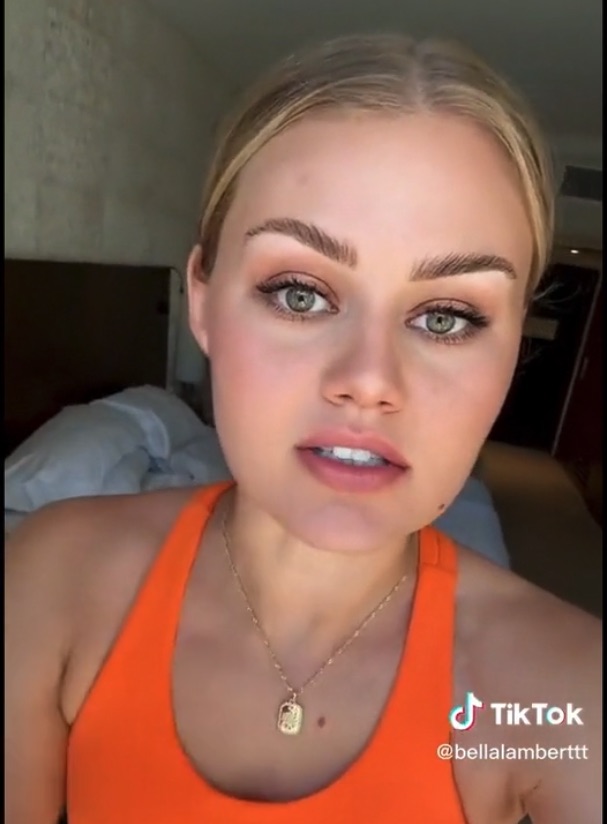
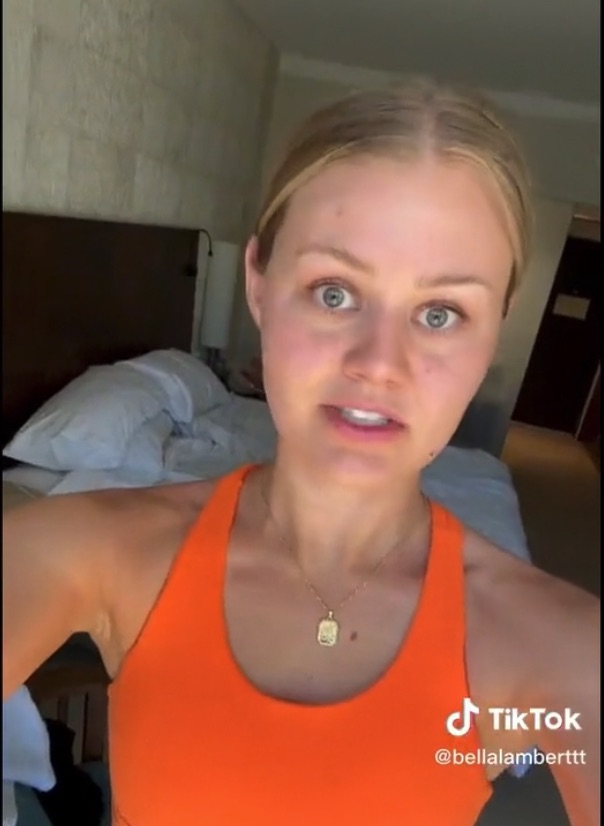
Similarly, the woman below notes that this filter is far advanced from previous versions that changed her look in harmless and silly ways. “I grew up with the doll filter on Snapchat, and now this filter gave me lip filters.” (Now she turns off Bold Glamour.) “This is what I look like in real life. Are you kidding me?”
Below, here she is with filter on, followed by filter off:
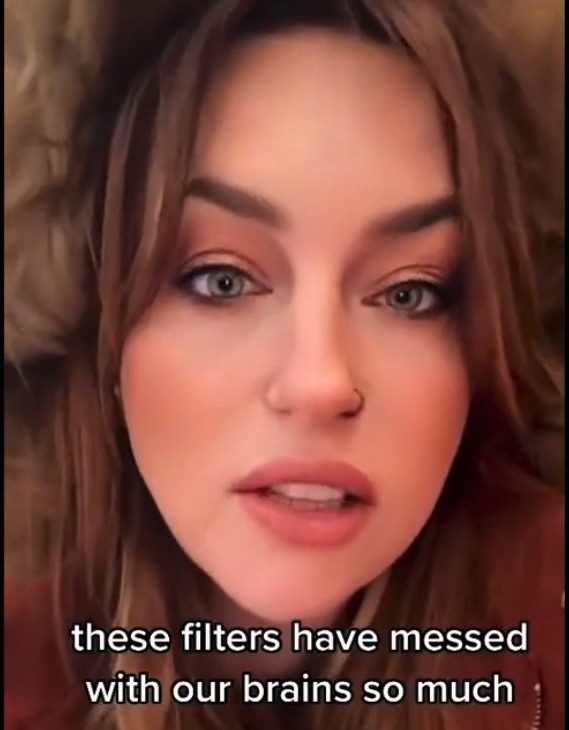
Finally, the user below says she owns a photography studio and sees the effects of this technology on her clients. They are so accustomed to seeing themselves reflected back on the phone screen with the filter on, that they are disappointed with the results from a professional (but non-filtered) photo shoot. She says:
When I take someone’s photo and I show them back the camera and they look like this, they’re devastated. The amount of times I hear a beautiful woman tell me how disgusting and how ugly they are. Oh, look at their wrinkles, look at how old. They use these filters, and that’s their baseline.
Here she is with filter on, followed by filter off:

Filters like Bold Glamour – surely copycats will launch soon – are as noteworthy for their obvious harm as they are for their technical sophistication. There is no mystery about how this latest distortion of reality will affect the emotional lives of teen, and preteen, kids that use TikTok. It won’t be good.
This is not conjecture. Jonathan Haidt has been tracking kids-and-tech research and has found “peer-reviewed studies and high-quality surveys showing 1) that there is in fact an epidemic of mental illness and 2) that phones and social media are substantial contributing causes” (source). And Noah Smith wrote this week that “the most plausible explanation for teenage unhappiness” is smartphones (source). Smith explains:
The smartphone was invented in 2007, but it didn’t really become commonplace until the 2010s, exactly when teen happiness fell off a cliff. . . . And of course the “killer app” for smartphones was social media. When you had to go to a computer to check Facebook or Twitter, you could only experience it intermittently; now, with a smartphone in your pocket and notifications enabled, you were on every app all the time.
Why would that make us unhappy? There’s an obvious reason: social isolation.
. . . But why would devices that make people more connected lead to social isolation? Isn’t that backwards? Doesn’t having access to all of their friends and acquaintances at all times via a device in their pockets mean that kids are less isolated than before? Well, no. As the natural experiment of the pandemic demonstrated, physical interaction is important.
Of course, not all AI is bad. I’ll go further and say that not all face manipulation with AI is bad. The difference lies in the type of experience: a teenager’s sense of self, and social standing, are deeply meaningful and therefore dangerous for an app to manipulate. But for a purely fun experience, AI can be as amusing as any funhouse mirror.
A great example of this, released around the same day as the TikTok filter, was Cam Harless’s Twitter thread: Every American president, but they’re all cool and they all sport a mullet. It’s pure fun. For example, here are the three most recent presidents, with mullets:
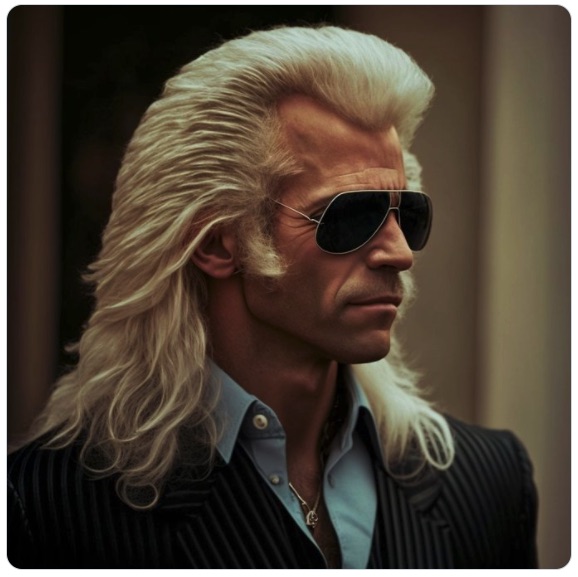
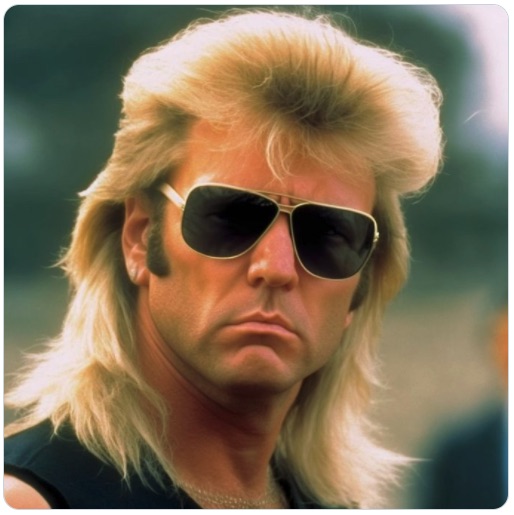
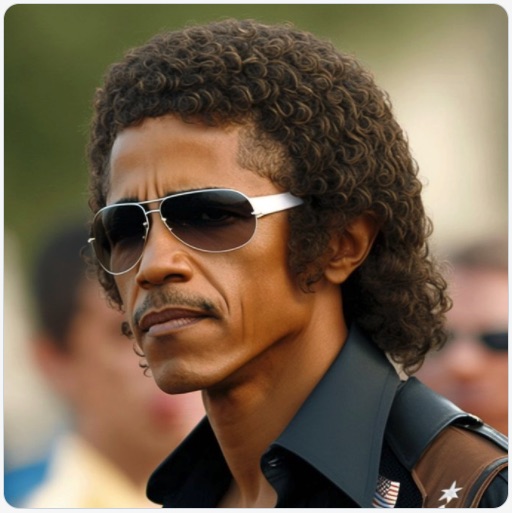
As promised, the thread has mullet-headshots for every president, all the way back to George Washington. (Along the way, spot the Harry Potter lookalike, aka Truman, and the Robin Williams doppelganger: Ulysses S. Grant.)
But as fun as these mullet shots are, they’re the exception. The tech industry isn’t looking for some benign entertainments. They want engagement and growth at any cost, and that means manipulating the lives of vulnerable kids and adolescents, at scale, with no regulation. The future is going to require a lot more pushback than we’re giving right now. (I’m trying to do my part, and if you’d like to help, please join Creative Good.)
TikTok’s new “Bold Glamour” makes me think of George Orwell, who wrote the famous phrase in 1984: “If you want a picture of the future, imagine a boot stamping on a human face – for ever.” Today we can see that Orwell was right about the face. But he was wrong about the boot. It was really a filter.
- - -
Post a comment here, for Creative Good members only. (You can join now.)
Until next time,
-mark
Mark Hurst, founder, Creative Good – see official announcement and join as a member
Email: mark@creativegood.com
Read my non-toxic tech reviews at Good Reports
Listen to my podcast/radio show: techtonic.fm
Subscribe to my email newsletter
Sign up for my to-do list with privacy built in, Good Todo
On Mastodon: @markhurst@mastodon.social
- – -