


惯性聚合 高效追踪和阅读你感兴趣的博客、新闻、科技资讯
阅读原文 在惯性聚合中打开

推荐订阅源

Recent Announcements
freeCodeCamp Programming Tutorials: Python, JavaScript, Git & More
Last Week in AI
Last Week in AI
Scott Helme
Scott Helme
cs.AI updates on arXiv.org
L
LINUX DO - 最新话题
S
Security @ Cisco Blogs
Webroot Blog
Webroot Blog
S
Security Affairs
H
Hacker News: Front Page
TaoSecurity Blog
TaoSecurity Blog
W
WeLiveSecurity
G
GRAHAM CLULEY
T
Tenable Blog
Schneier on Security
S
Securelist
Cyberwarzone
Cyberwarzone
P
Privacy International News Feed
Exploit-DB.com RSS Feed
S
Schneier on Security
Hacker News - Newest:
Hacker News - Newest: "LLM"
Recent Commits to openclaw:main
O
OpenAI News
N
News and Events Feed by Topic
AWS News Blog
AWS News Blog
C
Cisco Blogs
T
Threat Research - Cisco Blogs
S
Secure Thoughts
大猫的无限游戏
大猫的无限游戏
C
Check Point Blog
The GitHub Blog
The GitHub Blog
G
Google Developers Blog
奇客Solidot–传递最新科技情报
奇客Solidot–传递最新科技情报
美团技术团队
Martin Fowler
Martin Fowler
Microsoft Security Blog
L
LangChain Blog
Apple Machine Learning Research
爱范儿
爱范儿
D
DataBreaches.Net
博客园_首页
MyScale Blog
MyScale Blog
博客园 - 叶小钗
博客园 - 三生石上(FineUI控件)
P
Proofpoint News Feed
J
Java Code Geeks
SecWiki News
SecWiki News
P
Palo Alto Networks Blog
Know Your Adversary
Know Your Adversary
cs.CL updates on arXiv.org

Creative Good

Changing the address of this RSS feed Protecting elders and kids from predatory tech The garbage on our screens How it’s going in tech – without ethics AI isn’t meant for us Starlink bestows, or forces, the digital age on an Amazonian tribe Microsoft Recall should make you consider Linux Google goes bananums for AI Creative Good: Apple made a terrible mistake: it told the truth To resist the robots, get a typewriter Big Tech’s corruption was 25 years in the making Creative Good: China and TikTok Surviving the customer experience winter The gaping void in San Francisco, New York, and Cambridge Vision Pro, unscrambled, is “I Poison VR” Resisting Silicon Valley’s cult of “more” The airplane blowout came from our rotten Big Tech economy Creative Good: Instagram’s unmentionable problem Marc Andreessen is right – love doesn’t scale Facial recognition and the end of privacy – with Kashmir Hill The Luddites warned us about Google Celebrating 25 years of this newsletter – and an announcement Creative Good: Surveillance spreading Disaster alerts reveal a better way to design tech Don’t throw technology at it Hacks of the ultra-rich, as revealed by Bruce Schneier and Josh O'Kane Why car companies (still) ignore customers A walk around world raises questions about tech Three things you should listen to An addiction machine for our age Rejecting the Apple Vision Pro What you missed about Google and Amazon Why customers don’t want chat bots The giant brain suck of 2023 My 26-hour delay on Delta Air Lines Is AI a demon or what Creative Good: AI plus whatever ChatGPT’s dangers are starting to show Creative Good: A Simple Desultory Techtonic A picture of the future Where are the customers' chats? Sassy AIs are not the problem AI is creating the Play-Doh internet Who’s responsible for fixing tech? How Google profits from criminal activity ChatGPT’s drawbacks, and how to respond A new year to make tech better A few more inspiring people Why we can’t trust Apple Bonfire of the vanity project As cities embrace surveillance, we can resist A future for people doing good work A Halloween update on Big Tech Creative Good: Moralists, unite Creative Good: A song about surveillance AI is already turning against you. We can fix it. Waking up to the genetic surveillance state another reason to join Creative Good Creative Good: A “what now?” moment Creative Good: A most welcome decline An “internet for the people” or a plastic beach Our last chance in tech Jennifer Egan and a Forum update Creative Good: Citizenship and smartphones Celebrating one year of the Creative Good community Creative Good Forum Walking away from tech Where to go after Twitter An alternative to Amazon, and avoiding data brokers God, death, and tech with Sasha Stiles The web as monopolized surveillance space Human rights and digital spycraft Designing for deceit in Silicon Valley Bandcamp risks becoming an Epic failure The restart of history Why to resist Amazon by cancelling your Prime account Concentration of power is the problem We said ‘never again.’ Now look at Xinjiang Facebook patents and the comet in Don’t Look Up I founded Creative Good 25 years ago today – and learned a few things Are Facebook and Google criminal enterprises? My predictions for Apple’s smart glasses Creative Good Forum The banality of tech Big questions, answered by Big Tech Smiling in the metaverse Big Tech’s latest misbehavior calls for action Facebook’s laughable response to the whistleblower Get your community organization off of Facebook. Now. Voice surveillance must die The fall of Facebook Why we might transform computers into ‘tiles’ Explaining the last 20 years What to do when the storm arrives Public libraries are better than Google WeWork and waste How to prove vaccine status – with privacy We can’t trust tech, from A(pple) to Z(oom) On resisting emperors and their delusions Cameras and con games: Silicon Valley’s demented fun house
Creative Good: AI is spackle
2023-08-25 · via Creative Good

AI is spackle

Every major tech trend seems to draw two types of reactions. Boosters make excited pronouncements about the technology’s stunning and awesome potential, while catastrophists predict impending doom (either for the technology or for society at large).

Today’s mania for AI follows this pattern exactly. Boosters, mostly from the Silicon Valley companies that own the technology or invest in it, promise that AI will save the world. It’s hard to exaggerate the claims being made. Take, for example, Marc Andreessen’s post from June 6 called Why AI Will Save the World. Education, healthcare, government, and on and on – all of them will become exponentially better, Andreessen says, because AI. (It’s like a magic incantation – AI will solve it! – much like, a year or two ago, we heard that crypto would solve everything. But I digress.)

Outside of Silicon Valley, catastrophists delight in pointing out the flaws of AI and its impending failure. Ted Gioia’s August 23 post, for example, reports that AI demand is already shrinking: people are using it less as they realize how erroneous or harmful the output is. No one wants AI except scammers (“cheaters and criminals are taking full advantage of AI as a tool of deception”).

I’m more aligned with the catastrophists than the boosters, but I’d like to propose a different way of understanding AI, something that I hope gets at the truth better than an extreme of “awesome” or “worst thing ever.”

First, I’ll note that part of the problem of the AI discussion is that it’s not always clear what is meant by the term “AI.” Is it chat bots? Is it Skynet? Is it the singularity? Most techies will agree that AI isn’t quite any of these. There’s an old joke among programmers that once computers can do something reliably, it’s no longer AI. I suppose partly because of the clever branding – “AI” sounds so futuristic – people naturally have inflated expectations about the tool.

I’d define AI as the use of complex algorithms on massive sets of data. With enough processing power, the application of algorithms to large datasets gives rise to champion chess programs, and pattern recognition in tumor scans, and ChatGPT. A more accurate name to this technology might be “massive spreadsheets,” but it just doesn’t have the same ring as “AI.” That magic incantation.

With that said, let me propose a different way of viewing AI that acknowledges its use but steers away from the overhype that permeates the public discussion.

Spackle everywhere

What I’d like to suggest is that AI is spackle.

Home repair often calls for a binding substance to fix a crack, smooth over a hole, or just serve as an all-purpose filler. Gash in the drywall? No need to hand-construct that part of the wall, just add spackle. Crack in the ceiling? Spread on the gray goo.
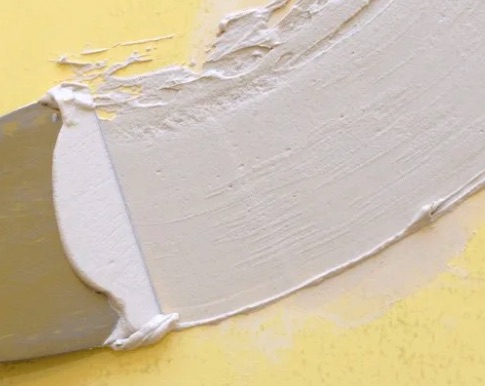
AI is the same sort of tool. Need some boilerplate language? Get the AI to generate the text. You’re coding and need a quick sort function? Spray some AI on it. An AI text generator can be a quick-and-dirty tool to fill a gap in the text. It’s boring, low-budget, a bit of a patch to paint over, in limited quantities, once in a while. Spackle has been with us for a long time, and so will AI.

The problem is that the public conversation has framed AI as a much bigger, more influential tool than it really is. Boosters and catastrophists both tend to overstate the importance: it’s the best thing ever, or the worst thing ever, and we’re living in a cosmically important moment, as we’re present at the creation of this New Thing: an AI brain that will save us, or destroy us. This rhetoric is so tiring.

AI is spackle. It has a place, filling the occasional blank, barfing out a sentence or two. Even as a search engine alternative it might be helpful as a conversational interface, for low-stakes questions (as one can never be 100% confident in the answers). Bits and pieces here and there, covering some gaps to be swiftly painted over with higher-quality tools.

I want to emphasize that AI is not inherently futuristic, any more than spackle is a spectacular marvel of ceiling care. We’ve had spreadsheets, data, and algorithms for a long time. Sure, the algorithms today are more sophisticated, and (thanks to intrusive online surveillance pioneered by Google and Facebook) there’s a lot more data available to crunch. But the act of using computers for pattern recognition is hardly new.

The danger here is that the boosters win the public conversation and people begin to adopt the boosters’ faith in AI as a salvic force. While it has its uses, AI should be used for – at most – an occasional input helping an actual expert, filling a gap or offering a suggestion. But we shouldn’t build our economy on AI, just as we wouldn’t build a house out of spackle. There’s a better way forward: tone down the hype, understand what AI is actually for, and keep humans in charge.
To support my newsletter, please join the Creative Good Forum. (You can also post and read comments.)

P.S. Question for anyone living in Washington, DC: do you know anything about what’s happening with the Whole Foods that installed QR-code surveillance throughout the store? We're discussing it on the Forum but can’t find anything except one Newsweek article. Any tips appreciated: mark@creativegood.com

Until next time,

-mark

Mark Hurst, founder, Creative Good – see official announcement and join as a member
Email: mark@creativegood.com
Listen to my podcast/radio show: techtonic.fm
Subscribe to my email newsletter
Sign up for my to-do list with privacy built in, Good Todo
On Mastodon: @markhurst@mastodon.social

- – -

LET’S MAKE TECH BETTER: JOIN US.

Mission

Creative Good creates good experiences — for our consulting clients, our Good Todo users, our newsletter readers, and all of our fans.

Contact

Creative Good, 2808 Broadway #17, New York, NY 10025 USA
Phone: +1.646.543.3530
Email: emailus@creativegood.com