We have an orange cat who loves to climb into our basement's drop ceiling and wander around. It's especially adorable when she hangs out in an alcove and surveys her domain.
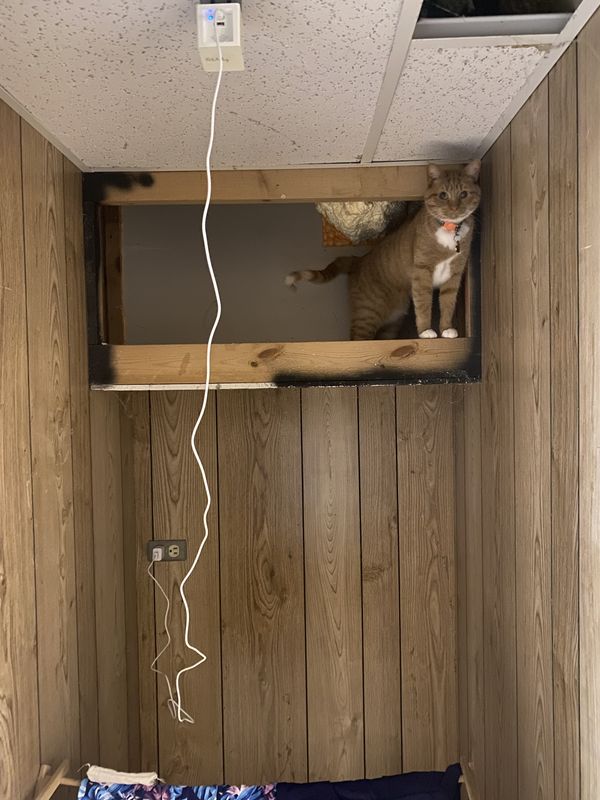
This does not happen on any predictable schedule, as per the whims of a cat. But I didn't want to miss out on any chances to see her perched up there.
So, I wired some cheap IoT devices together to notify us when she hops into the ceiling.
The workflow
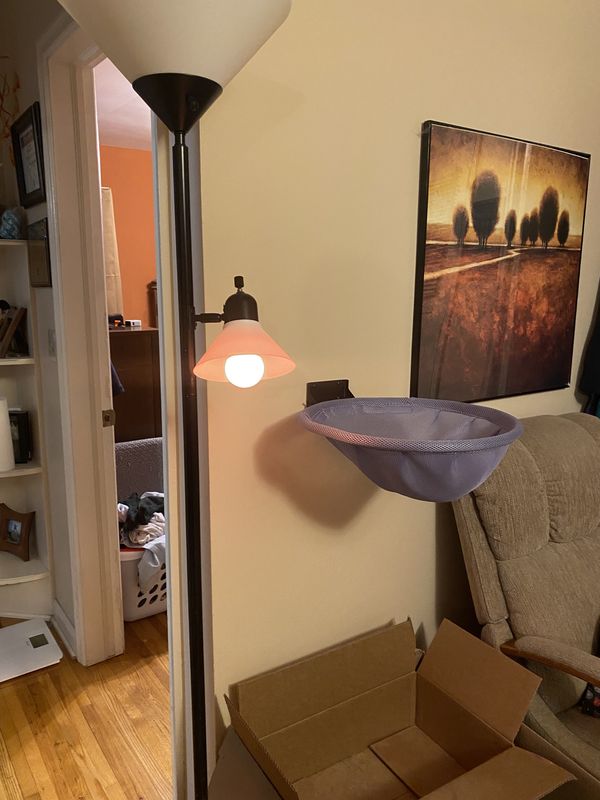
The goal of the project was to turn on a light in the living room any time a cat is detected in the drop ceiling alcove.
To do this, I used a few Internet of Things devices I had on-hand:
- A cheap Wi-Fi "security" camera (Wyze)
- An even cheaper Wi-Fi RGB light (Merkury)
Out of the box these devices don't talk to each other, and are no longer supported by their manufacturers. And I wouldn't want to rely on various cloud vendors for a mission-critical workload like this, so this was a perfect job for Home Assistant.
I've used Home Assistant in the past for similarly dubious projects, so I had some familiarity with its capabilities. It's got fairly extensive automation capabilities, where a change in one device's state can trigger a workflow to modify other devices, so this seemed very much in its wheelhouse.
The devices
Integrating the light wasn't too much of a challenge, though it took some sleuthing to discover that the device used Tuya firmware, which had a straightforward integration. I was hoping to be able to modify it to not require connections to Tuya's cloud servers via a tool like tuya-cloudcutter, but this wasn't available as a predefined, easily hackable device, so it became a project for a later date.
Adding camera feeds was done by integrating the open-source Frigate NVR. As per Frigate's docs I set it up for object detection, for both people and cats:
ffmpeg:
  hwaccel_args: preset-vaapi

objects:
  track:
    - person
    - cat

detectors:
  ov_0:
    type: openvino
    device: GPU

cameras:
  wyze_ceiling:
    enabled: true
    ffmpeg:
      inputs:
        - path: rtsp://id:password@192.168.200.4/live
          roles:
            - detect
    detect:
      enabled: true
      width: 1280
      height: 720
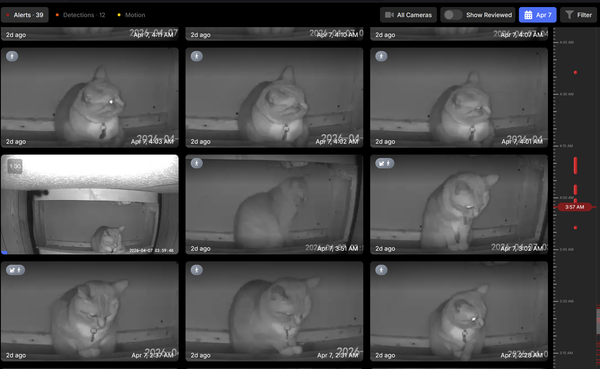
Frigate has a Home Assistant plugin that works quite well, connecting to the same MQTT broker I was already running for other IoT devices.
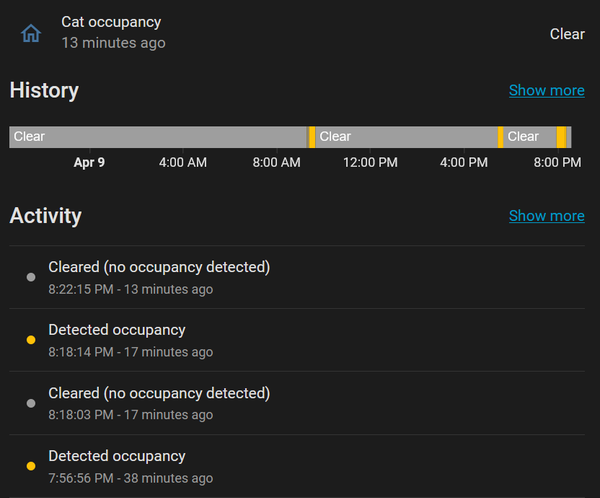
Hooking this into Home Assistant gave me an few data streams I can key off, like any other sensor.
Integration
Using the automation tools built into Home Assistant, I can toggle the light pretty easily:
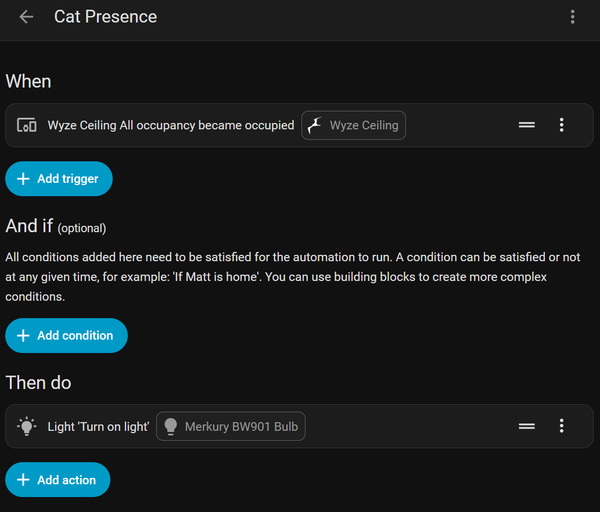
Or in code:
alias: Cat Presence
description: ""
triggers:
  - type: occupied
    device_id: b86f8493d0516cb5f9afe35ad61effcf
    entity_id: 5a7f5d90cdaaf72fff39387fe4e377ab
    domain: binary_sensor
    trigger: device
conditions: []
actions:
  - action: light.turn_on
    metadata: {}
    target:
      entity_id: light.merkury_bw901_bulb
    data:
      brightness_pct: 100
mode: single
Overall the project went really well, and I'm still delighted when the orange light turns on while I'm hanging out in the living room. There are a few things I'd like to improve with the workflow, but it's primarily around my hosting and object detection (I'd like to move Frigate to a Raspberry Pi with an AI hat, so I can add more cameras and detect cats elsewhere)
As dumb as a project like this is, it still lends credence that integration of disparate devices can bring value greater than the sum of their parts. No one is going to offer a commercial "ecosystem" that would give me these capabilities, especially not with cheap consumer hardware that's been abandoned by the manufacturers.