

惯性聚合 高效追踪和阅读你感兴趣的博客、新闻、科技资讯
阅读原文 在惯性聚合中打开

推荐订阅源

让小产品的独立变现更简单 - ezindie.com
MyScale Blog
MyScale Blog
U
Unit 42
M
MIT News - Artificial intelligence
小众软件
小众软件
P
Proofpoint News Feed
雷峰网
雷峰网
L
LangChain Blog
S
SegmentFault 最新的问题
腾讯CDC
F
Fortinet All Blogs
A
About on SuperTechFans
WordPress大学
WordPress大学
Vercel News
Vercel News
奇客Solidot–传递最新科技情报
奇客Solidot–传递最新科技情报
G
Google Developers Blog
大猫的无限游戏
大猫的无限游戏
OSCHINA 社区最新新闻
OSCHINA 社区最新新闻
D
Docker
N
Netflix TechBlog - Medium
Apple Machine Learning Research
Recent Announcements
D
DataBreaches.Net
Stack Overflow Blog
Stack Overflow Blog

School of Computer Science News

Rathje Named SAGE Emerging Scholar Robotics Innovation Center Earns LEED Platinum Certification for Sustainable Construction AI4MiddleSchools Expands Nationwide Effort To Prepare Students for an AI-Powered Future Carvalho Earns NSF CAREER Award To Study Motivation and Learning Season Three of 'Does Compute' Now Available Rare Ventures Partners Rings NYSE Opening Bell Bringing Images to Life Through Touch - Robotics Institute Carnegie Mellon University Fried Receives NSF CAREER Award - Language Technologies Institute - School of Computer Science - Carnegie Mellon University PAIR Helps Students Find Their Place in AI Research Navigating the AI Era with a CMU Focus on Critical Thinking Kaess Named to Inaugural Chief of Naval Research Fellows Program Navigating the Moon Koedinger Wins Lifetime Achievement Award Carnegie Mellon Names Damion Shelton Associate VP and Executive Director of the Swartz Center for Entrepreneurship Hong Shen Discusses AI Safety at WEF Annual Meeting Erickson Earns NSF CAREER Award - Robotics Institute Carnegie Mellon University Satya Honored With Test of Time Award From Proof to Program: CMU and the Rise of AI-Driven Mathematics SCS Researchers Named to Inaugural ACM SIGSOFT Software Engineering Academy Healthcare Blind Spots: AI Models Prone To Fabricating Diagnoses - Robotics Institute Carnegie Mellon University You Can't Remove Humans From Software Engineering Designing the Future of Tech Governance AI, Single-Cell Technology Reveal How 3D Genome Differs in People With Alzheimer's Disease Tepper School of Business and School of Computer Science Partner to Launch AI for Business Executive Education Program Carnegie Mellon Researchers Lead Three DOE Genesis Mission Awards to Advance the Future of AI-Enabled Scientific Discovery Snake Robots Support Earthquake Search and Rescue in Venezuela Lindlbauer Receives NSF CAREER Award for Adaptive Extended Reality Interfaces CMU Advances Defense Manufacturing and Military Education at Pennsylvania Defense and Innovation Summit Looking Ahead: AI Needs UI Liu Receives NSF CAREER Award
Fredrikson Earns Test of Time Award for AI Security
Mallory Lind · 2026-07-18 · via School of Computer Science News

Matt Fredrikson, an associate professor in Carnegie Mellon University's School of Computer Science, and his co-authors have received the inaugural Test of Time Award from the IEEE European Symposium on Security and Privacy (EuroS&P). The award recognizes their 2016 paper, "The Limitations of Deep Learning in Adversarial Settings," for its lasting impact on the field of AI security.

The IEEE EuroS&P Test-of-Time Award honors papers that have had significant and sustained influence on computer security and privacy research in the decade since their publication. This year's awards mark the first time the conference has presented the honor.
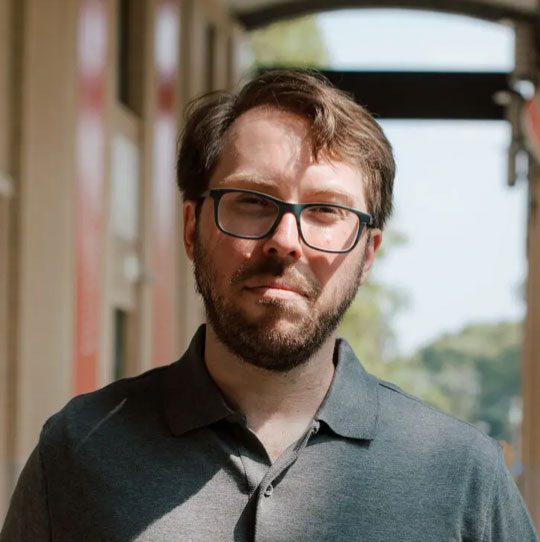
Portrait of Matt Fredrikson.
SCS faculty member Matt Fredrikson and his co-authors have received the inaugural Test of Time Award from the IEEE European Symposium on Security and Privacy for their 2016 paper, "The Limitations of Deep Learning in Adversarial Settings."

Selected as one of two recipients from the conference's inaugural proceedings, Fredrikson's paper took the then-recent discovery that AI models could be fooled by small, carefully crafted changes to their inputs and asked what it meant for building secure systems around them. The researchers created a framework for modeling the threats these systems faced and introduced new techniques for crafting adversarial inputs, demonstrating how even changes so small they were often imperceptible to people could cause a model to make the wrong prediction. Their work helped establish the field of adversarial machine learning, which studies how AI systems can be attacked and how to make them more secure.

The award-winning research was led by Nicholas Papernot, then a doctoral student at Pennsylvania State University, who worked with Fredrikson not long after the latter joined CMU as a faculty member in the Software and Societal Systems Department. The paper's co-authors included Patrick McDaniel, then a professor at Penn State; Somesh Jha, a professor at the University of Wisconsin–Madison; and Ananthram Swami and Richard Harang, researchers at the U.S. Army Research Laboratory.

Fredrikson and his co-authors were recognized during the EuroS&P 2026 conference earlier this month in Lisbon, Portugal.

For more information, visit the EuroS&P website.