
惯性聚合 高效追踪和阅读你感兴趣的博客、新闻、科技资讯
阅读原文 在惯性聚合中打开

推荐订阅源

S
SegmentFault 最新的问题
J
Java Code Geeks
V
V2EX
Blog — PlanetScale
Blog — PlanetScale
博客园 - 司徒正美
Hugging Face - Blog
Hugging Face - Blog
F
Fortinet All Blogs
aimingoo的专栏
aimingoo的专栏
B
Blog
A
About on SuperTechFans
有赞技术团队
有赞技术团队
月光博客
月光博客
Microsoft Azure Blog
阮一峰的网络日志
阮一峰的网络日志
腾讯CDC
美团技术团队
大猫的无限游戏
大猫的无限游戏
爱范儿
爱范儿
N
Netflix TechBlog - Medium
C
Check Point Blog
Recent Announcements
博客园 - Franky
博客园 - 叶小钗
T
Tailwind CSS Blog

School of Computer Science News

Robotics Innovation Center Earns LEED Platinum Certification for Sustainable Construction AI4MiddleSchools Expands Nationwide Effort To Prepare Students for an AI-Powered Future Carvalho Earns NSF CAREER Award To Study Motivation and Learning Season Three of 'Does Compute' Now Available Rare Ventures Partners Rings NYSE Opening Bell Bringing Images to Life Through Touch - Robotics Institute Carnegie Mellon University PAIR Helps Students Find Their Place in AI Research Navigating the AI Era with a CMU Focus on Critical Thinking Kaess Named to Inaugural Chief of Naval Research Fellows Program Navigating the Moon Koedinger Wins Lifetime Achievement Award Carnegie Mellon Names Damion Shelton Associate VP and Executive Director of the Swartz Center for Entrepreneurship Hong Shen Discusses AI Safety at WEF Annual Meeting Erickson Earns NSF CAREER Award - Robotics Institute Carnegie Mellon University Satya Honored With Test of Time Award From Proof to Program: CMU and the Rise of AI-Driven Mathematics SCS Researchers Named to Inaugural ACM SIGSOFT Software Engineering Academy Healthcare Blind Spots: AI Models Prone To Fabricating Diagnoses - Robotics Institute Carnegie Mellon University You Can't Remove Humans From Software Engineering Designing the Future of Tech Governance AI, Single-Cell Technology Reveal How 3D Genome Differs in People With Alzheimer's Disease Tepper School of Business and School of Computer Science Partner to Launch AI for Business Executive Education Program Carnegie Mellon Researchers Lead Three DOE Genesis Mission Awards to Advance the Future of AI-Enabled Scientific Discovery Snake Robots Support Earthquake Search and Rescue in Venezuela Lindlbauer Receives NSF CAREER Award for Adaptive Extended Reality Interfaces Fredrikson Earns Test of Time Award for AI Security CMU Advances Defense Manufacturing and Military Education at Pennsylvania Defense and Innovation Summit Looking Ahead: AI Needs UI Liu Receives NSF CAREER Award Carnegie Foundry, Carnegie Mellon and American Drone Manufacturers Launch Initiative to Supercharge America
Fried Receives NSF CAREER Award - Language Technologies I...
Carnegie Mellon University · 2026-09-03 · via School of Computer Science News

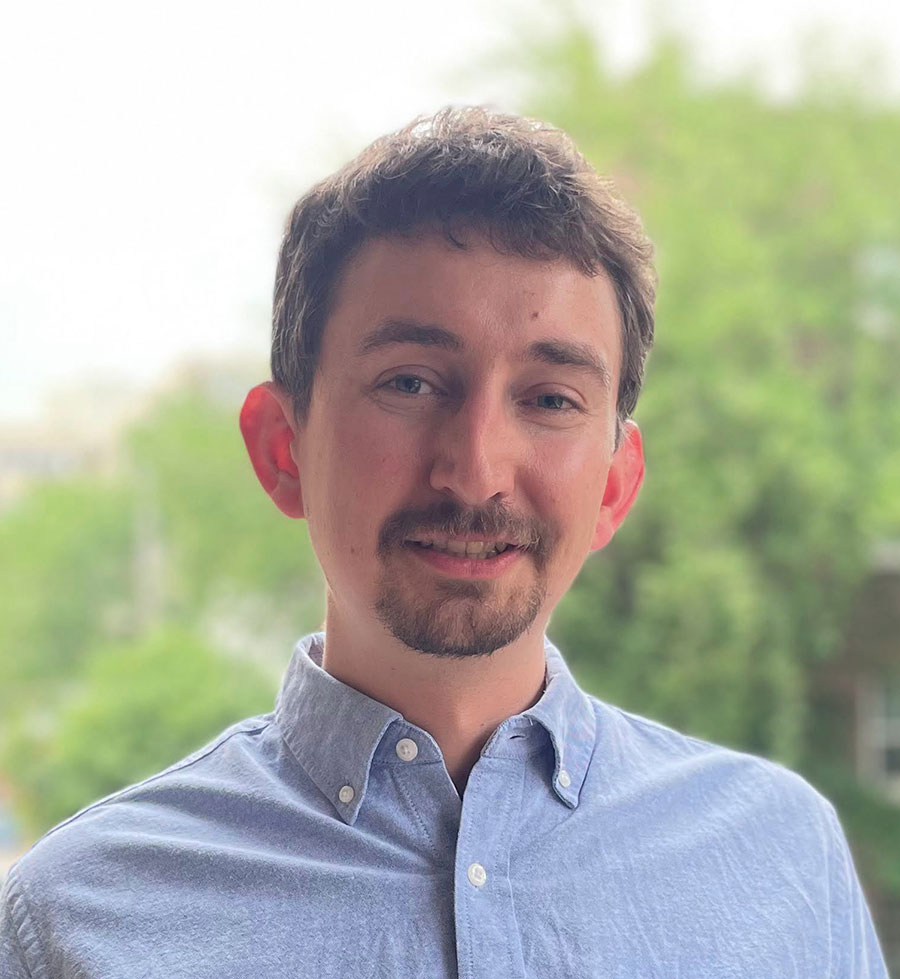
A headshot of Daniel Fried wearing a blue dress shirt in front of a blurred green background

August 28, 2026

Fried Receives NSF CAREER Award

LTI assistant professor Daniel Fried has received the prestigious award for his work on interaction between humans and AI systems

Daniel Fried, an assistant professor in the Language Technologies Institute at Carnegie Mellon University, has received a National Science Foundation (NSF) Faculty Early Career Development Program (CAREER) award for his research on improving interaction and communication between people and AI systems.

One of the NSF’s most prestigious offerings, the CAREER award is given each year to early career faculty “who have the potential to serve as academic role models” and “lead advances in the mission of their department or organization,” according to the foundation.

Fried’s work targets the friction that sometimes arises between AI systems and their human users when the complex tasks carried out by the systems require nuanced correction.

“AI agents now help with very complex tasks, like writing entire software applications, analyzing data or navigating the web,” Fried said. “But communicating corrections to agents can require substantial time and effort from people.”

Fried’s work seeks to develop ways for users to provide feedback that’s robust enough to comprehensively instruct the agent on what it needs to correct, without being so burdensome for the user that they wish they had just completed the task themselves.

To gauge the success of an agent, Fried and his team measure not only how satisfied human testers are with an agent’s output, but also the amount of effort the users had to put in to get that result.

The upshot, Fried explained, is more time gained for humans to do the things they want to be doing.

“Society is now spending enormous numbers of person-hours interacting with AI agents,” he said. “I want our collective interaction effort to go farther so we can all spend more time doing other things.”

Fried noted his gratitude to the NSF, his colleagues and his students, singling out two of them. “Zora Wang’s work on inducing reusable skills for agents and Saujas Vaduguru’s work on pragmatic program synthesis and multimodal instruction were particularly helpful, ” he said.

Fried joins LP Morency and Noah Smith as recipients of NSF CAREER awards from the LTI.