


惯性聚合 高效追踪和阅读你感兴趣的博客、新闻、科技资讯
阅读原文 在惯性聚合中打开

推荐订阅源

博客园_首页
IT之家
IT之家
博客园 - Franky
Stack Overflow Blog
Stack Overflow Blog
宝玉的分享
宝玉的分享
Recent Announcements
Engineering at Meta
Engineering at Meta
S
SegmentFault 最新的问题
V
Visual Studio Blog
freeCodeCamp Programming Tutorials: Python, JavaScript, Git & More
OSCHINA 社区最新新闻
OSCHINA 社区最新新闻
Last Week in AI
Last Week in AI
H
Help Net Security
V
V2EX
H
Hackread – Cybersecurity News, Data Breaches, AI and More
量子位
博客园 - 叶小钗
J
Java Code Geeks
博客园 - 【当耐特】
月光博客
月光博客
爱范儿
爱范儿
人人都是产品经理
人人都是产品经理
酷 壳 – CoolShell
酷 壳 – CoolShell
小众软件
小众软件

School of Computer Science News

Robotics Innovation Center Earns LEED Platinum Certification for Sustainable Construction AI4MiddleSchools Expands Nationwide Effort To Prepare Students for an AI-Powered Future Carvalho Earns NSF CAREER Award To Study Motivation and Learning Season Three of 'Does Compute' Now Available Rare Ventures Partners Rings NYSE Opening Bell Bringing Images to Life Through Touch - Robotics Institute Carnegie Mellon University Fried Receives NSF CAREER Award - Language Technologies Institute - School of Computer Science - Carnegie Mellon University PAIR Helps Students Find Their Place in AI Research Navigating the AI Era with a CMU Focus on Critical Thinking Kaess Named to Inaugural Chief of Naval Research Fellows Program Navigating the Moon Koedinger Wins Lifetime Achievement Award Carnegie Mellon Names Damion Shelton Associate VP and Executive Director of the Swartz Center for Entrepreneurship Hong Shen Discusses AI Safety at WEF Annual Meeting Erickson Earns NSF CAREER Award - Robotics Institute Carnegie Mellon University From Proof to Program: CMU and the Rise of AI-Driven Mathematics SCS Researchers Named to Inaugural ACM SIGSOFT Software Engineering Academy Healthcare Blind Spots: AI Models Prone To Fabricating Diagnoses - Robotics Institute Carnegie Mellon University You Can't Remove Humans From Software Engineering Designing the Future of Tech Governance AI, Single-Cell Technology Reveal How 3D Genome Differs in People With Alzheimer's Disease Tepper School of Business and School of Computer Science Partner to Launch AI for Business Executive Education Program Carnegie Mellon Researchers Lead Three DOE Genesis Mission Awards to Advance the Future of AI-Enabled Scientific Discovery Snake Robots Support Earthquake Search and Rescue in Venezuela Lindlbauer Receives NSF CAREER Award for Adaptive Extended Reality Interfaces Fredrikson Earns Test of Time Award for AI Security CMU Advances Defense Manufacturing and Military Education at Pennsylvania Defense and Innovation Summit Looking Ahead: AI Needs UI Liu Receives NSF CAREER Award Carnegie Foundry, Carnegie Mellon and American Drone Manufacturers Launch Initiative to Supercharge America
Satya Honored With Test of Time Award
Marylee Williams · 2026-08-07 · via School of Computer Science News

Mahadev Satyanarayanan (Satya), the Jaime Carbonell University Professor of Computer Science at Carnegie Mellon University, received a Test of Time Award for his work on a 2009 research paper, "The Case for VM-Based Cloudlets in Mobile Computing."

As part of IEEE Pervasive Computing's 25th anniversary, the publication recognized foundational research that defined this area of inquiry, choosing the "top eight most influential peer-reviewed articles published in IEEE Pervasive Computing based on long-term citation impact and download metrics."
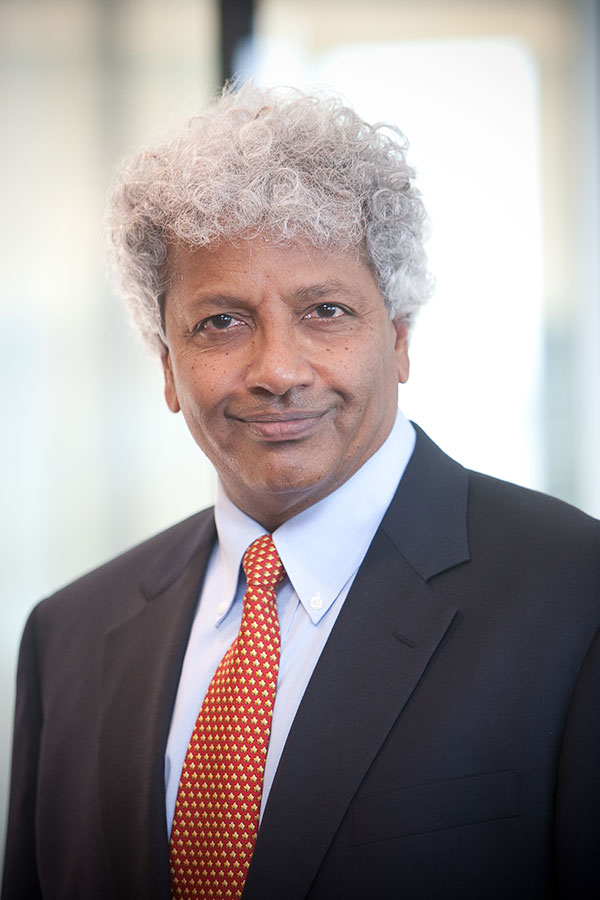
Portrait of Mahadev Satyanarayanan.
Mahadev Satyanarayanan (Satya), CMU's Jaime Carbonell University Professor of Computer Science, received an IEEE Pervasive Computing Test of Time Award for his work on cloudlets in mobile computing.

The paper Satya and collaborators published in 2009 went against the conventional thinking about the power of and potential limitations to cloud computing. Their research proposed using nearby, localized mini-clouds, called "cloudlets," to handle heavy processing for mobile devices. Keeping the computing close instead of sending it to a distant cloud eliminated network lag and allowed mobile apps to run instantly and smoothly.

These localized mini-clouds introduced edge computing — a distributed computing model that brings computation and data storage closer to the source of the data — years before the term became mainstream. Along with Satya, the research team on the 2009 paper included Paramvir Bahl, from Microsoft Research; Ramón Cáceres, formerly of AT&T Labs and now with Google; and Nigel Davies of Lancaster University.

"I think the important thing in science is to let the evidence take us where the truth is, and I am glad that the evidence confirmed what we had said," Satya noted. "It's possible that we could have missed something, and the original prediction could have been totally wrong. We obviously didn't feel that, otherwise we wouldn't have published that paper. And it feels very gratifying to know that we made the correct prediction."

Satya's current work in the Computer Science Department focuses on cyberphysical and cyberhuman systems that leverage edge computing, such as new applications and advances in drone usage or wearable cognitive assistance.

For more on the award, visit the IEEE Pervasive Computing website.