




惯性聚合 高效追踪和阅读你感兴趣的博客、新闻、科技资讯
阅读原文 在惯性聚合中打开

推荐订阅源

Hacker News: Ask HN
Hacker News: Ask HN
WordPress大学
WordPress大学
T
The Blog of Author Tim Ferriss
The GitHub Blog
The GitHub Blog
OSCHINA 社区最新新闻
OSCHINA 社区最新新闻
博客园 - 聂微东
A
About on SuperTechFans
Stack Overflow Blog
Stack Overflow Blog
雷峰网
雷峰网
Microsoft Azure Blog
腾讯CDC
爱范儿
爱范儿
酷 壳 – CoolShell
酷 壳 – CoolShell
博客园 - 【当耐特】
V
Visual Studio Blog
有赞技术团队
有赞技术团队
U
Unit 42
D
Docker
小众软件
小众软件
F
Full Disclosure
I
Intezer
Scott Helme
Scott Helme
P
Privacy International News Feed
P
Proofpoint News Feed
Engineering at Meta
Engineering at Meta
Google DeepMind News
B
Blog
Martin Fowler
Martin Fowler
Threat Intelligence Blog | Flashpoint
Vercel News
Vercel News
奇客Solidot–传递最新科技情报
奇客Solidot–传递最新科技情报
Spread Privacy
Spread Privacy
宝玉的分享
宝玉的分享
S
Security Affairs
www.infosecurity-magazine.com
月光博客
月光博客
C
Cisco Blogs
云风的 BLOG
云风的 BLOG
Schneier on Security
钛媒体:引领未来商业与生活新知
钛媒体:引领未来商业与生活新知
T
Threat Research - Cisco Blogs
量子位
Hacker News - Newest:
Hacker News - Newest: "LLM"
H
Heimdal Security Blog
N
Netflix TechBlog - Medium
H
Hacker News: Front Page
P
Proofpoint News Feed
G
GRAHAM CLULEY
V
Vulnerabilities – Threatpost
S
Schneier on Security

Comments for The Eclectic Light Company

Should you try Golden Gate beta? Solutions to Saturday Mac riddles 367 In the shadow: Diego Velázquez Comment on Last Week on My Mac: Freshen up your documents by David Comment on Happy 250th birthday America 2 by mac Happy 250th birthday America 1 Brushstrokes: Portraits 1760-1877 Spotlight and Core Spotlight are different Comment on Sort order, collation and the Finder by eyelessjerry Comment on Apple has just released macOS 26.5.2 Tahoe by Derek Currie Great Ladies of Impressionism: Marie Bracquemond Comment on Get more from your Mac’s log by extending its duration by John Gilbert Comment on Keep your Mac cool using physics by F Portraits of trees: Coppices and pollards Comment on Firmware has become complicated again by John Woods Comment on Logistician 1.2 fixes a couple of bugs by info395288a4d1d Comment on What does Activity Monitor measure? by hoakley Last Week on My Mac: Spotlight on semantics An American in Paris: paintings of Henry Ossawa Tanner 1902-1930 An American in Paris: paintings of Henry Ossawa Tanner 1880-1902 Great Ladies of Impressionism: Berthe Morisot 1874-1891 What to do with a hot Mac Deprecations and removals from Golden Gate Brushstrokes: From El Greco to Rembrandt Portraits of trees: Dutch Golden Age How to get the most from SilentKnight 3 Comment on Hero or hooligan: Achilles becomes the warrior by Deborah J. Brasket Solutions to Saturday Mac riddles 365 Comment on SilentKnight 3.0 for Apple silicon Macs running Sequoia and later (full release) by michaelriccioli Comment on Last Week on My Mac: Uncompressed compressed files by fds Comment on Explainer: Memory by jzonedotcom Comment on Colin Campbell Cooper painting America: 1896-1910 by House of Heart Brushstrokes: 16th century What can you do when an app uses too much memory? SilentKnight 3 second beta adds text and JSON reporting In the shadow: Caravaggism What to do with your encrypted HFS+ disks First beta-test version of SilentKnight 3 for Apple silicon Macs Hero or hooligan: Jason and Medea Comment on Fix documents that won’t open as expected using Quarant2 by EcleX Last Week on My Mac: The mystery of Safari’s Web Archives Last Week on My Mac: Why is it so hard to open a document? Explainer: Disk encryption In the shadow: Caravaggio Brushstrokes: innovators of the first century Changing Paintings: 36 Theseus and the Minotaur macOS virtualisation is leaping forward in Golden Gate Why can’t Preview open that PDF? Crossing the Golden Gate, Intel support, and an update to SystHist Reading the Finder’s Get Info dialog In memoriam Mary Cassatt: 2, 1880-81 Last Week on My Mac: What’s in a name? Explainer: Getting a location Get more from Get Info and the Finder’s contextual menu Stop your photos revealing your location Have you saved thousands of versions? Versatility 1.2 might be what you need Apple has released an update to XProtect for all macOS Apple has released macOS Tahoe 26.5.1 Comment on What Location Services do in macOS by Tristan Hubsch Comment on Protect files with the Locked or Immutable flag by markbot2zero Portraits of trees: Introduction Which tasks require mains power? Comment on Online reference to external displays for Apple silicon Macs by Brian What’s in that phishing email? How to search document versions Rubens’ Peace and War Comment on Last Week on My Mac: Syncing metadata in iCloud Drive by hoakley A weekend with Misia: 2 How to search Time Machine backups? Medium and message: Pottery How QuickLook provides thumbnails and previews Hunting extended attributes with an update to xattred Saturday Mac riddles 360 Comment on How to preserve versions, and how to create versioned PDFs by markbot2zero Comment on What gets synced in iCloud Drive? by hoakley Solutions to Saturday Mac riddles 359 Last Week on My Mac: snapshots, the elephant in APFS How to check whether Spotlight is getting the right metadata macOS Tahoe no longer fully supports Time Capsules The bicentenary of Frederic Edwin Church: 1857-77 macOS virtual machines and audio-video syncing Comment on Use Finder tags for categories by Chuck Last Week on My Mac: Dependency and skill fade Comment on Virtualisation on Apple silicon Macs is different by AndyS Painting Pandora and her box: 1883-1919 Mac Easter eggs Painting Spring blossom 2 Comment on The macOS Natural Language framework and Nalaprop by Ingo Comment on The MACL extended attribute by hoakley On Reflection: Cézanne Privacy: Which folders are protected in Tahoe? Last Week on My Mac: Root cause analysis and ClickFix Last Week on My Mac: Root cause analysis and ClickFix Last Week on My Mac: Root cause analysis and ClickFix Last Week on My Mac: Root cause analysis and ClickFix Why you can’t trust Privacy & Security How can I now have two apps named Pages? How to survive the loss of Rosetta Use Fallback Recovery on Apple silicon Macs Clean install macOS
Hero or hooligan: Theseus and the sandals
hoakley · 2026-05-18 · via Comments for The Eclectic Light Company

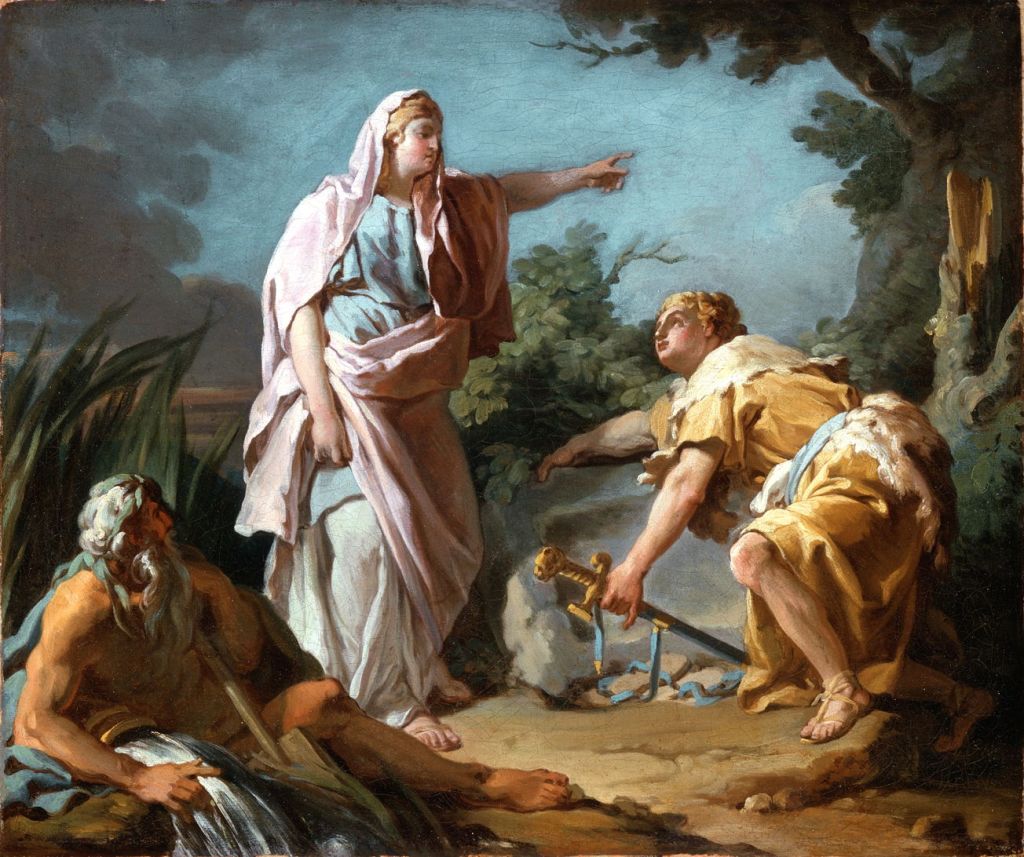
Nicolas-Guy Brenet (1728–1792), Aethra Showing her Son Theseus the Place Where his Father had Hidden his Arms (1768), oil on canvas, 50.2 × 59.7 cm, Los Angeles County Museum of Art, Los Angeles, CA. Wikimedia Commons.

Although legend held that Theseus was the founder of the city of Athens, it’s probably more accurate to attribute to him its early growth and development. Despite being ranked among the great heroes of classical Greece, he also displayed fundamental flaws. For a long time, the life of Theseus was as celebrated a series of myths as those of Heracles, Jason or Aeneas.

In about 1340-41, Giovanni Boccaccio wrote an epic poem of almost ten thousand lines Teseida, or The Theseid, which in turn inspired The Knight’s Tale in Chaucer’s Canterbury Tales.

davissotheseus
Paolo da Visso (1431–1481) Scenes from Boccaccio’s Teseida (date not known), front of a cassone, further details not known. Wikimedia Commons.

Paolo da Visso painted these three scenes from Boccaccio’s epic on the front of a cassone, a visual equivalent of Plutarch’s account of the adventures of Theseus.

Like Perseus, Theseus had complicated origins. His mortal father, Aegeus the king of a far smaller Athens, had been childless, but following the prophecy of the oracle at Delphi, the King of Troezen got him drunk and packed him off to bed with his daughter Aethra. She was instructed in a dream to leave Aegeus asleep, and to go to a nearby island, where she was also impregnated by the god Poseidon. Theseus, who is presumed to have been conceived that night, was thus considered to have double paternity, by god and man, a qualification for the heroes of myth.

After he had buried his sword and sandals under a massive rock, Aegeus returned to Athens. He told Aethra that when his son grew up, she should tell him to move the rock, as a test. If he succeeded, then he should take the sandals and sword as evidence of his paternity.

When Theseus was old enough, his mother Aethra showed him the rock, and told him Aegeus’ instructions. Theseus moved the rock, found the sandals and sword, and then undertook an epic journey overland to his father in Athens.

delahyretheseusaethra
Laurent de La Hyre (1606–1656), Theseus And His Mother Aethra (1635-36), oil on canvas, 141 × 118.5 cm, Szépművészeti Múzeum, Budapest, Hungary. Wikimedia Commons.

One of the earliest depictions of the young Theseus is Laurent de La Hyre’s Theseus And His Mother Aethra (1635-36). This shows the lad lifting a heavy pillar to reveal a pair of shoes and a sword.

poussintheseusrecovering
Nicolas Poussin (1594–1665) and Jean Lemaire (1598–1659), Theseus Recovering his Father’s Sword (c 1638), oil on canvas, 98 x 134 cm, Musée Condé, Chantilly, France. Wikimedia Commons.

In one of his rare collaborative paintings, Nicolas Poussin worked with Jean Lemaire to tell this fragment of the story in Theseus Recovering his Father’s Sword, from about 1638. They draw a marked contrast between the two actors: Theseus, destined to be a great hero, looks rough and brutish, while his mother Aethra wouldn’t look out of place standing in for the Madonna.

brenetaethrashowingtheseus
Nicolas-Guy Brenet (1728–1792), Aethra Showing her Son Theseus the Place Where his Father had Hidden his Arms (1768), oil on canvas, 50.2 × 59.7 cm, Los Angeles County Museum of Art, Los Angeles, CA. Wikimedia Commons.

Nicolas-Guy Brenet’s more sketchy Aethra Showing her Son Theseus the Place Where his Father had Hidden his Arms (1768) adds a river god for good measure, and has Aethra giving Theseus marching orders to go find his father.

balestratheseusfatherssword
Antonio Balestra (1666–1740), Theseus Discovering his Father’s Sword (c 1725), oil on canvas, 287 x 159 cm, Private collection. Wikimedia Commons.

Antonio Balestra’s Theseus Discovering his Father’s Sword (c 1725) makes Theseus look less than enthusiastic to follow his mother’s directions.

Aethra told her son to travel by sea to take the sword and sandals to his father, but inspired by Heracles he chose to travel overland instead.

Like his hero, Theseus had a series of adventures on this journey. He first killed Periphetes, who had wielded a large club at him; impressed by this club, he took it and killed another opponent, Sinis, raped his daughter and made her pregnant. Theseus went out of his way to meet the fearsome Crommyonian Sow, which he also killed. Coming to the borders of Megara, Theseus met Sciron, whom he threw down a cliff to his death, and killed another two people before reaching the city.

Theseus found Athens, and his father’s court, in disarray, with the king cohabiting with the sorceress Medea, who had promised to cure his lack of children. Aegeus remained unaware of Theseus’ true identity, but invited him to a banquet, at which Medea, acting in conspiracy with the king, tried to get Theseus to drink from a goblet laced with the poison aconite.

Luckily for Theseus, just before he was going to drink from the goblet, he drew his father’s sword, making as if to carve the meat with it. Aegeus recognised the sword, realised that his guest who was just about to drink poison was his son, and knocked the goblet from Theseus’ hand to stop his lips from touching it.
giberttheseusrecognised
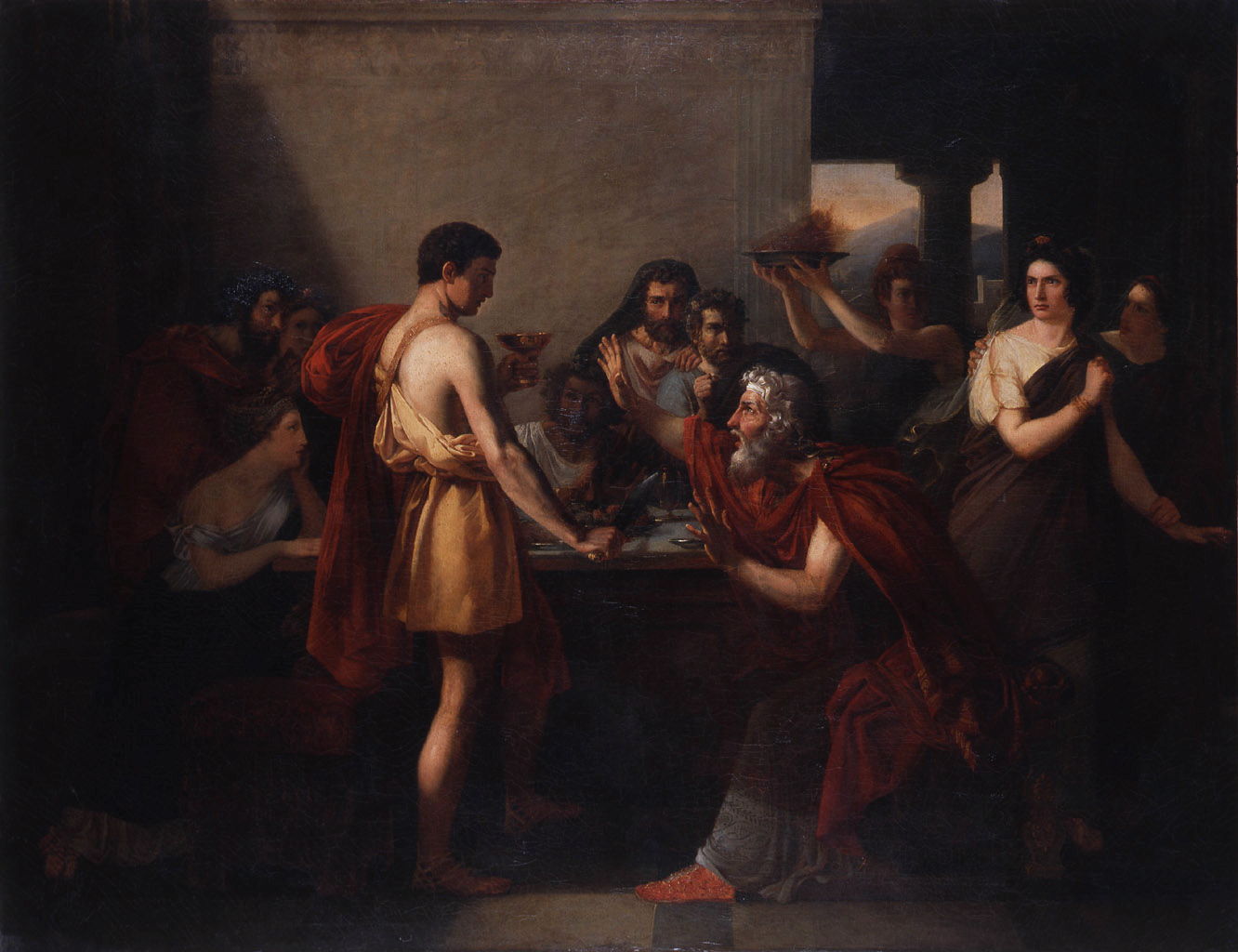
Antoine-Placide Gibert (1806-1875), Theseus Recognised by his Father (1832), oil, dimensions not known, Musée des Beaux-Arts, Bordeaux, France. Image by VladoubidoOo, via Wikimedia Commons.

In Antoine-Placide Gibert’s Theseus Recognised by his Father (1832), the three principal actors are arranged almost linearly across the canvas. Just left of centre, Theseus stands, his head in profile, the fateful cup in his left hand, and his father’s sword in his right. The king is just right of centre, looking Theseus in the eye, and appearing animated if not alarmed. At the far right is Medea, her face like thunder, sensing that her plot to kill Theseus is about to fall apart.
flandrintheseusrecognized
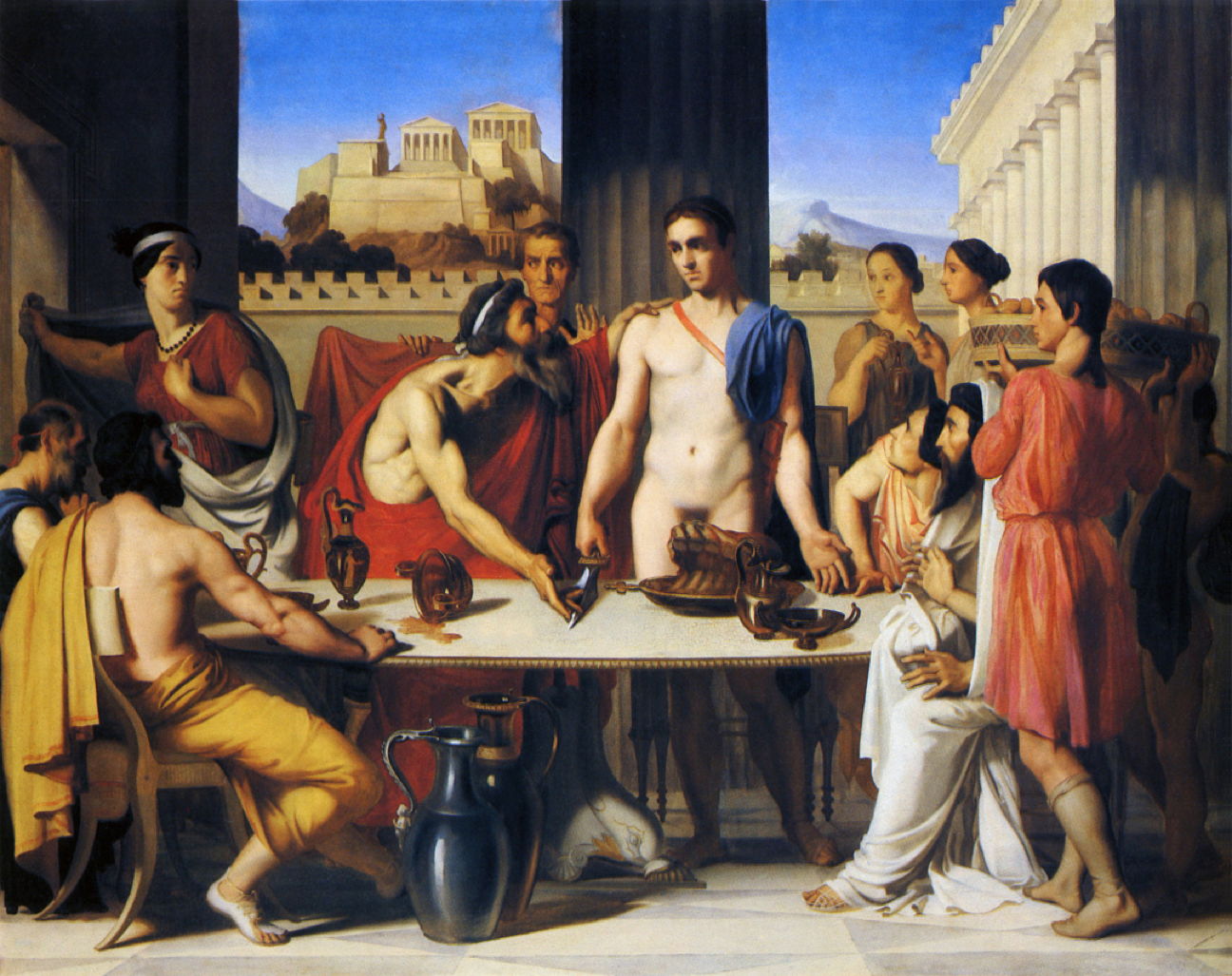
Hippolyte Flandrin (1809–1864), Theseus Recognized by his Father (1832), oil on canvas, 114.9 × 146.1 cm, École nationale supérieure des Beaux-Arts, Paris. Wikimedia Commons.

Hippolyte Flandrin’s Theseus Recognized by his Father beat Gibert’s painting for the Prix de Rome in 1832, and has a more neoclassical look, as if influenced by Jacques-Louis David. With a view of the Acropolis in the background, this shows the moment immediately after Aegeus has recognised his son, and the cup of aconite lies spilt on the table. Theseus, conspicuously naked, stands in the middle of the canvas, his father’s sword held rather limply in his right hand. Aegeus stands to the left of centre, talking emotionally to his son.

Of all the characters shown in this painting, it’s Medea who is the most fascinating. Stood at the far left, she appears to be on her way out. She is po-faced, and looks as if she has come not from Greece, but from central Asia.

Aegeus then declared Theseus to be his heir and successor as King of Athens. This was opposed by the sons of Pallas, who tried to attack the city. Theseus was tipped off by one of their men, surprised his opponents, and killed the lot of them. Like his hero Heracles, Theseus then set out to deal with the problem posed by the Marathonian Bull, captured it, and drove it through the city of Marathon before sacrificing it to Apollo. He then went on to battle with another bull, this time on the island of Crete.