

惯性聚合 高效追踪和阅读你感兴趣的博客、新闻、科技资讯
阅读原文 在惯性聚合中打开

推荐订阅源

cs.AI updates on arXiv.org
Google DeepMind News
The GitHub Blog
The GitHub Blog
Engineering at Meta
Engineering at Meta
N
Netflix TechBlog - Medium
Y
Y Combinator Blog
aimingoo的专栏
aimingoo的专栏
A
About on SuperTechFans
V2EX - 技术
V2EX - 技术
Webroot Blog
Webroot Blog
Google Online Security Blog
Cyber Security Advisories - MS-ISAC
AI
AI
N
News and Events Feed by Topic
S
Secure Thoughts
www.infosecurity-magazine.com
The Cloudflare Blog
cs.CL updates on arXiv.org
T
Tailwind CSS Blog
Vercel News
Vercel News
V
Vulnerabilities – Threatpost
Spread Privacy
Spread Privacy
Know Your Adversary
Know Your Adversary
人人都是产品经理
人人都是产品经理
I
Intezer
Schneier on Security
Martin Fowler
Martin Fowler
J
Java Code Geeks
K
Kaspersky official blog
H
Heimdal Security Blog
O
OpenAI News
I
InfoQ
Exploit-DB.com RSS Feed
云风的 BLOG
云风的 BLOG
Hacker News - Newest:
Hacker News - Newest: "LLM"
Blog — PlanetScale
Blog — PlanetScale
S
Schneier on Security
S
Security @ Cisco Blogs
Security Latest
Security Latest
PCI Perspectives
PCI Perspectives
H
Hacker News: Front Page
C
CERT Recently Published Vulnerability Notes
博客园_首页
The Last Watchdog
The Last Watchdog
罗磊的独立博客
L
LINUX DO - 热门话题
U
Unit 42
月光博客
月光博客
Security Archives - TechRepublic
Scott Helme
Scott Helme

Comments for The Eclectic Light Company

Should you try Golden Gate beta? Solutions to Saturday Mac riddles 367 In the shadow: Diego Velázquez Comment on Last Week on My Mac: Freshen up your documents by David Comment on Happy 250th birthday America 2 by mac Happy 250th birthday America 1 Brushstrokes: Portraits 1760-1877 Spotlight and Core Spotlight are different Comment on Sort order, collation and the Finder by eyelessjerry Comment on Apple has just released macOS 26.5.2 Tahoe by Derek Currie Great Ladies of Impressionism: Marie Bracquemond Comment on Get more from your Mac’s log by extending its duration by John Gilbert Comment on Keep your Mac cool using physics by F Portraits of trees: Coppices and pollards Comment on Firmware has become complicated again by John Woods Comment on Logistician 1.2 fixes a couple of bugs by info395288a4d1d Comment on What does Activity Monitor measure? by hoakley Last Week on My Mac: Spotlight on semantics An American in Paris: paintings of Henry Ossawa Tanner 1902-1930 An American in Paris: paintings of Henry Ossawa Tanner 1880-1902 Great Ladies of Impressionism: Berthe Morisot 1874-1891 What to do with a hot Mac Deprecations and removals from Golden Gate Portraits of trees: Dutch Golden Age How to get the most from SilentKnight 3 Comment on Hero or hooligan: Achilles becomes the warrior by Deborah J. Brasket Solutions to Saturday Mac riddles 365 Comment on SilentKnight 3.0 for Apple silicon Macs running Sequoia and later (full release) by michaelriccioli Comment on Last Week on My Mac: Uncompressed compressed files by fds Comment on Explainer: Memory by jzonedotcom Comment on Colin Campbell Cooper painting America: 1896-1910 by House of Heart Brushstrokes: 16th century What can you do when an app uses too much memory? SilentKnight 3 second beta adds text and JSON reporting In the shadow: Caravaggism What to do with your encrypted HFS+ disks First beta-test version of SilentKnight 3 for Apple silicon Macs Hero or hooligan: Jason and Medea Comment on Fix documents that won’t open as expected using Quarant2 by EcleX Last Week on My Mac: The mystery of Safari’s Web Archives Last Week on My Mac: Why is it so hard to open a document? Explainer: Disk encryption In the shadow: Caravaggio Brushstrokes: innovators of the first century Changing Paintings: 36 Theseus and the Minotaur macOS virtualisation is leaping forward in Golden Gate Why can’t Preview open that PDF? Crossing the Golden Gate, Intel support, and an update to SystHist Reading the Finder’s Get Info dialog In memoriam Mary Cassatt: 2, 1880-81 Last Week on My Mac: What’s in a name? Explainer: Getting a location Get more from Get Info and the Finder’s contextual menu Stop your photos revealing your location Have you saved thousands of versions? Versatility 1.2 might be what you need Apple has released an update to XProtect for all macOS Apple has released macOS Tahoe 26.5.1 Comment on What Location Services do in macOS by Tristan Hubsch Comment on Protect files with the Locked or Immutable flag by markbot2zero Portraits of trees: Introduction Which tasks require mains power? Comment on Online reference to external displays for Apple silicon Macs by Brian What’s in that phishing email? How to search document versions Rubens’ Peace and War Comment on Last Week on My Mac: Syncing metadata in iCloud Drive by hoakley A weekend with Misia: 2 How to search Time Machine backups? Medium and message: Pottery Hero or hooligan: Theseus and the sandals How QuickLook provides thumbnails and previews Hunting extended attributes with an update to xattred Saturday Mac riddles 360 Comment on How to preserve versions, and how to create versioned PDFs by markbot2zero Comment on What gets synced in iCloud Drive? by hoakley Solutions to Saturday Mac riddles 359 Last Week on My Mac: snapshots, the elephant in APFS How to check whether Spotlight is getting the right metadata macOS Tahoe no longer fully supports Time Capsules The bicentenary of Frederic Edwin Church: 1857-77 macOS virtual machines and audio-video syncing Comment on Use Finder tags for categories by Chuck Last Week on My Mac: Dependency and skill fade Comment on Virtualisation on Apple silicon Macs is different by AndyS Painting Pandora and her box: 1883-1919 Mac Easter eggs Painting Spring blossom 2 Comment on The macOS Natural Language framework and Nalaprop by Ingo Comment on The MACL extended attribute by hoakley On Reflection: Cézanne Privacy: Which folders are protected in Tahoe? Last Week on My Mac: Root cause analysis and ClickFix Last Week on My Mac: Root cause analysis and ClickFix Last Week on My Mac: Root cause analysis and ClickFix Last Week on My Mac: Root cause analysis and ClickFix Why you can’t trust Privacy & Security How can I now have two apps named Pages? How to survive the loss of Rosetta Use Fallback Recovery on Apple silicon Macs Clean install macOS
Brushstrokes: From El Greco to Rembrandt
raggedapple · 2026-06-25 · via Comments for The Eclectic Light Company

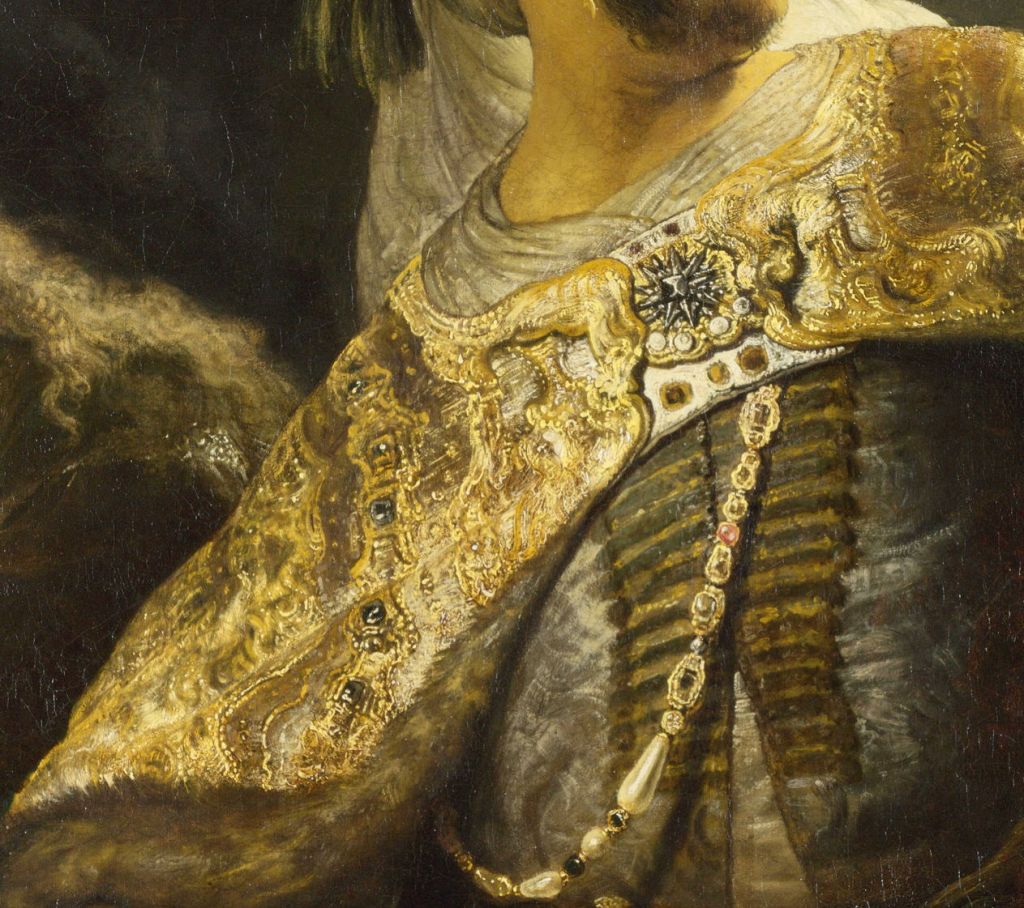
Rembrandt Harmenszoon van Rijn (1606-1669), Belshazzar's Feast (detail) (c 1635-1638), oil on canvas, 167.6 x 209.2 cm, The National Gallery, London. Wikimedia Commons.

By the late sixteenth century, well-known painters were showing their brushstrokes in textures of fabrics and hair, but flesh and most other details continued to be rendered precisely. This was to change again in the early seventeenth century, in the paintings of El Greco, Rubens and Rembrandt.

El Greco was originally Greek, and his real name was Doménikos Theotokópoulos (Δομήνικος Θεοτοκόπουλος), but he was born on the island of Crete when it was a Venetian colony. He trained in post-Byzantine art there, and travelled to Venice in about 1567. In 1570 he moved to Rome, and finally settled in Toledo, Spain, in 1577, when he was 36. Thus his tendency towards colorito rather than disegno may be the result of his Venetian training.
elgrecoannunciation
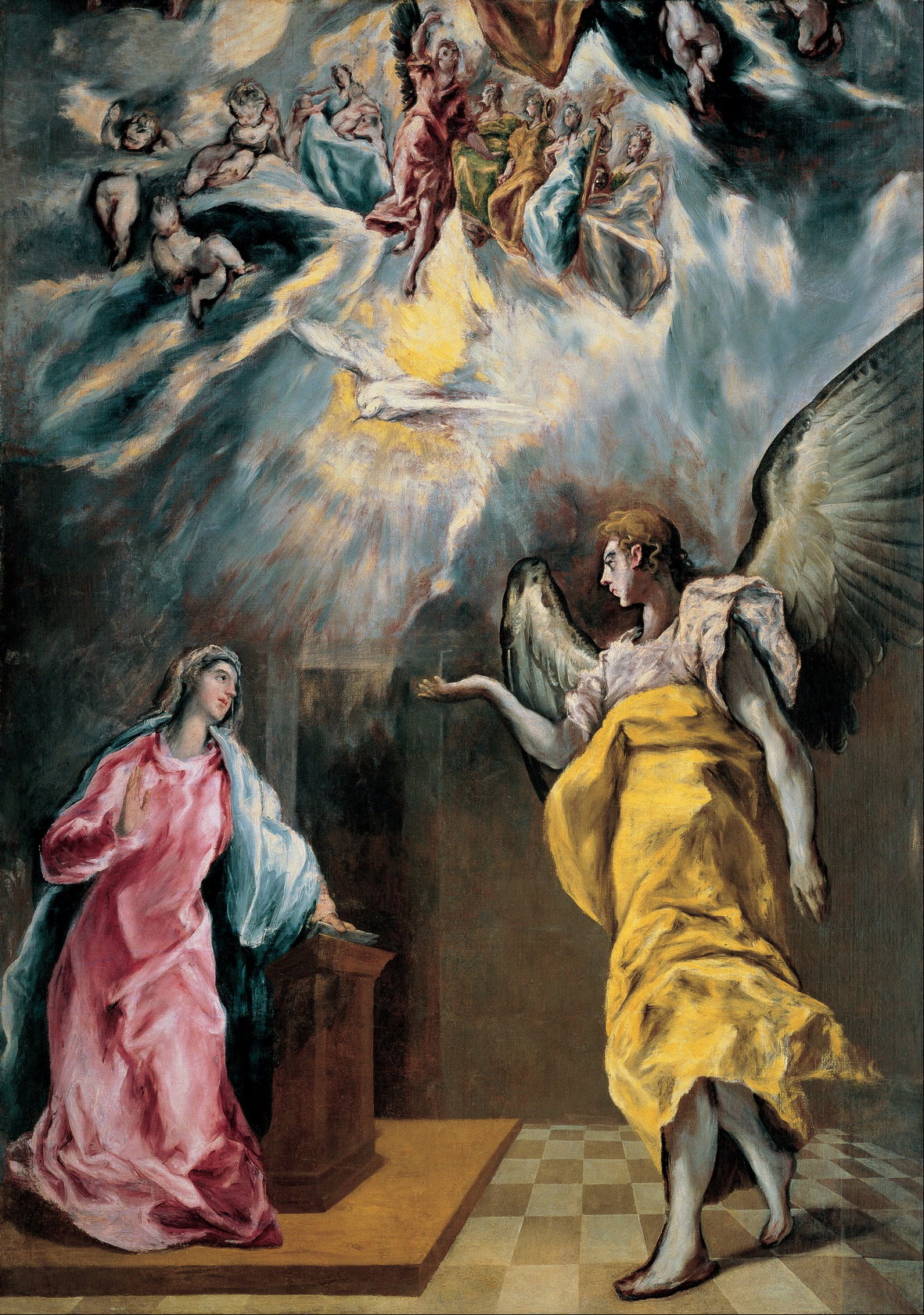
El Greco (Doménikos Theotokópoulos) (1541–1614), The Annunciation (1614), oil on canvas, 294 x 209 cm, Fundación Banco Santander, Madrid. Wikimedia Commons.

El Greco’s Annunciation (1614) is obviously rich in visible brushstrokes, particularly in its fabrics, and the heavenly host above.

elgrecoannunciationdet
El Greco (Doménikos Theotokópoulos) (1541–1614), The Annunciation (detail) (1614), oil on canvas, 294 x 209 cm, Fundación Banco Santander, Madrid. Wikimedia Commons.

More detailed examination of those figures in the heavens shows how sketchy they are, with an abundance of visible marks.

elgrecovisionsaintjohn
El Greco (Doménikos Theotokópoulos) (1541–1614), The Vision of Saint John, or The Opening of the Fifth Seal (1608-14), oil on canvas, 222.3 x 193 cm, Metropolitan Museum of Art, New York, NY. Wikimedia Commons.

Another of his late works, The Vision of Saint John (1608-14) is quite unlike anything being painted by others at the time, and bears obvious marks in several passages, particularly those depicting fabrics.

elgrecovisionsaintjohndet
El Greco (Doménikos Theotokópoulos) (1541–1614), The Vision of Saint John, or The Opening of the Fifth Seal (detail) (1608-14), oil on canvas, 222.3 x 193 cm, Metropolitan Museum of Art, New York, NY. Wikimedia Commons.

This detail shows the rich brushstrokes in fabrics, and in the sky.

Peter Paul Rubens is at his most painterly in the many oil sketches he left as evidence of his much looser style.

rubenssleepingchildren
Peter Paul Rubens (1577–1640), Two Sleeping Children (c 1612-3), oil on panel, 50.5 x 65.5 cm, National Museum of Western Art, Tokyo. Wikimedia Commons.

This breathtaking study of Two Sleeping Children (c 1612-13) looks much later and looser than his finished works. Looking at the detail of the bedclothes below, there are abundant marks visible. In textiles and fabrics his marks give a natural feel to the material.

rubenssleepingchildrendet
Peter Paul Rubens (1577–1640), Two Sleeping Children (detail) (c 1612-3), oil on panel, 50.5 x 65.5 cm, National Museum of Western Art, Tokyo. Wikimedia Commons.

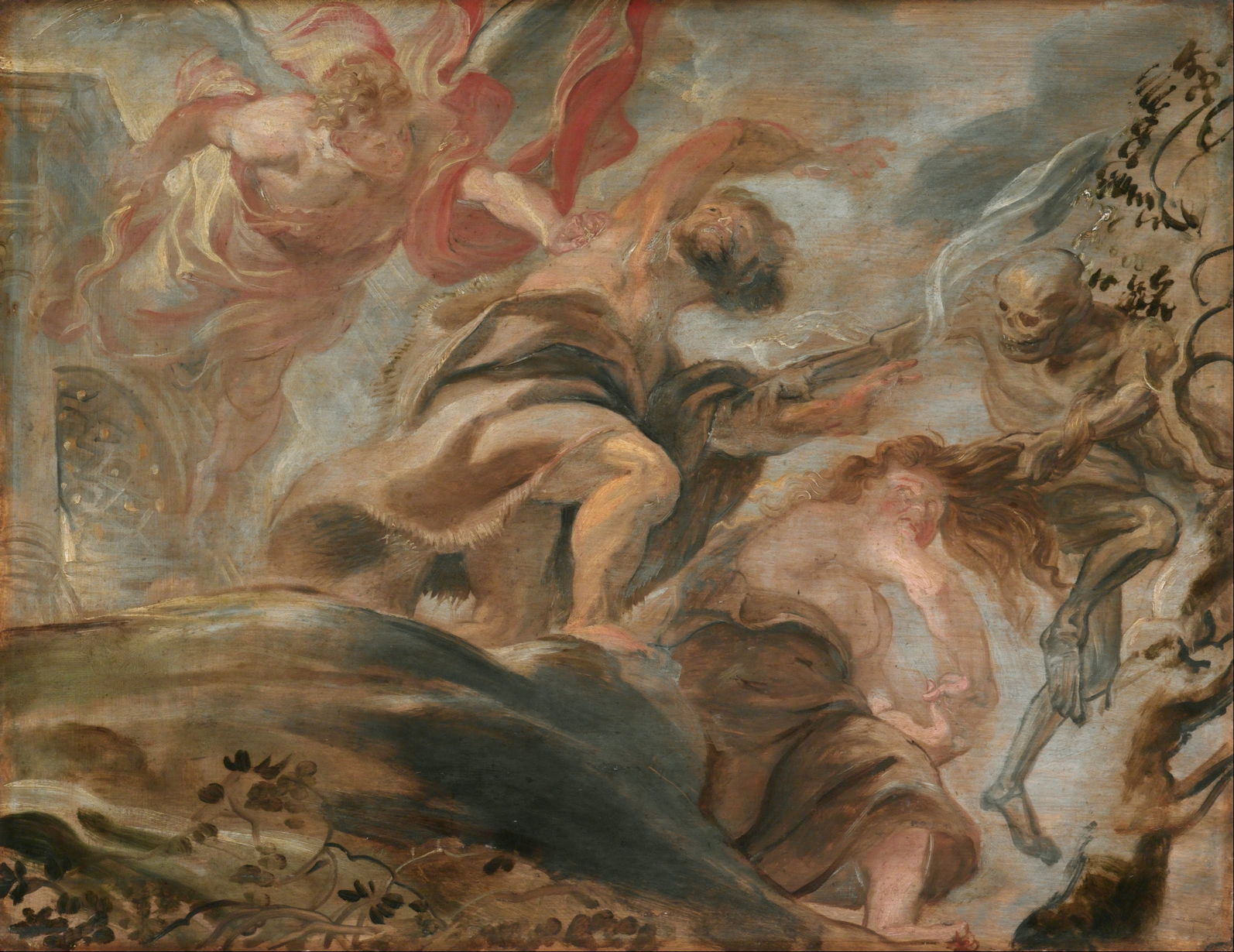
A further example is in Rubens’ study showing the Expulsion from the Garden of Eden (1620), where we don’t even need to look at details to see his marks.
rubensexpulsiongardeneden
Peter Paul Rubens (1577–1640), Expulsion from the Garden of Eden (1620), oil, dimensions not known, National Gallery in Prague, Prague. Wikimedia Commons.

My final painting from Rubens is an oil sketch, or modello, that he made of Aurora abducting Cephalus (c 1636), for one of a series of works commissioned by Philip the Fourth of Spain to decorate his hunting lodge just outside Madrid.

rubensauroraabdcephalus
Peter Paul Rubens (1577–1640), Aurora abducting Cephalus (c 1636), oil on oak panel, 30.8 x 48.5 cm, The National Gallery, London. Wikimedia Commons.

His marks are even more obvious in the detail view below, where they’re most prominent in fabrics.

rubensauroraabdcephalusdet
Peter Paul Rubens (1577–1640), Aurora abducting Cephalus (detail) (c 1636), oil on oak panel, 30.8 x 48.5 cm, The National Gallery, London. Wikimedia Commons.

The other Master whose work shows brushstrokes like no other until the nineteenth century is Rembrandt. Best-known for his large and highly-finished paintings, a unique exhibition of his late works in Europe in 2014-15 showed how radical were his changes in style.
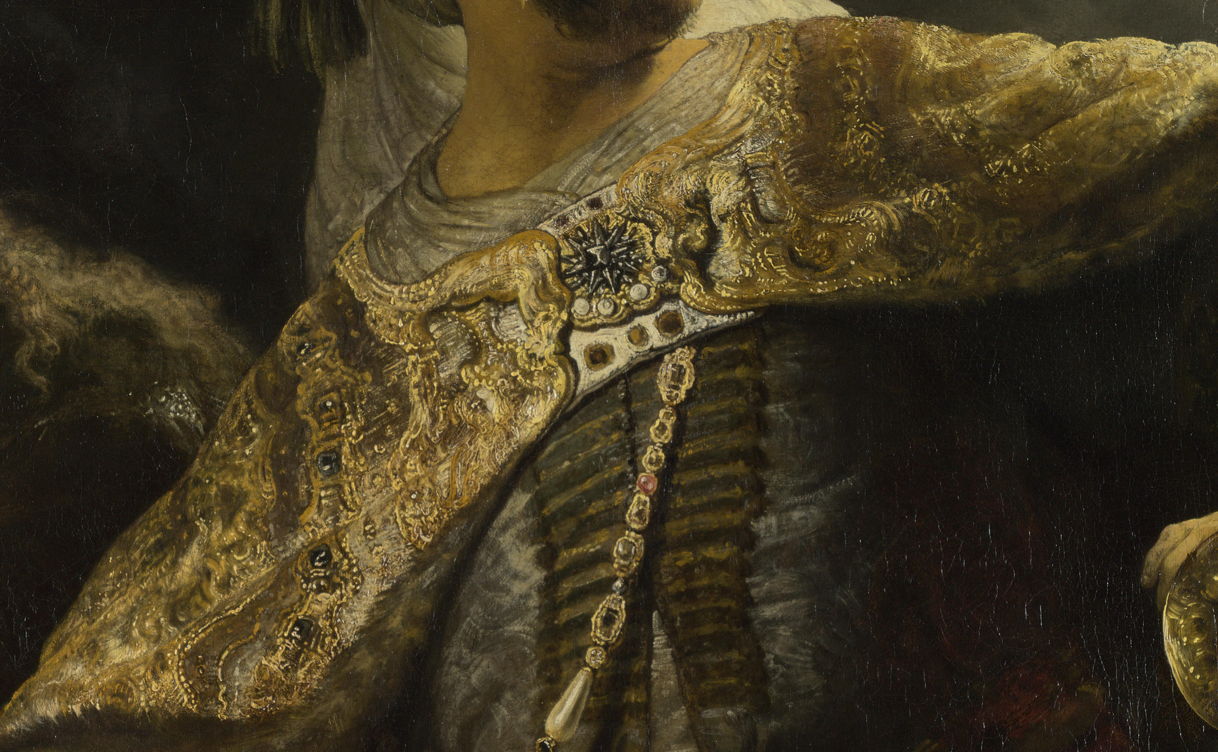
Rembrandt Harmenszoon van Rijn (1606-69), Belshazzar's Feast (detail) (c 1635-8), oil on canvas, 167.6 x 209.2 cm, The National Gallery, London. Courtesy of the National Gallery, via Wikimedia Commons.
Rembrandt Harmenszoon van Rijn (1606-69), Belshazzar’s Feast (detail) (c 1635-8), oil on canvas, 167.6 x 209.2 cm, The National Gallery, London. Courtesy of the National Gallery, via Wikimedia Commons.

These started when he was still enjoying commercial success, during his marriage to Saskia, as shown in this detail of some of the fabric of clothing in Belshazzar’s Feast (c 1635-8).

Rembrandt Harmenszoon van Rijn, The Jewish Bride (c 1667), oil on canvas, 121.5 x 166.5 cm, Rijksmuseum, Amsterdam. Wikimedia Commons.
Rembrandt Harmenszoon van Rijn (1606-69), The Jewish Bride (c 1667), oil on canvas, 121.5 x 166.5 cm, Rijksmuseum, Amsterdam. Wikimedia Commons.

His mark-making increased, both in the passages in which he left visible marks, and in the surfaces which he marked, right up to his death. It appears in the hands of the elderly, the glint of a knife, but above all in fabrics, as shown in the detail below of The Jewish Bride of about 1667.
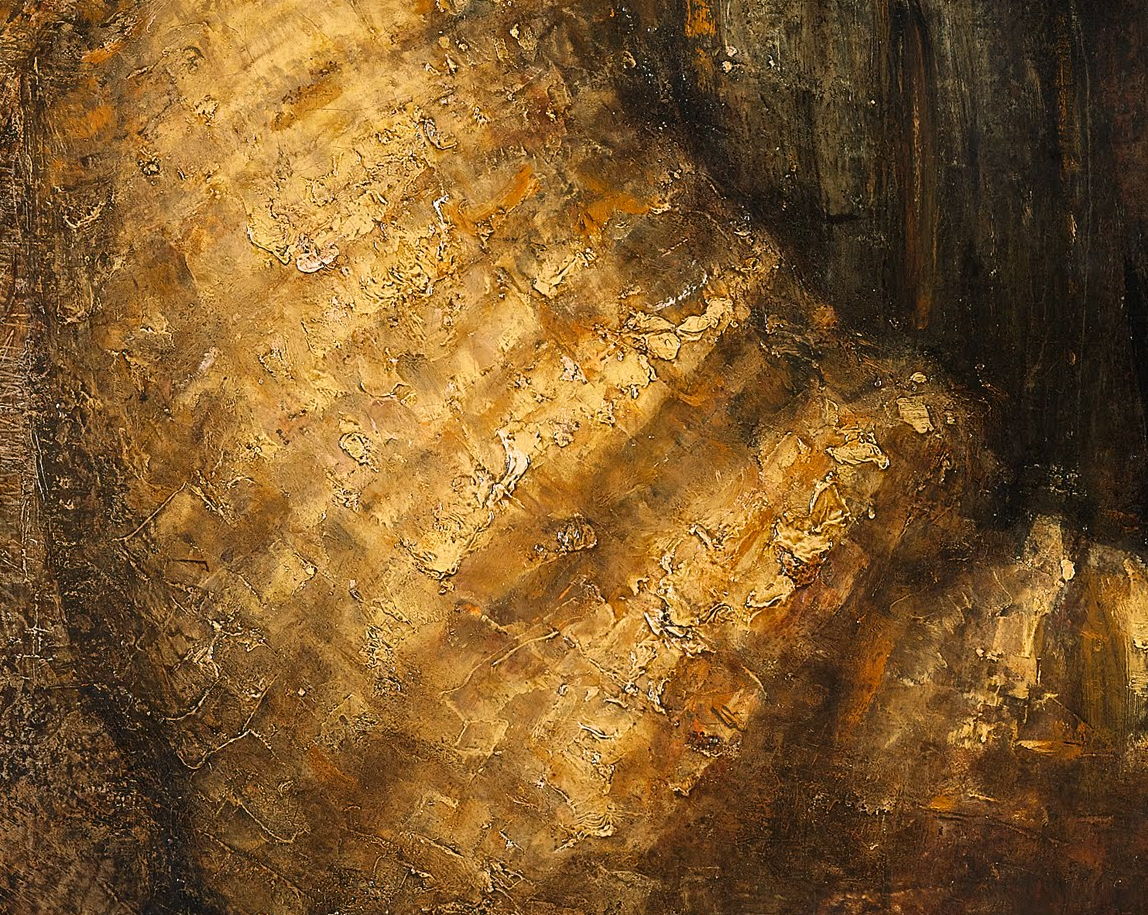
Rembrandt Harmenszoon van Rijn, The Jewish Bride (detail) (c 1667), oil on canvas, 121.5 x 166.5 cm, Rijksmuseum, Amsterdam. Wikimedia Commons.
Rembrandt Harmenszoon van Rijn (1606-69), The Jewish Bride (detail) (c 1667), oil on canvas, 121.5 x 166.5 cm, Rijksmuseum, Amsterdam. Wikimedia Commons.

Inevitably, this led to criticism for making his paintings ‘so coarse’, just as was going to happen two centuries later to Monet and his colleagues. For, as far as I can tell, Rembrandt was the first major artist to intentionally leave prominent passages in finished paintings with obvious brushstrokes and other marks. Their visual effect is stunning.

References

Bikker J & Weber GJM et al. (2014) Rembrandt, the Late Works, Yale UP. ISBN 978 18 5709 557 9.
Sutton P, Wieseman ME, van Hout N (2004) Drawn by the Brush, Oil Sketches by Peter Paul Rubens, Yale UP. ISBN 978 0 300 106268.
Sohm PL (1991) Pittoresco: Marco Boschini, his Critics, and their Critiques of Painterly Brushwork in Seventeenth- and Eighteenth-Century Italy, Cambridge UP. ISBN 978 0 5213 8256 4.