

惯性聚合 高效追踪和阅读你感兴趣的博客、新闻、科技资讯
阅读原文 在惯性聚合中打开

推荐订阅源

T
The Blog of Author Tim Ferriss
Threat Intelligence Blog | Flashpoint
大猫的无限游戏
大猫的无限游戏
月光博客
月光博客
博客园 - Franky
博客园 - 三生石上(FineUI控件)
爱范儿
爱范儿
腾讯CDC
罗磊的独立博客
OSCHINA 社区最新新闻
OSCHINA 社区最新新闻
T
Tailwind CSS Blog
P
Privacy International News Feed
The Cloudflare Blog
D
Darknet – Hacking Tools, Hacker News & Cyber Security
T
Threat Research - Cisco Blogs
Hugging Face - Blog
Hugging Face - Blog
Project Zero
Project Zero
S
SegmentFault 最新的问题
美团技术团队
WordPress大学
WordPress大学
奇客Solidot–传递最新科技情报
奇客Solidot–传递最新科技情报
云风的 BLOG
云风的 BLOG
Spread Privacy
Spread Privacy
CTFtime.org: upcoming CTF events
B
Blog
Cisco Talos Blog
Cisco Talos Blog
The GitHub Blog
The GitHub Blog
G
Google Developers Blog
T
The Exploit Database - CXSecurity.com
Simon Willison's Weblog
freeCodeCamp Programming Tutorials: Python, JavaScript, Git & More
C
Cisco Blogs
NISL@THU
NISL@THU
J
Java Code Geeks
C
CERT Recently Published Vulnerability Notes
T
Tor Project blog
K
Kaspersky official blog
宝玉的分享
宝玉的分享
Martin Fowler
Martin Fowler
I
Intezer
U
Unit 42
博客园 - 聂微东
C
Check Point Blog
Recent Announcements
Microsoft Azure Blog
Latest news
Latest news
博客园 - 司徒正美
G
GRAHAM CLULEY
S
Schneier on Security
V
Visual Studio Blog

Comments for The Eclectic Light Company

Should you try Golden Gate beta? Solutions to Saturday Mac riddles 367 In the shadow: Diego Velázquez Comment on Last Week on My Mac: Freshen up your documents by David Comment on Happy 250th birthday America 2 by mac Happy 250th birthday America 1 Brushstrokes: Portraits 1760-1877 Spotlight and Core Spotlight are different Comment on Sort order, collation and the Finder by eyelessjerry Comment on Apple has just released macOS 26.5.2 Tahoe by Derek Currie Great Ladies of Impressionism: Marie Bracquemond Comment on Get more from your Mac’s log by extending its duration by John Gilbert Comment on Keep your Mac cool using physics by F Portraits of trees: Coppices and pollards Comment on Firmware has become complicated again by John Woods Comment on Logistician 1.2 fixes a couple of bugs by info395288a4d1d Comment on What does Activity Monitor measure? by hoakley Last Week on My Mac: Spotlight on semantics An American in Paris: paintings of Henry Ossawa Tanner 1902-1930 An American in Paris: paintings of Henry Ossawa Tanner 1880-1902 Great Ladies of Impressionism: Berthe Morisot 1874-1891 What to do with a hot Mac Deprecations and removals from Golden Gate Brushstrokes: From El Greco to Rembrandt Portraits of trees: Dutch Golden Age How to get the most from SilentKnight 3 Comment on Hero or hooligan: Achilles becomes the warrior by Deborah J. Brasket Solutions to Saturday Mac riddles 365 Comment on SilentKnight 3.0 for Apple silicon Macs running Sequoia and later (full release) by michaelriccioli Comment on Last Week on My Mac: Uncompressed compressed files by fds Comment on Explainer: Memory by jzonedotcom Comment on Colin Campbell Cooper painting America: 1896-1910 by House of Heart Brushstrokes: 16th century What can you do when an app uses too much memory? SilentKnight 3 second beta adds text and JSON reporting In the shadow: Caravaggism What to do with your encrypted HFS+ disks First beta-test version of SilentKnight 3 for Apple silicon Macs Hero or hooligan: Jason and Medea Comment on Fix documents that won’t open as expected using Quarant2 by EcleX Last Week on My Mac: The mystery of Safari’s Web Archives Last Week on My Mac: Why is it so hard to open a document? Explainer: Disk encryption In the shadow: Caravaggio Brushstrokes: innovators of the first century Changing Paintings: 36 Theseus and the Minotaur macOS virtualisation is leaping forward in Golden Gate Why can’t Preview open that PDF? Crossing the Golden Gate, Intel support, and an update to SystHist Reading the Finder’s Get Info dialog Last Week on My Mac: What’s in a name? Explainer: Getting a location Get more from Get Info and the Finder’s contextual menu Stop your photos revealing your location Have you saved thousands of versions? Versatility 1.2 might be what you need Apple has released an update to XProtect for all macOS Apple has released macOS Tahoe 26.5.1 Comment on What Location Services do in macOS by Tristan Hubsch Comment on Protect files with the Locked or Immutable flag by markbot2zero Portraits of trees: Introduction Which tasks require mains power? Comment on Online reference to external displays for Apple silicon Macs by Brian What’s in that phishing email? How to search document versions Rubens’ Peace and War Comment on Last Week on My Mac: Syncing metadata in iCloud Drive by hoakley A weekend with Misia: 2 How to search Time Machine backups? Medium and message: Pottery Hero or hooligan: Theseus and the sandals How QuickLook provides thumbnails and previews Hunting extended attributes with an update to xattred Saturday Mac riddles 360 Comment on How to preserve versions, and how to create versioned PDFs by markbot2zero Comment on What gets synced in iCloud Drive? by hoakley Solutions to Saturday Mac riddles 359 Last Week on My Mac: snapshots, the elephant in APFS How to check whether Spotlight is getting the right metadata macOS Tahoe no longer fully supports Time Capsules The bicentenary of Frederic Edwin Church: 1857-77 macOS virtual machines and audio-video syncing Comment on Use Finder tags for categories by Chuck Last Week on My Mac: Dependency and skill fade Comment on Virtualisation on Apple silicon Macs is different by AndyS Painting Pandora and her box: 1883-1919 Mac Easter eggs Painting Spring blossom 2 Comment on The macOS Natural Language framework and Nalaprop by Ingo Comment on The MACL extended attribute by hoakley On Reflection: Cézanne Privacy: Which folders are protected in Tahoe? Last Week on My Mac: Root cause analysis and ClickFix Last Week on My Mac: Root cause analysis and ClickFix Last Week on My Mac: Root cause analysis and ClickFix Last Week on My Mac: Root cause analysis and ClickFix Why you can’t trust Privacy & Security How can I now have two apps named Pages? How to survive the loss of Rosetta Use Fallback Recovery on Apple silicon Macs Clean install macOS
In memoriam Mary Cassatt: 2, 1880-81
hoakley · 2026-06-08 · via Comments for The Eclectic Light Company

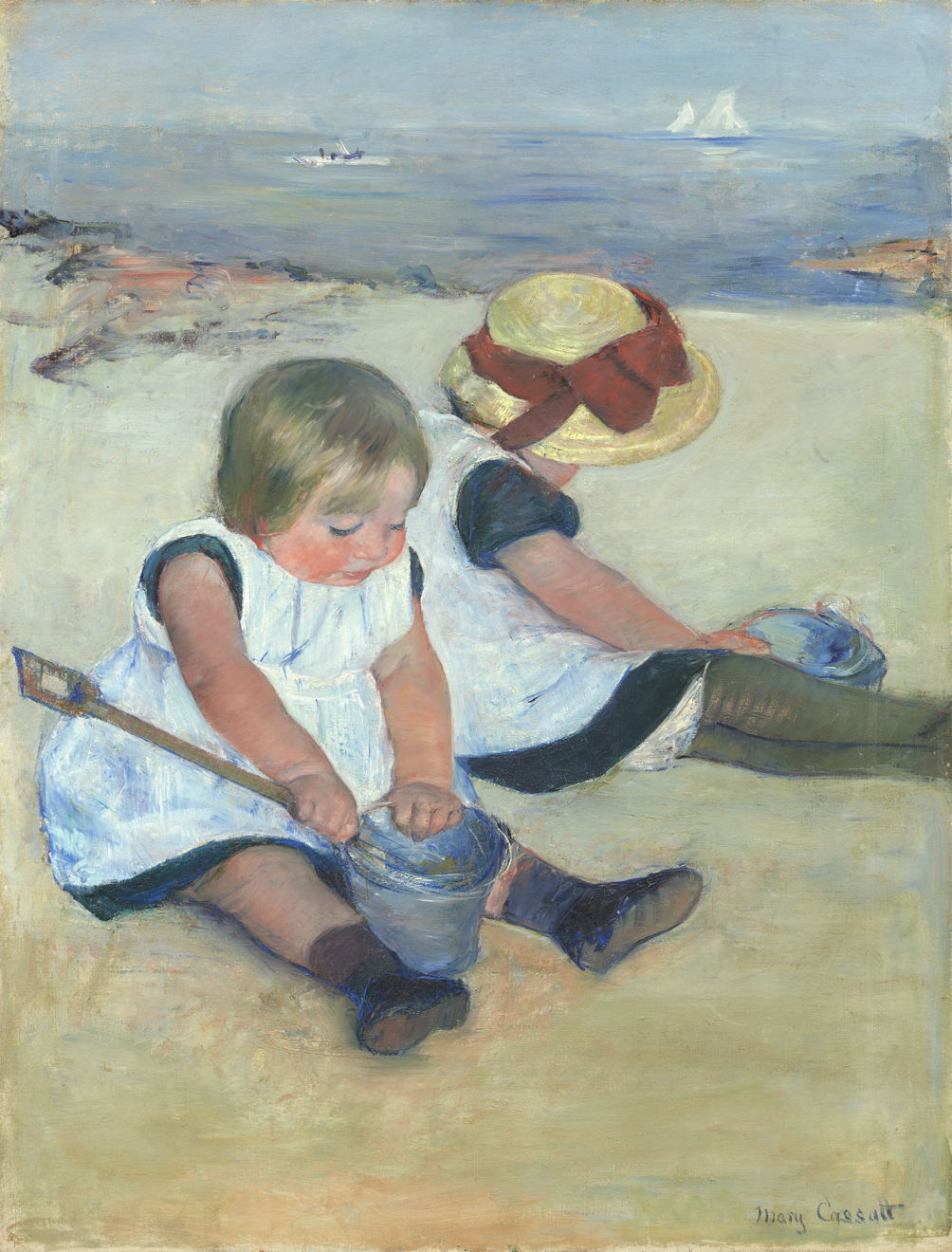
Mary Cassatt (1844–1926), Children Playing on the Beach (1884), oil on canvas, 97.4 x 74.2 cm, The National Gallery of Art, Washington, DC. Courtesy of The National Gallery of Art, via Wikimedia Commons.

During the winter of 1879-80, under the guidance of her close friend and mentor Edgar Degas, Mary Cassatt (1844–1926) worked hard to master print-making techniques. Some of her incentive came from the collaborative project involving Degas, Cassatt, Pissarro, and others to produce a journal of their prints.

Given the closeness and duration of their relationship, Degas and Cassatt seemed remarkably reticent about it. Repeated attempts to discover some underlying romantic or even sexual relationship have proved unsuccessful, and there is little doubt that it was mainly professional, with a varying element of friendship between two very private, forthright, and deeply self-driven artists.

cassattselfportrait
Mary Cassatt (1844–1926), Self-Portrait (c 1880), gouache and watercolour over graphite on paper, 32.7 x 24.6 cm, National Portrait Gallery, Washington, DC. Wikimedia Commons.

Neither artist was enamoured with self-portraiture: Cassatt’s watercolour Self-Portrait (c 1880) is small and hurried, if brilliantly made. She never appears to have painted any portrait of Degas, although her mentor painted his self-portrait on several occasions, and appears to have been happy for others to paint or photograph him.
degasmarycassatt
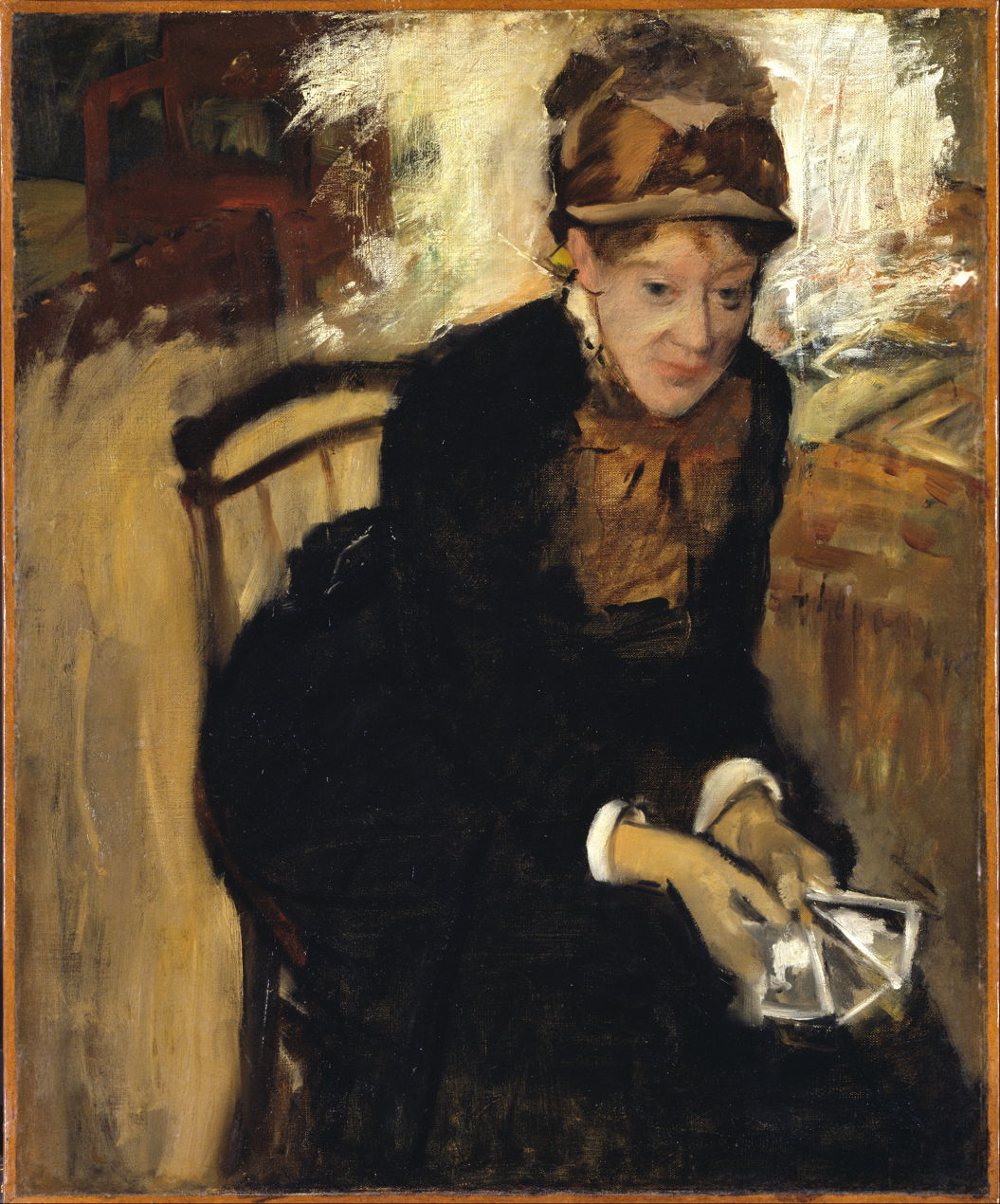
Edgar Degas (1834–1917), Mary Cassatt (Mary Cassatt Seated, Holding Cards) (c 1880-84), oil on canvas, 73.3 x 60 cm, National Portrait Gallery, Washington, DC. Wikimedia Commons.

Degas’ painting of Mary Cassatt Seated, Holding Cards (c 1880-84) might have seemed a good idea at the time, but in later life she came to hate it, and told others that she didn’t “want anyone to know that I posed for it.”

Cassatt continued to develop her painting style while she was working hard on her print-making.

cassattloge
Mary Cassatt (1844–1926), The Loge (c 1878-80), oil on canvas, 79.8 x 63.8 cm, The National Gallery of Art (Chester Dale Collection), Washington, DC. Courtesy of The National Gallery of Art, via Wikimedia Commons.

Another of her masterpieces of this period, The Loge (c 1878-80) shows two of Cassatt’s friends at the theatre, again using the reflection in a mirror behind them to provide great depth and establish the context. The woman on the left, whose mouth is obscured by her fan, is probably Mary Ellison from Philadelphia, who visited Paris at this time, while the other woman, who could be mistaken for a sister, is thought to have been the daughter of the poet Stephane Mallarmé, who was well-known in artistic circles.
cassattcupoftea
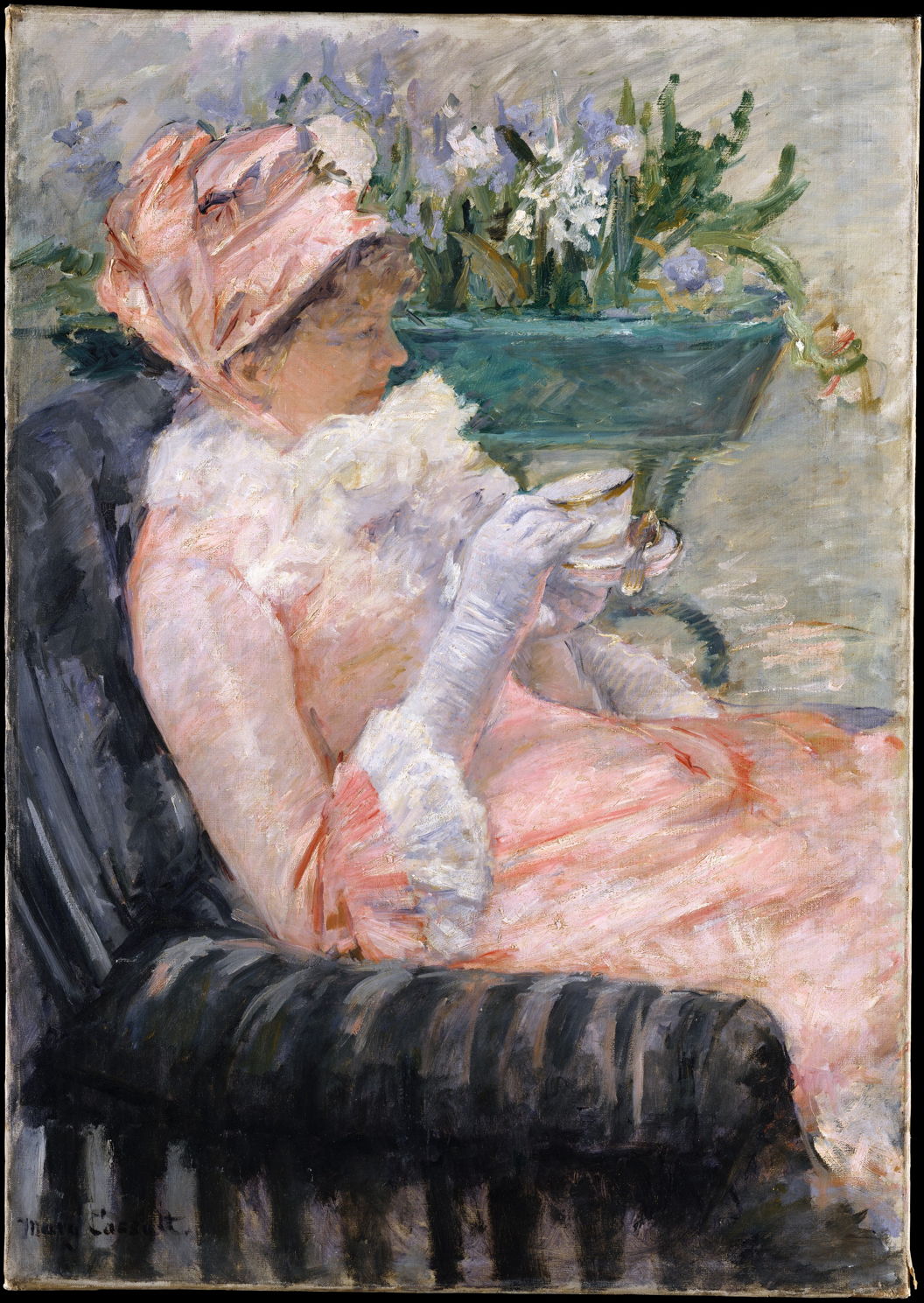
Mary Cassatt (1844–1926), The Cup of Tea (c 1880–81), oil on canvas, 92.4 x 65.4 cm, The Metropolitan Museum of Art, New York, NY. Courtesy of The Metropolitan Museum of Art, via Wikimedia Commons.

Cassatt continued to paint motifs from the sheltered world-view of an affluent woman, such as The Cup of Tea (c 1880–81), using wonderfully loose brushwork as seen in the oil sketches of Impressionists and others, like Giovanni Boldini (another member of Degas’ circle) and John Singer Sargent (who was starting his career in portraiture).
cassattlilacsinwindow
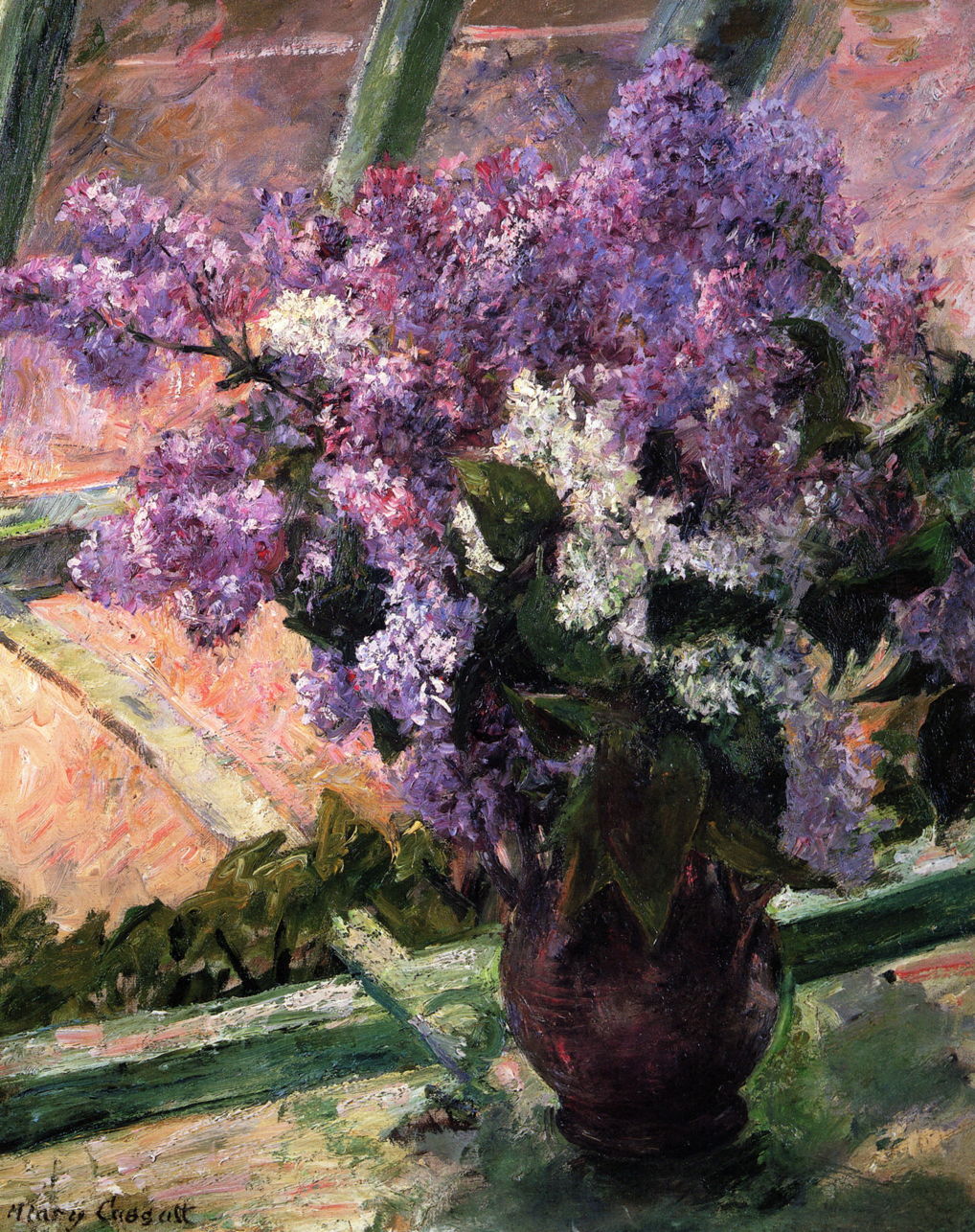
Mary Cassatt (1844–1926), Lilacs in a Window (Vase de Lilas a la Fenetre) (c 1880–83), oil on canvas, 61.5 x 51.1 cm, The Metropolitan Museum of Art (Partial and Promised Gift of Mr. and Mrs. Douglas Dillon, 1997), New York, NY. Courtesy of The Metropolitan Museum of Art.

Although Cassatt remained first and foremost a figurative painter, her flower study of Lilacs in a Window (c 1880–83) is an exception. This shows a vase freshly filled with cut flowers from the greenhouse, on a shelf by the open window. Her brushwork is here at its richest and most varied, from the linear marks on the shelf and window frame, to the staccato dabs of the flowers themselves. This painting was bought by Cassatt’s friend and patron, Moyse Dreyfus.
cassattchildrenplayingbeach
Mary Cassatt (1844–1926), Children Playing on the Beach (1884), oil on canvas, 97.4 x 74.2 cm, The National Gallery of Art, Washington, DC. Courtesy of The National Gallery of Art, via Wikimedia Commons.

Those richly textural flowers with their high chroma, contrast with Cassatt’s more usual paintings, such as Children Playing on the Beach (1884), which had nonetheless been informed by her pastel works.
cassattwomanbench
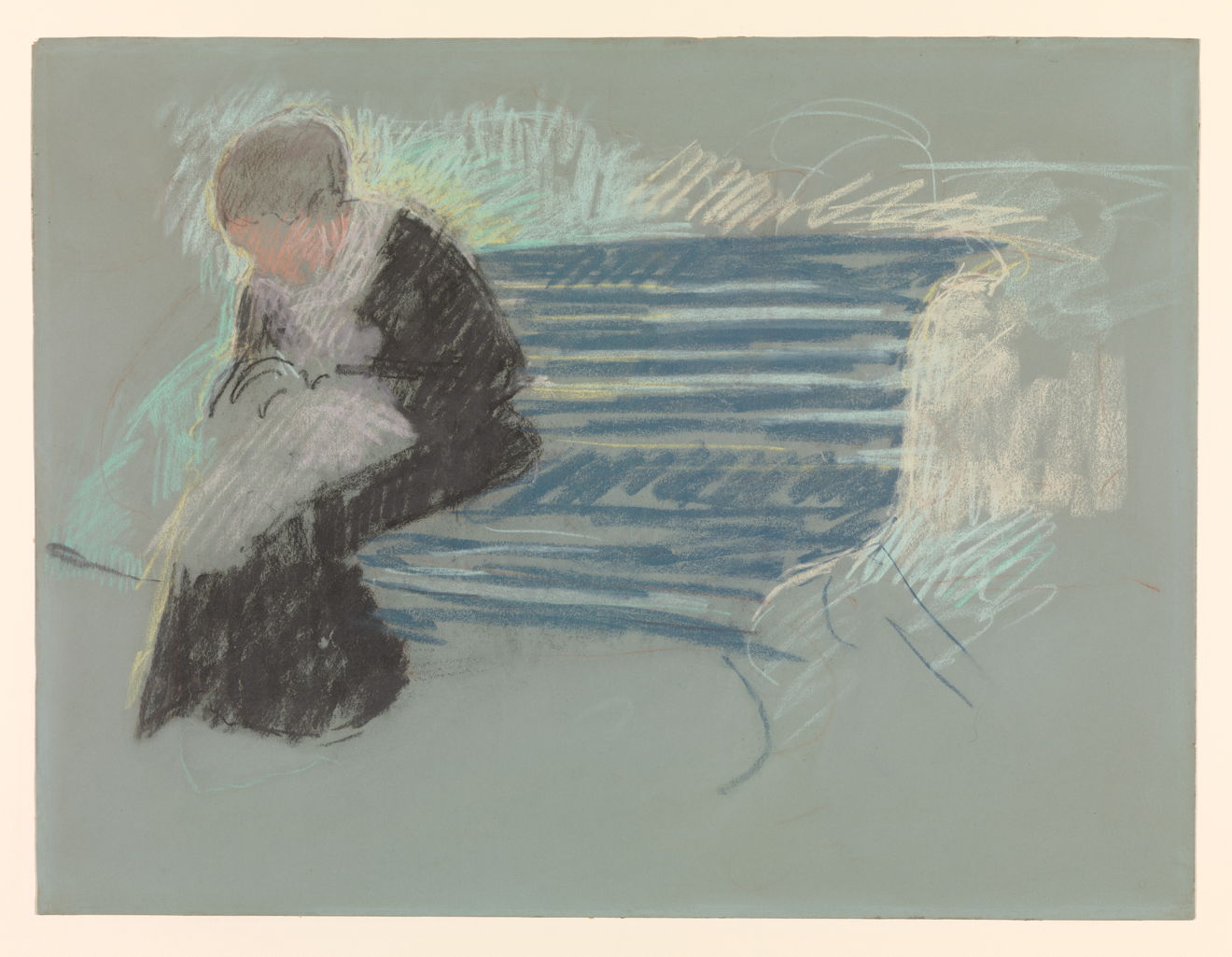
Mary Cassatt (1844–1926), Woman on a Bench (c 1881), pastel on green wove paper, mounted on illustration board, 46.4 x 61.3 cm, The Metropolitan Museum of Art (Gift of Mrs. Gardner Cassatt, 1958), New York, NY. Courtesy of The Metropolitan Museum of Art.

This quick pastel sketch of a Woman on a Bench (c 1881) shows clearly Cassatt’s use of diagonal strokes to lay down colour, a feature of many of Degas’ pastel paintings.

In her paintings in oils and pastels, Cassatt’s style and composition evolved under the influence of Degas. The greatest change occurred in her print-making, which was to become such an important part of her later work.
cassattknittinglamp
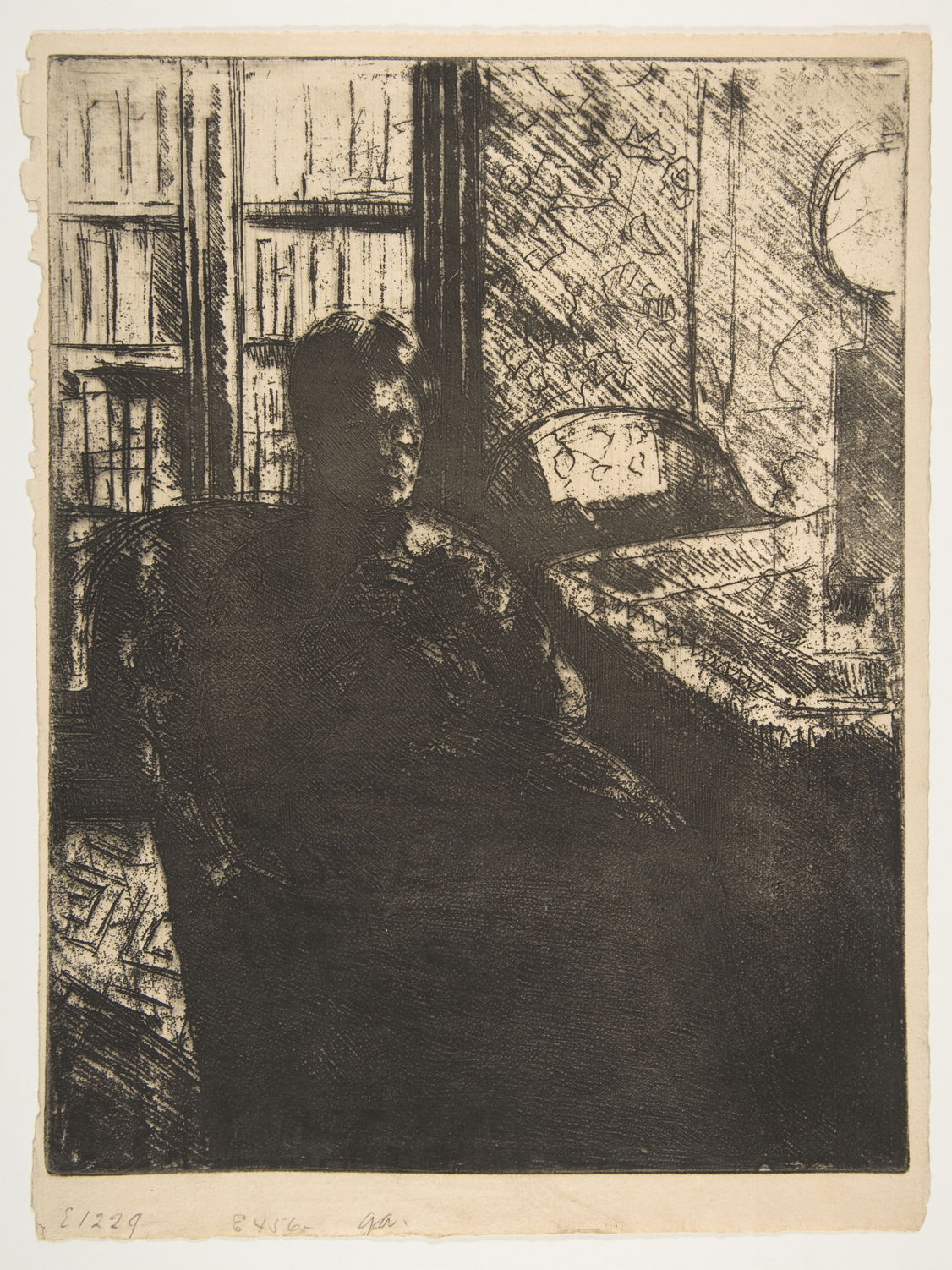
Mary Cassatt (1844–1926), Knitting in the Glow of a Lamp (c 1880), soft-ground, second state of two, 29.4 x 22.9 cm, The Metropolitan Museum of Art (Rogers Fund, 1920), New York, NY. Courtesy of The Metropolitan Museum of Art.

Her first prints are often dark and dense, as shown in her Soft Ground etching of a woman Knitting in the Glow of a Lamp (c 1880).

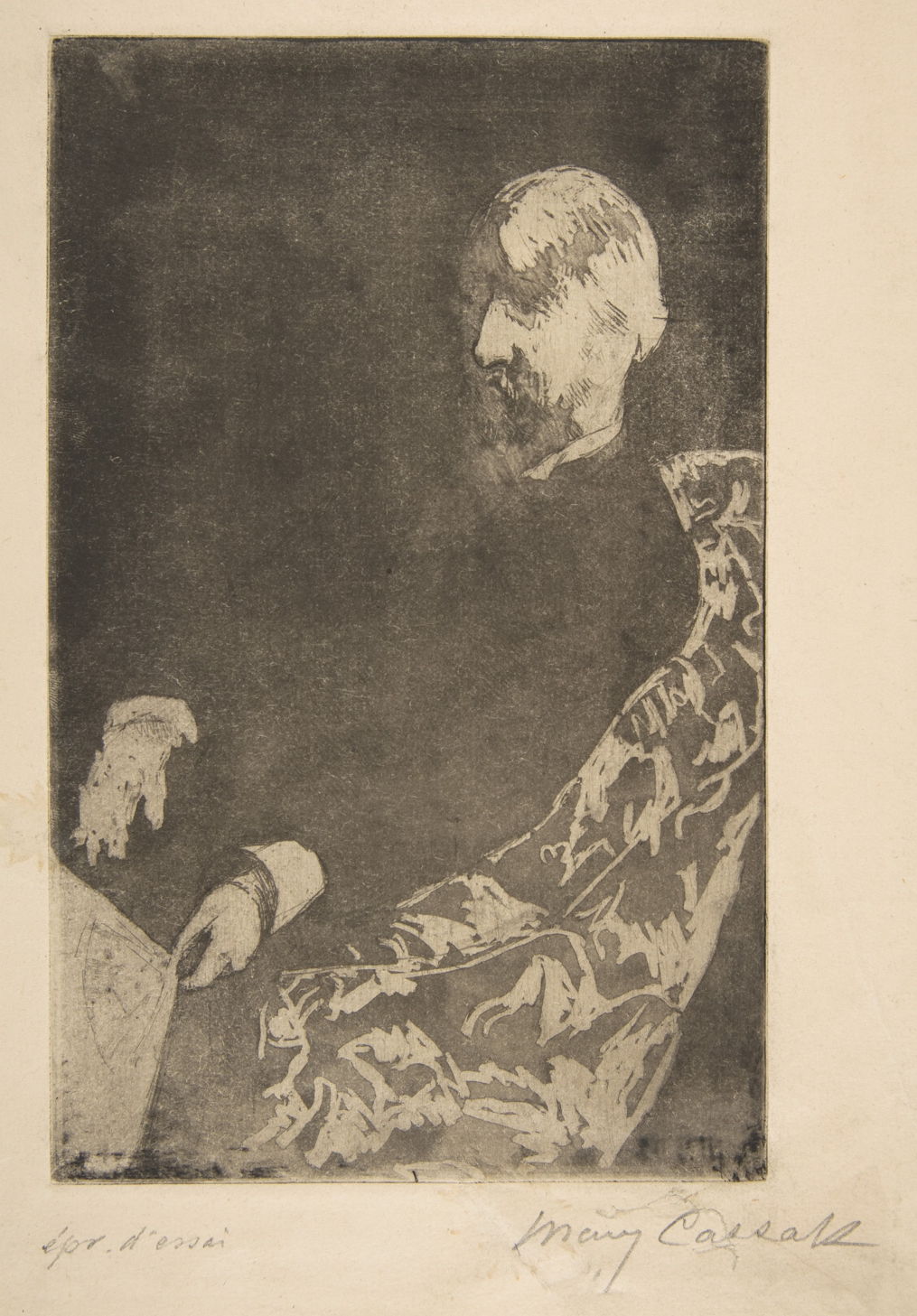
In Soft Ground etching, a soft, adherent ground is applied to a warmed metal plate, textures are transferred using a press, then the plate is etched in acid for up to ten minutes. The resulting plates print with soft lines, as if created using soft crayons, as seen here.
cassattgeorgemoore
Mary Cassatt (1844–1926), Portrait of George Moore (c 1881), soft-ground etching, 22.2 x 15.1 cm, The Metropolitan Museum of Art (Rogers Fund, 1919), New York, NY. Courtesy of The Metropolitan Museum of Art.

This Soft Ground etched Portrait of George Moore (c 1881) was created using the same process.
cassattoperabox3
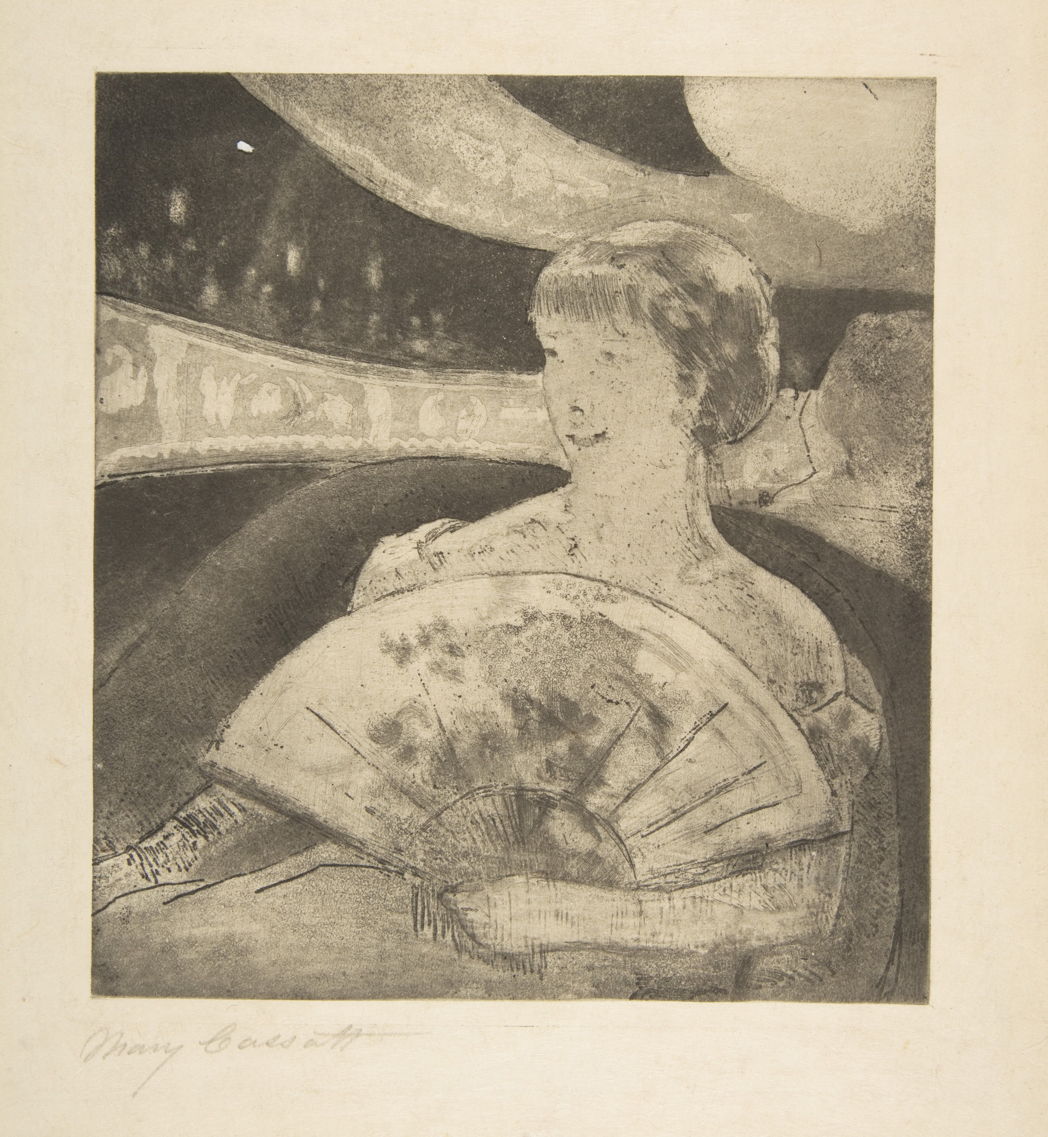
Mary Cassatt (1844–1926), In the Opera Box (No. 3) (c 1880), soft-ground, aquatint and etching, fourth state of four, 19.7 x 17.8 cm, The Metropolitan Museum of Art (Gift of Mrs. Imrie de Vegh, 1949), New York, NY. Courtesy of The Metropolitan Museum of Art.

Using motifs from her paintings, she learned more complex techniques, including a combination of Soft Ground, aquatint and etching for her In the Opera Box (No. 3) (c 1880).

This was one of a series of prints she assembled for the planned journal. Then, in April 1880, Degas withdrew from that project, in a characteristic change of mind. Cassatt was upset by this, and for a while her relationship with Degas changed markedly. She continued to develop her print-making, but moved on from her motifs of women at the theatre.

Reference

Wikipedia.