






June 19, 2026
By BNEF Summit Team
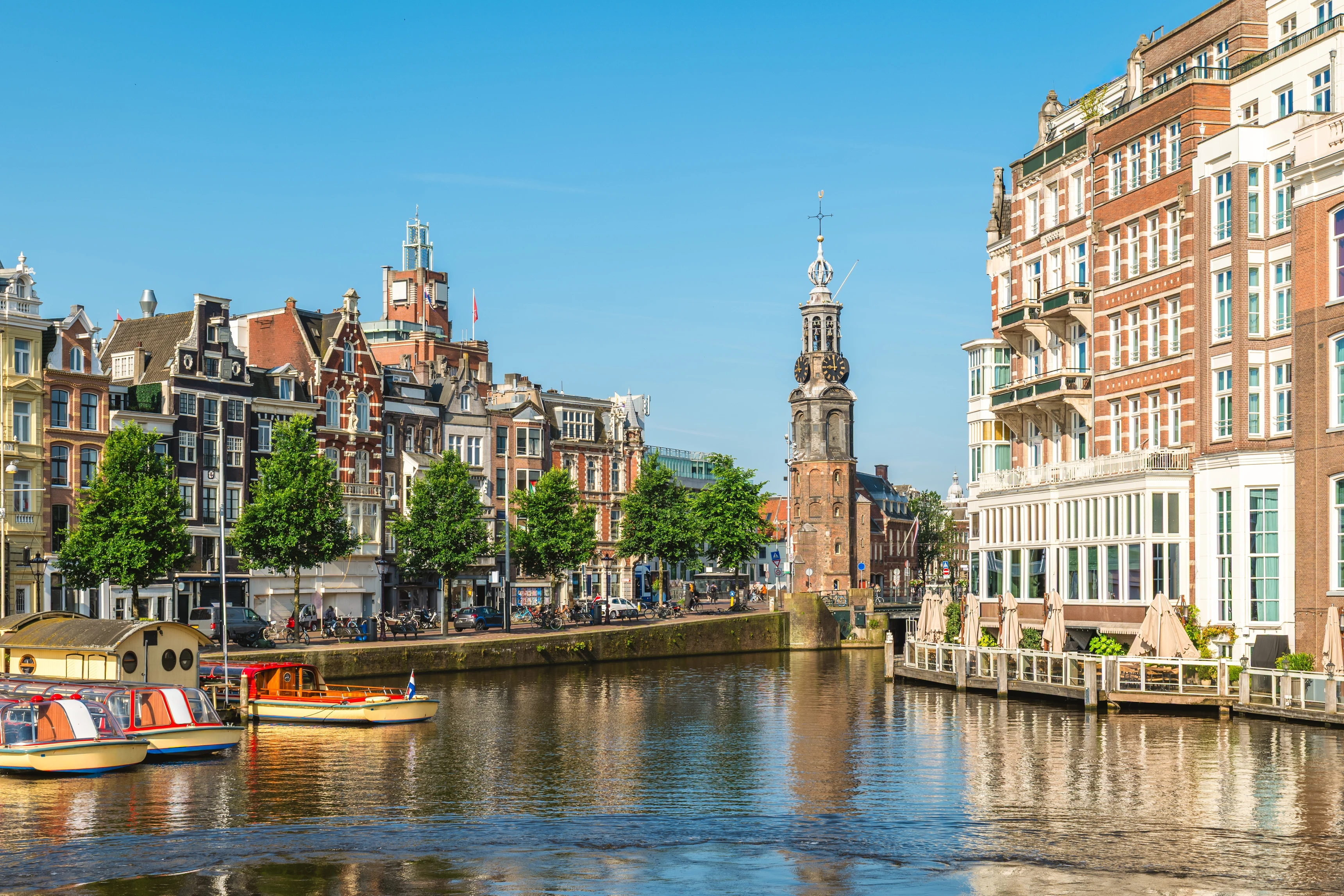
Amsterdam has long been a gateway for European trade and industry, making it a fitting venue for a discussion about the next phase of Europe’s clean transition. One theme repeatedly surfaced at the BloombergNEF Summit Amsterdam which took place on June 8: the debate is no longer about whether Europe should decarbonize, but under what conditions industry will invest to make it happen.
From carbon border measures and industrial policy to power markets and trade, speakers returned to the same underlying challenge. Companies can manage commodity prices and market risk. But many remain reluctant to commit capital when policy frameworks, incentives and regulatory requirements remain uncertain. At the same time, policy makers are increasingly grappling with a difficult balancing act – how to maintain industrial competitiveness while lowering energy costs, and advancing climate goals. Here are five themes emerged from the discussions:
1. Investment needs policy certainty and agility, not just ambition
“Companies can hedge prices, but they cannot hedge policy uncertainty,” said Emma Coker, head of carbon market research at BloombergNEF – a sentiment that echoed across the Summit. Faustine Delasalle, chief executive officer of Mission Possible Partnership, pointed to standards and certifications as another layer of uncertainty that continues to slow investment decisions.
For many companies, the issue is no longer whether low-carbon technologies can work, but whether the policy environment provides sufficient confidence to proceed. Hans Olav Raen, CEO of Yara Clean Ammonia, was direct about the consequences. “We have taken decisions and FIDs based on certain things happening. If those things don’t happen, we will not take FID (final investment decision),” he said.
Hans Olav Raen, Chief Executive Officer, Yara Clean Ammonia
2. Strategic autonomy requires cooperation
Europe’s push for strategic autonomy does not necessarily mean going it alone.
Several speakers argued that strengthening Europe’s industrial position will depend as much on partnerships and market access as on domestic production. “Smart cooperation is necessary,” said Sébastien Clerc, CEO of InnoEnergy.
That perspective was echoed by policymakers. Aleksandra Kordecka of the European Commission pointed to reciprocity as a guiding principle for European trade and industrial policy. Europe remains open to partners, she argued, provided those markets are equally accessible to European products and businesses.
The discussion highlighted a growing recognition that strategic autonomy and international cooperation are not mutually exclusive. Many industries will require both to achieve scale, secure supply chains, and attract investment.
Aleksandra Kordecka, Cabinet Expert, European Commission
3. Competitiveness requires more than CBAM
The Carbon Boarder Adjustment Mechanism (CBAM) featured prominently throughout the Summit, but speakers emphasized that it alone cannot solve Europe’s industrial competitiveness challenge.
Adolfo Aiello, deputy director general at EUROFER, argued that industrial decarbonization depends on a broader set of factors, including energy prices, carbon markets and demand-side measures. “CBAM cannot be the silver bullet,” he said.
The broader message was that carbon pricing mechanisms can support decarbonization, but they are unlikely to generate investment at the scale required without greater regulatory certainty and a more comprehensive industrial strategy.
4. Europe’s AI ambitions raise new questions about sovereignty
As Europe pursues greater strategic autonomy, a practical question is emerging: can the region reduce critical dependencies without creating new vulnerabilities, while remaining attractive to investors and keeping the transition affordable?
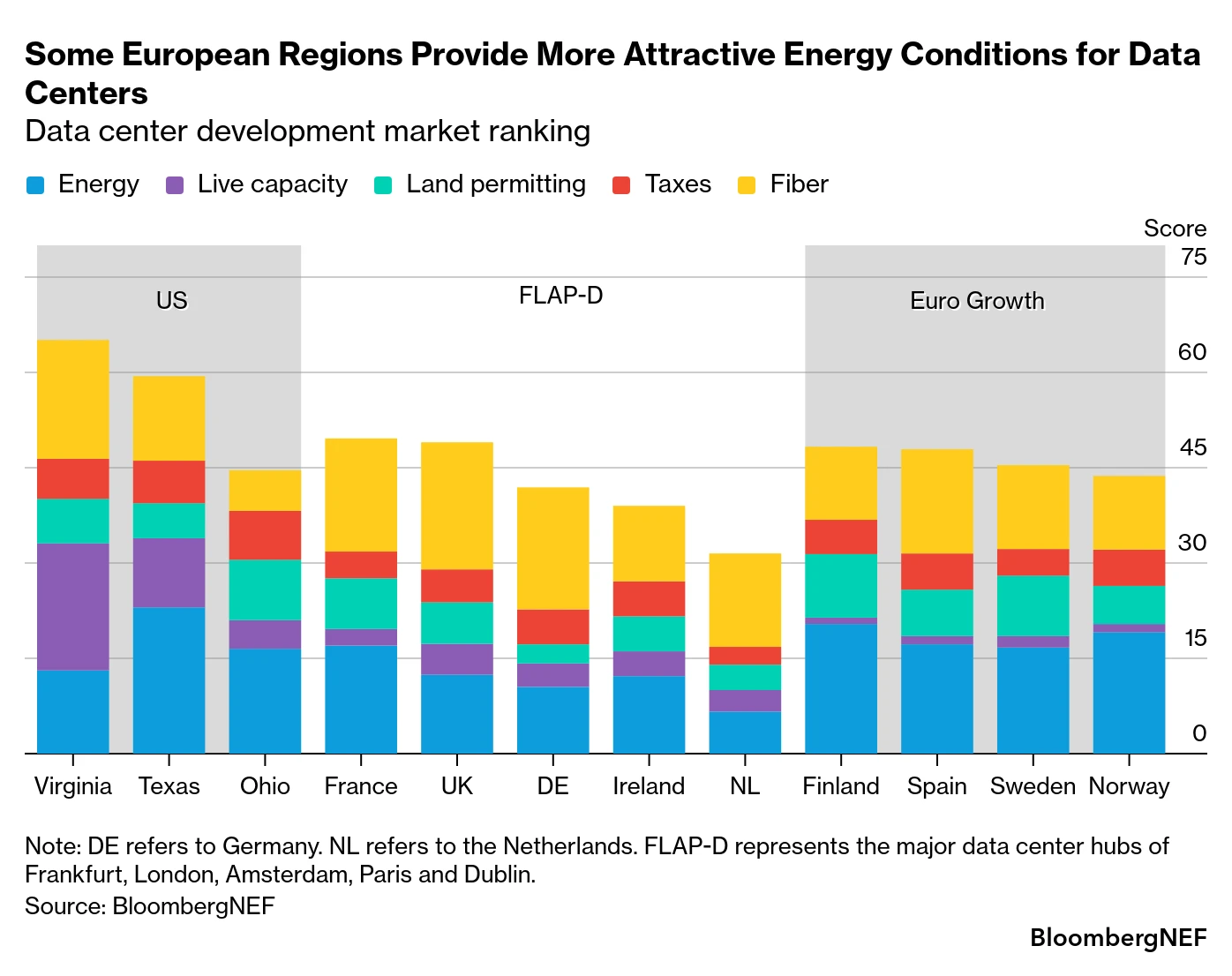
Throughout the Summit, speakers invoked sovereignty in many forms, spanning energy, industry, supply chains, data and artificial intelligence. AI sovereignty drew particular attention because the investment gap between the US and Europe continues to widen, raising concerns that the region could capture only a limited share of AI’s economic value. Reliance or dependence on infrastructure that is US owned or hosted was another sensitivity, particularly where data storage and processing intersect with European regulation.
Claire Curry, head of innovation and technology research at BloombergNEF, illustrated the scale of the challenge through the rapid growth of data centers. Global data-center power demand has tripled since 2020 to 84 gigawatts – roughly equivalent to Germany’s peak power demand. It is expected to more than double again by 2030. The EU is responding with policies to strengthen cloud and AI capabilities. Curry framed AI sovereignty through four dimensions: data sovereignty, compute sovereignty, platform sovereignty, and economic sovereignty. Together, they highlight a broader challenge facing Europe – not simply how to develop AI capabilities, but how to ensure that the economic benefits, infrastructure and strategic control remain anchored within the region.
5. The transition’s central dilemma remains unresolved
Underlying every discussion was a broader question that no single policy mechanism appears able to answer.
“There are a lot of dilemmas, and it really is about what weighs the most – keeping our industries competitive or lowering the cost of energy,” said Susan Hansen, global strategist for energy transition at Rabobank. “That is a dilemma both for countries, for European lawmakers, but also for developers themselves.”
The challenge extends beyond technology and supply chains. It is ultimately about costs, incentives and political choices – who pays for the transition, who benefits from it, and how those costs are distributed across industry, consumers and governments.
Pierre-Etienne Franc, CEO of Hy24, captured the tension most directly: “Everybody wants to save the world, but nobody wants to pay for it.” That tension between ambition, affordability, and competitiveness surfaced repeatedly throughout the Summit. It may also prove to be the defining challenge of Europe’s clean transition in the years ahead.
Pierre-Etienne Franc, Chief Executive Officer, Hy24; and Keith Norman, Chief Marketing Officer, Lyten
To dive deeper into these themes and more, watch a selection of videos from the BNEF Summit Amsterdam here. The annual Summit brought together almost 400 stakeholders in-person and remotely, including energy, industry, transport and technology companies as well as investors, financiers and policymakers. The next BNEF Summits will take place in New Delhi on Aug. 21, London on Oct. 19-20 and Houston on Nov. 11.
Sign up for BNEF’s free newsletter.
此内容由惯性聚合(RSS阅读器)自动聚合整理,仅供阅读参考。 原文来自 — 版权归原作者所有。