



惯性聚合 高效追踪和阅读你感兴趣的博客、新闻、科技资讯
阅读原文 在惯性聚合中打开

推荐订阅源

H
Hackread – Cybersecurity News, Data Breaches, AI and More
让小产品的独立变现更简单 - ezindie.com
V
V2EX
T
The Blog of Author Tim Ferriss
腾讯CDC
Hugging Face - Blog
Hugging Face - Blog
雷峰网
雷峰网
爱范儿
爱范儿
GbyAI
GbyAI
H
Help Net Security
I
InfoQ
罗磊的独立博客
酷 壳 – CoolShell
酷 壳 – CoolShell
钛媒体:引领未来商业与生活新知
钛媒体:引领未来商业与生活新知
cs.AI updates on arXiv.org
人人都是产品经理
人人都是产品经理
J
Java Code Geeks
Microsoft Security Blog
Threat Intelligence Blog | Flashpoint
N
Netflix TechBlog - Medium
Last Week in AI
Last Week in AI
宝玉的分享
宝玉的分享
云风的 BLOG
云风的 BLOG
Project Zero
Project Zero
P
Privacy & Cybersecurity Law Blog
A
Arctic Wolf
Know Your Adversary
Know Your Adversary
G
Google Developers Blog
freeCodeCamp Programming Tutorials: Python, JavaScript, Git & More
T
Tor Project blog
V
Vulnerabilities – Threatpost
Y
Y Combinator Blog
WordPress大学
WordPress大学
V
Visual Studio Blog
博客园_首页
G
GRAHAM CLULEY
K
Kaspersky official blog
T
Tailwind CSS Blog
T
Threat Research - Cisco Blogs
博客园 - Franky
D
Docker
Security Latest
Security Latest
I
Intezer
有赞技术团队
有赞技术团队
Application and Cybersecurity Blog
博客园 - 【当耐特】
B
Blog RSS Feed
T
The Exploit Database - CXSecurity.com
cs.CV updates on arXiv.org
OSCHINA 社区最新新闻
OSCHINA 社区最新新闻

AWS for Industries

How Peloton Engineers the World’s Largest Live Fitness Events on AWS | Amazon Web Services Henry Schein One goes AI-native with AI Product Discovery and Strategy | Amazon Web Services Cloud Adoption Update for Financial Market Infrastructure Providers 1H26 | Amazon Web Services How AWS helps Hong Kong banks deliver on HKMA DART Framework | Amazon Web Services GreenBridge.AI redefines renewable energy operations with agentic AI on AWS | Amazon Web Services Build a voice-enabled Automotive and Manufacturing assistant using Amazon Nova Sonic and Amazon Bedrock AgentCore | Amazon Web Services Managing AI agent sprawl across business units | Amazon Web Services Dynamic Inbound Routing for BYOIP Workloads Using Amazon VPC Route Server | Amazon Web Services How Autel Transformed Charging Station Management with AI Agents on AWS | Amazon Web Services How Danone Simplified Kubernetes at Scale with Amazon EKS Auto Mode | Amazon Web Services Build a Multi-Agent Assessment Workbench with Amazon Bedrock AgentCore | Amazon Web Services Sovereign by design: How AWS helps Nigeria’s financial services industry protect data and drive innovation | Amazon Web Services Scaling ML in production: how BBVA accelerated delivery with MLOps | Amazon Web Services Inside BBVA’s MLOps transformation: from data platform to scalable ML on AWS | Amazon Web Services Blazing a Trail: How Peloton Rebuilt the SDLC for the Agentic Era with Amazon Bedrock | Amazon Web Services Accelerate RISC-V Software Development Before Silicon: Virtual Prototyping with MachineWare’s SIM-V on AWS | Amazon Web Services How retailers deliver hyper-personalization in-store with Personalisation Hub, UST, and AWS | Amazon Web Services Deploy diagnostic-quality imaging globally with MedDream and AWS HealthImaging | Amazon Web Services Coins in Motion: Building agentic blockchain payments for in-vehicle experiences | Amazon Web Services Reduce P&ID analysis time by 80% with hybrid AI maintenance planning | Amazon Web Services Deploying industrial AI on AWS: Building the autonomous factory | Amazon Web Services How Atlantic Health cut legal document search time by 42% with Amazon Bedrock metadata filtering | Amazon Web Services Edge-to-Cloud Architecture for Real-Time Surgical Intelligence with AWS and NVIDIA | Amazon Web Services Reimagining B-Pillar DFMEA: Why Ontology-Grounded AI Is the Future of Automotive Engineering | Amazon Web Services Transforming energy trading by managing complexity and driving growth with Cloud ETRM | Amazon Web Services How Multi-Agent AI Turns Supply Chain Data into Decisions and Actions | Amazon Web Services ​​​Deploy Agentic Bidding Without Sacrificing Speed: ARTF Containers with NVIDIA GPU Acceleration on AWS​​ | Amazon Web Services Next-generation programmatic advertising: How AWS RTB Fabric redefines the game | Amazon Web Services Flexible Telecom AI Workload Deployment Across AWS Hybrid Cloud | Amazon Web Services Building a HIPAA-ready generative AI architecture for healthcare on AWS | Amazon Web Services Highlights from the 2026 AWS Life Sciences Symposium: MedTech Track | Amazon Web Services Multi-Agent Systems for Financial Services on Amazon EKS and AgentCore | Amazon Web Services How AI can help developers migrate embedded codebases between Arm SoCs | Amazon Web Services From Connected to Resilient: Cloud-Native Payment Connectivity on AWS | Amazon Web Services Ultra-low-latency cross-Region crypto trading with Avelacom and AWS | Amazon Web Services Build an AI-powered 5G Signaling Trace Analyzer Using Amazon Bedrock | Amazon Web Services Medical Legal Regulatory Review Orchestration with AI Agents on AWS | Amazon Web Services AWS showcases the agentic AI future of advertising and entertainment at Cannes Lions 2026 | Amazon Web Services The Road to 180M GRefs/s: Sizing Epic on AWS with R8ib and Enhanced EBS | Amazon Web Services BridgeWise builds responsible AI in FSI with Amazon Bedrock | Amazon Web Services Rethink Everything: Highlights from the 2026 AWS Financial Services Symposium | Amazon Web Services Improving Defect Analysis and Quality Control with AI Diagnostics | Amazon Web Services Building a cloud-based EV charging monitoring platform with real-time AI analytics | Amazon Web Services Introducing the AWS guide to the ECB Guide on outsourcing cloud services to cloud service providers | Amazon Web Services How a Luxury Retailer Accelerates Customer Experience with Amazon CloudFront | Amazon Web Services The Art of the Possible: Building an Intelligent Wealth Management Platform – Part 1 | Amazon Web Services How We Built Healthcare AI You Can Trust: The Science Behind Amazon Connect Health | Amazon Web Services How Everllence Scaled P&ID Intelligence to Improve Plant Operations | Amazon Web Services Rivian accelerates production with second-generation AWS Outposts: Improving resiliency and reducing costs | Amazon Web Services AI-Driven Development Lifecycle for Financial Services | Amazon Web Services How Agentic AI and Digital Twins on AWS Drive Operational Excellence | Amazon Web Services Modernizing Core Banking Systems: A Strategic Guide for Financial Leaders | Amazon Web Services Highlights from the 2026 AWS Life Sciences Symposium: Research and Drug Discovery | Amazon Web Services Discount Tire Uses Cloud WAN and Buffer VPC to Create a Scalable Enterprise Network Centralized third-party connectivity in AWS: Architecture patterns for highly regulated environments | Amazon Web Services FHIR-powered Care Continuum on AWS HealthLake From code to chemistry: using Kiro to tackle ADME-Tox, a key drug discovery challenge | Amazon Web Services How Toyota securely deployed HiveMQ with mTLS on AWS to power Smart Manufacturing | Amazon Web Services From record to intelligence: How EMR systems on AWS become the foundation for generative AI in healthcare | Amazon Web Services How to Connect AWS HealthOmics to Public and Private Network Sources at Runtime | Amazon Web Services Accelerating Android Builds on AWS: From 3 Hours to Under 5 Minutes with SourceFS | Amazon Web Services Closing the Loop with Amazon Bio Discovery’s Integrated Lab Partners | Amazon Web Services Massive Parallel Processing of Financial Transactions with Amazon EKS and Amazon MSK | Amazon Web Services Submit up to 100,000 Bioinformatics Workflow Runs with a Single API Call in AWS HealthOmics | Amazon Web Services Energy HPC Orchestrator powers collaborative, scalable energy computing | Amazon Web Services Automate Investment Research Using Strands Agents on Bedrock AgentCore | Amazon Web Services How OCC Built a Governed Cloud Foundation and Then Stress-Tested It Executive Insights from the 2026 AWS Life Sciences Symposium How Carlsberg’s Traitomic business leveraged AWS HealthOmics to power genetic trait development | Amazon Web Services CME Group MDP multicast data access on AWS using Transit Gateway | Amazon Web Services How retailers solve the customer identity puzzle with Amperity and AWS | Amazon Web Services Exact Sciences Transforms Bioinformatics Infrastructure with AWS HealthOmics | Amazon Web Services Building a Serverless Supply Chain Management Solution for Automotive Customers with AWS AppSync and Amazon Aurora Serverless | Amazon Web Services Accelerating physical AI with AWS and NVIDIA: building production-ready applications with simulation and real-world learning | Amazon Web Services Modernizing life-saving workloads with AWS serverless | Amazon Web Services Transforming Industrial Operations: How AVEVA and AWS drive Cloud Innovation | Amazon Web Services Introducing Amazon Bio Discovery | Amazon Web Services Accelerate Project Delivery with AI-Native Execution System on Amazon Quick | Amazon Web Services Reinvent Telecom Mediation Systems with Amazon Bedrock AgentCore, Strands Agents, and the Model Context Protocol | Amazon Web Services AWS Cloud Connectivity Patterns for Financial Market Infrastructures | Amazon Web Services Event-Driven Digital Pathology: Governed Whole Slide Image Ingestion to Scalable Inference with Amazon SageMaker | Amazon Web Services How Telefonica Germany achieved a centralized tracing solution with VPC Traffic Mirroring | Amazon Web Services AWS Teams Up with Wingstop to Deliver Wings to Millions During March Hoops Tournament | Amazon Web Services How Amazon Connect Health brings agentic AI to the point of care | Amazon Web Services How Liftoff improved conversion performance and reduced infrastructure costs with Cortex using AWS Graviton | Amazon Web Services From Prompt to Pipeline: AI-Powered Bioinformatics Workflow Development with Kiro and AWS HealthOmics | Amazon Web Services Driving Intelligent Quality in the Software-Defined Vehicle Era | Amazon Web Services How Amazon Devices Eliminated Credential Risk to Scale AI across Engineering Tools | Amazon Web Services The Evolution of BMW Group’s 3D Streaming Experience | Amazon Web Services Build ChatGPT Apps with MCP Servers and AWS Infrastructure | Amazon Web Services
How Axel Springer transformed ad monetization by migrating from client-side bidding to AWS RTB Fabric | Amazon Web Services
Alex König · 2026-07-21 · via AWS for Industries

Axel Springer is a family-owned transatlantic media company focused on publishing (including BILD, BUSINESS INSIDER, POLITICO, and WELT) and commerce (including Idealo, Bonial, and Awin). Axel Springer aims to become the leading provider of digital and AI-supported journalism in the free world. Axel Springer Tech is the company’s technology organization, building and operating technology products and platforms for Axel Springer’s global portfolio of digital brands. Its advertising technology teams process billions of bid requests per month across this portfolio, a scale that requires low-latency infrastructure, operational resilience, and a continuous focus on yield optimization.

In 2025, Axel Springer began evolving its programmatic advertising infrastructure to gain greater flexibility, scalability, and control over its monetization stack. As part of this transformation, the company introduced a self-hosted Prebid Server on AWS, complementing its existing header bidding setup and creating a foundation for faster experimentation, deeper infrastructure ownership, and future AI-powered optimization. Following this migration, Axel Springer became the first publisher to adopt AWS RTB Fabric.

This post walks through the motivation, architecture, and results of that transformation.

Axel_Springer_logo

The challenge: Client-side bidding at scale

Like many large publishers, Axel Springer originally monetized its digital inventory through client-side header bidding. In this model, the user’s browser executes JavaScript adapters that call multiple supply side platforms (SSPs) and demand side platforms (DSPs) in parallel before the primary ad server makes its final decision.

While effective at smaller scales, client-side bidding introduced several pain points as Axel Springer’s traffic grew:

  • Latency and user experience – Each adapter added milliseconds to page load. On mobile web and especially in-app environments (where client-side header bidding isn’t natively supported), the approach was limiting.
  • Limited auction participation – Browsers impose connection limits and timeout constraints, capping the number of demand partners that can realistically compete in each auction.
  • Lack of transparency and control – The company relied on external Prebid Server technologies for its server-side component, paying a revenue fee with limited ability to customize auction logic, implement dynamic floor pricing, or influence the server-side configuration in any way.
  • No in-app native prebid for header bidding – Client-side header bidding is only feasible using a server-side intermediary.

Phase 1: Self-hosted Prebid Server on AWS

The first step was to deploy an open source Prebid Server instance on Amazon Web Services (AWS) infrastructure, giving Axel Springer full control over bidder configuration, auction logic, and deployment cadence.

Architecture

Component AWS service Purpose
Compute AWS Fargate with Amazon ECS Stateless Prebid Server containers, auto-scaling based on bid request volume
Load balancing Application Load Balancer Distributes incoming bid requests across container tasks
Caching Amazon ElastiCache (Redis) Stores bidder configurations, floor pricing rules, and stored request data
Content delivery network (CDN) and Edge Amazon CloudFront Low-latency delivery of Prebid.js client library and configuration
Monitoring Amazon CloudWatch Real-time dashboards for bid latency, win rates, timeouts, and revenue
Infrastructure as Code (IaC) AWS Cloud Development Kit (AWS CDK) Reproducible, version-controlled deployments

Key design decisions

Rather than re-platforming everything at once, the team made targeted choices that kept risk low and delivery fast:

  • Hybrid deployment (AWS plus third-party CDN) – The team maintained the third-party CDN for ad creative delivery while routing all bid orchestration through AWS – allowing a phased migration without disrupting live traffic.
  • Dynamic configuration without redeployment – Prebid Server allows for dynamic configuration changes through deploying config files to Amazon Simple Storage Service (Amazon S3), which get imported without having to restart the server
  • Two-week delivery – By using AWS CDK templates and the open source Prebid Server Go implementation, the team achieved a working hybrid deployment in only two weeks.

Results (Phase 1)

  • Revenue parity achieved immediately – Prebid Server on AWS matched or exceeded the previous managed server-side bidding setup from day one of A/B testing.
  • Cost efficiency maintained – The infrastructure cost of the self-hosted Prebid Server on AWS was comparable to the previous managed setup, while providing greater technical flexibility and infrastructure ownership.
  • Increased technical ownership – Enabling faster experimentation with auction logic, bidder configurations, and future optimization approaches.

Phase 2: Adopting AWS RTB Fabric

With Prebid Server running on AWS, the natural next step was to use AWS RTB Fabric, a purpose-built, private network for real-time bidding workloads that delivers single-digit millisecond latency between bidding partners with up to 80% savings compared to standard cloud networking costs.

Why RTB Fabric?

Traditional server-side bidding routes bid requests over the public internet, introducing variable latency, packet loss, and high data transfer costs at scale. For a publisher processing billions of requests per month, even small inefficiencies compound dramatically.

AWS RTB Fabric addresses this by providing:

  • Dedicated, low-latency network paths between SSPs and DSPs – Enabling more bidders to respond within timeout windows, increasing auction pressure and yield.
  • Up to 80% savings compared to standard cloud networking costs without the need for upfront commitments – Critical at Axel Springer’s request volumes.
  • OpenRTB-native communication – Bidirectional request-response model supporting standard OpenRTB protocols without application changes.
  • Inline optimization modules – Including rate limiter, OpenRTB filter, and error masking to help you protect RTB workloads and improve operational efficiency.

Integration architecture
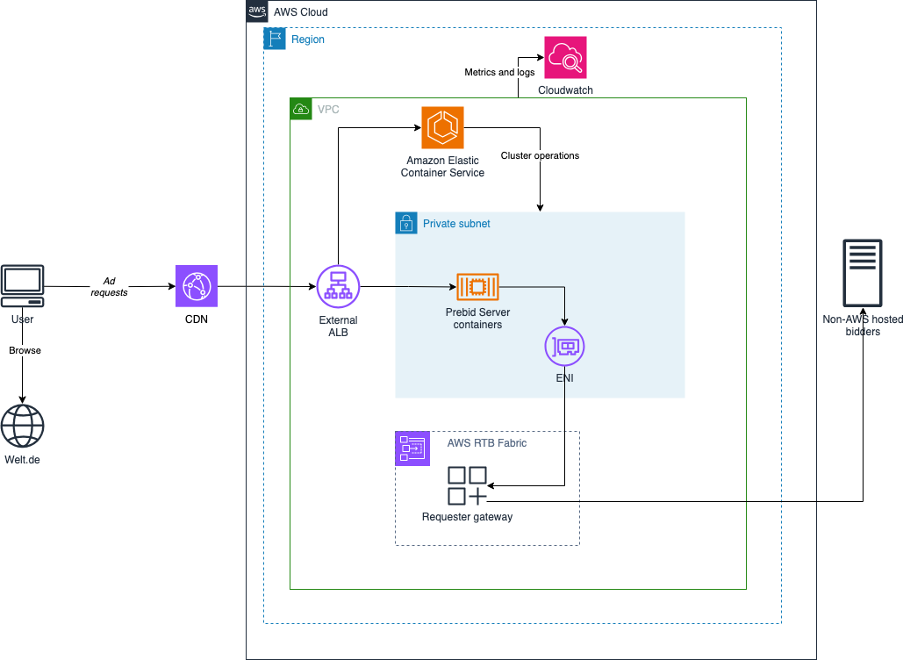
Figure 1- Phase 2 integration architectureFigure 1: Phase 2 integration architecture

Integration challenges

The primary operational challenge was bidder onboarding—obtaining credentials, endpoints, and technical specifications from each demand partner to route traffic through RTB Fabric rather than the public internet. This process often took multiple days per bidder, requiring coordination across different teams and time zones.

Results (Phase 2)

Metric Before (Internet) After (AWS RTB Fabric)
Median bid latency 45 – 80 ms Less than 10 ms
Bidder timeout rate 8 – 12% Less than 2%
Data transfer cost Baseline Reduced by 66%
Revenue (yield) Baseline Increased by 2% (increased auction participation)

Whats’ next: AI-powered monetization

With the infrastructure foundation in place, Axel Springer is now building the next generation of its monetization stack around a hybrid model: combining Prebid Client and Prebid Server depending on the environment, use case, and performance requirements.

Client-side Prebid remains an important revenue driver across Axel Springer’s web inventory and continues to provide strong demand access and auction pressure. At the same time, server-side bidding becomes increasingly important in environments where latency, scalability, and control are critical, especially in mobile web, app, and high-performance ad experiences where every millisecond matters.

Rather than replacing one model with the other, Axel Springer’s strategy is to bring both worlds together: using Prebid Client where it creates incremental value, and Prebid Server with RTB Fabric where speed, reliability, and deeper infrastructure control deliver the strongest advantage.

On top of this hybrid foundation, Axel Springer is exploring how AI-powered optimization could further improve its monetization stack in the future.

Potential areas of innovation include dynamic floor pricing, smarter demand routing, and more intelligent bid request management. These capabilities could help publishers make more data-driven decisions about which partners to call, how to balance latency and auction pressure, and how to optimize yield without increasing operational complexity.

In addition, the flexibility of Prebid Server and RTB Fabric creates opportunities to evaluate more customized optimization logic over time, for example around routing, filtering, throttling, and decisioning, while keeping the publisher in control of its infrastructure strategy.

Lessons learned

  • Start with ownership, not perfection – Deploying your own Prebid Server, even without every optimization, immediately unlocks experimentation velocity that managed solutions cannot match.
  • Prove revenue parity first – The team ran rigorous A/B tests comparing their self-hosted stack against the incumbent before scaling.
  • Bidder onboarding is the bottleneck – The technology migration is fast; the partner ecosystem coordination is slow. Start bidder communication early.
  • RTB Fabric is complementary, not a replacement – RTB Fabric optimizes the network layer between your Prebid Server and demand partners—your auction logic remains fully in your control.
  • Plan for AI from day one: Designing the stack with dynamic configuration and real-time data pipelines makes it straightforward to layer ML-powered optimizations later.

Getting started

  • Evaluate your current vendor fees – Revenue-share models compound quickly at scale.
  • Deploy Prebid Server on AWS – The open source Go implementation runs well on Amazon ECS Fargate with auto-scaling.
  • Connect to AWS RTB Fabric – Request access to the private network for immediate latency and cost benefits.
  • Instrument everything – Use CloudWatch and your BI tools to establish baselines before and after each change.
  • Engage AWS Solutions Architects – our AdTech specialists can help design your target architecture and accelerate bidder onboarding.