







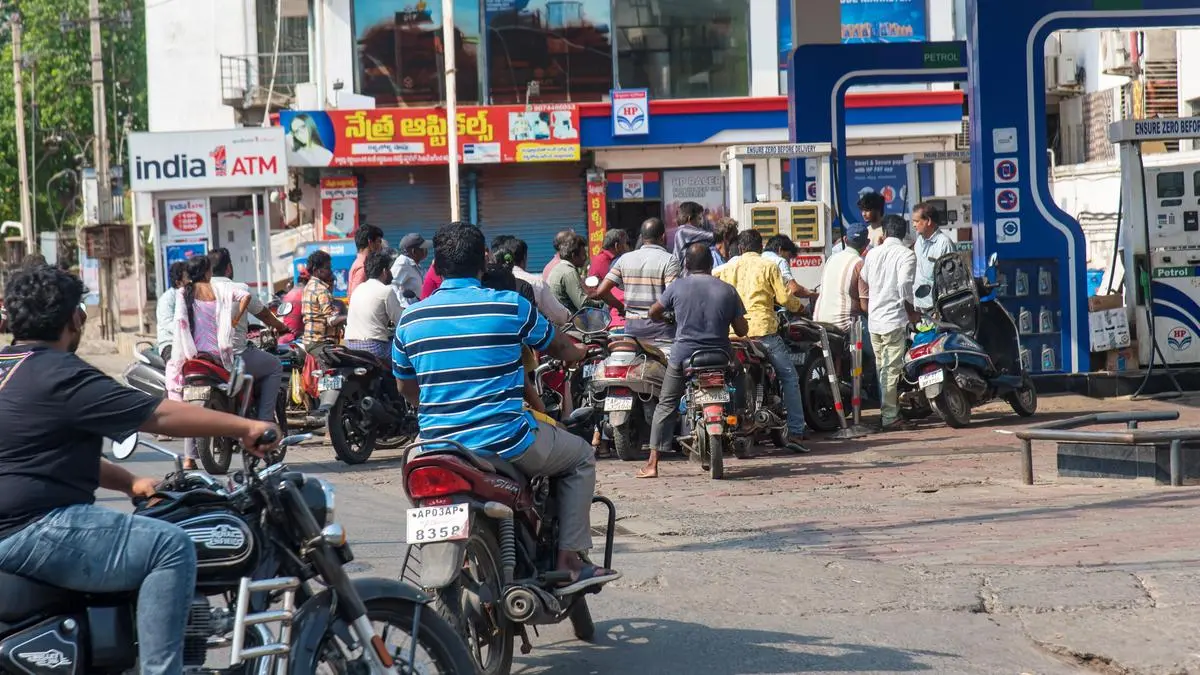
The Centre’s resolve to not burden the common man with higher fuel prices is laudable but it flies against the reality of the markets | Photo Credit: KOMMURI SRINIVAS
The Centre increased commercial liquefied petroleum gas (LPG) prices by a massive 50 per cent or by ₹993 per 19 kg cylinder on Friday. What it did not do though was increase retail prices of domestic LPG, petrol and diesel, as was widely expected. With crude oil prices soaring over the last two months due to the Gulf war, the expectation was that fuel prices would be raised once the Assembly elections were over. But the Centre has preferred status quo for now. That’s bad policy.
India’s crude oil basket, a mix of different varieties of crude that the country sources, rose from $71 a barrel on February 28 when the war began, to $112 a barrel on May 1, with a high of $146 a barrel in mid-March. The international traded price of petrol (FOB), which was an average of $75.28 a barrel in February rose to $127.49 in April. Yet, petrol (and diesel) prices have remained unchanged in India; elsewhere in the world, they have become expensive, reflecting prevailing market prices. This is a puzzling policy stance. The Centre’s resolve to not burden the common man with higher fuel prices is laudable but it flies against the reality of the markets. For a country that is 87 per cent dependent on imported crude oil, it is impossible to buffer the consumer from rising import costs forever. If costlier crude is not reflected in retail product prices, who’s bearing the burden? The Centre absorbed some of it by cutting excise duty on petrol and diesel in late March, but that is insignificant when compared with the increase in sourcing costs.
The oil marketing companies — Indian Oil, Bharat Petroleum and Hindustan Petroleum — are acting as sponges soaking up the higher prices but the sponges, though strong, will begin to fray sooner than later because the losses they’re soaking up are more than what they can handle. A recent ICRA report put the under-recoveries on LPG alone at ₹80,000 crore in FY27. The reality is that oil prices are unlikely to retrace their steps over the next few months. The Centre should accordingly plan for an equitable sharing of burden between oil companies, consumers and itself. It is poor policy to burden just one stakeholder. As even a freshman economics student would know, fuel demand is quite price elastic, and consumers need to feel the pinch of higher prices if demand is to be managed. The “protection” of consumers now will come back to haunt the Centre as demand remains unaffected, increasing the subsidy burden and straining the fisc, not to speak of the impact on the already beleaguered rupee.
Political compulsions are obviously behind the decision to hold retail prices, which is understandable. But good politics does not always sit well with good economics. The NDA government missed more than one opportunity to free prices (and be relieved of the political baggage) when oil prices touched lows several times in the last decade. If consumers had tasted low prices then, they would understand higher prices now when they are peaking. There is surely a lesson here for the future as the oil price cycle will surely turn again once the war ends.
Published on May 1, 2026
此内容由惯性聚合(RSS阅读器)自动聚合整理,仅供阅读参考。 原文来自 — 版权归原作者所有。