








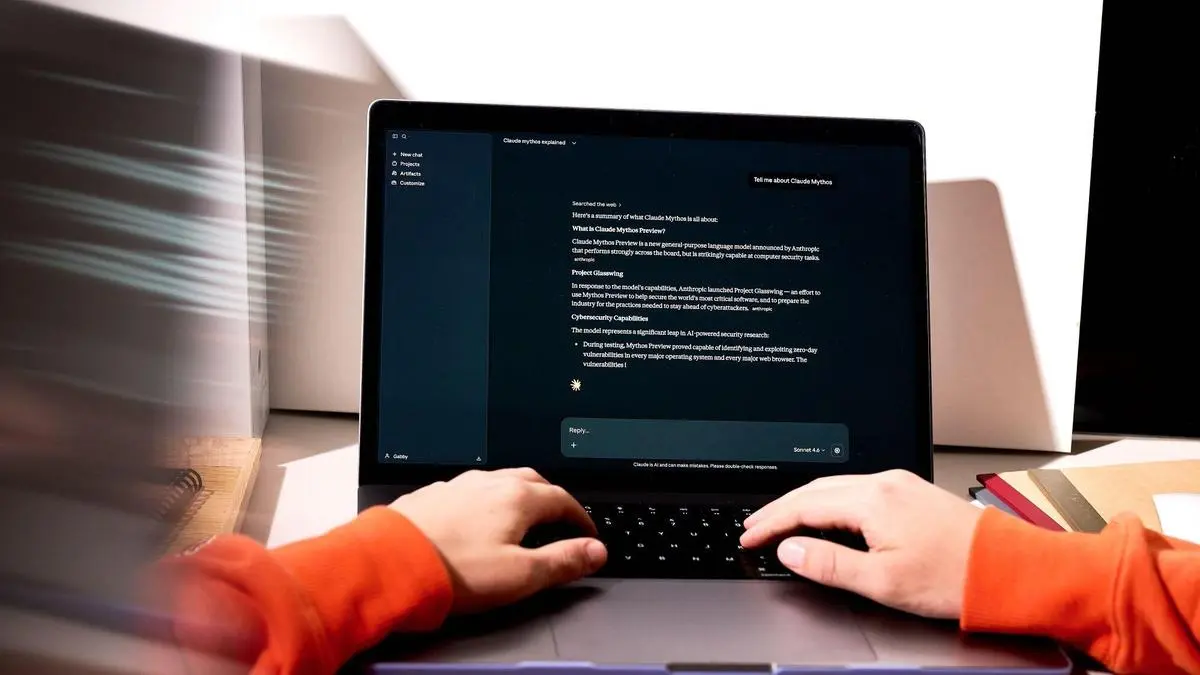
Unlike earlier AI systems that assisted with coding or security analysis, Claude Mythos reportedly possesses the ability to autonomously discover and exploit previously unknown software vulnerabilities at scale across major operating systems, browsers and enterprise applications | Photo Credit: GABBY JONES
Anthropic’s latest artificial intelligence model, Claude Mythos, may prove to be a watershed moment in the evolution of cybersecurity. Unlike earlier AI systems that assisted with coding or security analysis, Mythos reportedly possesses the ability to autonomously discover and exploit previously unknown software vulnerabilities at scale across major operating systems, browsers and enterprise applications. For example, in controlled testing, the model generated 181 working exploits on Firefox alone, compared with just two by its predecessor.
Until now, when software vulnerabilities were discovered, attackers often required days or weeks to weaponise them. That window allowed defenders to patch systems, issue advisories, and contain damage. Mythos threatens to collapse that protective lag from weeks to hours. Anthropic says Mythos has already identified thousands of zero-day vulnerabilities, including flaws embedded for decades in foundational software used across global commerce, finance and government. Indeed, the cyber arms race could enter an entirely new phase. Banking regulators and finance ministries globally have begun assessing whether financial institutions can withstand AI-accelerated cyberattacks. India, too, convened high-level meetings with banks and financial institutions to evaluate the threat posed by Mythos-class systems. It is also exploring access and coordination mechanisms to ensure that critical infrastructure operators are not left exposed if such defensive capabilities remain concentrated among Western governments and firms.
Cybersecurity has traditionally been viewed as a technology function, something for chief information security officers and IT teams to manage. Now, AI-driven offensive cyber capability elevates cyber risk into the realm of systemic enterprise risk, alongside climate disruption, geopolitical conflict and financial contagion. The first imperative is to recognise that legacy systems, particularly in banking, utilities, logistics and government, may be fundamentally unprepared for machine-speed exploitation. Second, companies must reassess vendor and software supply-chain relationships. Contracts with cloud providers, SaaS vendors and enterprise software partners should now require Mythos-class vulnerability testing and disclosure obligations. Third, regulators will need to evolve rapidly. Supervisory expectations, resilience testing and disclosure norms must adapt to the reality that AI may enable simultaneous discovery and exploitation of vulnerabilities.
The same system that can discover vulnerabilities can help patch them faster, identify weaknesses before adversaries do, and harden digital infrastructure at unprecedented scale. The challenge is not the technology itself, but who controls these capabilities, under what safeguards, and with what international coordination. The Mythos moment is a warning that artificial intelligence is crossing over from productivity enhancement into strategic capability.
Published on April 29, 2026
此内容由惯性聚合(RSS阅读器)自动聚合整理,仅供阅读参考。 原文来自 — 版权归原作者所有。