




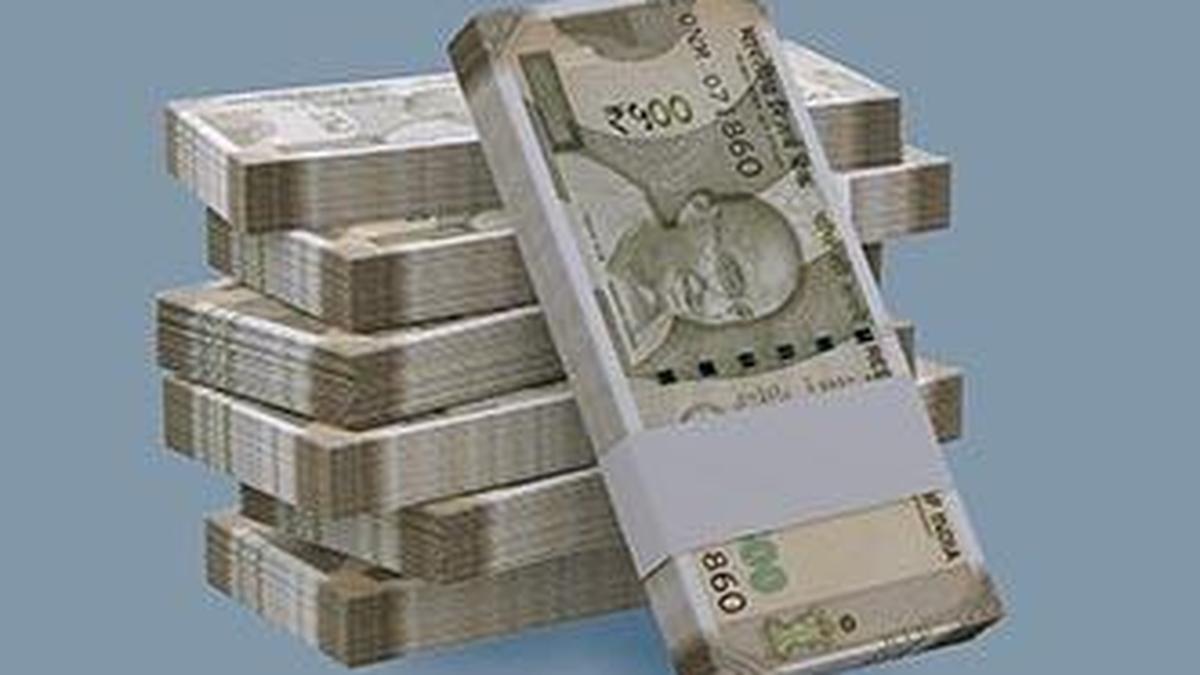
A 26 per cent rise in RBI’s income has come in very handy | Photo Credit: Akhilesh
In what must come as a measure of comfort in these otherwise grim times for the fisc, the Reserve Bank of India has transferred a record dividend to the Centre, while also setting aside ample sums for its own contingency buffers. The Centre needs the funds badly, and so does the RBI — both for distinct reasons. Besides reducing fiscal stress, the dividend will also infuse liquidity into the system, now shrinking due to RBI interventions to shore up the rupee.
At ₹2.86 lakh crore for 2025-26, RBI’s dividend transfer is almost 7 per cent higher than last year’s. This may help in reducing the Centre’s rising fiscal deficit this year. Meanwhile, the RBI needs the comfort of ample contingency reserves for market intervention in these very volatile times. With respect to the latter, a revised economic capital framework, adopted by the RBI in 2025, provides it the flexibility to maintain the contingency risk buffer at 4.5-7.5 per cent. To support the Centre during Covid-19 pandemic, the CRB had been lowered to 5.5 per cent of the RBI’s balance sheet. As economic activity normalised, the buffer had been gradually increased to take it to 7.5 per cent of the balance sheet in 2024-25. It is well that the RBI has not used the entire leeway provided by the revised economic capital framework and has lowered the CRB’s portion by only one percentage point to 6.5 per cent of its balance sheet, despite the exigencies created by the war. Even so, the transfer to CRB is 143 per cent higher for 2025-26, at ₹1.09 lakh crore. This has been made possible by the RBI’s balance sheet expanding 20.6 per cent to ₹91.97 lakh crore; much higher than the expansion of 8.2 per cent in 2024-25. A 26 per cent rise in RBI’s income (gross and net) has come in very handy.
The expansion in the balance sheet appears driven by the open market operations in government securities to support the government borrowing programme and infuse liquidity. The RBI did not buy much gold in FY26, restricting the purchases to 0.9 tonnes. But the 61 per cent surge in domestic gold prices in 2025-26 will also have boosted its currency and gold revaluation reserve. The sharp increase of 26.42 per cent in gross income appears led by the sale of US dollars, purchased at lower rates, and the higher interest income on its holding of domestic and foreign government securities, due to the high yields prevailing in India and the US.
As for the Centre’s finances, the fisc will be faced with rising subsidies on food, fertilizer and fuel, alongside welfare and stimulus commitments; on the other hand, revenues will not be buoyant. Higher crude prices and reduced margins could lower dividends from oil majors. Margins of companies are expected to decline, impacting corporate tax collections. Lower consumption due to inflation can dent indirect tax revenues. In sum, with oil prices likely to be above $90 a barrel on average in FY27, a fiscal target of 4.3 per cent of GDP looks daunting — and, this dividend transfer could help.
Published on May 24, 2026
此内容由惯性聚合(RSS阅读器)自动聚合整理,仅供阅读参考。 原文来自 — 版权归原作者所有。