









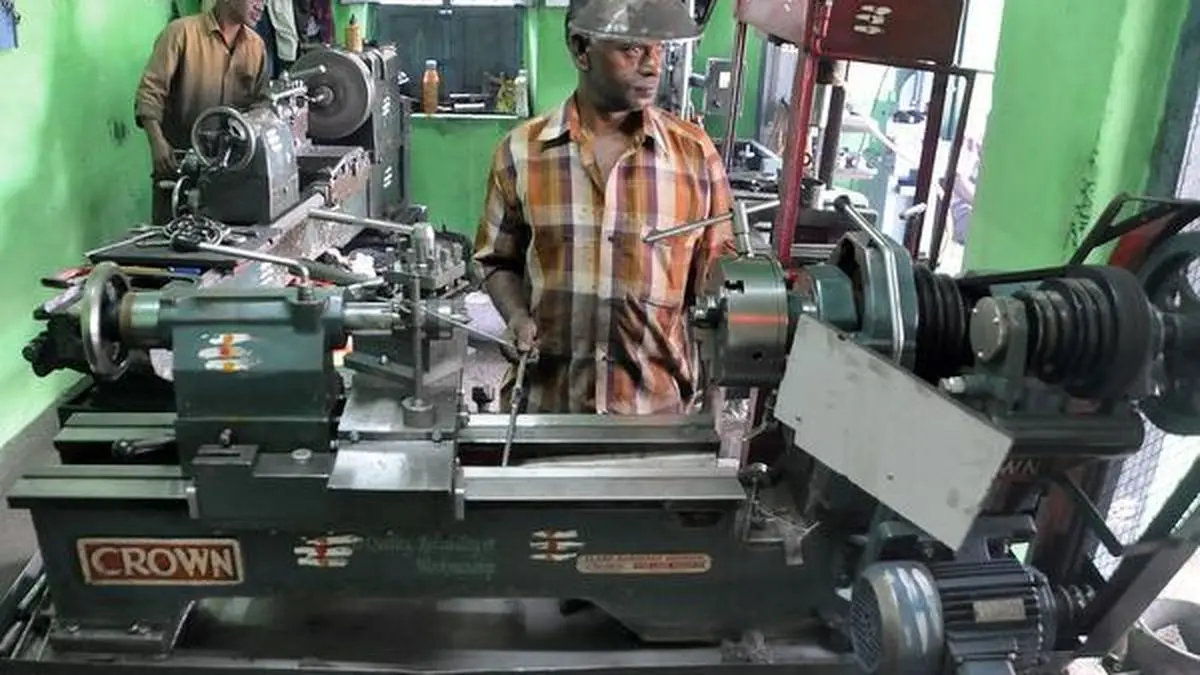
MSMEs: Lending a helping hand | Photo Credit: SRIRAM MA
The Centre has done well to announce the fifth tranche of the Emergency Credit Linked Guarantee Scheme (earlier versions were operational in the Covid years) to deal with the impact of the Iran war on India’s 7.47 crore MSMEs. These MSMEs account for 31 per cent of GDP, 48 per cent of exports and employ 32 crore persons. The ECLGS 5.0 can help in easing liquidity constraints arising out of disruption of markets and logistics.
The war has rocked the economy in many ways. For example, industries directly dependent on crude oil, gas and petrochemicals have been affected by non-availability of supplies or their late arrivals in dribbles and at high costs — impacting output. This category includes steel, glass, ceramics and chemicals units, which have been forced into erratic operations or shutdowns. Others dependent on raw materials and intermediates from China, such as pharma, electronics, solar components, EVs and automobiles, have likely been able to carry on with production — but are faced with logistics issues, payment delays and working capital stress, more so as exporters. The Centre recently set aside ₹18,100 crore to provide a ₹2.55 lakh crore loan guarantee over five or seven years to MSMEs and the aviation sector, respectively. The latter has been badly hit by rising costs of aviation turbine fuel, and route disruptions. With losses of top players ballooning, the ECLGS 5.0 has allowed for loans up to ₹1,500 crore to smoothen operations.
However, the ECLGS 5.0 is primarily aimed at keeping MSMEs afloat. As a scheme, it is ideal for lenders and borrowers. MSMEs have been allowed up to 20 per cent additional credit of the working capital utilised in Q4FY26, with 100 per cent guarantee for banks. In its earlier versions (which ended in June 2023), the credit allowed was 20-50 per cent of credit outstanding, with a guarantee corpus of ₹5 lakh crore. So, ECLGS 5.0 is smaller in scope — but the fact is that today’s crisis bears no comparison to the Covid debacle. Under ECLGS 1.0-4.0, MSMEs used up only about half the guarantees on offer or ₹2.45 lakh crore. The total guarantees issued were ₹3.6 lakh crore for 26 identified sectors. However, MSME observers have sought to draw bankers’ attention to trade credit, which often acts as the primary provider of working capital. In times of crisis, credit between firms freezes, as the entire chain is disrupted. ECLGS should be used to avert a breakdown of liquidity chains.
The latest support to the MSMEs comes on the heels of steps taken to soften the impact of Trump’s tariff tantrums in FY26. In November 2025, the Reserve Bank of India announced a slew of liquidity support measures to the ease the working capital crunch faced by exporters. Credit guarantees for the PM Mudra Yojana and other schemes for self-employed can boost businesses at the bottom of the pyramid. Taken together, these moves can propel domestic demand at a time when growth is expected to fall below 7 per cent this fiscal.
Published on May 8, 2026
此内容由惯性聚合(RSS阅读器)自动聚合整理,仅供阅读参考。 原文来自 — 版权归原作者所有。