







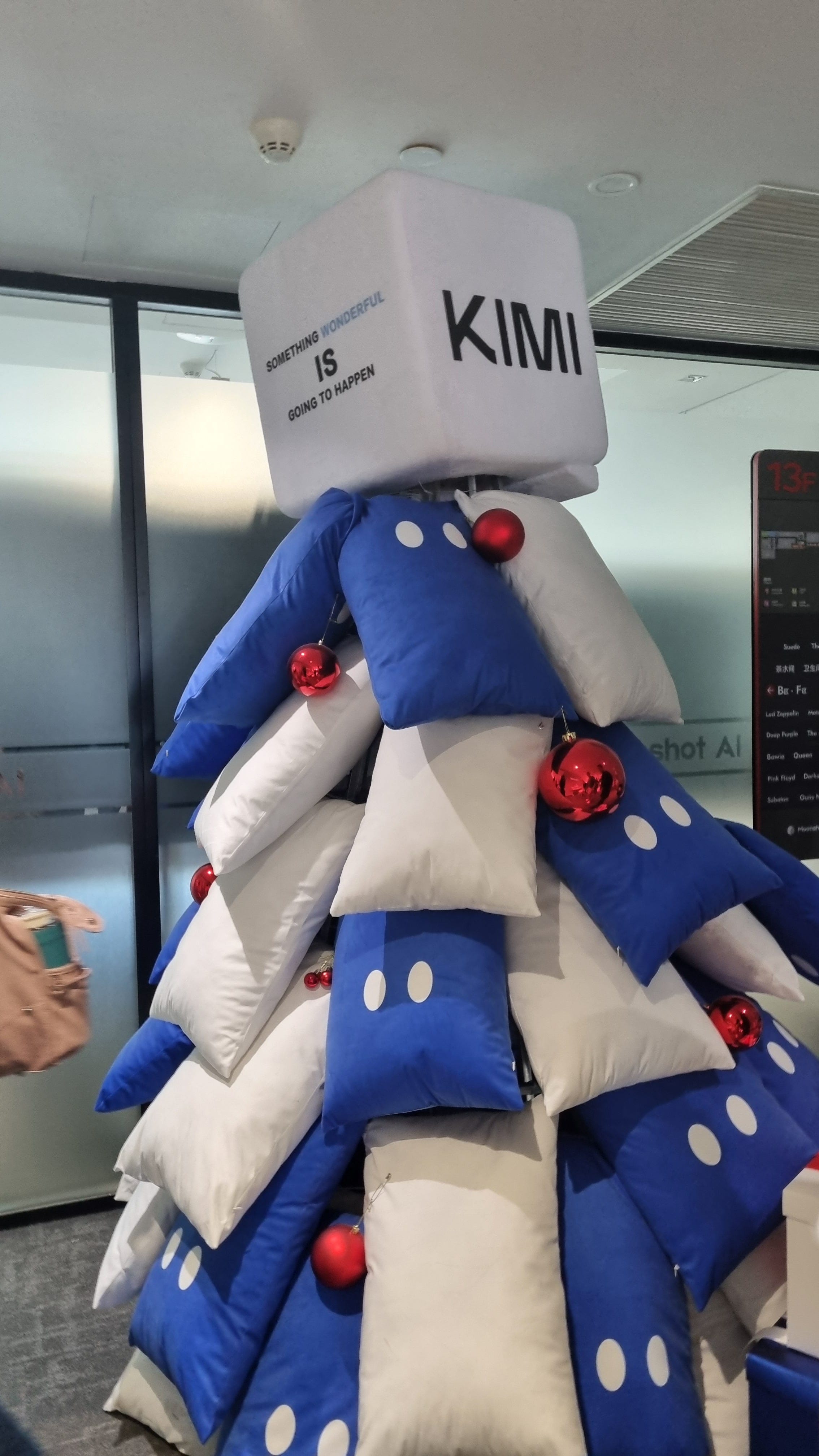
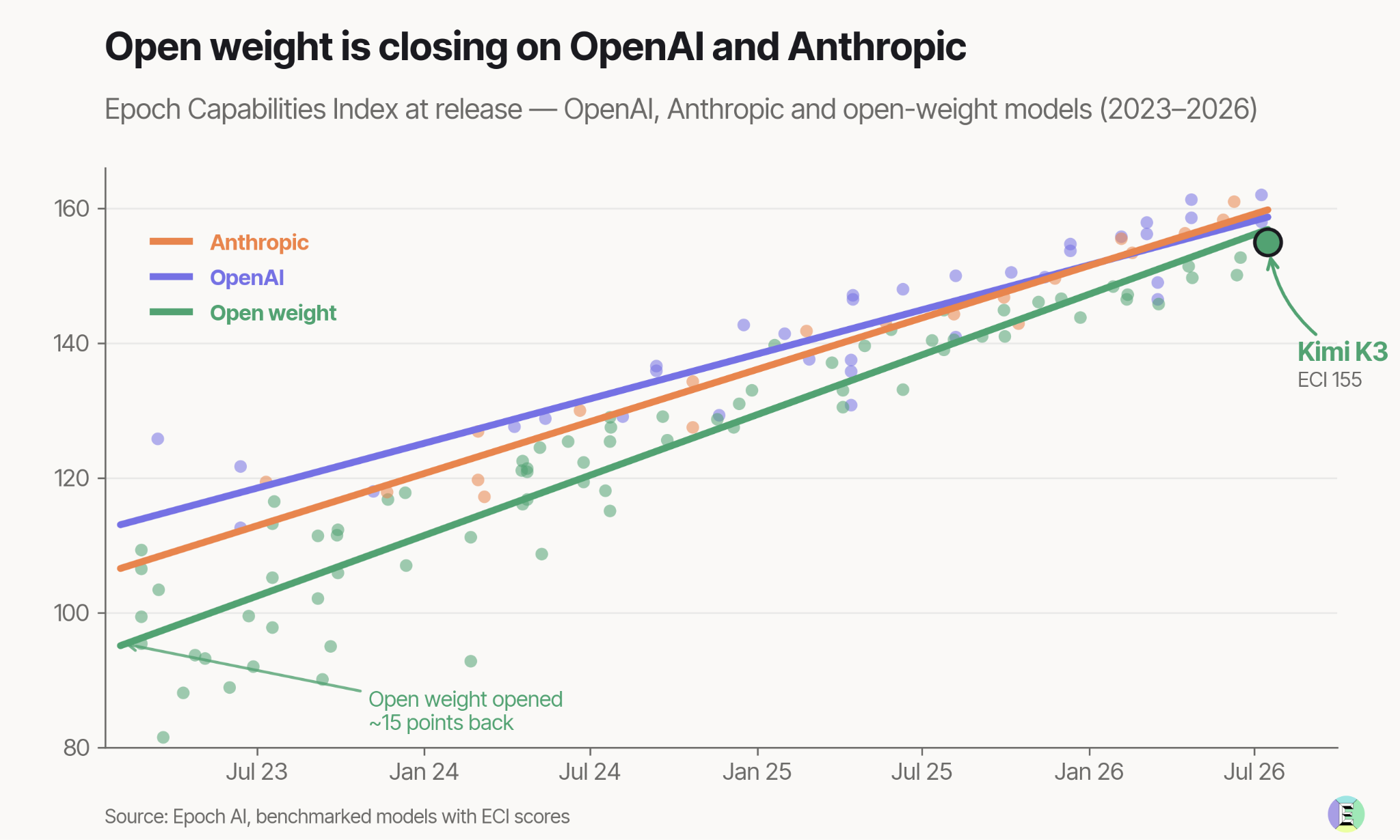
Kimi K3 has caused quite an uproar since its release last week. It’s the first time a Chinese model has taken the lead on the frontend Code Arena benchmark. And that’s three months since Moonshot AI’s previous impressive flagship model, Kimi K2.6, was released.
Following in Moonshot’s steps, Alibaba announced over the weekend that Qwen3.8 – a 2.4 trillion-parameter model – is coming soon, and unlike its last release, this one will be an open-weight model. No benchmarks or further details have been released as of yet.
Open models are now estimated to be 4-7 months behind the frontier in cyber capabilities, down from 6-10 months in 2025. And despite compute constraints, efficiency improvements mean these labs are doing more with less. Comparing the compute availability and model performance between US labs and Chinese labs, we estimated Chinese labs to be getting 4-7x more out of their compute.
Hannah Petrovic and I spent some time with the Moonshot AI and Alibaba teams in China back in April and May, and we’ve had time to think about the economics of open-source models and how they affect the entire ecosystem.
Some have claimed that Kimi K3’s performance breaks the economic case for AI as it lowers the cost to complete various tasks at frontier standards. For instance, Microsoft engineers are reportedly testing whether Kimi K3 can be used within Copilot.
We don’t think this is the case, and in today’s post we’ll work through what might happen next.
此内容由惯性聚合(RSS阅读器)自动聚合整理,仅供阅读参考。 原文来自 — 版权归原作者所有。