


惯性聚合 高效追踪和阅读你感兴趣的博客、新闻、科技资讯
阅读原文 在惯性聚合中打开

推荐订阅源

GbyAI
GbyAI
爱范儿
爱范儿
Y
Y Combinator Blog
T
Tor Project blog
V
Visual Studio Blog
U
Unit 42
B
Blog RSS Feed
博客园 - 叶小钗
OSCHINA 社区最新新闻
OSCHINA 社区最新新闻
阮一峰的网络日志
阮一峰的网络日志
T
Tailwind CSS Blog
G
Google Developers Blog
I
InfoQ
Stack Overflow Blog
Stack Overflow Blog
IT之家
IT之家
Microsoft Azure Blog
T
The Blog of Author Tim Ferriss
钛媒体:引领未来商业与生活新知
钛媒体:引领未来商业与生活新知
The Cloudflare Blog
Google DeepMind News
奇客Solidot–传递最新科技情报
奇客Solidot–传递最新科技情报
H
Hackread – Cybersecurity News, Data Breaches, AI and More
F
Fortinet All Blogs
人人都是产品经理
人人都是产品经理
Apple Machine Learning Research
The GitHub Blog
The GitHub Blog
Recorded Future
Recorded Future
博客园_首页
罗磊的独立博客
让小产品的独立变现更简单 - ezindie.com
量子位
P
Proofpoint News Feed
Jina AI
Jina AI
博客园 - 【当耐特】
S
Security @ Cisco Blogs
I
Intezer
MyScale Blog
MyScale Blog
Simon Willison's Weblog
P
Privacy & Cybersecurity Law Blog
腾讯CDC
T
Tenable Blog
A
Arctic Wolf
T
Threat Research - Cisco Blogs
S
Securelist
Know Your Adversary
Know Your Adversary
Spread Privacy
Spread Privacy
C
Check Point Blog
NISL@THU
NISL@THU
Microsoft Security Blog
V
Vulnerabilities – Threatpost

Whexy Blog

We lost the AIxCC. So, what now? Arm VMM with Apple's Hypervisor Framework Driving WaveShare E‐Paper Display with a Raspberry Pi Pico in MicroPython Use cgroup v2 inside docker containers Annual Hit Piece: Fuzzing Top Conference Paper Debunking Report Solving SSH Key Login Issues on Synology NAS Can SSD Cache Improve Synology NAS Write Speeds? Virtualization is all you need Running Windows Games on Mac Without Virtual Machines Tears of the Kingdom: End of an Era Anonymous CDN Traffic Relay Self-host Relay Service with CDN Home Networking Solution Building Your Own Blog System Connecting Smart Devices to SUSTech Campus Network Function Color Theory Stop Forkin' Around: Faster Creating of Large Processes on Linux PMU Interrupts: How to handle them Asynchronous Mutex Using QEMU to run Linux images on M1 Macbook Alligator In Vest - My first research work Experience Using Several Plugins in Complex LaTeX Projects Variance in Rust Understanding Rust Generic Traits SUSTeam: Ultimate Gaming Platform Inline Assembly Language in C React Learning Notes Building a School Bus Schedule App for Apple Watch 12307 Train Ticket Purchase Platform Building a Super Simple OpenJudge in Two Nights Setting Up Remote Backup for macOS Shell Script for Automatically Logging into SUSTech Campus Network Building a Movie Streaming System in the Dorm
Sakai and Local Folder Synchronization
Whexy · 2020-02-27 · via Whexy Blog

Whexy /

February 27, 2020

The Sakai system that school teachers often use to publish courseware and assignments also supports WebDAV protocol. By configuring local WebDAV services, you can easily download course resources, saving time and effort.

Using Sakai Personal Resource Pages at SUSTech

SUSTech gives each student 1GB of Sakai space. Using WebDAV service, you can open it as a folder locally. First thing to do is change the default password. On the Sakai-Gateway page, click "Reset Password" on the left, enter your school email (with @mail.sustech.edu.cn suffix) on the right page, then press "Send Password". Later you can receive a "Password Reset Reminder" in the WeChat official account "Southern University of Science and Technology" Sakai function page, click to enter and input the password you want to use for WebDAV.

  • Can only input school email
  • Email won't actually receive emails
  • If you don't receive reminders in WeChat official account, please uncheck "Disable WeChat message reminders" in "Sakai" → "Profile" → "Preferences" → "WeChat Messages"

After that, in Sakai site "Resources" functions, you can see the "Upload-Download Multiple Resources" tab. Click to enter, which contains WebDAV connections for this site.

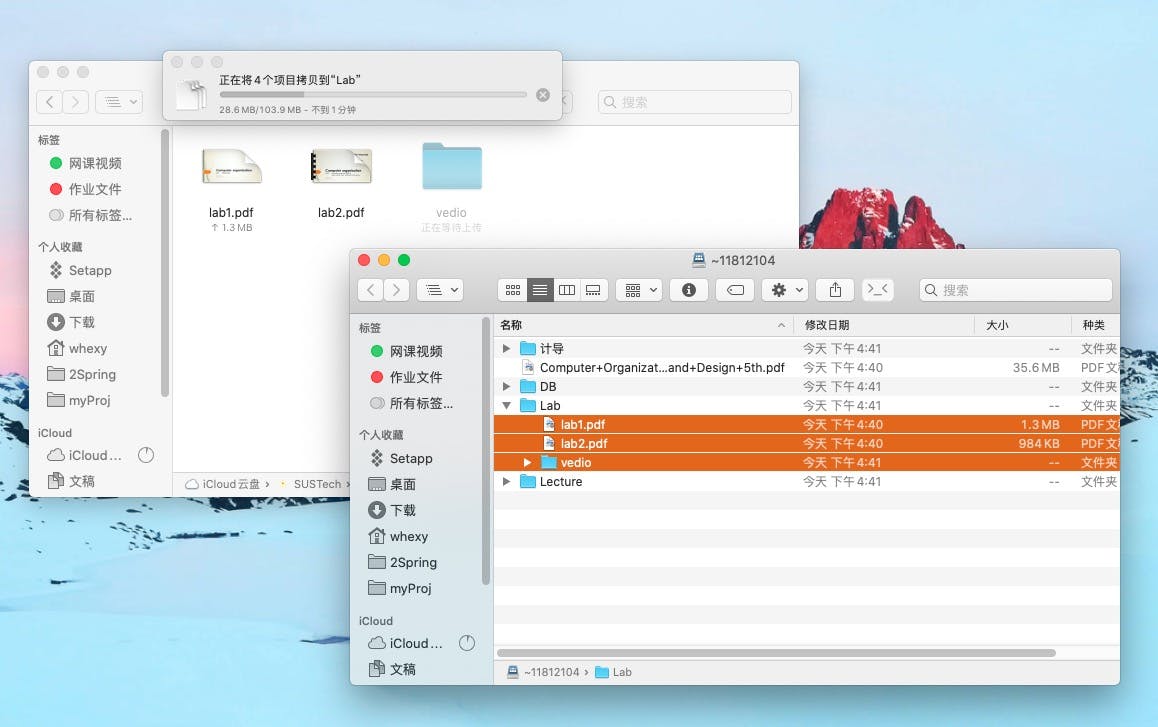
Taking macOS operating system as an example. Press shortcut ⌘+K in "Finder", then input the WebDAV address shown on Sakai. In the login page that appears, input your student ID and the password you changed earlier. You can then open Sakai content as a folder.
© LICENSED UNDER CC BY-NC-SA 4.0