







Contract research organizations (CROs) play a critical role in drug discovery, providing the specialized laboratory services that translate computational designs into physical candidates. They enable researchers to access capabilities that for some teams would be impractical to build and maintain in-house, from DNA synthesis and protein expression to comprehensive biophysical characterization. Yet for many researchers, working with CROs remains harder than it should be. Finding the right partner with the right services for a specific project takes time and effort. Setting up new engagements involves manual coordination across procurement, contracting, and data exchange. And once results come back, the data often lives in separate systems from the computational tools used to design candidates, creating silos that slow down the iterative cycle between design and experimentation. According to David Younger, Co-Founder and CEO of A-Alpha Bio, in an interview with GEN Edge, the “fundamental gap” in AI-powered drug discovery is the lack of high-quality, experimental data at scale to evaluate protein design models. “The convergence of technology and life sciences isn’t just about faster compute or better algorithms,” Younger said. “It’s about connecting those advances to real-world, experimental observations.”
Amazon Bio Discovery is an AI-powered application designed to help scientists design and test new antibody drugs more quickly and confidently. It gives you access to 40+ AI biology models with AI-guided selection, plus agentic assistants that help design and configure experiments. It also connects you to a network of integrated contract research organization (CRO) partners, including Twist Bioscience and Ginkgo Bioworks, with A-Alpha Bio coming soon, who physically synthesize and test the most promising candidates. Lab results flow directly back into the application, improving the next round of design. This continuous workflow, known as “lab-in-the-loop,” turns drug discovery from a series of disconnected steps into a continuously accelerating learning cycle.
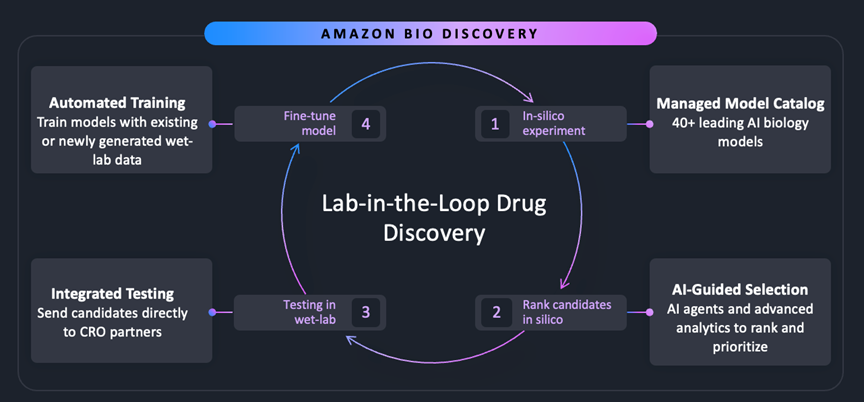
Figure 1: Amazon Bio Discovery’s lab-in-the-loop workflow connecting computational design with integrated CRO partners
In this post, we showcase our CRO launch partners and explain how integrating computational and wet-lab workflows in a single application is expanding lab-in-the-loop drug discovery to more researchers.
One Application for All Antibody Research Teams
Amazon Bio Discovery is built on the same AWS infrastructure trusted today by 19 of the top 20 global pharmaceutical companies to power their most sensitive research workloads. The application brings enterprise-grade privacy and security to every researcher, with complete data isolation and full customer ownership over all proprietary data and intellectual property. All proprietary models remain private and accessible only to you or your organization. If you discover a novel antibody using the application, the IP belongs to you.
The researchers who stand to benefit most from integrated CRO services are the ones who previously couldn’t access them independently. Academic labs, non-profit research institutions, early-stage biotechs, and smaller teams often lack the procurement resources, volume commitments, or even awareness of which CRO partner offers the right services for their research needs. These teams do critical work across oncology, rare disease, and infectious disease research, but frequently lack the infrastructure and lab resources that larger organizations have. For larger pharmaceutical and biotech organizations, integrated CRO access offers a way to complement existing in-house lab capabilities, giving research teams the ability to run additional characterization campaigns without having to make tradeoffs with other programs using internal lab capacity.
Amazon Bio Discovery gives these researchers a direct line to trusted CROs with transparent pricing and turnaround times visible before they submit an order. And with a free academic tier, researchers at universities, medical centers, and non-profit research institutes can design candidates using state-of-the-art AI models and send them to our CRO partners without worrying about first securing compute resources.
For CRO partners, Amazon Bio Discovery opens access to potentially tens of thousands of new researchers who previously had no practical path to their services. The ability to batch orders together through the application, with streamlined legal and payment processes, makes it practical for CRO partners to serve smaller research teams that would otherwise fall below minimum engagement thresholds. For CROs with established relationships with large research customers, those partnerships continue as they always have. Amazon Bio Discovery offers the added option of centralizing data integration across computational and wet-lab workflows in a single application, creating a connected feedback loop between design and experimentation.
See It in Action
The CRO network is designed to give you more choice and transparency while removing the operational friction that slows down the lab-in-the-loop discovery cycle. For computational biologists, this means you can rapidly iterate on model predictions by sending candidates to wet-lab CRO partners and using returning experimental data to improve accuracy with each cycle. For bench scientists, it means you can validate candidates through integrated CRO partners and get experimental data returned directly into the same environment where you designed them for additional analysis.
Analyze and select candidates. After computationally generating hundreds of thousands of candidates, Amazon Bio Discovery helps you identify the most promising ones for experimental validation. Using multi-property optimization, AI-guided ranking, and liability assessment, you can filter and prioritize candidates based on predicted binding affinity, developability, thermostability, and other key properties. The result is a focused shortlist of high-confidence candidates ready for wet-lab testing.
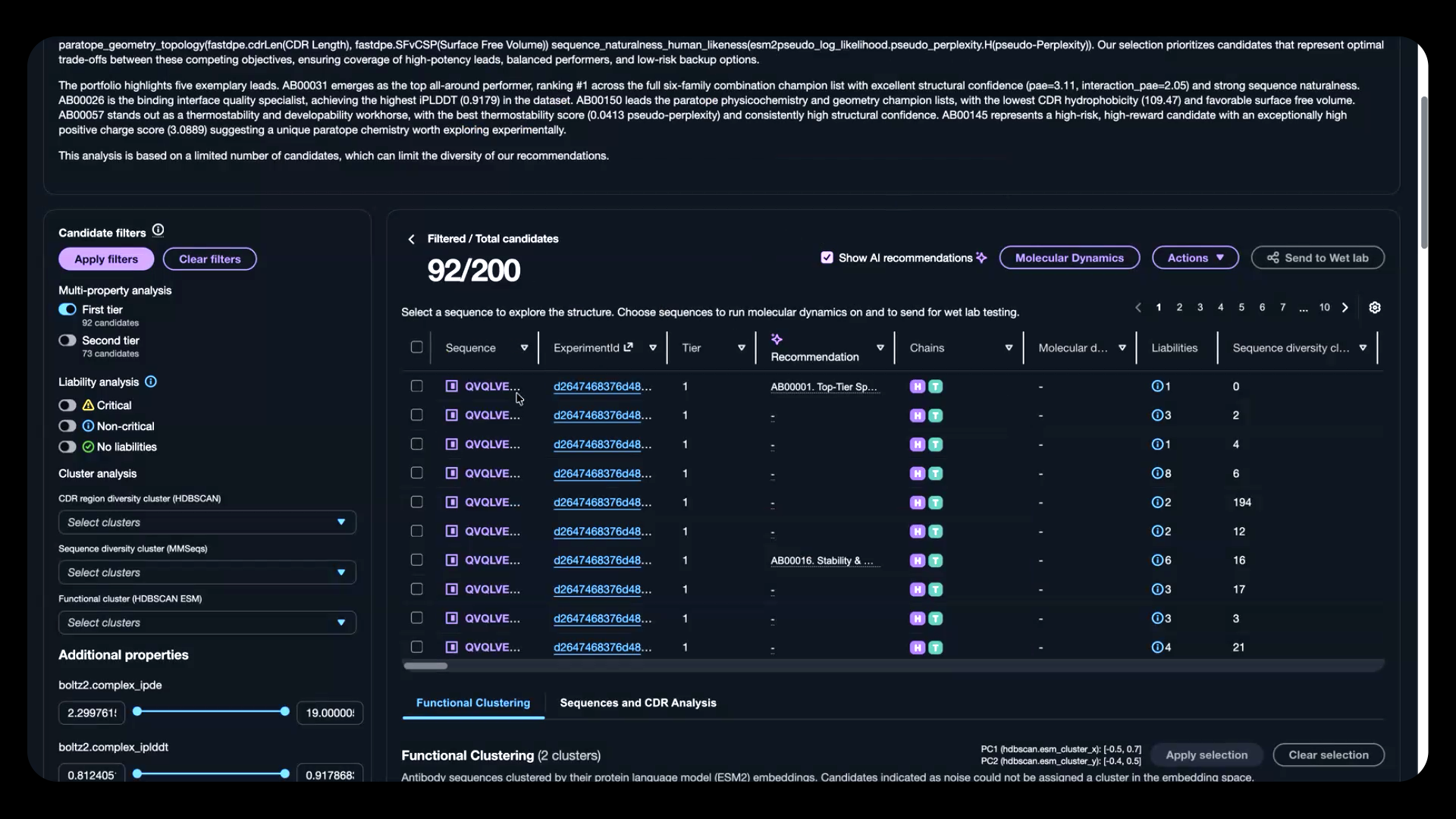
Figure 2: Review AI-recommended candidates filtered by multi-property optimization and liability assessment
Submit candidates to a CRO partner. Once you have identified your top candidates, you browse available CRO services within the application. Each partner lists available assays, pricing, estimated turnaround times, and supported antibody formats. You can compare options across CRO partners side by side, giving you the transparency to choose the best option for your project. With a few clicks, you send selected candidates directly to the CRO partner through an integrated workflow. No manual data exports, no separate systems, no email chains. Only the specific candidate sequences you select are transmitted to the CRO partner. The CRO partner does not have access to your projects, experiments, or any other data.
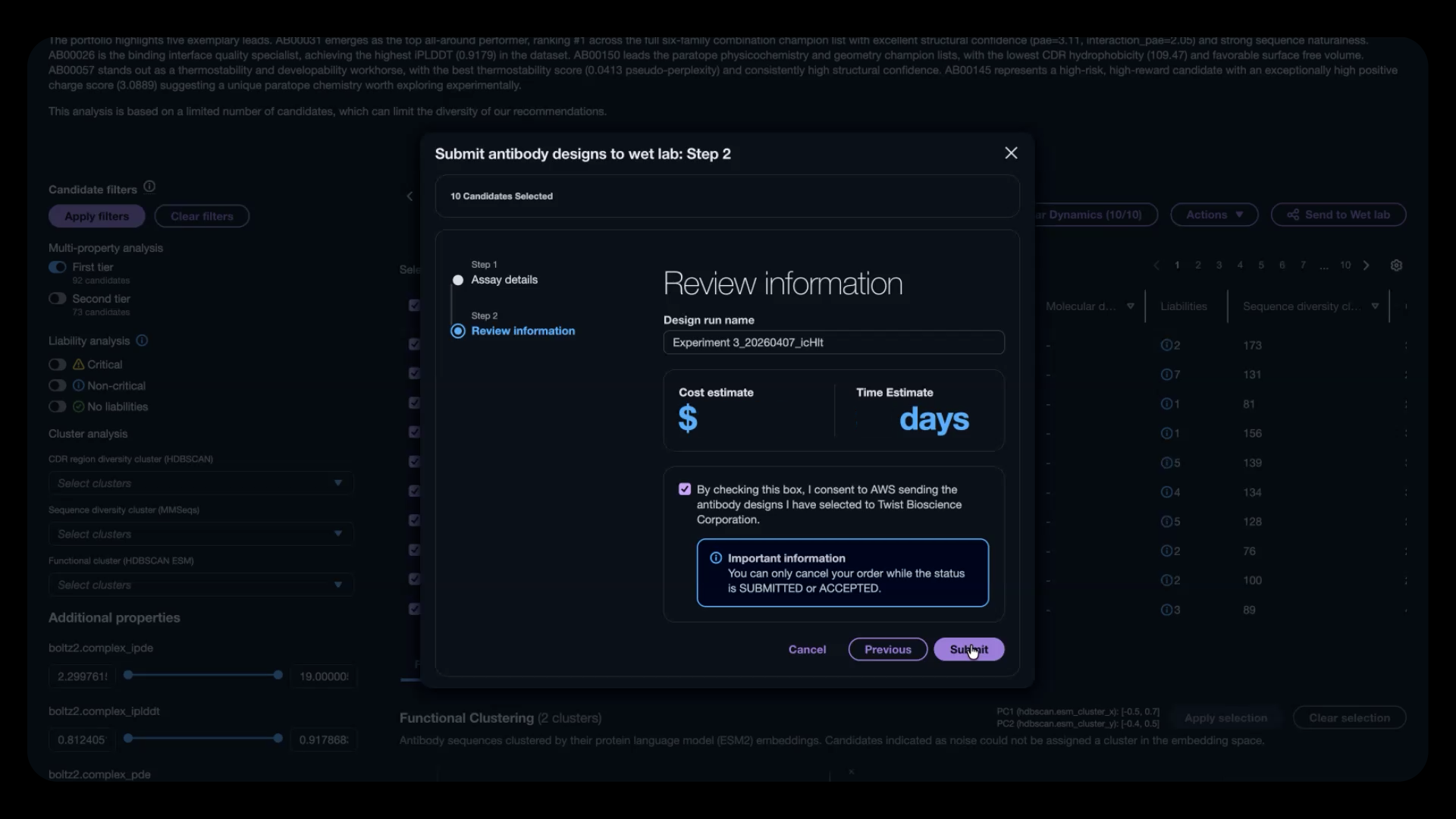
Figure 3: Send validated candidates directly to an integrated CRO partner with assay details, cost estimates, and turnaround times
Receive results and close the loop. When the lab completes its work, results flow back into your Amazon Bio Discovery environment automatically. The data can then be used for analysis and comparison against computational predictions. Results stay within your account. You can use returning lab data to refine your AI models, improving prediction accuracy for the next cycle. Over time, this feedback loop produces increasingly high-confidence candidates, reducing the number of experimental iterations needed to identify a viable therapeutic lead.
Meet the CRO Partners
Each Amazon Bio Discovery CRO partner brings distinct capabilities to the lab-in-the-loop workflow. Below, we highlight what each partner offers and the benefits for researchers. Across all partners, you retain full ownership of the data generated through these services.
Twist Bioscience
Twist Bioscience brings high-throughput antibody production and characterization services to Amazon Bio Discovery. Twist’s offering spans DNA synthesis through expression to a comprehensive panel of biophysical assays, including binding affinity, developability, thermostability, and functional characterization. Twist supports multiple antibody formats including full-length IgG, VHH, scFv, bispecifics, and Fab, with flexible expression scales from microgram to milligram quantities.
Twist was the wet-lab CRO partner behind two early validations of Amazon Bio Discovery: the Memorial Sloan Kettering Cancer Center collaboration, where nearly 300,000 novel antibody candidates were designed and the top 100,000 sent to Twist for synthesis and testing in weeks versus up to a year using traditional methods, and the Antibody Developability Benchmark developed jointly with Johns Hopkins University.
“At Twist, integrating this end-to-end wet-lab workflow within a single provider empowers Amazon Bio Discovery customers by avoiding delays and data silos often created when outsourcing different stages of validation to multiple vendors. This consolidation ensures a seamless transition from digital design to physical results, maximizing the efficiency of the ‘lab-in-the-loop’ cycle and providing researchers with a more reliable path to high-confidence candidates,” said Emily M. Leproust, CEO and co-founder of Twist Bioscience.
Ginkgo Bioworks
Through its Datapoints business, Ginkgo Bioworks brings large-scale antibody developability characterization services to Amazon Bio Discovery. Ginkgo offers wet-lab capabilities spanning DNA synthesis, antibody expression and purification, and a comprehensive panel of developability assays, including target binding, aggregation, thermostability, self-association, polyreactivity, and hydrophobicity.
Ginkgo’s services are designed for flexibility and scale. You can run characterization campaigns ranging from 20 to 5,000+ antibodies per batch across a panel of up to 14 assays. The service supports a broad range of antibody formats including IgGs, ADCs, Fc-fusions, VHH, Fab, scFv, multispecifics, and minibinders. For researchers running large characterization campaigns, Ginkgo offers volume discounts to help maximize the scope of testing within budget constraints. Smaller pilot campaigns are also available for teams looking to validate specific candidates before scaling up.
“Amazon Bio Discovery brings bio-AI and lab-in-the-loop capabilities to any team, at any scale. Researchers can access models and submit antibody designs directly to Ginkgo’s automated wet labs— getting validated data back fast, and iterating from there. We built the infrastructure to match the fast pace and confidence modern drug discovery demands” said John Androsavich, GM of Ginkgo Datapoints.
A-Alpha Bio (Coming Soon)
A-Alpha Bio generates high-quality, quantitative protein-protein affinity data through its high-throughput AlphaSeq platform. Researchers can quickly measure on- and off-target affinities for their in silico designs at scale, enabling broader screening to identify diverse candidate binders for any downstream application.
“With the AlphaSeq integration, Amazon customers can experimentally test their binder designs by the hundreds or thousands, which is essential for modern design pipelines with single-digit-percent success rates for the easiest targets,” says David Younger, Co-Founder and CEO of A-Alpha Bio. “This partnership with Amazon extends access to AlphaSeq beyond large pharmaceutical companies to academic labs and early-stage biotechs. Improving access to abundant and high-quality data is how we can move the needle on bringing new medicines to patients faster.”
Get Started
The CRO partners integrated into Amazon Bio Discovery today represent the beginning of a growing lab-in-the-loop ecosystem. We plan to expand the network of integrated partners across new modalities and service types, always with the same principle: making high-quality laboratory services accessible to every researcher, regardless of your organization’s size or resources.
To get started with Amazon Bio Discovery and explore integrated CRO partner services, sign up for a free trial and design your first antibody molecule through a free digital course today.