



惯性聚合 高效追踪和阅读你感兴趣的博客、新闻、科技资讯
阅读原文 在惯性聚合中打开

推荐订阅源

S
Schneier on Security
A
Arctic Wolf
S
Security Affairs
O
OpenAI News
SecWiki News
SecWiki News
TaoSecurity Blog
TaoSecurity Blog
H
Heimdal Security Blog
T
Threat Research - Cisco Blogs
Hacker News: Ask HN
Hacker News: Ask HN
N
News | PayPal Newsroom
Google Online Security Blog
C
Cisco Blogs
The Hacker News
The Hacker News
cs.AI updates on arXiv.org
C
CXSECURITY Database RSS Feed - CXSecurity.com
P
Privacy International News Feed
V
Vulnerabilities – Threatpost
cs.CV updates on arXiv.org
酷 壳 – CoolShell
酷 壳 – CoolShell
H
Hacker News: Front Page
T
Tenable Blog
T
The Exploit Database - CXSecurity.com
Recent Commits to openclaw:main
Spread Privacy
Spread Privacy
人人都是产品经理
人人都是产品经理
www.infosecurity-magazine.com
V2EX - 技术
V2EX - 技术
L
LINUX DO - 最新话题
The GitHub Blog
The GitHub Blog
博客园 - 三生石上(FineUI控件)
T
The Blog of Author Tim Ferriss
OSCHINA 社区最新新闻
OSCHINA 社区最新新闻
V
Visual Studio Blog
The Cloudflare Blog
N
News and Events Feed by Topic
量子位
Google DeepMind News
Application and Cybersecurity Blog
L
LINUX DO - 热门话题
P
Palo Alto Networks Blog
Stack Overflow Blog
Stack Overflow Blog
K
KPMG report finds enterprise disconnect between AI and its ROI | CIO
Attack and Defense Labs
Cyber Security Advisories - MS-ISAC
Hacker News - Newest:
Hacker News - Newest: "LLM"
Apple Machine Learning Research
The Register - Security
Microsoft Security Blog
Know Your Adversary
Know Your Adversary
Webroot Blog
Webroot Blog

AWS for Industries

Build a voice-enabled Automotive and Manufacturing assistant using Amazon Nova Sonic and Amazon Bedrock AgentCore | Amazon Web Services Managing AI agent sprawl across business units | Amazon Web Services Dynamic Inbound Routing for BYOIP Workloads Using Amazon VPC Route Server | Amazon Web Services How Autel Transformed Charging Station Management with AI Agents on AWS | Amazon Web Services How Danone Simplified Kubernetes at Scale with Amazon EKS Auto Mode | Amazon Web Services Build a Multi-Agent Assessment Workbench with Amazon Bedrock AgentCore | Amazon Web Services Sovereign by design: How AWS helps Nigeria’s financial services industry protect data and drive innovation | Amazon Web Services Scaling ML in production: how BBVA accelerated delivery with MLOps | Amazon Web Services Inside BBVA’s MLOps transformation: from data platform to scalable ML on AWS | Amazon Web Services Blazing a Trail: How Peloton Rebuilt the SDLC for the Agentic Era with Amazon Bedrock | Amazon Web Services Accelerate RISC-V Software Development Before Silicon: Virtual Prototyping with MachineWare’s SIM-V on AWS | Amazon Web Services How retailers deliver hyper-personalization in-store with Personalisation Hub, UST, and AWS | Amazon Web Services Deploy diagnostic-quality imaging globally with MedDream and AWS HealthImaging | Amazon Web Services Coins in Motion: Building agentic blockchain payments for in-vehicle experiences | Amazon Web Services Reduce P&ID analysis time by 80% with hybrid AI maintenance planning | Amazon Web Services Deploying industrial AI on AWS: Building the autonomous factory | Amazon Web Services How Atlantic Health cut legal document search time by 42% with Amazon Bedrock metadata filtering | Amazon Web Services Edge-to-Cloud Architecture for Real-Time Surgical Intelligence with AWS and NVIDIA | Amazon Web Services Reimagining B-Pillar DFMEA: Why Ontology-Grounded AI Is the Future of Automotive Engineering | Amazon Web Services Transforming energy trading by managing complexity and driving growth with Cloud ETRM | Amazon Web Services How Multi-Agent AI Turns Supply Chain Data into Decisions and Actions | Amazon Web Services ​​​Deploy Agentic Bidding Without Sacrificing Speed: ARTF Containers with NVIDIA GPU Acceleration on AWS​​ | Amazon Web Services Next-generation programmatic advertising: How AWS RTB Fabric redefines the game | Amazon Web Services Flexible Telecom AI Workload Deployment Across AWS Hybrid Cloud | Amazon Web Services Building a HIPAA-ready generative AI architecture for healthcare on AWS | Amazon Web Services Highlights from the 2026 AWS Life Sciences Symposium: MedTech Track | Amazon Web Services Multi-Agent Systems for Financial Services on Amazon EKS and AgentCore | Amazon Web Services How AI can help developers migrate embedded codebases between Arm SoCs | Amazon Web Services From Connected to Resilient: Cloud-Native Payment Connectivity on AWS | Amazon Web Services Ultra-low-latency cross-Region crypto trading with Avelacom and AWS | Amazon Web Services Build an AI-powered 5G Signaling Trace Analyzer Using Amazon Bedrock | Amazon Web Services Medical Legal Regulatory Review Orchestration with AI Agents on AWS | Amazon Web Services AWS showcases the agentic AI future of advertising and entertainment at Cannes Lions 2026 | Amazon Web Services The Road to 180M GRefs/s: Sizing Epic on AWS with R8ib and Enhanced EBS | Amazon Web Services BridgeWise builds responsible AI in FSI with Amazon Bedrock | Amazon Web Services Rethink Everything: Highlights from the 2026 AWS Financial Services Symposium | Amazon Web Services Improving Defect Analysis and Quality Control with AI Diagnostics | Amazon Web Services Building a cloud-based EV charging monitoring platform with real-time AI analytics | Amazon Web Services Introducing the AWS guide to the ECB Guide on outsourcing cloud services to cloud service providers | Amazon Web Services How a Luxury Retailer Accelerates Customer Experience with Amazon CloudFront | Amazon Web Services The Art of the Possible: Building an Intelligent Wealth Management Platform – Part 1 | Amazon Web Services How We Built Healthcare AI You Can Trust: The Science Behind Amazon Connect Health | Amazon Web Services How Everllence Scaled P&ID Intelligence to Improve Plant Operations | Amazon Web Services Rivian accelerates production with second-generation AWS Outposts: Improving resiliency and reducing costs | Amazon Web Services AI-Driven Development Lifecycle for Financial Services | Amazon Web Services How Agentic AI and Digital Twins on AWS Drive Operational Excellence | Amazon Web Services Modernizing Core Banking Systems: A Strategic Guide for Financial Leaders | Amazon Web Services Highlights from the 2026 AWS Life Sciences Symposium: Research and Drug Discovery | Amazon Web Services Discount Tire Uses Cloud WAN and Buffer VPC to Create a Scalable Enterprise Network Centralized third-party connectivity in AWS: Architecture patterns for highly regulated environments | Amazon Web Services FHIR-powered Care Continuum on AWS HealthLake From code to chemistry: using Kiro to tackle ADME-Tox, a key drug discovery challenge | Amazon Web Services How Toyota securely deployed HiveMQ with mTLS on AWS to power Smart Manufacturing | Amazon Web Services From record to intelligence: How EMR systems on AWS become the foundation for generative AI in healthcare | Amazon Web Services How to Connect AWS HealthOmics to Public and Private Network Sources at Runtime | Amazon Web Services Accelerating Android Builds on AWS: From 3 Hours to Under 5 Minutes with SourceFS | Amazon Web Services Closing the Loop with Amazon Bio Discovery’s Integrated Lab Partners | Amazon Web Services Massive Parallel Processing of Financial Transactions with Amazon EKS and Amazon MSK | Amazon Web Services Submit up to 100,000 Bioinformatics Workflow Runs with a Single API Call in AWS HealthOmics | Amazon Web Services Energy HPC Orchestrator powers collaborative, scalable energy computing | Amazon Web Services Automate Investment Research Using Strands Agents on Bedrock AgentCore | Amazon Web Services How OCC Built a Governed Cloud Foundation and Then Stress-Tested It Executive Insights from the 2026 AWS Life Sciences Symposium How Carlsberg’s Traitomic business leveraged AWS HealthOmics to power genetic trait development | Amazon Web Services CME Group MDP multicast data access on AWS using Transit Gateway | Amazon Web Services How retailers solve the customer identity puzzle with Amperity and AWS | Amazon Web Services Exact Sciences Transforms Bioinformatics Infrastructure with AWS HealthOmics | Amazon Web Services Building a Serverless Supply Chain Management Solution for Automotive Customers with AWS AppSync and Amazon Aurora Serverless | Amazon Web Services Accelerating physical AI with AWS and NVIDIA: building production-ready applications with simulation and real-world learning | Amazon Web Services Modernizing life-saving workloads with AWS serverless | Amazon Web Services Transforming Industrial Operations: How AVEVA and AWS drive Cloud Innovation | Amazon Web Services Accelerate Project Delivery with AI-Native Execution System on Amazon Quick | Amazon Web Services Reinvent Telecom Mediation Systems with Amazon Bedrock AgentCore, Strands Agents, and the Model Context Protocol | Amazon Web Services AWS Cloud Connectivity Patterns for Financial Market Infrastructures | Amazon Web Services Event-Driven Digital Pathology: Governed Whole Slide Image Ingestion to Scalable Inference with Amazon SageMaker | Amazon Web Services How Telefonica Germany achieved a centralized tracing solution with VPC Traffic Mirroring | Amazon Web Services AWS Teams Up with Wingstop to Deliver Wings to Millions During March Hoops Tournament | Amazon Web Services How Amazon Connect Health brings agentic AI to the point of care | Amazon Web Services How Liftoff improved conversion performance and reduced infrastructure costs with Cortex using AWS Graviton | Amazon Web Services From Prompt to Pipeline: AI-Powered Bioinformatics Workflow Development with Kiro and AWS HealthOmics | Amazon Web Services Driving Intelligent Quality in the Software-Defined Vehicle Era | Amazon Web Services How Amazon Devices Eliminated Credential Risk to Scale AI across Engineering Tools | Amazon Web Services The Evolution of BMW Group’s 3D Streaming Experience | Amazon Web Services Build ChatGPT Apps with MCP Servers and AWS Infrastructure | Amazon Web Services
Introducing Amazon Bio Discovery | Amazon Web Services
2026-04-14 · via AWS for Industries

A new agentic application that makes lab-in-the-loop drug discovery accessible to every researcher

Lab-in-the-loop drug discovery has transformed research for some organizations. AI-powered predictions improve continuously through wet-lab feedback, accelerating the path from hypothesis to validated candidates. But for most research teams, the reality looks different.

The field is moving fast. New biological AI models emerge constantly, each with different strengths, data requirements, and integration needs. Computational biologists are expected to evaluate and operationalize these models while supporting a growing number of discovery programs, often without the infrastructure or resources to match the demand. Meanwhile, bench scientists bring deep biological expertise to their targets and experiments but lack direct access to the computational tools that could accelerate their work. The result is a collaboration bottleneck: not because the science isn’t available, but because the tooling doesn’t support how these teams need to work together.

Even when systems are running, computational predictions and wet-lab workflows stay disconnected. Manual handoffs introduce delays, make it harder to reproduce experiments, and slow the feedback loop that makes lab-in-the-loop valuable in the first place. Scaling across multiple discovery programs and research teams remains a persistent challenge.

Amazon Bio Discovery changes this by bringing computational design and wet-lab validation together in one application. It makes lab-in-the-loop accessible and scalable across your entire research organization.

The application provides access to 40+ AI biology models with AI-guided selection. Users can also upload custom models as well as models licensed from third parties. Agentic assistants help you select the right models for your research goals, optimize configurations, and evaluate candidates for experimentation. Amazon Bio Discovery’s contract research organization (CRO) partners enable seamless wet-lab validation, with results flowing back to improve the next cycle.

For computational biologists, this means building, modifying, and enhancing computational workflows in a no-code environment without managing infrastructure or provisioning compute for training and inference. You can ensure your workflows have standardized data processing and rigorous analysis built in, then publish them for your team to use. For bench scientists, it means running multiple experiment versions in parallel and adjusting input parameters through agentic assistance, rather than waiting for someone to build a custom solution. Both roles work from the same system, the same data, and the same results.

This is where collaboration compounds. Computational biologists create reusable workflows that embed and scale their expertise in model selection, pipeline design, and analytical rigor, encoding decisions like which AI biology models to chain together, how to process and validate input data, and what quality thresholds to enforce. Bench scientists then pick up those workflows and apply their specialized knowledge of target biology and experimental context to configure experiments, evaluate computational results, and send validated candidates to the wet lab for testing. The results flow back to refine the models, and with each cycle, the workflows become more accurate, computational biologists can support even more programs, and bench scientists gain access to increasingly powerful tools. Projects that would have waited in a queue move forward immediately, and the value multiplies over time.
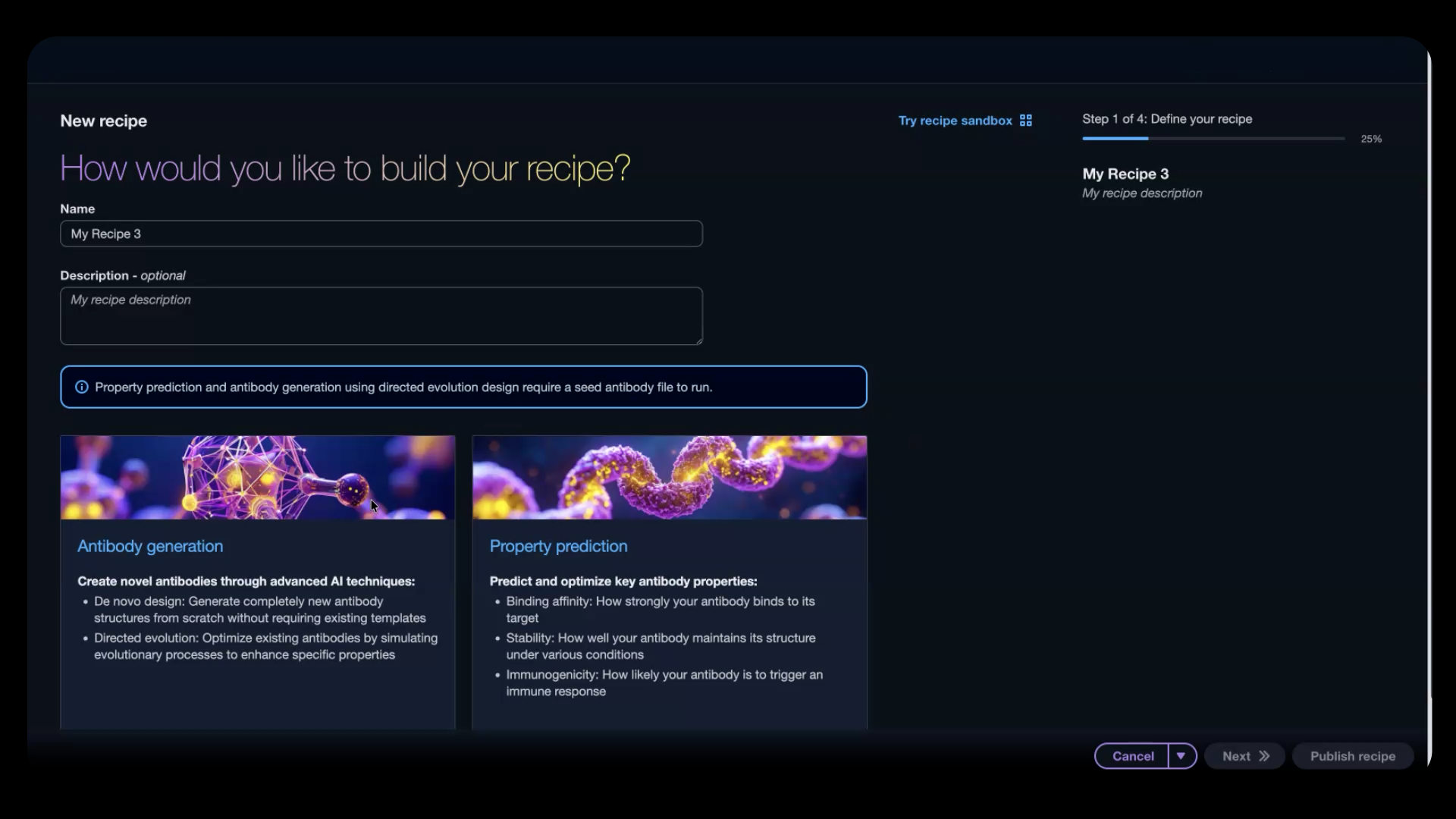
Figure 1: Begin creating a new recipe by choosing your workflow type in a no-code environment

See it in Action

Let’s walk through a representative antibody design workflow to show you what this looks like in practice. This mirrors the approach used in our collaboration with Memorial Sloan Kettering Cancer Center (MSK) where Amazon Bio Discovery was used to design nearly 300,000 novel antibody candidates, filter down to the top 100,000, and send them to the wet lab for testing in weeks versus up to a year using traditional design methods. Read the white paper to learn more.

Step 1. Evaluate models and build your in silico workflow

Start by exploring the catalog of 40+ AI biology models, including any models you have uploaded yourself. Each is specialized for different aspects of antibody design, from binding affinity prediction to developability assessment. The module evaluation page lets you filter by the property you’re interested in. You can run head-to-head comparisons using our antibody developability benchmark. Read the blog to learn more about the benchmark dataset.

Not sure which models to use? The AI-assisted workflow walks you through what you want to achieve. You’ll see a list of recommendations across all hosted models, complete with scientific rationale. Review the suggestions, confirm your selections, and the system generates a recipe. This is a computational workflow pipeline you can modify in the sandbox and then publish for use in your experiments or share with colleagues.

This enables computational biologists to focus on advancing science rather than infrastructure. Instead of building individual pipelines or writing custom code for each project, you’re creating reusable workflows that anyone on your team can run. The computational expertise gets embedded in the recipe. The biological expertise drives how it’s used. Projects that would have waited in a queue can move forward immediately.
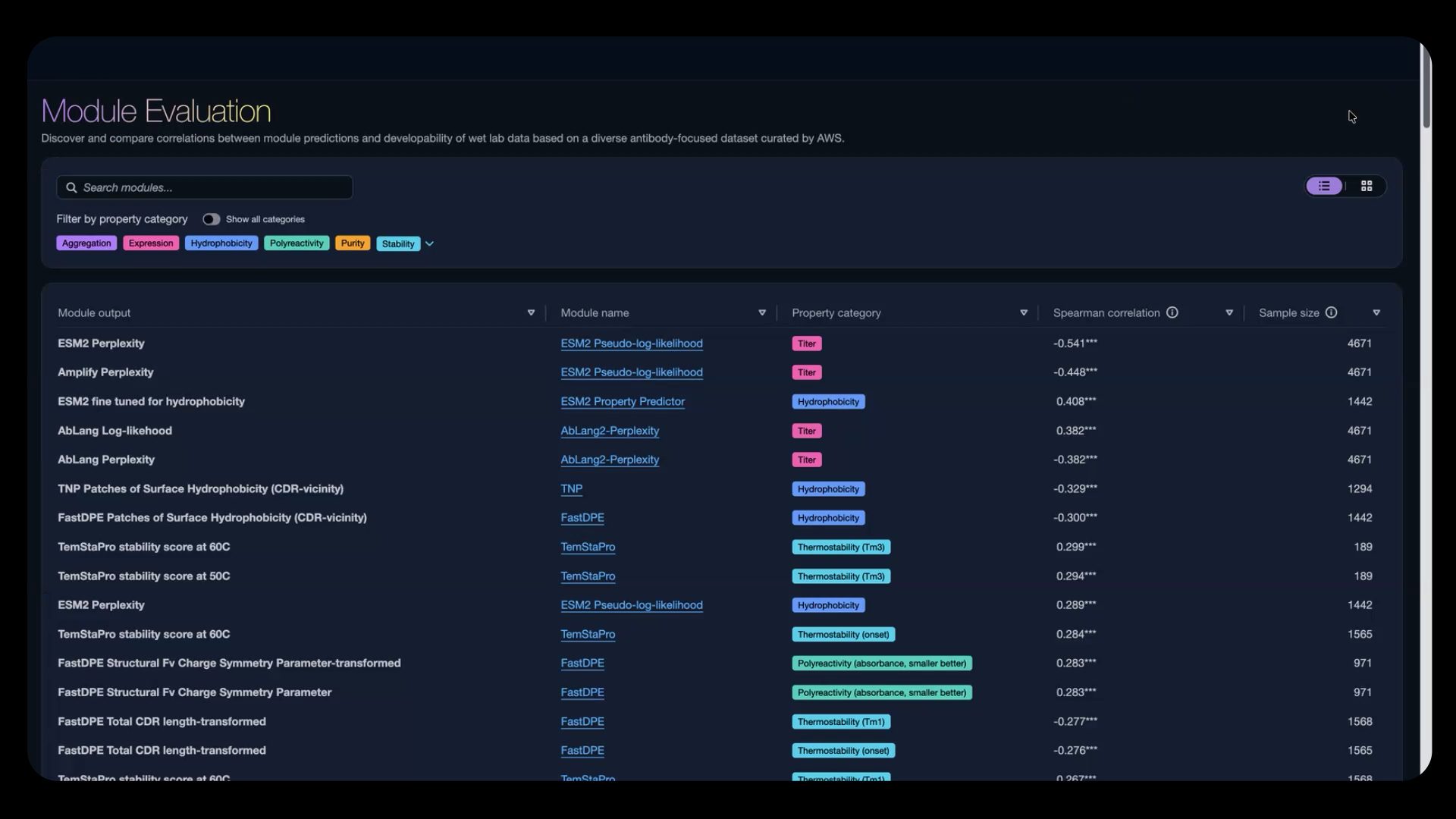
Figure 2: Benchmark AI biology model developability performance against real antibody dataset

Step 2: Design your in silico experiment with configuration agents

Once you’re ready to run an experiment, the AI agent guides you through the key decisions. For antibody design, that means identifying hotspot residues (the binding-critical amino acids) and selecting the right framework, the structural scaffold that affects how well your antibody binds to the target antigen.

The agent searches through multiple data sources and considers factors like surface accessibility and hydrophobicity. It provides recommendations with scientific rationale and references. You’re not just getting predictions. You’re understanding why the system is suggesting what it’s suggesting. If you want to adjust parameters or explore alternative approaches, you can do that directly. No coding required.
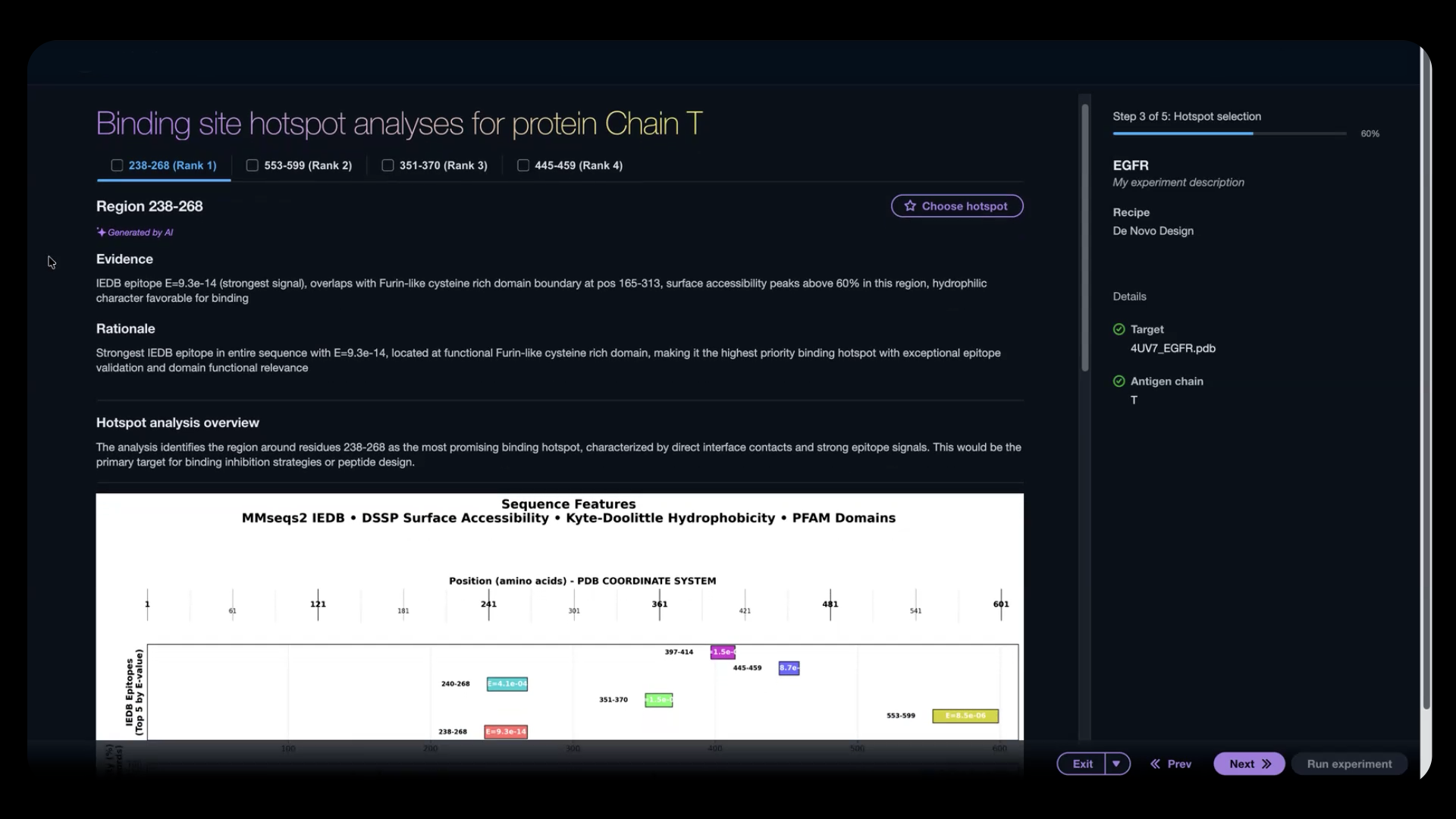
Figure 3: The configuration agent identifies hotspot residues on your target antigen

Step 3: Analyze in silico results with candidate selection agents

When the in silico experiment completes, you’ll see an AI-generated summary of your results and a pre-filtered list of candidates selected for you to consider. These candidates have already been run through multi-property optimization and liability assessment. This ensures no chemical modifications that would impact antibody stability, efficacy, or developability.

Each recommended candidate comes with rationale explaining why it was selected. You also have advanced analytical tools at your fingertips. Molecular dynamics analysis, functional and sequential diversity reviews let you dig into the data before deciding which candidates to move forward. The system gives you the insights you need to make more informed decisions faster.
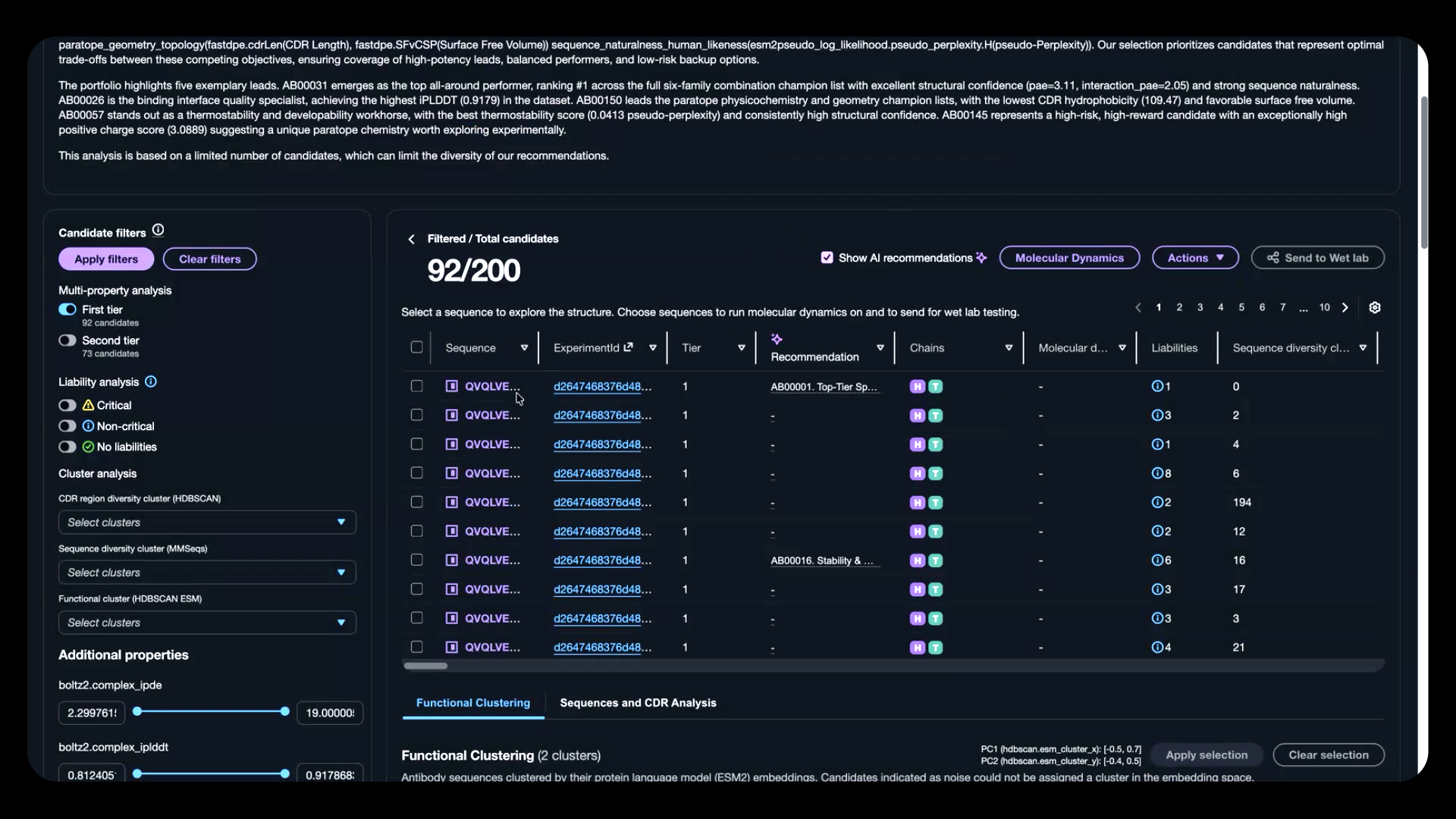
Figure 4: Review AI-recommended candidates filtered by multi-property optimization and liability assessment

Step 4: Send top candidates to wet lab for validation

Once you’ve identified a cohort of candidates, you can send them directly to one of our integrated lab partners: Ginkgo Bioworks, Twist Bioscience, or A-Alpha Bio. Select the assays you want to run, and you’ll get cost and turnaround time estimates in near real-time. No more manual handoffs. No more custom integrations with each CRO’s unique offerings.

When lab testing completes, the data flows back into Amazon Bio Discovery automatically. You can download results for further analysis or compare in silico predictions against wet-lab outcomes to understand prediction accuracy. The data triage and wrangling that used to require manual solutions is now handled through an experimental data registry—one place to view experimental inputs and results, now and in the future.
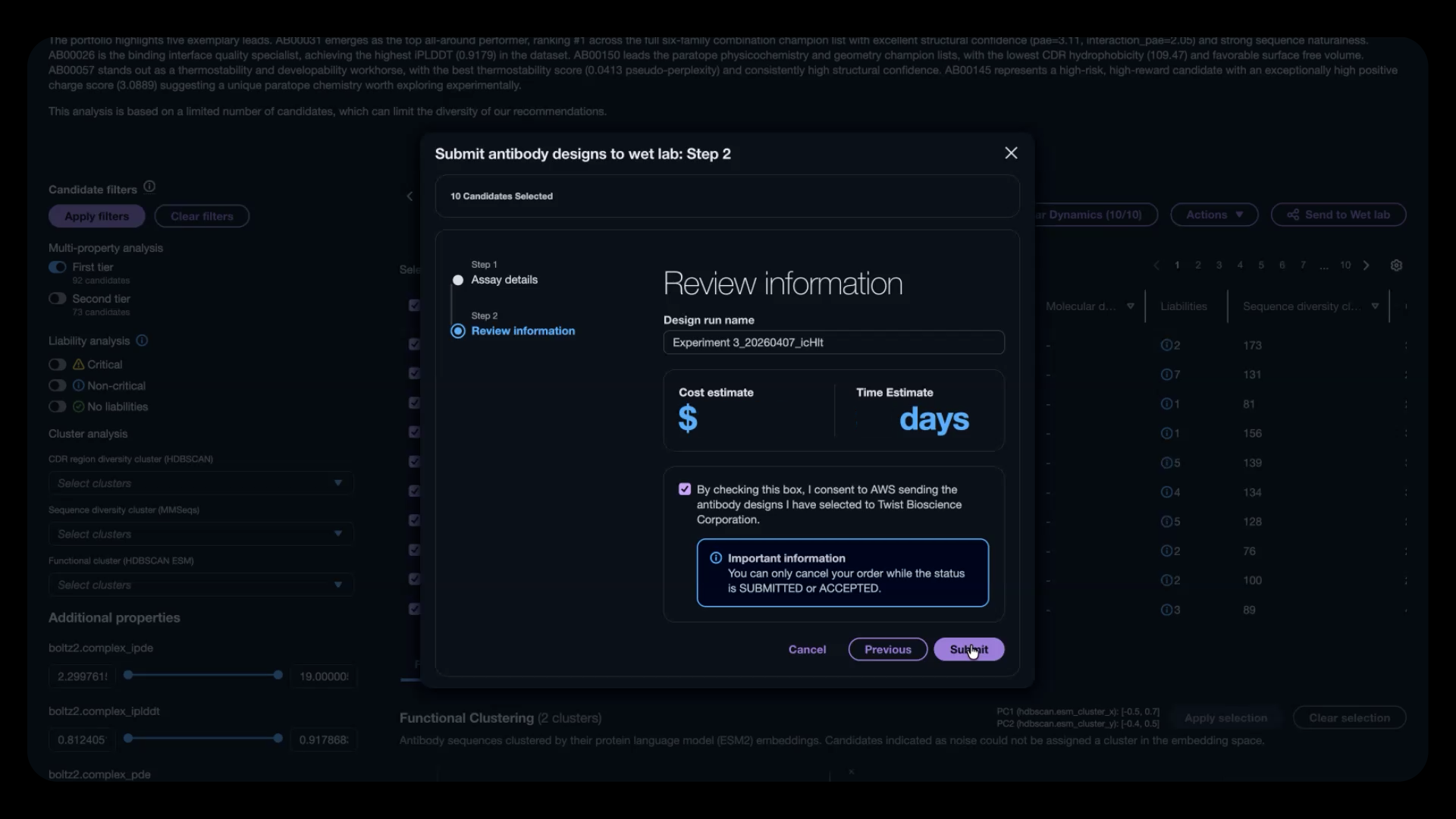
Figure 5: Send validated candidates directly to an integrated CRO partner with assay details, cost estimates, and turnaround times

Step 5: Close the loop with active learning

Here’s where lab-in-the-loop becomes real. The wet-lab results feed back into the system, allowing you to fine-tune models with your newly generated data. After a few cycles, you’re identifying drug-like candidates with increasing confidence. These are candidates you’re ready to take to the next stage, whether that’s animal testing or pre-clinical development.
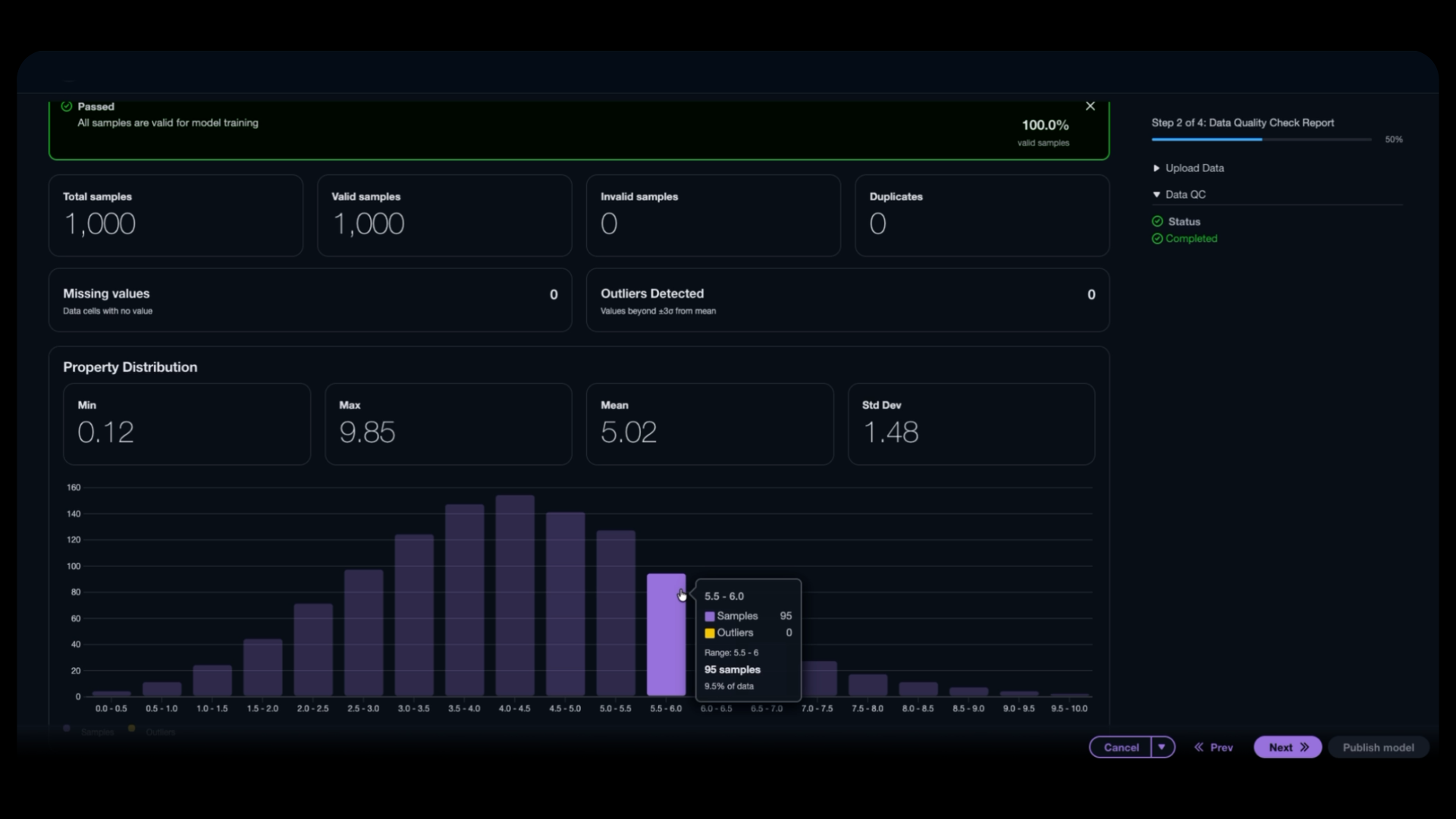
Figure 6: Verify incoming wet-lab data quality before model fine-tuning

Built for the way you work

Amazon Bio Discovery is built on the same AWS infrastructure trusted by 19 of the top 20 pharmaceutical companies. You get enterprise-grade security with data isolation to ensure your proprietary experimental data and custom-trained models remain protected within your application environment.

Get Started

Lab-in-the-loop drug discovery shouldn’t take time away from science. It should be accessible to everyone doing the science, whether you’re designing the computational workflows or running the experiments that test your hypotheses.

Amazon Bio Discovery is available today. Visit the Amazon Bio Discovery website to learn more, sign up for a free trial, and build skills through a free digital course from AWS Training and Certification.