

惯性聚合 高效追踪和阅读你感兴趣的博客、新闻、科技资讯
阅读原文 在惯性聚合中打开

推荐订阅源

Hacker News: Ask HN
Hacker News: Ask HN
C
Cisco Blogs
The Hacker News
The Hacker News
T
Tor Project blog
Cyber Security Advisories - MS-ISAC
The GitHub Blog
The GitHub Blog
A
Arctic Wolf
CTFtime.org: upcoming CTF events
The Register - Security
云风的 BLOG
云风的 BLOG
Simon Willison's Weblog
P
Palo Alto Networks Blog
Vercel News
Vercel News
C
CERT Recently Published Vulnerability Notes
I
InfoQ
freeCodeCamp Programming Tutorials: Python, JavaScript, Git & More
M
MIT News - Artificial intelligence
I
Intezer
aimingoo的专栏
aimingoo的专栏
U
Unit 42
C
Cyber Attacks, Cyber Crime and Cyber Security
L
LINUX DO - 热门话题
Microsoft Security Blog
酷 壳 – CoolShell
酷 壳 – CoolShell
Cyberwarzone
Cyberwarzone
P
Proofpoint News Feed
P
Proofpoint News Feed
B
Blog
T
Threat Research - Cisco Blogs
博客园 - 叶小钗
Recorded Future
Recorded Future
Last Week in AI
Last Week in AI
N
News and Events Feed by Topic
cs.AI updates on arXiv.org
Know Your Adversary
Know Your Adversary
Engineering at Meta
Engineering at Meta
G
Google Developers Blog
PCI Perspectives
PCI Perspectives
Google DeepMind News
WordPress大学
WordPress大学
Application and Cybersecurity Blog
MyScale Blog
MyScale Blog
Security Archives - TechRepublic
Schneier on Security
N
News | PayPal Newsroom
C
Cybersecurity and Infrastructure Security Agency CISA
H
Help Net Security
博客园 - 聂微东
H
Hackread – Cybersecurity News, Data Breaches, AI and More
G
GRAHAM CLULEY

AWS for Industries

Build a voice-enabled Automotive and Manufacturing assistant using Amazon Nova Sonic and Amazon Bedrock AgentCore | Amazon Web Services Managing AI agent sprawl across business units | Amazon Web Services Dynamic Inbound Routing for BYOIP Workloads Using Amazon VPC Route Server | Amazon Web Services How Autel Transformed Charging Station Management with AI Agents on AWS | Amazon Web Services How Danone Simplified Kubernetes at Scale with Amazon EKS Auto Mode | Amazon Web Services Build a Multi-Agent Assessment Workbench with Amazon Bedrock AgentCore | Amazon Web Services Sovereign by design: How AWS helps Nigeria’s financial services industry protect data and drive innovation | Amazon Web Services Scaling ML in production: how BBVA accelerated delivery with MLOps | Amazon Web Services Inside BBVA’s MLOps transformation: from data platform to scalable ML on AWS | Amazon Web Services Blazing a Trail: How Peloton Rebuilt the SDLC for the Agentic Era with Amazon Bedrock | Amazon Web Services Accelerate RISC-V Software Development Before Silicon: Virtual Prototyping with MachineWare’s SIM-V on AWS | Amazon Web Services How retailers deliver hyper-personalization in-store with Personalisation Hub, UST, and AWS | Amazon Web Services Deploy diagnostic-quality imaging globally with MedDream and AWS HealthImaging | Amazon Web Services Coins in Motion: Building agentic blockchain payments for in-vehicle experiences | Amazon Web Services Reduce P&ID analysis time by 80% with hybrid AI maintenance planning | Amazon Web Services Deploying industrial AI on AWS: Building the autonomous factory | Amazon Web Services How Atlantic Health cut legal document search time by 42% with Amazon Bedrock metadata filtering | Amazon Web Services Edge-to-Cloud Architecture for Real-Time Surgical Intelligence with AWS and NVIDIA | Amazon Web Services Reimagining B-Pillar DFMEA: Why Ontology-Grounded AI Is the Future of Automotive Engineering | Amazon Web Services Transforming energy trading by managing complexity and driving growth with Cloud ETRM | Amazon Web Services How Multi-Agent AI Turns Supply Chain Data into Decisions and Actions | Amazon Web Services ​​​Deploy Agentic Bidding Without Sacrificing Speed: ARTF Containers with NVIDIA GPU Acceleration on AWS​​ | Amazon Web Services Next-generation programmatic advertising: How AWS RTB Fabric redefines the game | Amazon Web Services Flexible Telecom AI Workload Deployment Across AWS Hybrid Cloud | Amazon Web Services Building a HIPAA-ready generative AI architecture for healthcare on AWS | Amazon Web Services Highlights from the 2026 AWS Life Sciences Symposium: MedTech Track | Amazon Web Services Multi-Agent Systems for Financial Services on Amazon EKS and AgentCore | Amazon Web Services How AI can help developers migrate embedded codebases between Arm SoCs | Amazon Web Services From Connected to Resilient: Cloud-Native Payment Connectivity on AWS | Amazon Web Services Ultra-low-latency cross-Region crypto trading with Avelacom and AWS | Amazon Web Services Build an AI-powered 5G Signaling Trace Analyzer Using Amazon Bedrock | Amazon Web Services Medical Legal Regulatory Review Orchestration with AI Agents on AWS | Amazon Web Services AWS showcases the agentic AI future of advertising and entertainment at Cannes Lions 2026 | Amazon Web Services The Road to 180M GRefs/s: Sizing Epic on AWS with R8ib and Enhanced EBS | Amazon Web Services BridgeWise builds responsible AI in FSI with Amazon Bedrock | Amazon Web Services Rethink Everything: Highlights from the 2026 AWS Financial Services Symposium | Amazon Web Services Improving Defect Analysis and Quality Control with AI Diagnostics | Amazon Web Services Building a cloud-based EV charging monitoring platform with real-time AI analytics | Amazon Web Services Introducing the AWS guide to the ECB Guide on outsourcing cloud services to cloud service providers | Amazon Web Services How a Luxury Retailer Accelerates Customer Experience with Amazon CloudFront | Amazon Web Services The Art of the Possible: Building an Intelligent Wealth Management Platform – Part 1 | Amazon Web Services How We Built Healthcare AI You Can Trust: The Science Behind Amazon Connect Health | Amazon Web Services How Everllence Scaled P&ID Intelligence to Improve Plant Operations | Amazon Web Services Rivian accelerates production with second-generation AWS Outposts: Improving resiliency and reducing costs | Amazon Web Services AI-Driven Development Lifecycle for Financial Services | Amazon Web Services How Agentic AI and Digital Twins on AWS Drive Operational Excellence | Amazon Web Services Modernizing Core Banking Systems: A Strategic Guide for Financial Leaders | Amazon Web Services Highlights from the 2026 AWS Life Sciences Symposium: Research and Drug Discovery | Amazon Web Services Discount Tire Uses Cloud WAN and Buffer VPC to Create a Scalable Enterprise Network Centralized third-party connectivity in AWS: Architecture patterns for highly regulated environments | Amazon Web Services FHIR-powered Care Continuum on AWS HealthLake From code to chemistry: using Kiro to tackle ADME-Tox, a key drug discovery challenge | Amazon Web Services How Toyota securely deployed HiveMQ with mTLS on AWS to power Smart Manufacturing | Amazon Web Services From record to intelligence: How EMR systems on AWS become the foundation for generative AI in healthcare | Amazon Web Services How to Connect AWS HealthOmics to Public and Private Network Sources at Runtime | Amazon Web Services Accelerating Android Builds on AWS: From 3 Hours to Under 5 Minutes with SourceFS | Amazon Web Services Closing the Loop with Amazon Bio Discovery’s Integrated Lab Partners | Amazon Web Services Massive Parallel Processing of Financial Transactions with Amazon EKS and Amazon MSK | Amazon Web Services Submit up to 100,000 Bioinformatics Workflow Runs with a Single API Call in AWS HealthOmics | Amazon Web Services Energy HPC Orchestrator powers collaborative, scalable energy computing | Amazon Web Services Automate Investment Research Using Strands Agents on Bedrock AgentCore | Amazon Web Services How OCC Built a Governed Cloud Foundation and Then Stress-Tested It Executive Insights from the 2026 AWS Life Sciences Symposium CME Group MDP multicast data access on AWS using Transit Gateway | Amazon Web Services How retailers solve the customer identity puzzle with Amperity and AWS | Amazon Web Services Exact Sciences Transforms Bioinformatics Infrastructure with AWS HealthOmics | Amazon Web Services Building a Serverless Supply Chain Management Solution for Automotive Customers with AWS AppSync and Amazon Aurora Serverless | Amazon Web Services Accelerating physical AI with AWS and NVIDIA: building production-ready applications with simulation and real-world learning | Amazon Web Services Modernizing life-saving workloads with AWS serverless | Amazon Web Services Transforming Industrial Operations: How AVEVA and AWS drive Cloud Innovation | Amazon Web Services Introducing Amazon Bio Discovery | Amazon Web Services Accelerate Project Delivery with AI-Native Execution System on Amazon Quick | Amazon Web Services Reinvent Telecom Mediation Systems with Amazon Bedrock AgentCore, Strands Agents, and the Model Context Protocol | Amazon Web Services AWS Cloud Connectivity Patterns for Financial Market Infrastructures | Amazon Web Services Event-Driven Digital Pathology: Governed Whole Slide Image Ingestion to Scalable Inference with Amazon SageMaker | Amazon Web Services How Telefonica Germany achieved a centralized tracing solution with VPC Traffic Mirroring | Amazon Web Services AWS Teams Up with Wingstop to Deliver Wings to Millions During March Hoops Tournament | Amazon Web Services How Amazon Connect Health brings agentic AI to the point of care | Amazon Web Services How Liftoff improved conversion performance and reduced infrastructure costs with Cortex using AWS Graviton | Amazon Web Services From Prompt to Pipeline: AI-Powered Bioinformatics Workflow Development with Kiro and AWS HealthOmics | Amazon Web Services Driving Intelligent Quality in the Software-Defined Vehicle Era | Amazon Web Services How Amazon Devices Eliminated Credential Risk to Scale AI across Engineering Tools | Amazon Web Services The Evolution of BMW Group’s 3D Streaming Experience | Amazon Web Services Build ChatGPT Apps with MCP Servers and AWS Infrastructure | Amazon Web Services
How Carlsberg’s Traitomic business leveraged AWS HealthOmics to power genetic trait development | Amazon Web Services
Toni Wendt Toni Wendt is a co-founder and COO of Traitomic. · 2026-04-27 · via AWS for Industries

AWS for Industries

Introduction

Traitomic, a spinoff from the Carlsberg Research Laboratory, develops better genetics for the food industry. Traitomic uses technology developed at Carlsberg to help food companies create healthier, more sustainable products by identifying improved traits in crops and microbes, from higher-protein beans to more energy efficient microbial strains.

This blog explains how Traitomic partnered with AWS to power genetic trait development by overcoming common challenges with sequencing workflows.

Sequencing Challenges in Life Sciences

Life science organizations rely on genomic sequencing to solve critical problems across research, agriculture, and healthcare. However, the path from raw sequencing data to actionable insights presents significant technical hurdles.

Common Sequencing Problems

Organizations use sequencing to address diverse challenges:

  • Trait discovery and breeding: Identifying genetic markers for desired characteristics in crops or livestock
  • Variant analysis: Detecting mutations linked to disease or drug resistance
  • Microbial characterization: Understanding strain properties for fermentation, probiotics, or food safety
  • Population genomics: Analyzing genetic diversity across species or patient cohorts
  • Quality control: Verifying genetic identity and purity in production strains or seed lines

Technical Challenges

The complexity of genomic analysis creates three major bottlenecks:

Data management: A single sequencing run can generate terabytes of data. Organizations struggle with storage costs, data transfer speeds, and maintaining data integrity across analysis pipelines. Many lack the infrastructure to efficiently move data from sequencers to compute environments, creating delays that slow research timelines.

Limited infrastructure: High-performance computing requirements for sequence alignment, variant calling, and comparative genomics often exceed on-premises capabilities. Organizations face difficult choices: invest heavily in local infrastructure that may sit idle between projects or accept the limitations of underpowered systems that extend analysis times from hours to days.

Required technical skills: Genomic analysis demands expertise spanning bioinformatics, computational biology, and cloud infrastructure. Teams need to understand both biological questions and technical tools like workflow languages, containerization, and pipeline orchestration. This skill gap is particularly acute at smaller organizations or those new to large-scale sequencing.

These challenges compound as sequencing volumes grow. What works for occasional projects becomes unsustainable at scale, forcing organizations to rethink their approach to genomic data analysis.

As an organization working with sequencing data, Traitomic has experienced similar challenges:

  • Compute constrained in scale by on-premises availability
  • Difficulty managing large data volumes and workflows written in different definition languages
  • Overspending on static infrastructure
  • An IT architecture that required their scientists to be both technical and domain experts

The Solution

To address these challenges, Traitomic adopted an AWS-hosted solution built on GitHub Actions, AWS HealthOmics, Amazon Simple Storage Service (S3), and WinSCP/Cyberduck for production sequencing workflows. The team is also evaluating Kiro-CLI and the HealthOmics MCP server for future production use. Together, these technologies deliver several key improvements:

AWS HealthOmics provides cost and scale improvement with pay-as-you-go managed bioinformatics infrastructure that provisions compute and storage when a workflow starts and de-provisions the infrastructure at workflow completion.

GitHub Actions decouples backend processing of sequencing data from a GitHub interface familiar to scientists. Triggering on-demand HealthOmics workflow runs from form submissions through GitHub allows scientists to focus on their research and engineers to focus on the supporting technology.

Amazon S3 stores terabytes of data cost efficiently using tiered storage to provide the scale needed for sequencing workloads. Third party transfer clients like WinSCP and Cyberduck provide an agentless drag-and-drop UI that allow scientists to easily move data to the cloud using Amazon S3 APIs, with limited overhead on regulated and latency-sensitive lab machines.

Kiro-CLI enables automated conversion of workflow definition files from Snakemake to NextFlow, WDL, or CWL using conversational AI. When integrated with the HealthOmics MCP server, Kiro-CLI provides additional capabilities such as workflow generation, validation, packaging, and troubleshooting.

The Architecture
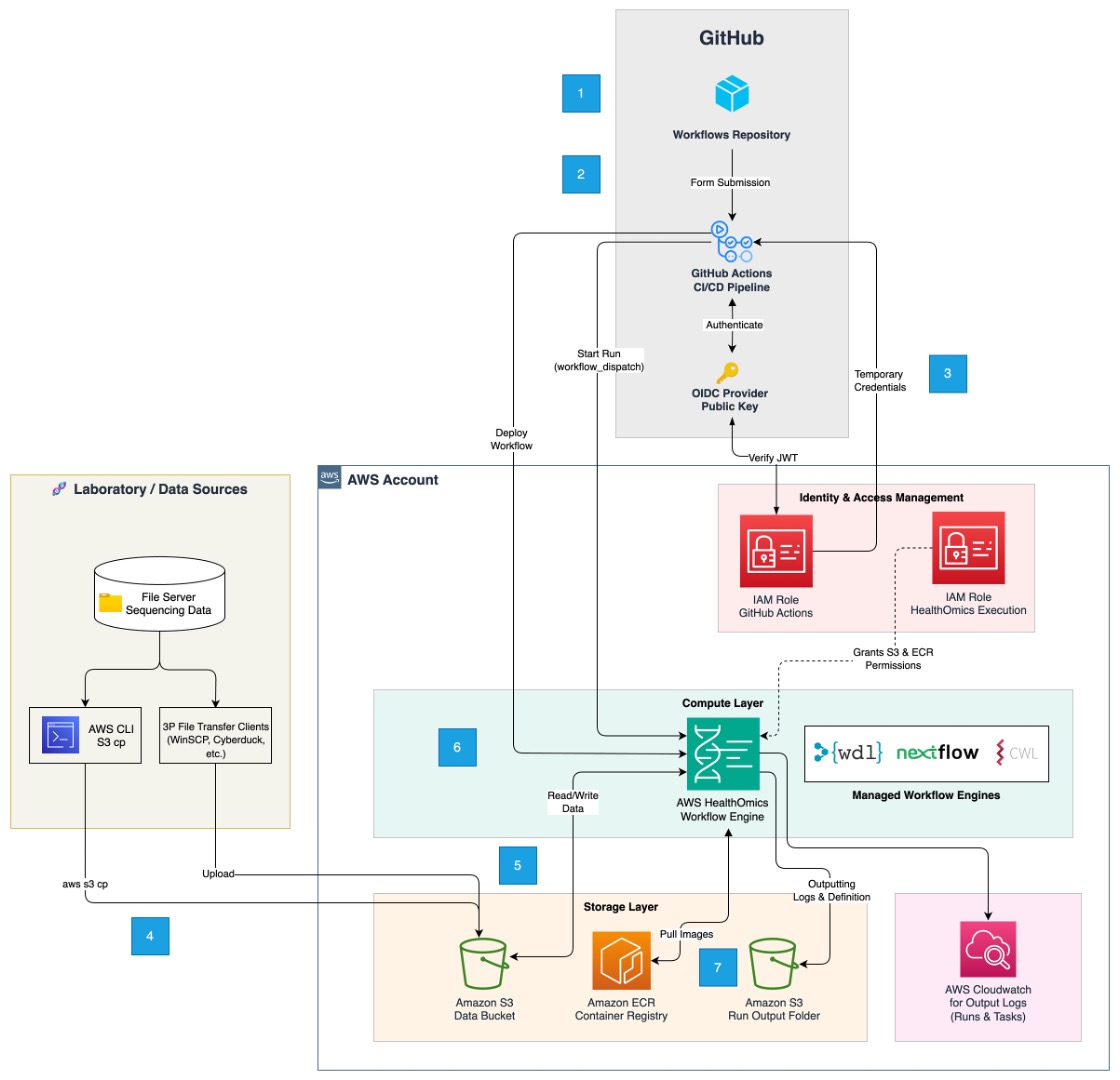
Figure 1 Traitomic’s sequencing architecture

Figure 1: Traitomic’s sequencing architecture. Steps are described below.

  1. Bioinformaticians build HealthOmics workflows using a workflow definition language like NextFlow, WDL, or CWL. These workflows are pushed to GitHub for collaborative use. A GitHub Actions pipeline uses these workflow definitions to create and store the workflows in HealthOmics.
  2. Scientists log into GitHub. To use the workflows previously developed, they trigger a separate GitHub Actions workflow by submitting inputs like run_name, output_bucket, output_folder, storage_type, and workflow_name into a form through the GitHub UI.
  3. GitHub Actions interacts with AWS Identity Access Management to exchange an OpenID Connect token with the short-term credentials needed to invoke a HealthOmics run.
  4. WinSCP and Cyberduck allow on-demand migration of sequencing data from the lab to S3 so it’s available for use with HealthOmics.
  5. GitHub Actions invokes a HealthOmics run using the parameters specified in the GitHub UI. Required input and reference data is pulled from S3 privately by HealthOmics when the run is called. This data is stored in a temporary filesystem that’s only accessible to HealthOmics.
  6. HealthOmics dynamically provisions infrastructure to process each task in a workflow. When the task is completed, the infrastructure is deprovisioned for cost-optimization.
  7. Workflow outputs are stored in S3 where they are staged for downstream analysis.

Business Outcomes

Since deploying this solution, Traitomic engineers have received feedback that their scientist teams prefer working with HealthOmics compared to the on-premises HPC cluster. This is because the interface for HealthOmics is intuitive and because HealthOmics-managed pipeline orchestration allows scientists to perform more research by minimizing time spent monitoring active runs. Further, the time reduction for initiating and completing runs has allowed Traitomic to provide faster turnaround times to their customers. Consequently, Traitomic is migrating all their workflows to HealthOmics to scale these benefits.

Conclusion

Traitomic was able to increase the scale and usability of their bioinformatics pipelines by choosing HealthOmics over on-prem HPC infrastructure. To learn more about overcoming sequencing challenges with HealthOmics, read more about other production use cases. To get started with HealthOmics today, visit the HealthOmics GitHub repository for self-service tutorials exploring leveraging HealthOmics for sequencing data storage, workflows, and analytics.