




惯性聚合 高效追踪和阅读你感兴趣的博客、新闻、科技资讯
阅读原文 在惯性聚合中打开

推荐订阅源

T
Tenable Blog
K
Kaspersky official blog
cs.AI updates on arXiv.org
T
The Exploit Database - CXSecurity.com
Cisco Talos Blog
Cisco Talos Blog
P
Palo Alto Networks Blog
Latest news
Latest news
cs.CL updates on arXiv.org
C
CXSECURITY Database RSS Feed - CXSecurity.com
P
Privacy International News Feed
The Hacker News
The Hacker News
T
Tor Project blog
www.infosecurity-magazine.com
C
Cisco Blogs
阮一峰的网络日志
阮一峰的网络日志
Recent Commits to openclaw:main
博客园_首页
N
News and Events Feed by Topic
W
WeLiveSecurity
罗磊的独立博客
GbyAI
GbyAI
T
Troy Hunt's Blog
Y
Y Combinator Blog
Recorded Future
Recorded Future
The Cloudflare Blog
TaoSecurity Blog
TaoSecurity Blog
爱范儿
爱范儿
美团技术团队
Attack and Defense Labs
C
Check Point Blog
Engineering at Meta
Engineering at Meta
Cyberwarzone
Cyberwarzone
Cyber Security Advisories - MS-ISAC
F
Fortinet All Blogs
The GitHub Blog
The GitHub Blog
奇客Solidot–传递最新科技情报
奇客Solidot–传递最新科技情报
Apple Machine Learning Research
Know Your Adversary
Know Your Adversary
AWS News Blog
AWS News Blog
D
DataBreaches.Net
Recent Announcements
K
KPMG report finds enterprise disconnect between AI and its ROI | CIO
M
MIT News - Artificial intelligence
Webroot Blog
Webroot Blog
Security Latest
Security Latest
T
Tailwind CSS Blog
V2EX - 技术
V2EX - 技术
aimingoo的专栏
aimingoo的专栏
S
Security @ Cisco Blogs
Exploit-DB.com RSS Feed

BusinessLine Editorial Opinion & Analyses | The HinduBusinessLine

Fund of options No marks Net ambiguity Crushing problem Fiscal dividend Editorial. Power equation Editorial. Taking charge Editorial. Coal comfort Editorial. Future shock Editorial. Beyond the ballot Editorial. Halfway house Precious saving Failing the test Poison in the food Editorial. Austere times Bond truths Editorial. Creditable step Editorial. Stardom to statecraft Editorial. Worthy proposal Editorial. Gold rush Editorial. Power shift Editorial. Costly remedy Bad policy The real turnout Challenge of Mythos Fuel for thought Anchoring trade Cover point Editorial. Job well done Editorial. Misreading markets Editorial. Major undercurrents Labour pangs Editorial. Snooping around Editorial. Process deficit Prepare the ground Clear the smoke SIP with caution Cyber insecurity Pressure point Plastic concerns Editorial. Fair deal Editorial. Wait and watch Cease and desist Editorial. Nuclear milestone Editorial. Freebies unplugged Editorial. Sweeping powers Editorial. Knotty regulations Up in the air Challenging year Existential crisis Bond blues Editorial. Hard choices Editorial. Commercial pitch Editorial. Weighty matter Editorial. Micro management Editorial. Selling strategy Editorial. Plane truths Demographic fixation Editorial. Resignation and after Feedstock facts Course correction Scenario planning Electric kitchens Editorial. Tariff war 2.0 Editorial. Dry run Editorial. China positive Editorial. Ethanol drive Editorial. Safety Net Editorial. Ides of March Stress management Editorial. Reforms vindicated Editorial. Hard times Categorisation challenges Optimal bandwidth Strong base Editorial. Fresh pain REIT moves Editorial. Last mile finance Editorial. Rhetoric to reality Editorial. Critical alliance Intelligent summit Tricky pitch Capital move Spectrum redefined Realty check Hefty penalty needed for mis-selling financial products TCS, Infosys, HCL Tech, Wipro: IT’s opaque Editorial. InvIT with care Rafale buy a watershed in defence upgrade efforts Creditable move Freedom from toxicity India Inc. manages to overcome adversity in Q3 Editorial. At a crossroads Trade reset Editorial. Staying the course CPI overhaul will result in contemporary inflation numbers Tariff cheer 16th Finance panel formula awards ‘efficient’ States Better options ahead Editorial. Change and continuity
Editorial. Reforming schools
2026-05-21 · via BusinessLine Editorial Opinion & Analyses | The HinduBusinessLine
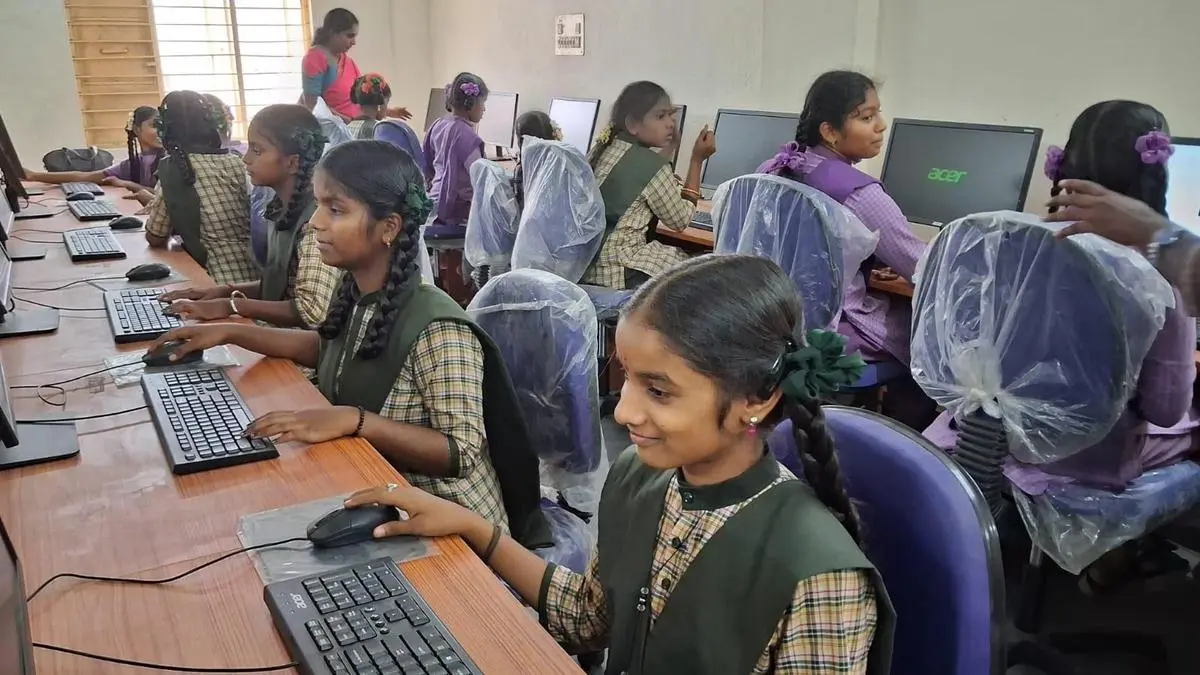
Schooling: Improving learning outcomes is still a challenge

Schooling: Improving learning outcomes is still a challenge | Photo Credit: HANDOUT

India’s school education story, as laid out in a new report by NITI Aayog, begins on an encouraging note. Over the past decade, India has achieved what once seemed elusive: near-universal access to primary schooling, better enrolment among girls and disadvantaged groups, improved basic infrastructure in schools, and signs of recovery in foundational literacy. With 14.7 lakh schools serving nearly 25 crore students, the architecture of access is now largely in place.

Yet, beneath this progress lies a deeper, more troubling truth — India may have succeeded in getting children into schools, but it is struggling to ensure that they stay, learn and emerge ready for a changing economy. While enrolment is robust at the elementary level, participation collapses as children move into secondary and higher secondary education, with gross enrolment at the higher secondary stage just 58.4 per cent. A key reason lies outside the classroom. For millions of low-income families, adolescence marks the point at which education begins to compete directly with survival. Secondary schooling brings transport costs, books, uniforms, exam fees and often private tuition. At the same time, household economic pressures intensify. Many teenagers are pulled into the labour market early.

This challenge is becoming more acute in a new economy increasingly shaped by low-barrier gig work. Delivery platforms, logistics apps and on-demand services offer quick earning opportunities that require little formal qualification. The gig economy, in fact, risks quietly normalising early exit from education for vulnerable families. The tragedy is that this happens even as learning levels remain weak. Too many children are progressing through grades without mastering the basics. The report points to a system still dominated by rote pedagogy and assessment structures that fail to measure real understanding.

India therefore faces a paradox: access has expanded, but learning quality and retention remain fragile; aspiration for private schooling has risen, but quality assurance remains uneven; policy frameworks are modern, but classroom realities lag behind. The answer cannot simply be to keep children in school longer. Schooling itself must become more relevant to the future economy. As artificial intelligence reshapes work, India must rethink education as preparation not for clerical or repetitive jobs, many of which automation will eliminate, but for higher-value roles requiring problem-solving, creativity, digital fluency, design thinking, communication and STEM skills. Secondary schooling must integrate AI literacy, critical thinking and market-linked skills without abandoning foundational learning. India must create an economy that rewards higher skills with better wages. If the future offers only low-paid gig work, families will continue to choose immediate income over long-term education. The challenge lies in building a system that makes staying in school more worthwhile than leaving it early.

Published on May 21, 2026