













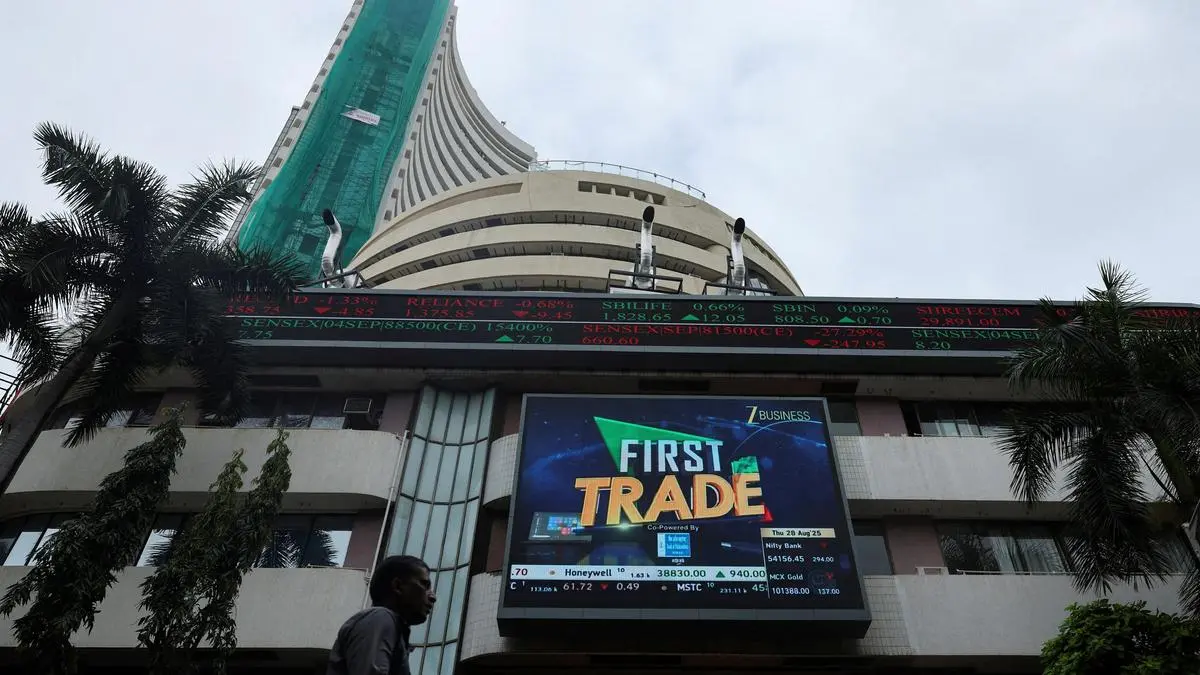
Fund raising has been impacted in the markets | Photo Credit: FRANCIS MASCARENHAS
A decline in stock prices since the start of this calendar year has impacted primary market fundraising. In the first quarter of 2026, average funds raised per month through initial public offerings on the mainboard of the exchanges was just ₹5,610 crore; this was against average monthly fundraising of ₹31,757 crore in the last quarter of 2025. Primary offerings on the SME platform mirror this trend. However, this is more in the nature of a welcome market correction. Yet, the Securities and Exchange Board of India seems to have taken a different view. Perhaps persuaded by the impact of the Iran war on fund-raising, it has relaxed norms for companies making initial public offerings in the coming months.
Primary markets — which typically go through phases when issuances flood the market, followed by those when offerings dry up — have been hyperactive and frothy over the last two years. These cycles are influenced by the requirements of the promoters, demand from investors and the valuations being given to issues by the market. The total number of IPOs on the mainboard and the SME platform were 375 and 336 in calendar year 2025 and 2024 respectively. This is more than twice the average of 126 IPOs per year in the preceding five years. Funds raised have also been quite high, around ₹1.9 lakh crore each in 2024 and 2025. With the market regulator clamping down on equity derivatives trading to check speculation, many retail investors seem to have shifted to primary markets. The share of IPO allocations to retail investors increased to 23 per cent in FY26 from 19 per cent in FY25. The share of institutional investors declined by 5 percentage points in this period. Primary issuances are risky for retail investors, since companies here usually do not have a known track record.
The current downtrend is not an adverse development. However, the Securities and Exchange Board of India has extended the deadline for making public offers — for companies whose deadline is set to expire between April and September this year. They now have time till end-September. The regulator will also allow companies to cut the size of the IPO by up to 50 per cent without having to follow onerous procedures. Small companies can perhaps weather serious global headwinds. Even so, SEBI’s incentives seem overdone, if not a tad premature.
The quality of issuances in the primary market has suffered in the wake of speculative activity. Several scams surfaced on the SME platform in 2025 — promoters were found siphoning IPO proceeds, backing shell companies or manipulating stock prices to dump shares. The prevailing tepidity was therefore exactly what was needed. The regulator should, in fact, consider tightening regulations on disclosures, scrutiny of offer documents and curtailing speculation before and immediately after listing. A special dispensation for primary markets is not desirable.
Published on April 23, 2026
此内容由惯性聚合(RSS阅读器)自动聚合整理,仅供阅读参考。 原文来自 — 版权归原作者所有。