







Security leaders evaluating Check Point Exposure Management tend to ask the same questions: how the solution discovers assets, what intelligence it provides, and how well it fits their existing tools and workflows.
Below, we answer the questions that come up most often in product evaluations, offering a practical look at how organizations discover, understand, and reduce cyber risk.
1. How does the platform discover my assets?
Every exposure management program starts with knowing what you own. Security teams cannot assess, prioritize, or remediate exposures tied to systems they do not know exist.
Check Point Exposure Management begins by continuously discovering internet-facing assets through External Attack Surface Management (EASM), identifying domains, subdomains, IP addresses, SSL certificates, APIs (application programming interfaces), VPNs (virtual private networks), exposed services, and other externally accessible assets. Cyber Asset Attack Surface Management (CAASM) extends that visibility through agentless integrations with existing security, cloud, and IT tools to discover internal assets across the organization.
Relationships between internal and external assets are mapped automatically, uncovering shadow IT, forgotten development environments, abandoned infrastructure, and systems missing from the CMDB (configuration management database). Every asset is then enriched with technologies in use, vulnerabilities, internet exposure, threat intelligence, and existing security controls, providing the context needed to prioritize exposures and reduce organizational risk.
2. Does this cover our cloud infrastructure?
Yes. Cloud resources are continuously discovered alongside internet facing and on premises assets, giving security teams a unified view of their environment.
Internet-facing cloud assets are identified through EASM, while cloud resources inside your environment are discovered through integrations with major cloud providers and existing security tools. The solution correlates vulnerabilities, misconfigurations, exploitability, and existing security controls to help teams understand how each cloud exposure contributes to overall organizational risk.
This unified view helps security, cloud, and infrastructure teams work from the same exposure data.
Want to see how organizations are addressing today’s exposure challenges? Explore the latest findings in the 2026 Exposure Gap Report to learn where security teams are succeeding, where gaps remain, and how organizations are reducing exposure at scale.
3. Can you monitor our suppliers and vendors?
Vendors and suppliers can introduce risk long before it reaches your environment. Monitoring third party exposure has become an important part of understanding overall cyber risk.
Built in supply chain intelligence continuously monitors suppliers, vendors, and other third parties that are relevant to your organization for security issues that could affect your business. The solution tracks exposed assets, leaked credentials, brand abuse, phishing activity, and other external threats connected to those organizations. These findings help organizations assess vendors and respond more quickly as third party risk changes.
4. What does dark web monitoring cover?
Dark web monitoring extends well beyond searching for leaked passwords.
The solution monitors open, deep, and dark web sources for exposed employee credentials, leaked company data, malicious domains, phishing kits, brand impersonation, and threat actor activity associated with your organization, industry, and geographic region. These findings are correlated with attack surface data to identify the assets, users, and business functions that may be affected.
The solution processes approximately 55 million intelligence items each month and continuously surfaces newly emerging intelligence, helping security teams identify relevant, high confidence threats while they are still timely.
5. What do we do when employee credentials are leaked?
A leaked credential can become the starting point for phishing, account takeover, or unauthorized access.
When exposed credentials are identified, security teams should determine which users are affected, invalidate compromised passwords, review authentication activity, verify multifactor authentication, investigate whether the credentials have already been used, and assess affected endpoints for signs of malware or infostealer infections.
Leaked credentials are correlated with organizational assets, threat intelligence, and external activity to provide additional context for response efforts. Safe Remediation workflows also help coordinate actions across security and identity teams, reducing exposure before attackers can take advantage of compromised accounts.
Need a clearer view of the risks affecting your organization? Request a Free Agentic Exposure Validation Scan to identify and prioritize the exposures that require immediate attention.
6. How do IOC feeds work with our existing tools?
An IOC (indicator of compromise) can represent a malicious IP (Internet Protocol) address, domain, URL (uniform resource locator), file hash, or other indicator associated with attacker activity.
Tactical Intelligence continuously consumes and enriches threat intelligence from Check Point Research and external sources, then correlates those indicators with your internal assets, external attack surface, and existing security controls. This helps security teams quickly determine whether an IOC is relevant to their environment and whether existing security controls already provide protection.
Validated indicators can be automatically disseminated across connected security tools with confidence scores, threat actor attribution, exploit context, and related intelligence. Support for TAXII (Trusted Automated Exchange of Intelligence Information) 2.1, REST (representational state transfer), and the interactive IOC Card streamlines investigation and response. Approximately 30,000 new IOCs are added every day, with more than 30 percent unavailable in VirusTotal when first identified.
7. What integrations do you support?
Effective exposure management depends on having visibility across your entire environment. Integrations bring together the information needed to understand where exposures exist, correlate them across your environment, and accurately prioritize organizational risk.
An open garden architecture includes more than 150 integrations across cloud providers, vulnerability scanners, endpoint security, identity providers, ticketing systems, and third-party security technologies. Findings can also be shared with SIEM (security information and event management), SOAR (security orchestration, automation, and response), ITSM (information technology service management), and collaboration platforms to streamline investigation and remediation workflows.
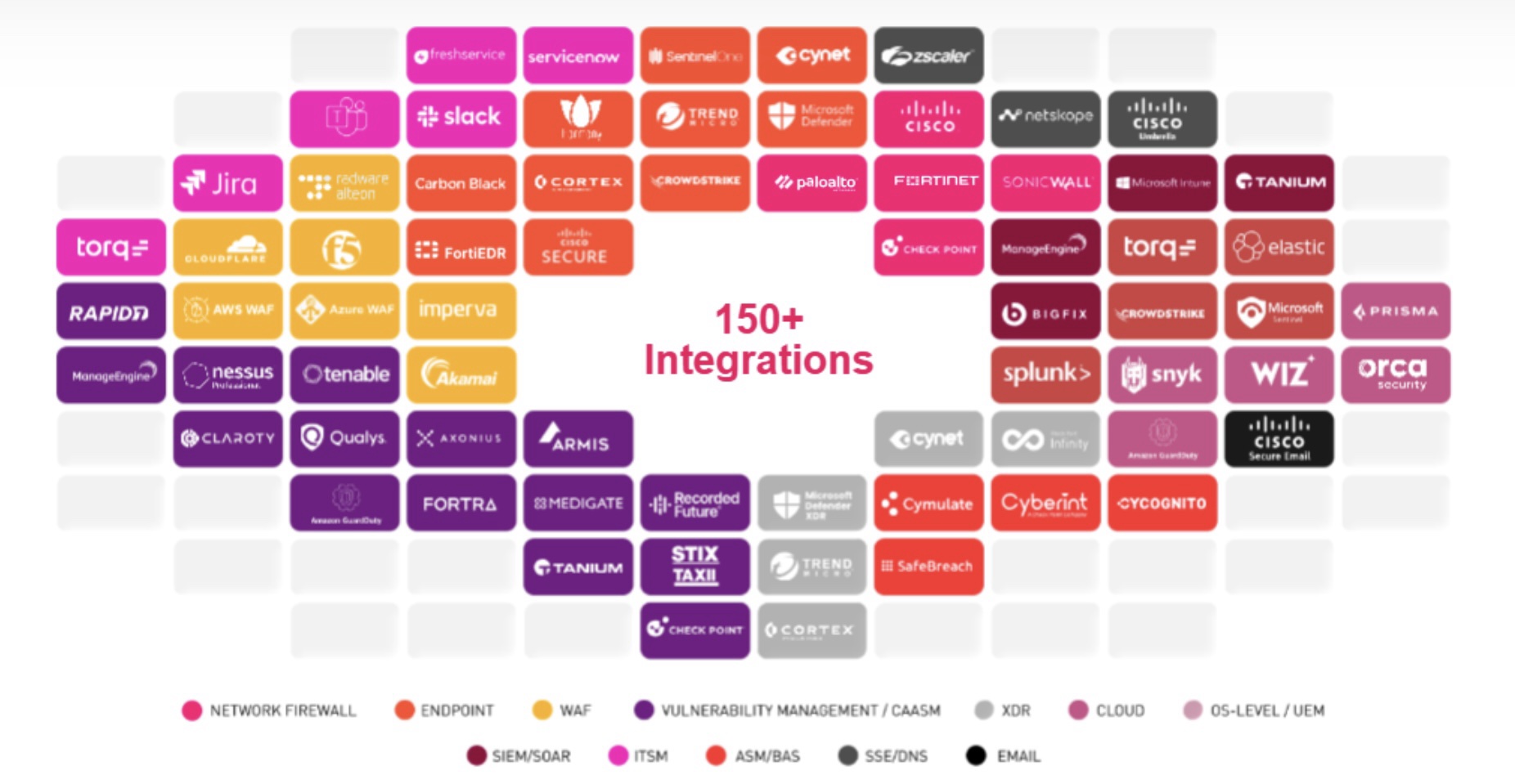
This approach helps organizations use exposure intelligence to support faster investigation, coordinated remediation, and measurable risk reduction.
Security teams need more than a complete, usable view of their exposure. They need the context to understand which exposures create meaningful organizational risk and where remediation efforts will have the greatest impact.
By bringing external threat activity, internal assets, threat intelligence, and existing security controls into a single platform, Check Point Exposure Management helps organizations prioritize exposures, coordinate remediation across the security stack, and make better informed security decisions.
Stay tuned for part 2, coming soon…
Ready to see how Check Point Exposure Management helps organizations discover, prioritize, and remediate cyber exposure? Schedule a personalized demo with one of our experts.
此内容由惯性聚合(RSS阅读器)自动聚合整理,仅供阅读参考。 原文来自 — 版权归原作者所有。