


惯性聚合 高效追踪和阅读你感兴趣的博客、新闻、科技资讯
阅读原文 在惯性聚合中打开

推荐订阅源

T
The Blog of Author Tim Ferriss
S
Schneier on Security
博客园 - 聂微东
爱范儿
爱范儿
大猫的无限游戏
大猫的无限游戏
有赞技术团队
有赞技术团队
腾讯CDC
博客园 - 叶小钗
WordPress大学
WordPress大学
博客园_首页
J
Java Code Geeks
Last Week in AI
Last Week in AI
钛媒体:引领未来商业与生活新知
钛媒体:引领未来商业与生活新知
V
V2EX
Microsoft Azure Blog
The GitHub Blog
The GitHub Blog
N
Netflix TechBlog - Medium
Y
Y Combinator Blog
Schneier on Security
CTFtime.org: upcoming CTF events
Recorded Future
Recorded Future
The Register - Security
C
Cybersecurity and Infrastructure Security Agency CISA
P
Privacy & Cybersecurity Law Blog
P
Proofpoint News Feed
P
Privacy International News Feed
K
Kaspersky official blog
C
CERT Recently Published Vulnerability Notes
阮一峰的网络日志
阮一峰的网络日志
F
Full Disclosure
NISL@THU
NISL@THU
AWS News Blog
AWS News Blog
cs.AI updates on arXiv.org
freeCodeCamp Programming Tutorials: Python, JavaScript, Git & More
U
Unit 42
MongoDB | Blog
MongoDB | Blog
A
Arctic Wolf
云风的 BLOG
云风的 BLOG
cs.CV updates on arXiv.org
D
Darknet – Hacking Tools, Hacker News & Cyber Security
T
Threatpost
D
Docker
人人都是产品经理
人人都是产品经理
T
Tailwind CSS Blog
V2EX - 技术
V2EX - 技术
G
GRAHAM CLULEY
M
MIT News - Artificial intelligence
H
Heimdal Security Blog
N
News and Events Feed by Topic
P
Proofpoint News Feed

Check Point Blog

Which Brands Are Impersonated Most? Inside the Q2 2026 Brand Phishing Report - Check Point Blog Security Advisory - Action Required - July 2026 Security Update - Check Point Blog What the 2026 Exposure Gap Report Reveals About Remediation - Check Point Blog Inline Email Security and Microsoft 365: A Practical View of Mail Routing, Risk, and Prevention - Check Point Blog The State of Hybrid SASE: Built-In vs. Bolted-On - Check Point Blog AI Appreciation Day: Let's Be Honest About What We're Appreciating - Check Point Blog AI Security Is Never Finished: Building the Continuous Red Teaming Loop  - Check Point Blog AI Security Threats in 2026: Annual Insights from Check Point Research - Check Point Blog AI Agents are Only As Effective as Their Harness - Check Point Blog Email Agent Hijacking: The Hidden Threat That Breaks Post-Delivery Security - Check Point Blog How Check Point Email Security Stopped a Student Job Scam Before It Reached the Inbox - Check Point Blog Redefining the CISO Contract: From Securing the Business to Securely Doing Business - Check Point Blog A New Ransomware Leader Emerges as June 2026 Attack Volumes Climb Worldwide How Unified Policies Close Security Gaps - Check Point Blog Under Pressure: Insights from the 2026 Exposure Gap Report - Check Point Blog When AI Invents the Attack: Browser-Native Ransomware - Check Point Blog Check Point and the AWS European Sovereign Cloud: Securing Europe’s Digital Future - Check Point Blog Shadow AI Is Not a Tool Problem. It's a Timing Problem. - Check Point Blog AI Is Changing Cyber Careers. NICE 2026 Showed What Students Need Next - Check Point Blog 90% of the World's Businesses are SMEs and MSMEs and AI Is Reshaping Both Their Future and Their Risk - Check Point Blog Prevention Before the Inbox: Reading the Microsoft Defender Benchmark Report in Context - Check Point Blog ClickFix: The Attack That Turns Users Into Their Own Attackers - Check Point Blog From Prompt Testing to AI Red Teaming at Enterprise Scale - Check Point Blog AI Has Moved From Assistance to Action. Is Your Security Model Ready? AI Security Governance: How to Secure AI Agents, Copilots, and Autonomous AI in 2026 - Check Point Blog OpenAI Frontier AI Models Powering Check Point's Leading Cyber Security Solutions The Operational Reality of Zero Trust- And How You Can Change It - Check Point Blog Amazon Prime Day 2026: Bargains Begin June 23 — and So Do the Scams - Check Point Blog Securing AI Agent Behavior with Amazon Bedrock AgentCore and CheckPoint AI Security - Check Point Blog What Successful Exposure Management Deployments Had in Common in 2026 - Check Point Blog From Stars to Upvotes: The Fake Reputation Economy Behind a Crypto Clipboard Hijackers - Check Point Blog AI Red Teaming Makes the Unknowns Known - Check Point Blog Check Point and Illumio Expand Partnership to Secure Hybrid Environments - Check Point Blog The NCSC Patch Wave Is Coming. Do You Know Where Your Risk Lives? - Check Point Blog NCSC Warns of AI-Driven Patch Wave: Is Your Attack Surface Ready? Energy, Healthcare, and Finance: Why Midwest Industries Are Facing Surging Cyber Attacks - Check Point Blog Midwest Cyber Attacks Surge in 2026: Energy, Healthcare, and Finance Under Growing Threat Travel Phishing and Cyber Attacks are Surging in 2026, Growing 122% over the last 3 years. Here's What Cyber Criminals Are Actually Doing - Check Point Blog Travel Phishing Scams Surge 122%: How Cybercriminals Are Targeting Travelers in 2026 The AI Your Security Team Can’t See Is the One You Should Worry About Check Point Engage Public Sector 2026: AI Is the New Battlefield Check Point Joins OpenAI’s Trusted Access for Cyber Program and Daybreak Initiative When Your AI Agent’s Memory Becomes a Security Liability AI Agents Are Becoming Enterprise Workers. Who Secures Them? Global Cyber Attacks Ease in May 2026, But Ransomware Surges 48% As Threats Reorganize Security Advisory – Action Required – Active Exploitation of Check Point VPN Authentication Bypass (CVE-2026-50751) Fraud, Ransomware, and Fake Apps Are Already Targeting FIFA 2026 The AI Defense Plane: Securing the New Enterprise Execution Layer The Meta AI Account Recovery Incident Wasn’t Just a Chatbot Problem Check Point Lays the Groundwork for the Future of AI Factory Security with NVIDIA - Check Point Blog Check ... The 2026 U.S. Midterms Have a Cyber Problem, But it’s Not at the Ballot Box The Server Seizure That Affects Also Iran’s Cyber Operations The Autonomous Security Platform Built for Attacker Speed Check Point Frontier AI Models Readiness Program – Security Update 2026 Cloud Security Report: Why Traditional Network, Cloud, and Security Architecture Are Lagging Behind t ... AI Attacks Are No Longer Experimental: Key Findings from the March-April 2026 AI Threat Landscape - Check ... Protect GenAI Chatbots with Check Point WAF The Network Security Problem No One Could Solve – Until Now. Hacktivists, Ransomware, and a 124% Surge Across DACH The Case for a Vulnerability Operations Center Before the First Whistle: How Cyber Criminals Are Targeting World Cup 2026 - Check Point Blog World Cup 20 ... When the Ransomware Gang Gets Hacked: What the Gentlemen Leak Reveals About Modern Ransomware Risk - Check ... Cyber Threats Spike in April 2026 as Ransomware Expands and Attack Volumes Climb After Short-Lived Moderation World Password Day 2026: Why "Strong Passwords" Can’t Save You from AI, Infostealers, and the Telegram Underground - Check Point Blog Resilient by Design: When the Network Itself Becomes the Target AI Threat Readiness: Defending Against Attacks Powered by Frontier AI Models Check Point Cyber Security Now Available Across All Levels of U.S. Government - Check Point Blog Check Poi ... VECT Ransomware: Why Paying Won’t Get Your Files Back Check Point WAF Leads Application Security-Validated by Frost & Sullivan Check Point WAF Leads Application ... From Access Control to Outcome Control: Securing AI Agents with Check Point and Google Cloud Experience AI-Powered Check Point Firewall at Google Cloud Next AI Finds Every Gap: How Many Can Your Network Survive? The Gentlemen RaaS Is Surging in 2026 The Phishing Paradox: The World’s Most Trusted Brands Are Cyber Criminals’ Entry Point of Choice World Quantum Day 2026: The Harvest Has Already Begun, Are You Prepared? Why Manufacturing Cyber Security is Becoming More Complex as Cyber Attacks Accelerate March 2026 Cyber Threat Report: Ransomware & GenAI Risk PS Private Training: Turning Cyber Complexity into Operational Control Tax Season 2026: How Cyber Criminals Are Preparing Their Attacks Months in Advance Claude Mythos Wake-Up Call: What AI Vulnerability Discovery Means for Cyber Defense Iran-nexus Password Spray Campaign Targeting Cloud Environments, with a Focus on the Middle East ROI of Hybrid Mesh Network Security (IDC Study 2026) Operation TrueChaos: TrueConf Zero‑Day Supply‑Chain Attack ChatGPT Data Leak (Fixed Feb 2026): Key Takeaways Spring Cleaning Has Arrived: Meet the New Check Point Portal Experience North America’s Cyber Security Threat Reality in 2026
Q1 2026 Ransomware Report: Fewer Groups, Higher Impact - Check Point Blog
lizwu@checkpoint.com · 2026-05-11 · via Check Point Blog

Ransomware activity remained elevated in Q1 2026, continuing the trend established over the past year.

According to the State of Ransomware Q1 2026 report from Check Point Research, overall attack volume stayed near historic highs. At the same time, the structure of the ransomware ecosystem changed materially. After two years of increasing fragmentation, activity is consolidating around a smaller number of dominant groups. For organizations, this shift reduces the number of active actors but increases the potential impact of individual incidents.

 Key Findings:
  • 2,122 organizations were listed on ransomware data leak sites in Q1 2026, making it the second-highest Q1 on record
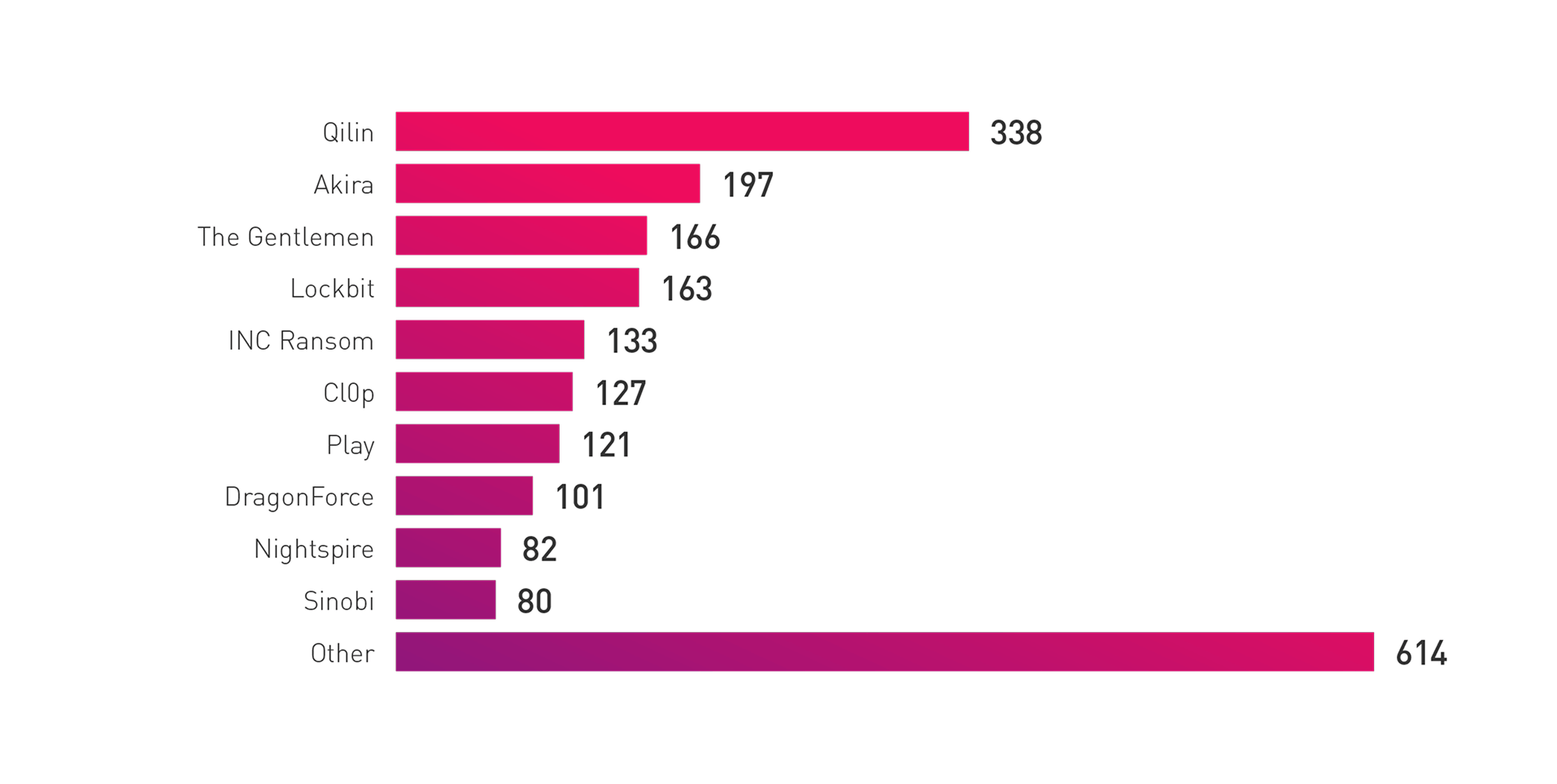
  • The top 10 ransomware groups accounted for 71% of all victims, reversing the fragmented landscape seen throughout much of 2025
  • Qilin remained the most active ransomware operation for the third consecutive quarter, posting 338 victims
  • LockBit confirmed its comeback, posting 163 victims and re-entering the global top tier

Taken together, these figures show that ransomware volume has stabilized at a high baseline, while operational power is concentrating in fewer, more capable hands.

High Volume Is the New Normal

Check Point Research tracked more than 70 active ransomware data leak sites during Q1 2026. These sites recorded:

  • More than 700 victims per month on average
  • Minimal fluctuation between January, February, and March

At first glance, However, that comparison is misleading. Last year’s figures were inflated by a single mass-exploitation campaign. When that anomaly is removed, ransomware activity actually increased YoY.

The takeaway for business leaders is straightforward.
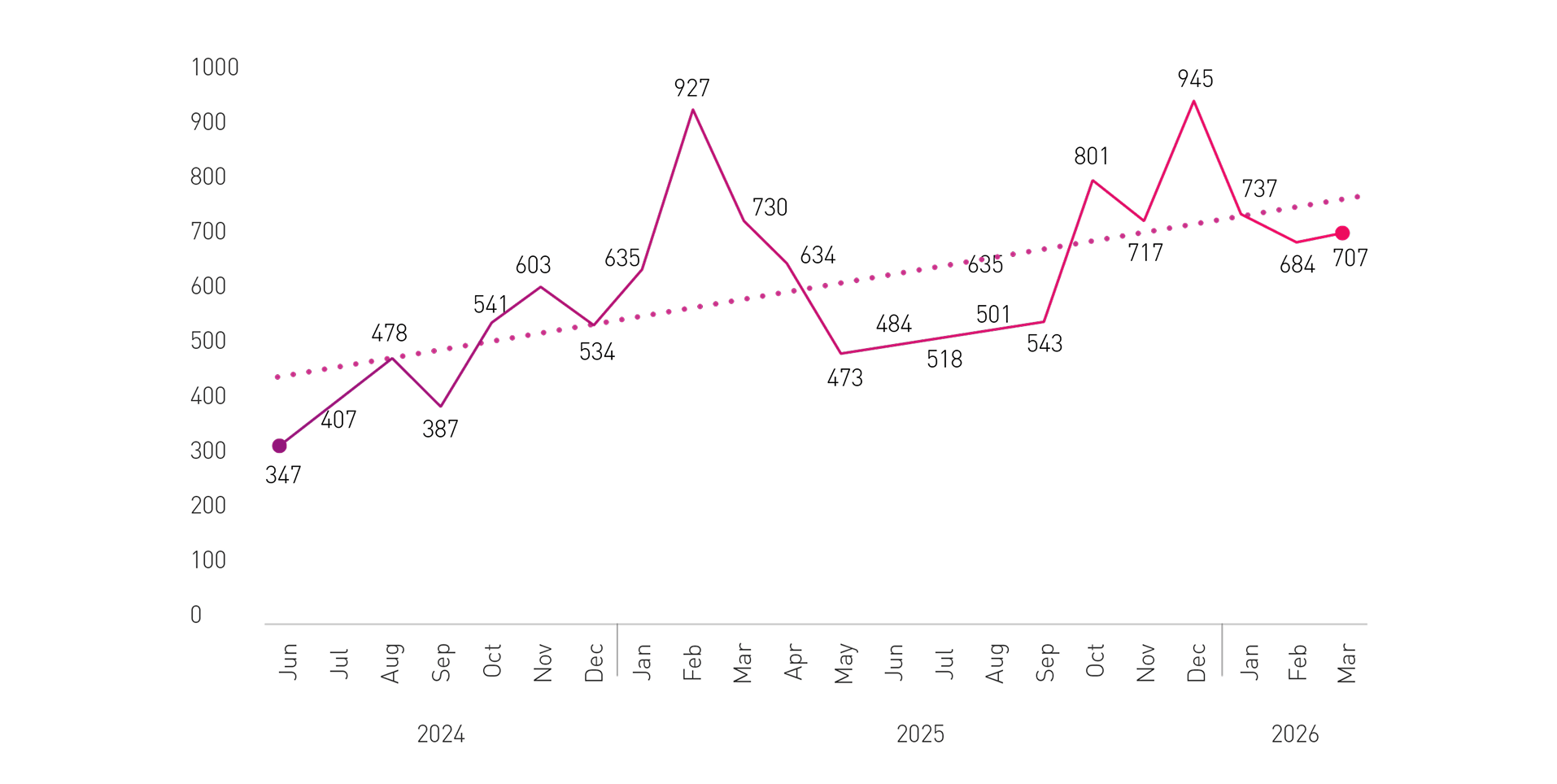
Figure 1 – Total number of reported ransomware victims in DLS, per month (Jun 2024 – Mar 2026)

From Fragmentation to Consolidation

The most important change this quarter is not how many attacks occurred, but who carried them out.

  • In Q3 2025, ransomware activity was spread across a record number of groups
  • By Q1 2026, the number of active groups had declined
  • At the same time, the share of victims claimed by top operators surged past 70%

This pattern is familiar. Law enforcement pressure, infrastructure disruption, and the competitive landscape tend to scatter smaller players. Stronger groups survive, absorb displaced affiliates, and grow. In Q1 2026, groups such as Qilin, Akira, The Gentlemen, and LockBit together accounted for 41% of all victims, with the top 10 ransomware groups accounting for 71% of all victims.

For defenders, consolidation raises the stakes. Larger ransomware operations tend to be:
  • More organized
  • More operationally consistent
  • More resilient to disruption

Figure 2 – Top 10 ransomware groups by number of publicly claimed victims – Q1 2026

The Breakout Story: The Gentlemen

One of the most notable increases in activity during Q1 2026 was attributed to The Gentlemen, a ransomware group that reached third place globally within a few months of initial activity.

Their growth was fueled by pre-positioned access at scale. Rather than relying on slow, opportunistic exploitation, the group operated with a large inventory, allowing it to launch attacks immediately and in volume.

Their targeting pattern also stands out:

  • Only 13% of publicly extorted victims were based in the United States, compared to an ecosystem average of 49.6%
  • Activity clustered in APAC and Latin America, mirroring the geographic distribution of compromised access points instead of a shift in the broader threat landscape

This disparity does not indicate deliberate avoidance of US targets, but rather reflects where the group already had established access. Increasingly in some cases, attackers go where access is available, not necessarily where victims are most lucrative.

LockBit’s Return, With a Strategic Shift

LockBit’s reappearance in Q1 2026 confirms that the group has recovered operationally after significant law enforcement disruption in 2024.

While overall activity more than doubled compared to the previous quarter, the most notable change was geographic. Historically focused on the United States, LockBit’s recent victims were spread more evenly across Europe, Latin America, and other regions.

The shift suggests a deliberate effort to reduce exposure to aggressive enforcement jurisdictions while maintaining scale. For global organizations, this reinforces a critical point. Geographic diversification by attackers expands risk, it does not reduce it.

Geographic and Industry distribution: How Access Shapes Impact

Ransomware activity in Q1 2026 shows that both industry and geographic impact are also shaped in some cases, by where attackers already have access.

Industries with high downtime sensitivity and complex environments continued to experience frequent attacks, including:

  • Manufacturing
  • Business services
  • Healthcare
  • Industrial sectors

The same access‑driven pattern was visible geographically:

  • The United States accounted for nearly half of all reported victims (49.6%), consistent with its large enterprise footprint, with Western developed economies making up the clear majority of targets.
  • Thailand accounted for 10.8% of victims tied to a single dominant ransomware group (The Gentlemen), pushing it into the top‑targeted countries for the first time,
  • Play concentrated 85.1% of its activity on USbased organizations, demonstrating how individual groups can heavily focus on a certain country

Taken together, these trends show that ransomware risk is less about sector or location in isolation, and more about the underlying exposure created by deployed technology, connectivity, and available access paths.
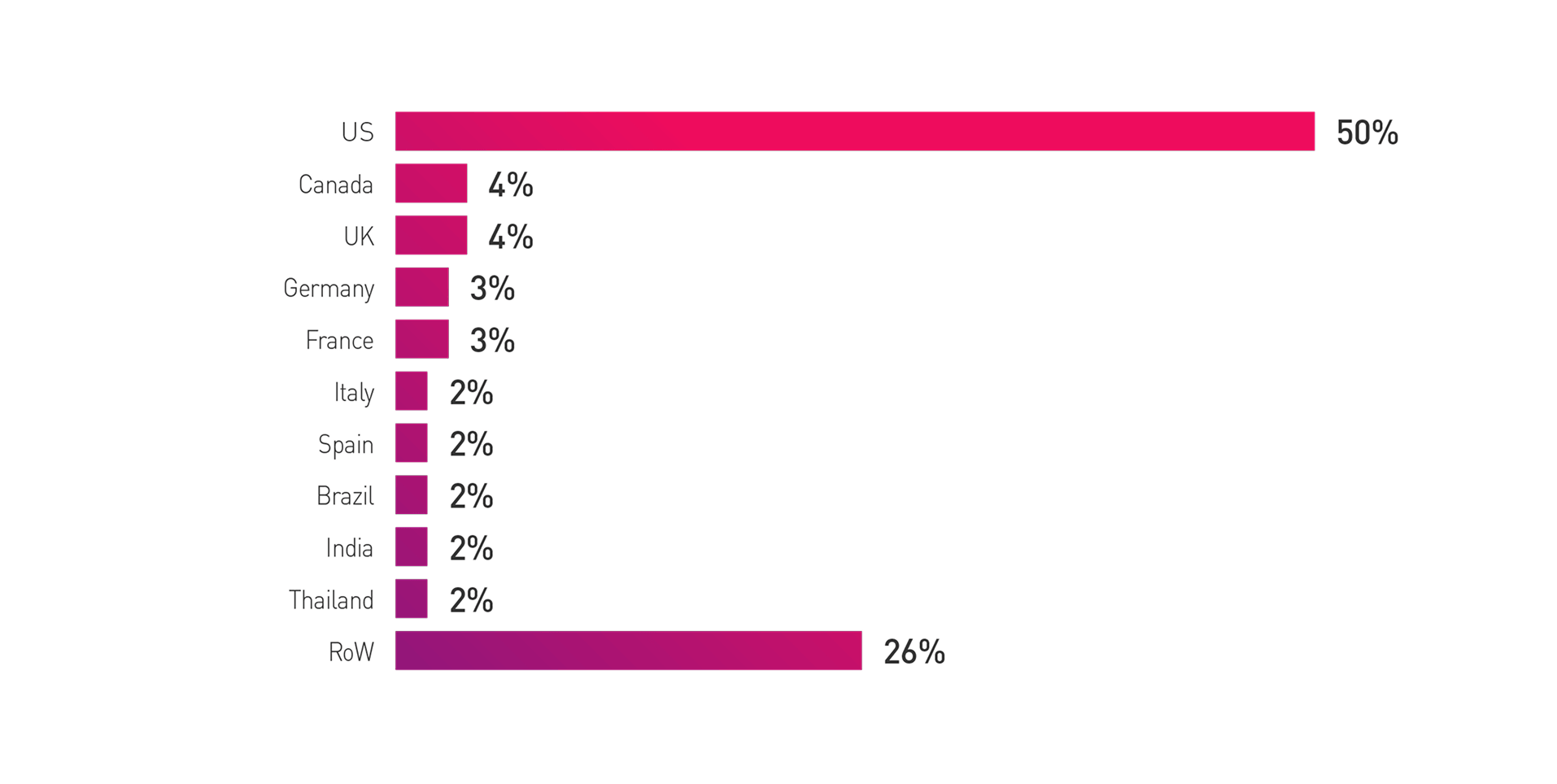
Figure 03 – Reported ransomware victims, by country

What This Means for Organizations

Ransomware in 2026 is defined by concentration, not volume. Fewer groups now drive the majority of attacks, and these operators are more capable, better resourced, and harder to disrupt.

For organizations, this changes the risk equation:

  • Fewer incidents may occur, but each carries greater potential impact
  • Attacks are more repeatable and access‑driven
  • Prevention and containment matter more than reaction alone

In practical terms, defense means:

Stopping Ransomware at the Network and Cloud Access Layer

Ransomware and extortion attacks often enter through exposed infrastructure, cloud services, or remote access paths. This is addressed through Hybrid Mesh Network Security, by applying consistent, AI‑driven threat prevention across networks, clouds, data centers, and remote users.

Capabilities such as network firewalls, SASE Internet Access, and CASB block malicious downloads, phishing, exploits, and ransomware before they reach devices. If an infection occurs, Zero Trust controls in SASE Private Access limits ransomware impact by restricting attackers to only the data a compromised user can access.

Reducing Ransomware Exposure Before Exploitation

As ransomware attacks become faster and more targeted, reducing exposure before exploitation is critical. This is the focus of the Exposure Management pillar, which helps organizations identify which assets, vulnerabilities, misconfigurations, and access paths attackers can realistically exploit.

By correlating live ransomware intelligence with internal exposure and validating safe remediation paths, security teams can close the most likely attack vectors early and reduce the likelihood of business disruption.

Protecting Users as a Primary Entry Point

Many ransomware attacks still begin with user interaction, such as phishing emails, malicious links, or compromised credentials. Workspace Security addresses this risk by protecting users across email, browsers, SaaS applications, and endpoints.

Using AI‑driven detection and global threat intelligence, Workspace Security blocks delivery vectors, prevents credential abuse, and disrupts command‑and‑control activity, helping organizations contain ransomware before it spreads or encrypts critical systems.

Join our upcoming webinar to hear directly from Check Point Research as we review the key findings from the Q1 2026 Ransomware Report and discuss what these trends mean for organizations and defenders today. Register for the webinar or download the Q1 report.