



惯性聚合 高效追踪和阅读你感兴趣的博客、新闻、科技资讯
阅读原文 在惯性聚合中打开

推荐订阅源

Google Online Security Blog
S
Security @ Cisco Blogs
Recent Commits to openclaw:main
人人都是产品经理
人人都是产品经理
The Hacker News
The Hacker News
W
WeLiveSecurity
freeCodeCamp Programming Tutorials: Python, JavaScript, Git & More
OSCHINA 社区最新新闻
OSCHINA 社区最新新闻
The Cloudflare Blog
博客园 - 司徒正美
雷峰网
雷峰网
L
LINUX DO - 最新话题
博客园 - 叶小钗
云风的 BLOG
云风的 BLOG
The Last Watchdog
The Last Watchdog
V2EX - 技术
V2EX - 技术
S
Security Affairs
有赞技术团队
有赞技术团队
月光博客
月光博客
T
Threatpost
T
Tor Project blog
O
OpenAI News
cs.AI updates on arXiv.org
cs.CL updates on arXiv.org
V
V2EX
Know Your Adversary
Know Your Adversary
Project Zero
Project Zero
博客园 - 三生石上(FineUI控件)
D
Docker
AWS News Blog
AWS News Blog
AI
AI
P
Proofpoint News Feed
K
Kaspersky official blog
H
Hackread – Cybersecurity News, Data Breaches, AI and More
D
Darknet – Hacking Tools, Hacker News & Cyber Security
www.infosecurity-magazine.com
S
Securelist
F
Fortinet All Blogs
F
Full Disclosure
cs.CV updates on arXiv.org
量子位
Hacker News - Newest:
Hacker News - Newest: "LLM"
CTFtime.org: upcoming CTF events
P
Palo Alto Networks Blog
Cyberwarzone
Cyberwarzone
Cisco Talos Blog
Cisco Talos Blog
美团技术团队
N
News | PayPal Newsroom
T
The Blog of Author Tim Ferriss
MyScale Blog
MyScale Blog

Check Point Blog

AI Appreciation Day: Let's Be Honest About What We're Appreciating - Check Point Blog AI Security Is Never Finished: Building the Continuous Red Teaming Loop  - Check Point Blog AI Security Threats in 2026: Annual Insights from Check Point Research - Check Point Blog AI Agents are Only As Effective as Their Harness - Check Point Blog Email Agent Hijacking: The Hidden Threat That Breaks Post-Delivery Security - Check Point Blog How Check Point Email Security Stopped a Student Job Scam Before It Reached the Inbox - Check Point Blog Redefining the CISO Contract: From Securing the Business to Securely Doing Business - Check Point Blog A New Ransomware Leader Emerges as June 2026 Attack Volumes Climb Worldwide How Unified Policies Close Security Gaps - Check Point Blog Under Pressure: Insights from the 2026 Exposure Gap Report - Check Point Blog When AI Invents the Attack: Browser-Native Ransomware - Check Point Blog Check Point and the AWS European Sovereign Cloud: Securing Europe’s Digital Future - Check Point Blog Shadow AI Is Not a Tool Problem. It's a Timing Problem. - Check Point Blog AI Is Changing Cyber Careers. NICE 2026 Showed What Students Need Next - Check Point Blog 90% of the World's Businesses are SMEs and MSMEs and AI Is Reshaping Both Their Future and Their Risk - Check Point Blog Prevention Before the Inbox: Reading the Microsoft Defender Benchmark Report in Context - Check Point Blog ClickFix: The Attack That Turns Users Into Their Own Attackers - Check Point Blog From Prompt Testing to AI Red Teaming at Enterprise Scale - Check Point Blog AI Has Moved From Assistance to Action. Is Your Security Model Ready? AI Security Governance: How to Secure AI Agents, Copilots, and Autonomous AI in 2026 - Check Point Blog OpenAI Frontier AI Models Powering Check Point's Leading Cyber Security Solutions The Operational Reality of Zero Trust- And How You Can Change It - Check Point Blog Amazon Prime Day 2026: Bargains Begin June 23 — and So Do the Scams - Check Point Blog Securing AI Agent Behavior with Amazon Bedrock AgentCore and CheckPoint AI Security - Check Point Blog What Successful Exposure Management Deployments Had in Common in 2026 - Check Point Blog From Stars to Upvotes: The Fake Reputation Economy Behind a Crypto Clipboard Hijackers - Check Point Blog AI Red Teaming Makes the Unknowns Known - Check Point Blog Check Point and Illumio Expand Partnership to Secure Hybrid Environments - Check Point Blog The NCSC Patch Wave Is Coming. Do You Know Where Your Risk Lives? - Check Point Blog NCSC Warns of AI-Driven Patch Wave: Is Your Attack Surface Ready? Energy, Healthcare, and Finance: Why Midwest Industries Are Facing Surging Cyber Attacks - Check Point Blog Midwest Cyber Attacks Surge in 2026: Energy, Healthcare, and Finance Under Growing Threat Travel Phishing and Cyber Attacks are Surging in 2026, Growing 122% over the last 3 years. Here's What Cyber Criminals Are Actually Doing - Check Point Blog Travel Phishing Scams Surge 122%: How Cybercriminals Are Targeting Travelers in 2026 The AI Your Security Team Can’t See Is the One You Should Worry About Check Point Engage Public Sector 2026: AI Is the New Battlefield Check Point Joins OpenAI’s Trusted Access for Cyber Program and Daybreak Initiative When Your AI Agent’s Memory Becomes a Security Liability AI Agents Are Becoming Enterprise Workers. Who Secures Them? Global Cyber Attacks Ease in May 2026, But Ransomware Surges 48% As Threats Reorganize Security Advisory – Action Required – Active Exploitation of Check Point VPN Authentication Bypass (CVE-2026-50751) Fraud, Ransomware, and Fake Apps Are Already Targeting FIFA 2026 The AI Defense Plane: Securing the New Enterprise Execution Layer The Meta AI Account Recovery Incident Wasn’t Just a Chatbot Problem Check Point Lays the Groundwork for the Future of AI Factory Security with NVIDIA - Check Point Blog Check ... The 2026 U.S. Midterms Have a Cyber Problem, But it’s Not at the Ballot Box The Server Seizure That Affects Also Iran’s Cyber Operations The Autonomous Security Platform Built for Attacker Speed Check Point Frontier AI Models Readiness Program – Security Update 2026 Cloud Security Report: Why Traditional Network, Cloud, and Security Architecture Are Lagging Behind t ... AI Attacks Are No Longer Experimental: Key Findings from the March-April 2026 AI Threat Landscape - Check ... Protect GenAI Chatbots with Check Point WAF The Network Security Problem No One Could Solve – Until Now. Hacktivists, Ransomware, and a 124% Surge Across DACH The Case for a Vulnerability Operations Center Before the First Whistle: How Cyber Criminals Are Targeting World Cup 2026 - Check Point Blog World Cup 20 ... When the Ransomware Gang Gets Hacked: What the Gentlemen Leak Reveals About Modern Ransomware Risk - Check ... Cyber Threats Spike in April 2026 as Ransomware Expands and Attack Volumes Climb After Short-Lived Moderation Q1 2026 Ransomware Report: Fewer Groups, Higher Impact - Check Point Blog World Password Day 2026: Why "Strong Passwords" Can’t Save You from AI, Infostealers, and the Telegram Underground - Check Point Blog Resilient by Design: When the Network Itself Becomes the Target AI Threat Readiness: Defending Against Attacks Powered by Frontier AI Models Check Point Cyber Security Now Available Across All Levels of U.S. Government - Check Point Blog Check Poi ... Check Point WAF Leads Application Security-Validated by Frost & Sullivan Check Point WAF Leads Application ... From Access Control to Outcome Control: Securing AI Agents with Check Point and Google Cloud Experience AI-Powered Check Point Firewall at Google Cloud Next AI Finds Every Gap: How Many Can Your Network Survive? The Gentlemen RaaS Is Surging in 2026 The Phishing Paradox: The World’s Most Trusted Brands Are Cyber Criminals’ Entry Point of Choice World Quantum Day 2026: The Harvest Has Already Begun, Are You Prepared? Why Manufacturing Cyber Security is Becoming More Complex as Cyber Attacks Accelerate March 2026 Cyber Threat Report: Ransomware & GenAI Risk PS Private Training: Turning Cyber Complexity into Operational Control Tax Season 2026: How Cyber Criminals Are Preparing Their Attacks Months in Advance Claude Mythos Wake-Up Call: What AI Vulnerability Discovery Means for Cyber Defense Iran-nexus Password Spray Campaign Targeting Cloud Environments, with a Focus on the Middle East ROI of Hybrid Mesh Network Security (IDC Study 2026) Operation TrueChaos: TrueConf Zero‑Day Supply‑Chain Attack ChatGPT Data Leak (Fixed Feb 2026): Key Takeaways Spring Cleaning Has Arrived: Meet the New Check Point Portal Experience North America’s Cyber Security Threat Reality in 2026
VECT Ransomware: Why Paying Won’t Get Your Files Back
lizwu@checkp · 2026-04-28 · via Check Point Blog
  • Do not pay the ransom. VECT permanently destroys large files rather than locking them. Even the attackers cannot recover them. Payment will not restore your data 
  • VECT partnered with TeamPCP and BreachForums to build one of the largest ransomware affiliate networks ever assembled, giving them a ready-made pipeline to thousands of potential victims 
  • The encryption flaw exists across all versions. Windows, Linux, and ESXi variants are all affected. The bug has been present since before the public 2.0 release and has never been fixed 
  • Advertised features don’t work. Encryption speed modes, anti-analysis protections, and other capabilities are either unimplemented or broken 
  • Check Point Threat Emulation and Harmony Endpoint provide full protection against all known VECT variants 
A New Threat with an Ambitious Playbook 

VECT emerged in late 2025 with an unusual ambition: rather than recruiting a small, vetted group of criminal partners in the traditional ransomware model, they opened their doors to everyone. Through a formal partnership with BreachForums, a major cybercrime marketplace, VECT distributed access to their ransomware platform to every registered member of the forum automatically. Thousands of potential operators, almost overnight. 

At the same time, VECT announced a partnership with TeamPCP, the group responsible for a series of supply-chain attacks earlier this year that compromised popular software tools used by businesses worldwide. The stated goal, openly announced on BreachForums, was to use that existing access as a launchpad for ransomware attacks against companies already affected by those attacks. 

On paper, this looked like a serious and scalable threat. In practice, Check Point Research gained access to the affiliate panel and builder, analyzed all three payloads, and found something the group’s own operators may not know: their software is broken in a way that makes it far more destructive, and far less profitable, than intended. 

Our researchers also believe VECT is more likely the work of newcomers than experienced ransomware operators. The pattern of errors, which are identical across every platform and uncorrected across every version, is not consistent with a seasoned group. The possibility that parts of the codebase were generated with AI assistance cannot be ruled out, and would help explain how a group could produce something that looks credible on the surface while containing fundamental mistakes underneath. 

The Critical Flaw: It’s a Wiper, Not Ransomware 

Ransomware is supposed to be reversible. The attacker locks your files, holds the key, and returns it when you pay. That’s the business model. VECT’s software breaks this model entirely, not by design, but by mistake. 

When VECT encrypts large files, and virtually every file that matters to a business qualifies, it permanently discards the information needed to reverse the process. There is no key to hand back. The attacker cannot provide a working decryptor, not because they are unwilling, but because the means to decrypt no longer exists anywhere. 

This affects the files ransomware groups typically use as their strongest leverage: virtual machine images, databases, backups, and archives. For these file types, VECT is not ransomware. It is a data wiper with a ransom note attached. 

Check Point Research confirmed this flaw exists across all three versions of VECT’s software (Windows, Linux, and VMware ESXi) and has been present in every known version of the malware, including samples that predate the public 2.0 release. It has never been fixed. 

For the full technical breakdown of how the flaw works, read the Check Point Research report

Professional Appearance, Serious Gaps 

VECT has invested heavily in looking legitimate. The affiliate panel is well-designed. The partnerships are real. The marketing is polished. But analysis of the actual code tells a different story. 

Several features the group advertises to operators simply do not work. Encryption speed settings, offered as a way to balance speed and thoroughness, are accepted by the software and then silently ignored. Every attack runs identically regardless of what settings the operator chooses. 

Security evasion tools designed to help VECT avoid detection were built and compiled into the software, but are never actually activated. Any security researcher can run VECT today with no evasive response from the malware itself. 

These are not minor oversights. They are the kinds of errors that basic testing would catch, and they suggest a group that has prioritized the appearance of a professional operation over building one. 

There is also evidence suggesting VECT may be built on a leaked ransomware codebase from before 2022, rather than written from scratch as the group claims. A telling indicator is an unusual geofencing choice: VECT’s software is configured to avoid attacking targets in Ukraine, a country that most Russian-speaking ransomware groups stopped protecting after the 2022 war. Retaining that exclusion points to code inherited from an older source, not a deliberate ideological stance by the current operators. 

What This Means for Your Organization 

If you’ve been hit: Do not pay. For large files, which includes the vast majority of business-critical data, there is no functional decryptor and there never will be. Paying transfers money to criminals and returns nothing. Focus on recovery from clean backups and engage your incident response team immediately. 

If you haven’t been hit: VECT’s current limitations do not make it harmless. Data can still be exfiltrated before encryption runs. Systems still go down. And the flaws identified are correctable, a future version that fixes them, distributed through the same network that already has thousands of affiliates, would be significantly more dangerous. This group is worth watching. 

Organizations with exposure to the recent TeamPCP supply-chain attacks, which targeted widely used developer tools including Trivy, KICS, LiteLLM, and Telnyx, should treat credential rotation as an immediate priority. 

Check Point Threat Emulation and Endpoint Security provide full protection against all known VECT variants across Windows, Linux, and ESXi environments. 
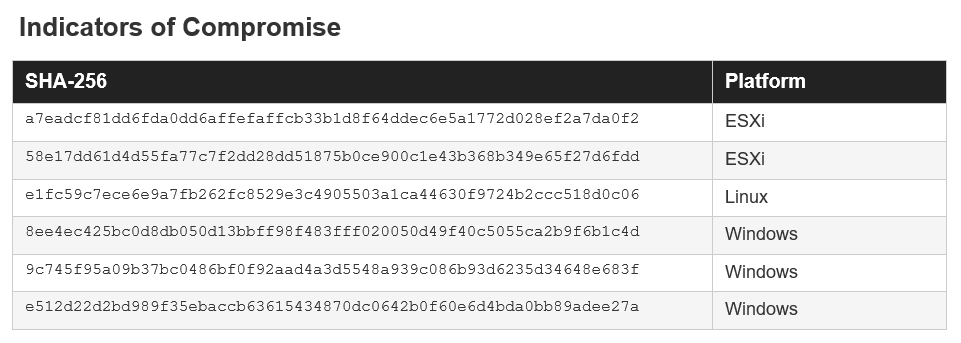
For the full technical analysis — including code-level detail on the encryption flaw, cipher analysis, and platform-by-platform breakdown — read the Check Point Research report.