







Sign up to see the future, today
Can’t-miss innovations from the bleeding edge of science and tech
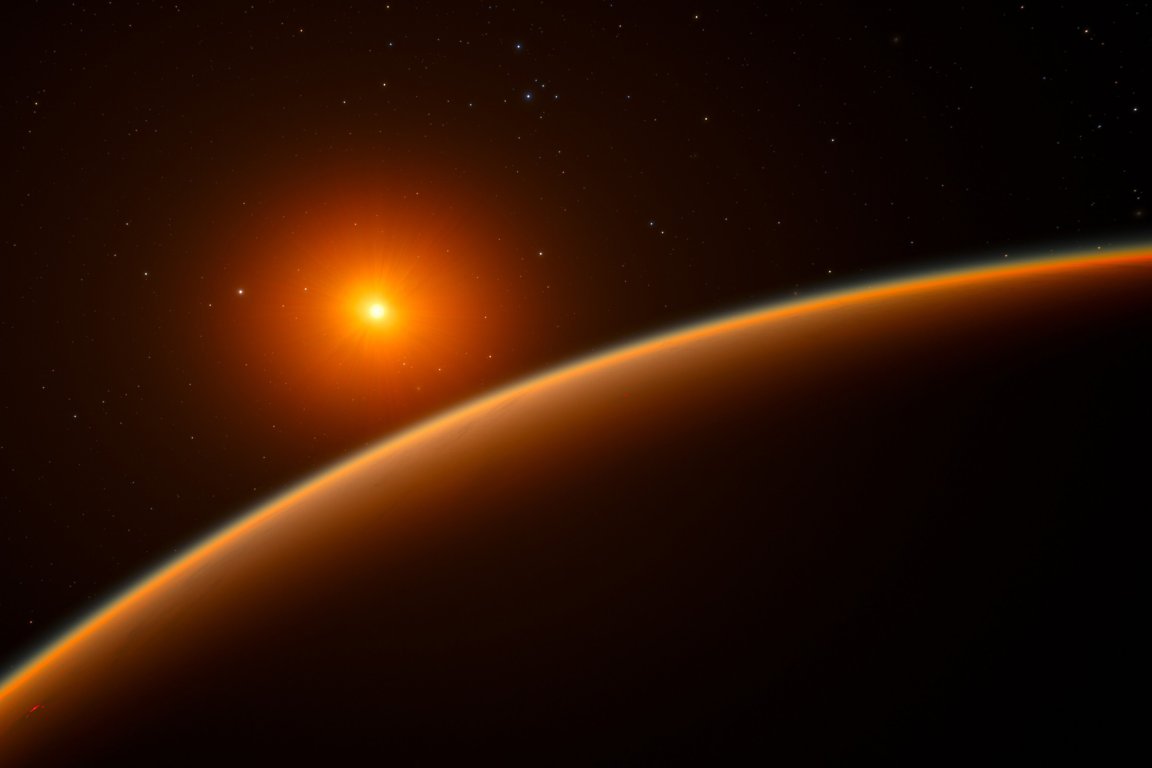
If there’s extraterrestrial life anywhere in the galaxy, chances are, it could be on LHS 1140b.
Astronomers have found that the exoplanet 48 light years away is spewing helium into space, a strong sign that it harbors a robust atmosphere, they reported in a new study published in the journal Science.
And that’s not all: it’s also a rocky world like our own, and orbits within its star’s habitable zone, the region around a star where a planet can maintain liquid — and possibly life-harboring — water on its surface.
If their findings are borne out, then it’s the first ever Earth-like exoplanet we’ve seen with an atmosphere stable enough to support life — and could vindicate the belief that there’s a whole host of similar planets out there, rather than our own being a rare anomaly in the cosmos.
“When there’s one, there’s more in exoplanets,” Sara Seager, an astrophysicist at MIT who was not involved in the study, told the New York Times. “Hopefully this is the start of something new.”
“At this point, we have absolutely no evidence for life on the planet,” lead author Collin Cherubim, a planetary scientist at Harvard University, added to the newspaper. “But we think all of the really important, essential ingredients are there.”
Spotting exoplanets is rare. While we have catalogued millions of stars, we have only confirmed around 6,000 worlds outside our solar system. Finding ones with an atmosphere is even rarer, since their signals are faint compared to the light of the planet’s star. In many cases, the planets with atmospheres are gas giants, which are unlikely to support life.
A key detail is that LHS 1140b orbits a red dwarf. Planets around red dwarfs are easier to spot because the diminutive stars are fainter, meaning it’s more noticeable when a planet passes in front of them. But since they emit less heat, a potentially habitable planet needs to orbit much closer to to them than we do our Sun. That could be a problem because red dwarfs are believed to be highly volatile. A closely orbiting planet would be in danger of being battered by solar flares and other powerful outbursts, which could strip it of its atmosphere and sterilize developing lifeforms.
The astronomers, however, found that LHS 1140b has a helium-rich atmosphere despite being — or because it’s in — the star’s habitable zone, demonstrating that the volatility of red dwarfs may not be as much as a problem as once thought (though this one appears to be less active than its cousins). They used a theoretical computer model of exoplanet atmosphere evolution that tracked how lighter elements like hydrogen and helium would be ejected by the outbursts of its host star, Science explained. When they applied it to LHS 1140b, which was first discovered in 2017, it predicted that its upper atmosphere would be dominated by helium, a promising sign that it’s capable of supporting life.
“Twenty years ago we wondered whether other terrestrial-type planets even existed,” Robin Wordsworth, a professor of earth and planetary sciences at Harvard, said in a statement about the work. “Then we learned they’re common, and found some in the habitable zone.”
“The next question was whether any of them had managed to keep an atmosphere,” he added. “Now we know at least one has.”
More on space: Scientists Say They’ve Identified an Earth-Like Planet Right Next Door