







Sign up to see the future, today
Can’t-miss innovations from the bleeding edge of science and tech
In July 2025, astronomers spotted a mysterious object screaming through the solar system from interstellar space.
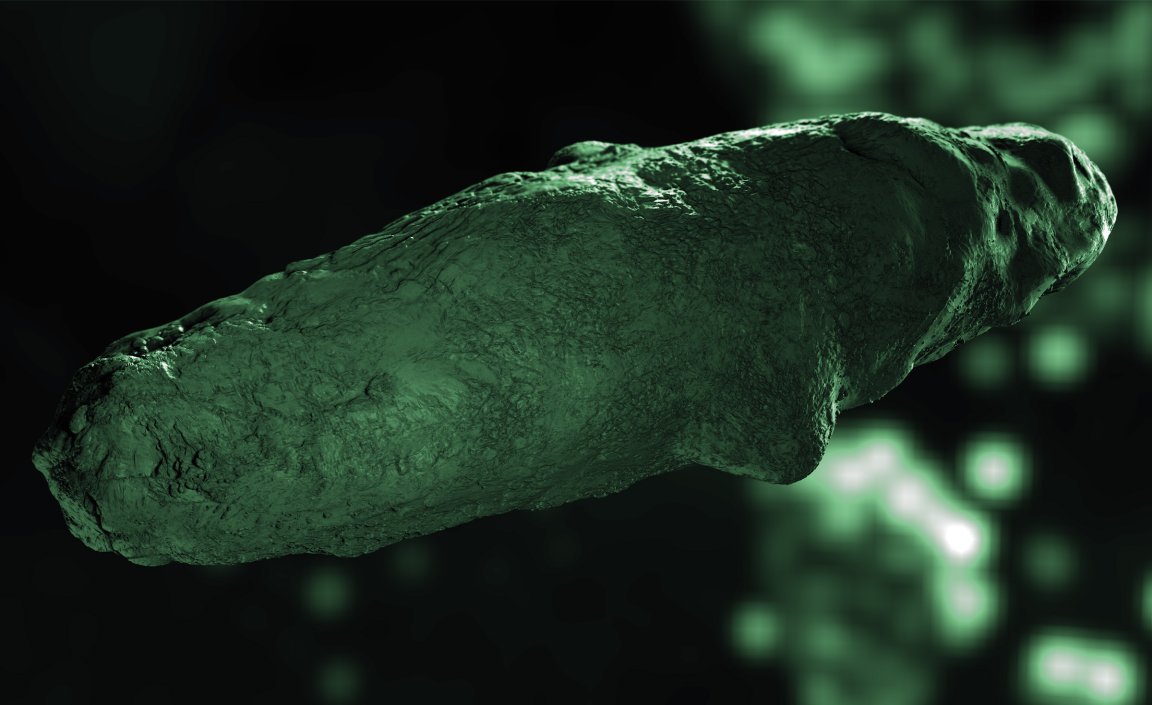
The object, later dubbed 3I/ATLAS, has been a fertile area of investigation for researchers curious about the composition its far-away point of origin. It’s also generated plenty of eyebrow-raising speculation, with Harvard astronomer Avi Loeb meticulously cataloguing its unusual properties to build a case that it could have been an ancient alien relic sent to us by an extraterrestrial civilization.
While the scientific community has overwhelmingly concluded it’s a comet, researchers wanted to find out for sure whether 3I/ATLAS may have been an alien probe.
In a new paper published in The Astronomical Journal, a team of scientists from the Search for Intelligent Life (SETI) Institute at Berkeley University and the alien-hunting astronomy project Breakthrough Listen scanned 3I/ATLAS across a huge range of radio frequencies to see if it was emitting any artificial signatures.
Using the Allen Telescope Array near San Francisco, the team narrowed an original dataset of “nearly 74 million narrowband hits in 7.25 hours of data” down to roughly two million candidates by filtering out any radio-frequency interference (RFI), meaning electromagnetic radiation from human-caused sources such as communication equipment.
They then algorithmically filtered these for any outliers — potential signs of artificially strong radio emissions — to come up with 211 signals of interest. However, none of the 211 signals stood out as technological and all of them were “easily attributable to RFI,” according to the paper.
It’s yet another nail in the coffin for the theory that 3I/ATLAS was a piece of alien tech. Previously, Breakthrough Listen had also pointed the Green Bank Telescope — the largest single-dish radio telescope in the world — at 3I/ATLAS, and similarly failed to detect any “candidate signals.”
Still, the process itself was worthwhile.
“The results from 3I/ATLAS show how realistic it is to detect a signal with the technology we have today,” said coauthor, Breakthrough Listen member, and Furman University physics professor Valeria Garcia Lopez in a statement. “That is why it is important to keep searching for technosignatures, even from objects we might not expect to have signals.”
And the fact of the matter is that it’s not entirely unlikely that there are alien probes drifting through space. After all, we’ve launched several of our own.
“Eventually, our own Voyager spacecraft will be extraterrestrial artifacts in other stellar systems,” said lead author and SETI Institute researcher Sofia Sheikh in a statement. “Given that, it is important that we understand the natural distribution of interstellar objects so that we will be able to identify any anomalies that could one day be signs of an artificial interstellar object.”
More on 3I/ATLAS: NASA’s James Webb Discovers That 3I/ATLAS Let One Rip as It Passed Through Solar System