





China and TikTok
This week on Techtonic I spoke with Ian Johnson, author of Sparks: China’s Underground Historians and Their Battle for the Future. The book describes how individual Chinese citizens, resisting the authoritarian surveillance state in their country, are writing books and filming documentaries about events – massacres, famines, purges, executions – that the censors would like to keep buried. (See more at Ian’s site China Unofficial Archives, where he has posted hundreds of books, articles, and films.)
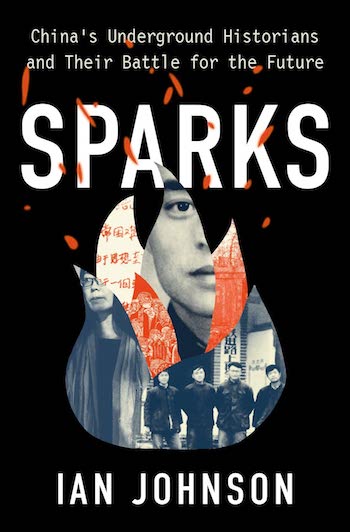
In Ian’s words, the historians are “people seeking to reclaim their country’s history.” Their urge, their calling, is simply to tell the truths that haven’t been told elsewhere, that aren’t allowed to be told. Many of the people featured in Sparks have been imprisoned, exiled, or killed. Defying the Party is risky business.
Those historians came to mind recently as I saw the news of Congress debating whether to shut down TikTok, a Chinese-owned app with ties to Beijing. There are fears that, much like the crackdowns in China, the app could prevent Americans from seeing anything critical of the Party. This has already happened. Back in 2019, the Guardian documented how TikTok downranked or deleted mentions of Tiananmen Square and other politically sensitive topics.
TikTok’s usage is widespread among American teenagers today. A Pew Research study from December 2023 found that 58% of teenagers report using TikTok daily, with about one in five of all U.S. teenagers using TikTok “almost constantly.” Only YouTube had higher usage, and not by much.
It’s remarkable to think that one of the most popular media sources for American teenagers is a Chinese Communist Party-friendly app with a history of censorship – as well as addiction loops and other social media dangers. I’d guess that most users don’t know or fully understand the app’s connections to the Party. After all, the manipulations in the feed, if and when they occur, are totally invisible.
This is all to say that I understand the concerns about TikTok as a national security risk. I don’t agree with comments that such concerns amount to “xenophobia.” Pointing out a foreign government’s influence in a major media source is hardly an anti-Chinese posture. As Ian Johnson’s book makes clear, propaganda and censorship aren’t the work of China so much as a Party with a particular agenda and a brutally authoritarian history. The country of China, the culture, the people are not a monoculture. Just look at the underground historians. China as a whole is not to blame for TikTok.
A bigger threat
There’s another issue to grapple with, one that’s arguably more dangerous than Party censors noodling with algorithms and feeds. Here I’m referring to invasive surveillance. TikTok’s tracking of users’ interests, relationships, location, and more – and building a secret dossier with that data that users have no way to inspect, alter, or delete – all of it is a horror show of intrusive spying that should be illegal.
Here again we have to be careful who we blame, because TikTok is hardly alone. Facebook, Google, Amazon, and countless data brokers conduct the same sorts of surveillance on Americans. Will Congress demand that those companies all be banned? Will we see angry speeches about “threats to American youth” due to the predatory behavior of American surveillance capitalists? Of course not. The U.S. government has been openly accessing this data for some time. From Wired almost a year ago (June 2023):
In the shadow of years of inaction by the US Congress on comprehensive privacy reform, a surveillance state has been quietly growing in the legal system’s cracks. Little deference is paid by prosecutors to the purpose or intent behind limits traditionally imposed on domestic surveillance activities.
More recently, in the WSJ, by Byron Tau, U.S. Spy Agencies Know Your Secrets. They Bought Them. (March 8, 2024):
In recent years, U.S. intelligence agencies, the military and even local police departments have gained access to enormous amounts of data through shadowy arrangements with brokers and aggregators. Everything from basic biographical information to consumer preferences to precise hour-by-hour movements can be obtained by government agencies without a warrant.
We have enough to worry about from American companies, in other words, before we lose our minds over TikTok. Yes, TikTok’s censorship is a problem. But surveillance – from TikTok and American companies – is a constant threat to our lives as independent citizens.
If we’re going to denounce TikTok for its shadowy workings, we should first condemn the surveillance state that Big Tech is already building here in the U.S. Instead of banning TikTok, Congress should focus its energy on a national privacy bill.
Note that we are discussing more surveillance news on the Creative Good Forum and you should join. Columns like this are only a small part of the conversation that goes on every day on the Forum.
Until next time,
-mark
Mark Hurst, founder, Creative Good – see our services or join as a member
Email: mark@creativegood.com
Listen to my podcast/radio show: techtonic.fm
Subscribe to my email newsletter
Sign up for my to-do list with privacy built in, Good Todo
On Mastodon: @markhurst@mastodon.social
- – -