





An “internet for the people” or a plastic beach
I’m happy to be back in New York City after two weeks away: one week for a family visit, and a second week in the Florida Keys, mostly outdoors in the balmy 90-degree weather (that’s 32 Celsius). Creative Good members will enjoy the bounty of new posts on our Forum: they’re worth browsing through.
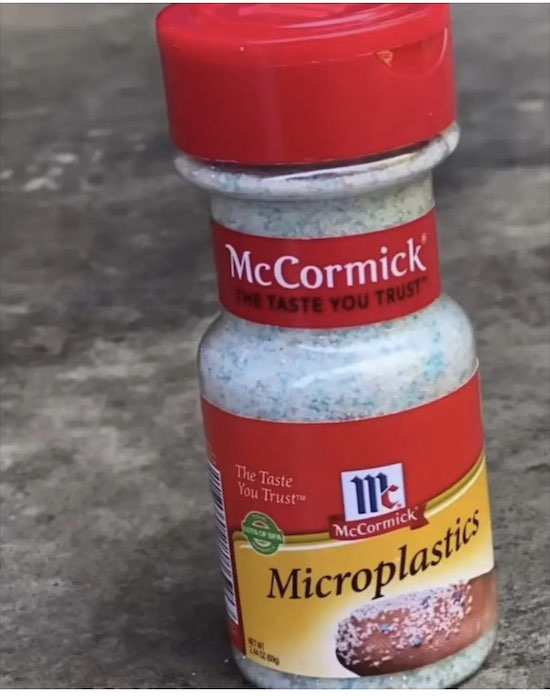
A word on the Keys. As I mentioned at the end of this week’s Techtonic, I had an sobering experience while walking along the seaweed-strewn beach of a barrier island there. Wherever I looked, the strands of seaweed and sea grass were threaded through with tiny bits of plastic. Most pieces looked like they had flaked off from larger sheets or chunks, then decomposed in the sun and weather, turning into a million tiny shreds. It was, in other words, a “plastic beach.” The phrase came to mind after Bob Ostertag brought it up on the April 19, 2021 Techtonic.
I wrote about Bob’s experience in my column The future and the remotest beach in the world (April 22, 2021), which has a Forum comments page here. Quoting Bob’s book Facebooking the Anthropocene in Raja Ampat:
I soon discovered that clearing the plastic from even a tiny little patch of beach was beyond the ability of one person. It was like doing amateur microscale stratigraphy. Intact artifacts like plastic bottles formed the top layer. Clearing that away revealed a layer of fragments of the same artifacts that were intact in the top layer. Excavating layer by layer, the fragments became progressively smaller until they became indistinguishable from the sand. Maybe the sand itself was plastic. Below that would be the plastic fragments even smaller than the sand. Microplastic, it is called. I couldn’t see it because I didn’t have a microscope, but it was there.
Similarly, on the barrier island I found that digging below the seaweed unearthed even more plastic bits embedded in the soil underneath. No doubt a microscope would have revealed exponentially more.
Creative Good is reader-supported.
You’re on a free subscription. If you want to support my writing, the best way is by joining Creative Good.
The plastic beach was topical to my Techtonic interview this week with Ben Tarnoff, author of Internet for the People: The Fight for Our Digital Future. The widescale privatization of the internet, Tarnoff explains, has created a kind of “plastic beach” for our interactions online: unnatural, unsustainable, and driven by the spurious faith in “eternal growth at any cost.” I’d recommend the interview: Listen to the show or see the episode page with links and listener comments.
Also recommended:
• I was interviewed by David Wilk on his WritersCast podcast: Listen to the interview (this autoplays audio) or see the episode page. The interview explores my career transformation from tech advocate to critic and apostate. Thanks to David for having me on the show.
• Lots of new comments and pointers in our Forum thread on The emerging threat of AI “personhood”: from ELIZA history to Google’s incompetent attempt at labelling emotions. For Creative Good members only – join here to get access.
Post a comment on this column – for Creative Good members only.
Until next time,
-mark
Creative Good is reader-supported.
You’re on a free subscription. If you want to support my writing, the best way is by joining Creative Good.
Mark Hurst, founder, Creative Good – see official announcement and join as a member
Email: mark@creativegood.com
Read my non-toxic tech reviews at Good Reports
Listen to my podcast/radio show: techtonic.fm
Subscribe to my email newsletter
Sign up for my to-do list with privacy built in, Good Todo
Twitter: @markhurst
- – -