





The world is waiting for AI to deliver returns to the economy. The New York Times published this headline a year ago.
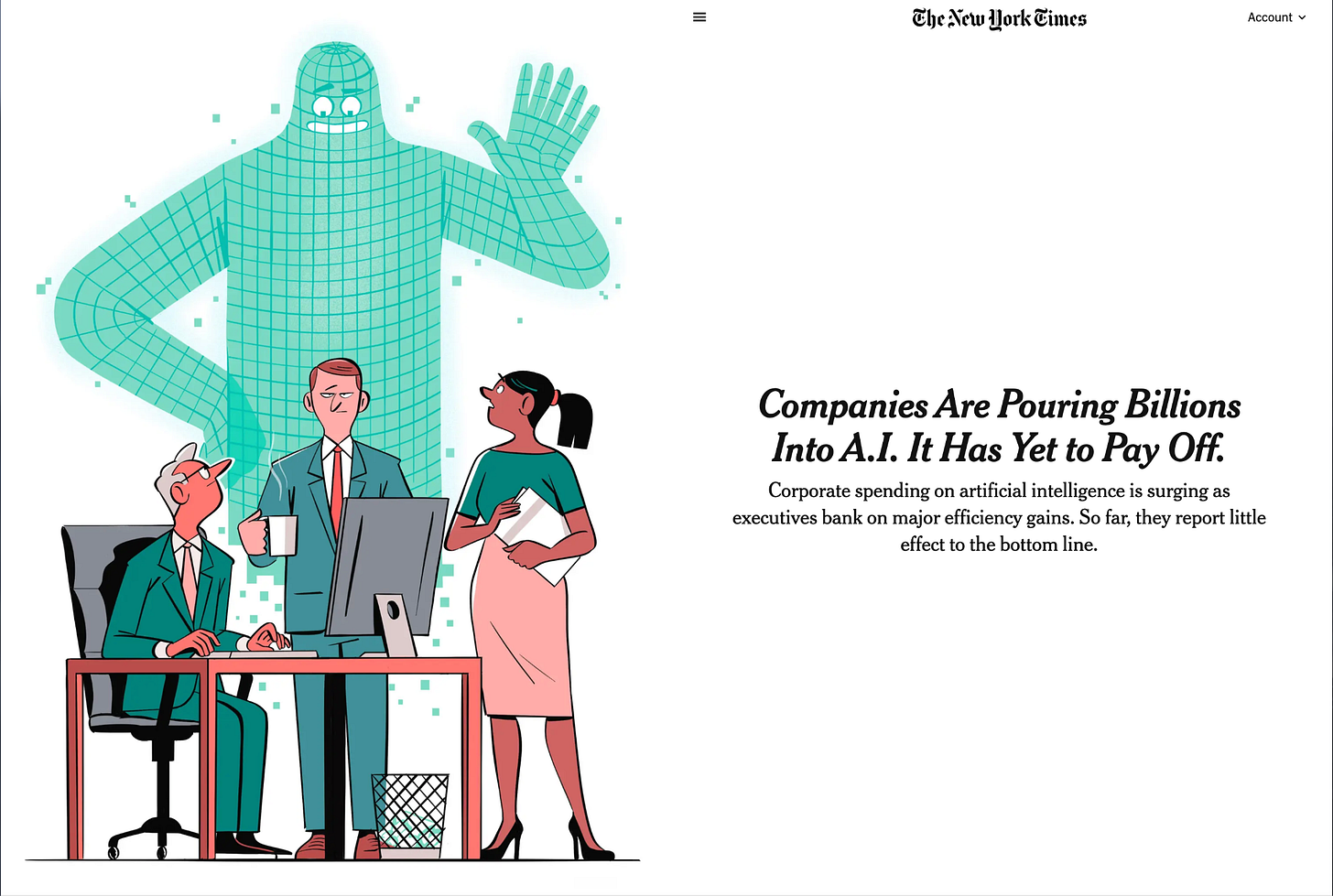
Reuters ended 2025 with “Companies still waiting.” Seven months into 2026, the waiting continues. Barclays says that broad adoption of AI has not yet lifted productivity.
Executives are under pressure to show they can deliver – half of all CEOs BCG surveyed worldwide say their jobs depend on getting their AI strategy right. Public disclosures of net AI returns are patchy. JPMorgan’s estimate of $1-1.5 billion in value from its AI use is a rare case of a company naming a number.
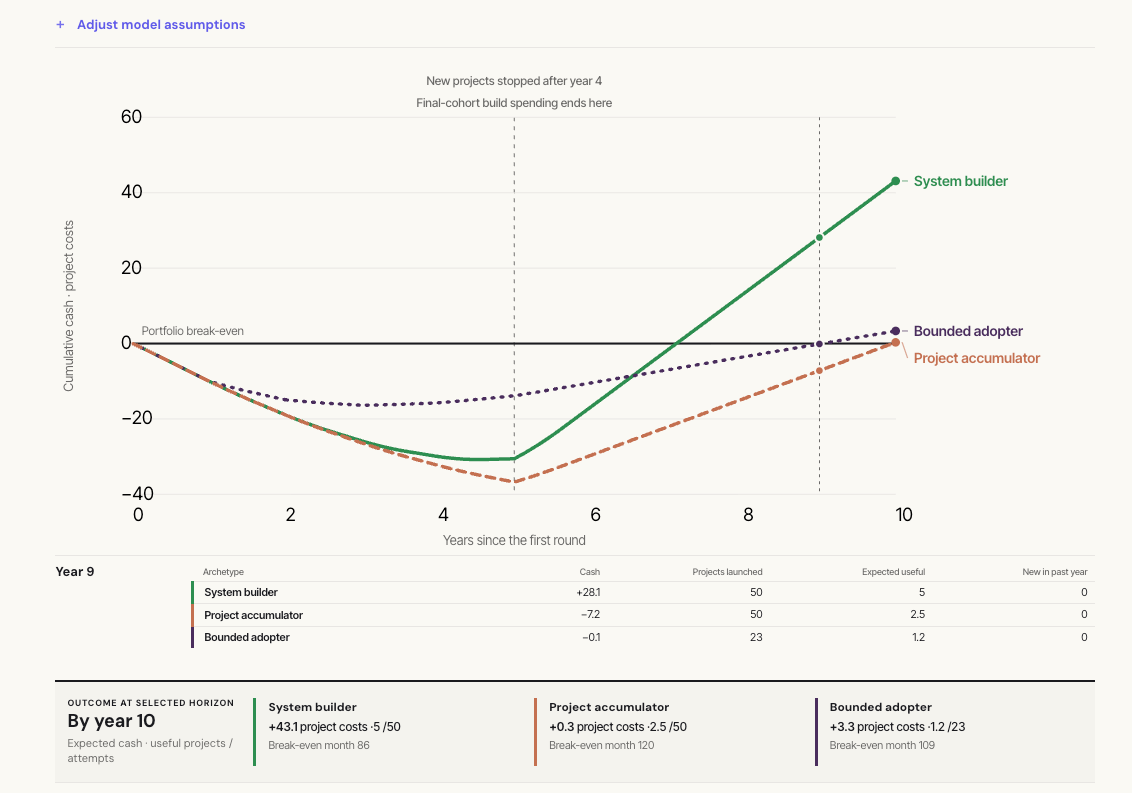
Adopters are spending a lot, so where are the returns? That is the question most are asking right now. And yet, in a successful technology rollout, the first visible economic signal may not be the returns. Winners and losers might look the same. We have created a model to show why this is the case and what signals to follow to understand if your AI adoption is going well.
Members of Exponential View get access to the full interactive model to test the assumptions behind today’s essay.
All investments follow a path. You might begin by buying an office building, starting in the red. You earn a return by leasing it to tenants, which can bring you into neutral and, if all goes well, you’ll climb to profitability.
Investing in new technology can follow a similar path. Much of the upfront cost is learning how to use the technology – new processes, skills training, making changes to the organization. Mistakes are almost guaranteed, and learning is expensive. The learning bill will almost certainly arrive before your returns.
Learning is a continuous practice, not a one-time exercise. It happens through a series of projects, each with its own investment J-curve. A company might have dozens of projects at different stages of maturity running at once.
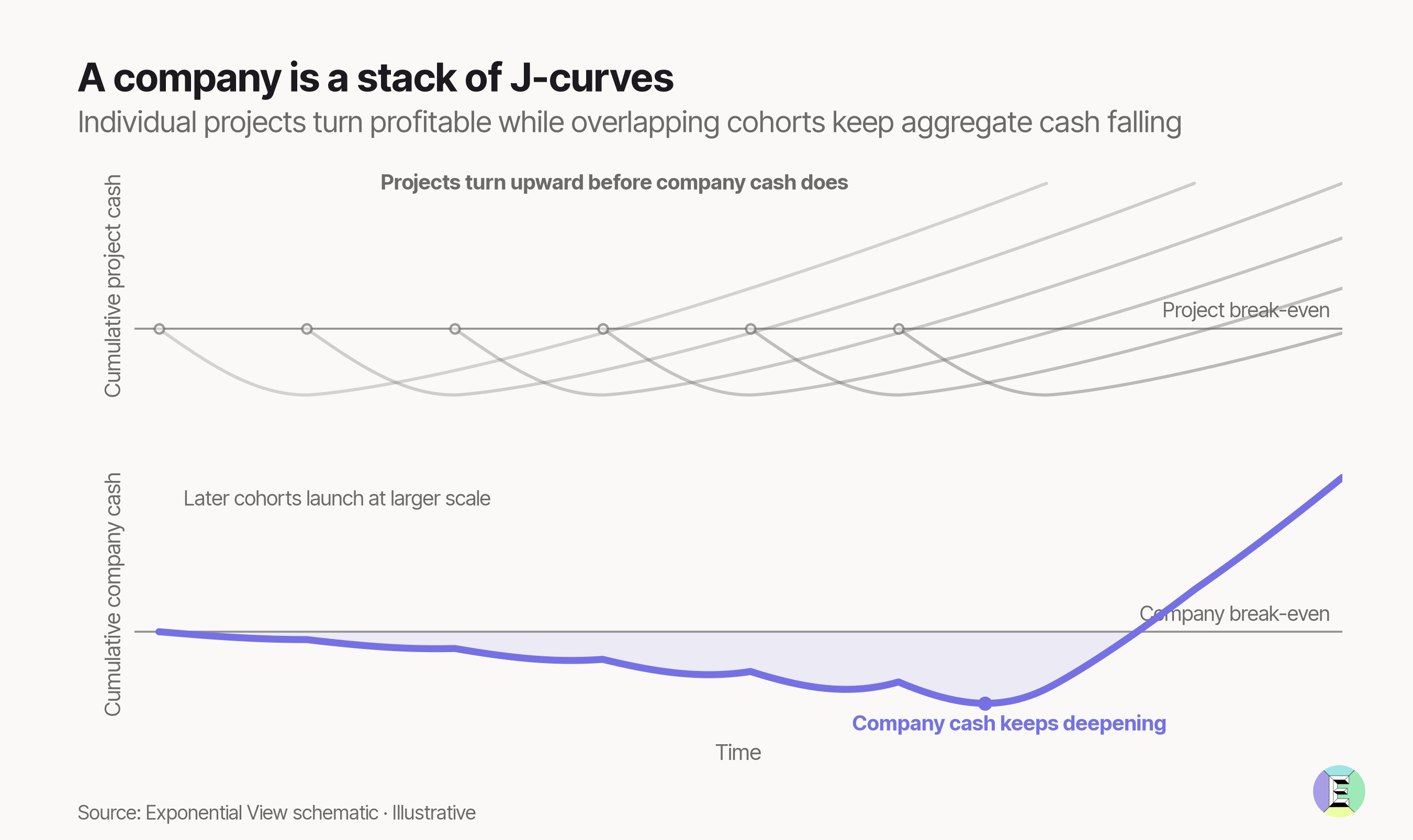
If we adopt the premise that the AI economy is going through a J-curve – firms are investing upfront, learning through deployment, and scaling what works – at the aggregate level, this can make a successful rollout look expensive, even irrational, before it looks productive.1
Our model has three archetypes of companies experimenting with a general-purpose technology, in this case AI:
Bounded adopters find something that works, put it to work, and then stop experimenting.
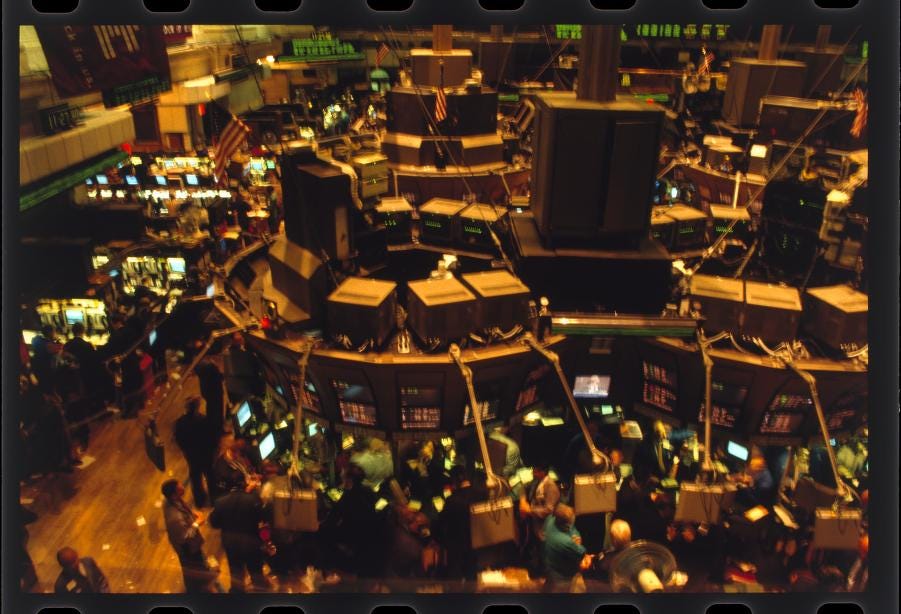
In 1976, the NYSE’s Designated Order Turnaround system allowed member firms to send small orders to the floor electronically, bypassing the human broker who would normally carry them. Even as the system caught on – by 1999, more than 90% of orders arrived this way – it automated only the delivery of orders; human traders still executed the trade. In 2000, NYSE’s market structure committee rejected a fully electronic order book and chose to keep the floor and its specialists.
But competitors didn’t wait. By 2005, Nasdaq, which already had automated execution, was handling about 15% of trading in NYSE-listed stocks. Eventually, NYSE switched. It merged with the all-electronic Archipelago in 2006 (a combination then valued at $9 billion), and in 2008 the SEC approved a plan that phased out specialists.
Borders, an American book retailer, is another example of bounded adoption. In 2001, it entered into an agreement with Amazon to run its e-commerce site. At this time, Borders was one of the top operators of bookstores in the world, and the Amazon deal helped it maintain an e-commerce site. But that’s where Borders stopped developing its in-house online capability, and its growth remained anchored in physical stores. Only in 2008 did Borders bring its own e-commerce site back in-house, ending the Amazon agreements after nearly seven years. By then it was too late and Borders filed for bankruptcy in 2011.
The project accumulator keeps exploring, but rarely or never learns. It launches new projects without figuring out what separates the winners from the losers. Nothing carries forward, so each project starts with the same odds as the last.
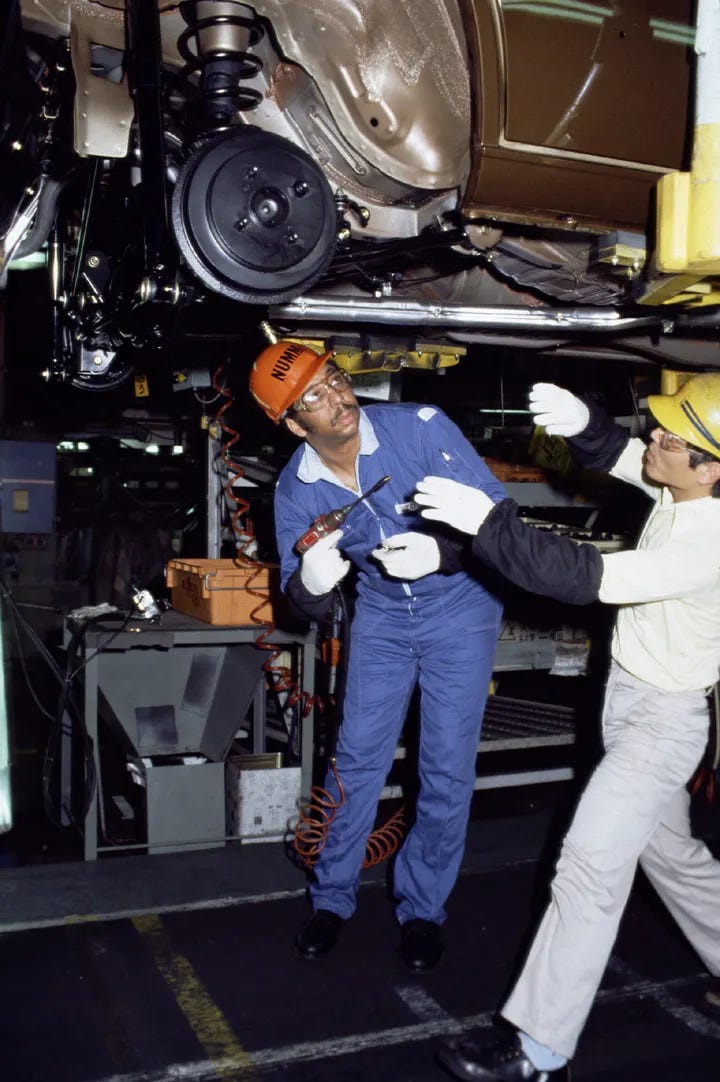
In the 1980s, GM made multiple automation bets at once. It bet on factory robots, modernized plants, a $2.5 billion acquisition of a data-processing firm; it created Saturn, a new car brand subsidiary with a new factory and labor arrangements; and it bet on NUMMI, a joint venture with Toyota. By 1986, GM’s capital spending was going to hit $10 billion.
Of all the projects, NUMMI seemed the least likely to succeed. Toyota got GM’s worst-performing factory and rehired the same workforce that was let go when the factory closed down in the past. Under new management, NUMMI outperformed every other GM factory. GM saw this happen, knew what was working well, but for various reasons, the learning traveled too slowly to be transformative.
此内容由惯性聚合(RSS阅读器)自动聚合整理,仅供阅读参考。 原文来自 — 版权归原作者所有。