


惯性聚合 高效追踪和阅读你感兴趣的博客、新闻、科技资讯
阅读原文 在惯性聚合中打开

推荐订阅源

N
News and Events Feed by Topic
T
The Exploit Database - CXSecurity.com
P
Palo Alto Networks Blog
T
Threat Research - Cisco Blogs
Cloudbric
Cloudbric
Recent Commits to openclaw:main
I
Intezer
Attack and Defense Labs
P
Privacy International News Feed
cs.CV updates on arXiv.org
L
Lohrmann on Cybersecurity
C
Cybersecurity and Infrastructure Security Agency CISA
V2EX - 技术
V2EX - 技术
AWS News Blog
AWS News Blog
O
OpenAI News
L
LINUX DO - 最新话题
N
News | PayPal Newsroom
PCI Perspectives
PCI Perspectives
www.infosecurity-magazine.com
T
Troy Hunt's Blog
Latest news
Latest news
D
Darknet – Hacking Tools, Hacker News & Cyber Security
A
Arctic Wolf
Spread Privacy
Spread Privacy
G
GRAHAM CLULEY
T
Tor Project blog
博客园_首页
Know Your Adversary
Know Your Adversary
有赞技术团队
有赞技术团队
S
Secure Thoughts
美团技术团队
Apple Machine Learning Research
爱范儿
爱范儿
T
Tailwind CSS Blog
Application and Cybersecurity Blog
V
Visual Studio Blog
J
Java Code Geeks
Cisco Talos Blog
Cisco Talos Blog
Schneier on Security
Exploit-DB.com RSS Feed
S
Security Affairs
Jina AI
Jina AI
人人都是产品经理
人人都是产品经理
雷峰网
雷峰网
宝玉的分享
宝玉的分享
量子位
Last Week in AI
Last Week in AI
月光博客
月光博客
罗磊的独立博客
S
SegmentFault 最新的问题

Modular Blog

Qualcomm to Acquire Modular Modular 26.4: SOTA MoE Serving, Model Bringup via Agent Skills, Mojo 1.0 Beta 2 and More ModCon 2026: Modular’s Developer Conference Day Zero: MiniMax M3 Open Weights on Modular Cloud Modverse #55: Mojo 1.0 Beta, Community Mojo Libraries, and Real-Time Patient Conversations Powered by MAX What about OpenCL and CUDA C++ alternatives? (Democratizing AI Compute, Part 5) Why LLM Inference Needs a New Kind of Router - Part 3 Three trends from MLSys 2026 Why LLM Inference Needs a New Kind of Router - Part 2 How I built a pure Mojo app (and 10 libraries) with AI agents Hippocratic AI partners with Modular to power flexible, high-quality inference for real-time patient conversations Translating to Mojo via AI Agents Inkwell: Why Your Inference Platform Matters As Much As Your Model Why LLM Inference Needs a New Kind of Router - Part 1 Modular 26.3: Mojo 1.0 Beta, MAX Video Gen, and more Modverse #54: AMD AI DevDay, New Modular Offices, and a Community That Keeps Shipping How Frontier Coding Agents Built a Video Diffusion Pipeline on MAX TileTensor Part 1 - Safer, More Efficient GPU Kernels Structured Mojo Kernels Part 4 - Portability and the Road Ahead Day Zero Launch: Fastest Performance for Gemma 4 on NVIDIA and AMD Modverse #54: From GTC to Edinburgh, a Community Building Momentum Software Pipelining for GPU Kernels: Part 1 - The Pipeline Problem Structured Mojo Kernels Part 3 - Composition in Practice Modular 26.2: State-of-the-Art Image Generation and Upgraded AI Coding with Mojo Modular at NVIDIA GTC 2026: MAX on Blackwell, Mojo Kernel Porting, and DeepSeek V3 on B200 Structured Mojo Kernels Part 2 - The Three Pillars Modverse #53: Community Builds, Research Milestones, and a Growing Ecosystem Structured Mojo Kernels Part 1 - Peak Performance, Half the Code The Claude C Compiler: What It Reveals About the Future of Software BentoML Joins Modular The Five Eras of KVCache Modular 26.1: A Big Step Towards More Programmable and Portable AI Infrastructure How to Beat Unsloth's CUDA Kernel Using Mojo—With Zero GPU Experience 🔥 Modular 2025 Year in Review The path to Mojo 1.0 Modverse #52: Advancing AI Together — Community Projects & Platform Milestones Modular 25.7: Faster Inference, Safer GPU Programming, and a More Unified Developer Experience "TTS 1 Max" (powered by Modular Platform) Ranked #1 Speech Model on Artificial Analysis PyTorch and LLVM in 2025 — Keeping up With AI Innovation Achieving State-of-the-Art Performance on AMD MI355 — in Just 14 Days Modular Raises $250M to scale AI's Unified Compute Layer Modular 25.6: Unifying the latest GPUs from NVIDIA, AMD, and Apple Matrix Multiplication on Blackwell: Part 4 - Breaking SOTA Modverse #51: Modular x Inworld x Oracle, Modular Meetup Recap and Community Projects Matrix Multiplication on Blackwell: Part 3 - The Optimizations Behind 85% of SOTA Performance Matrix Multiplication on Blackwell: Part 2 - Using Hardware Features to Optimize Matmul Matrix Multiplication on Blackwell: Part 1 - Introduction Modverse #50: Modular Platform 25.5, Community Meetups, and Mojo's Debut in the Stack Overflow Developer Survey Modular Platform 25.5: Introducing Large Scale Batch Inference SF Compute and Modular Partner to Revolutionize AI Inference Economics AI Agents for AWS Marketplace Modverse #49: Modular Platform 25.4, Modular 🤝 AMD, and Modular Hack Weekend Inside Modular Hack Weekend: Top Projects and Community Highlights How is Modular Democratizing AI Compute? (Democratizing AI Compute, Part 11) Modular 25.4: One Container, AMD and NVIDIA GPUs, No Lock-In Introducing Mammoth: Enterprise-Scale GenAI Deployments Made Simple Modular + AMD: Unleashing AI performance on AMD GPUs Modverse #48: Modular Platform 25.3, MAX AI Kernels, and the Modular GPU Kernel Hackathon Exploring Metaprogramming in Mojo Modular GPU Kernel Hackathon Highlights: Innovation, Community, & Mojo🔥 Modular’s bet to break out of the Matrix (Democratizing AI Compute, Part 10) Modular Platform 25.3: 450K+ Lines of Open Source Code and pip Packaging A New, Simpler License for MAX and Mojo Why do HW companies struggle to build AI software? (Democratizing AI Compute, Part 9) Modverse #47: MAX 25.2 and an evening of GPU programming at Modular HQ What about the MLIR compiler infrastructure? (Democratizing AI Compute, Part 8) What about Triton and Python eDSLs? (Democratizing AI Compute, Part 7) MAX 25.2: Unleash the power of your H200's–without CUDA! What about TVM, XLA, and AI compilers? (Democratizing AI Compute, Part 6) Modverse #46: MAX 25.1, MAX Builds, and Democratizing AI Compute CUDA is the incumbent, but is it any good? (Democratizing AI Compute, Part 4) MAX 25.1 - Introducing MAX Builds How did CUDA succeed? (Democratizing AI Compute, Part 3) Paged Attention & Prefix Caching Now Available in MAX Serve What exactly is “CUDA”? (Democratizing AI Compute, Part 2) Modular DeepSeek's Impact on AI (Democratizing AI Compute, Part 1) Modular Hands-on with Mojo 24.6 Evaluating Llama Guard with MAX 24.6 and Hugging Face Modular Introducing MAX 24.6: A GPU Native Generative AI Platform MAX GPU: State of the Art Throughput on a New GenAI platform Understanding SIMD: Infinite Complexity of Trivial Problems Community Spotlight: Writing Mojo with Cursor Hands-on with Mojo 24.5 MAX 24.5 - With SOTA CPU Performance for Llama 3.1 Announcing stack-pr: an open source tool for managing stacked PRs on GitHub Debugging in Mojo🔥 Write hardware-agnostic custom ops for PyTorch | Modular Take control of your AI Develop locally, deploy globally A brief guide to the Mojo n-body example What's new in MAX 24.4? MAX on macOS, fast local Llama3, native quantization and GGUF support What’s new in Mojo 24.4? Improved collections, new traits, os module features and core language enhancements MAX 24.4 - Introducing quantization APIs and MAX on macOS Deep dive into ownership in Mojo What ownership is really about: a mental model approach Fast⚡k-means clustering in Mojo🔥: a guide to porting Python to Mojo🔥 for accelerated k-means clustering
Modular Opens Edinburgh & San Francisco Offices
No items found. · 2026-04-10 · via Modular Blog

Modular is growing! We've opened offices in two cities with deep ties to the work we do.

Edinburgh: home at the Bayes Centre

Our new Edinburgh office is based at the Bayes Centre, the University of Edinburgh's hub for data science and AI. Researchers, students, and businesses share the building, working to turn AI and data science into practical solutions for industry and society.

Edinburgh is a natural home for Modular. The city has deep roots in computer science, compilers, and programming language research, the disciplines that define what we build. The University of Edinburgh's School of Informatics is one of the largest and most respected CS departments in Europe, and the broader Scottish AI community has produced foundational work in machine learning, natural language processing, and systems engineering.

The Bayes Centre puts us in the middle of that community. It houses AI-focused companies alongside researchers and programs like the AI Accelerator and Venture Builder Incubator, all in one building. That proximity to active research and emerging talent is why we chose it.
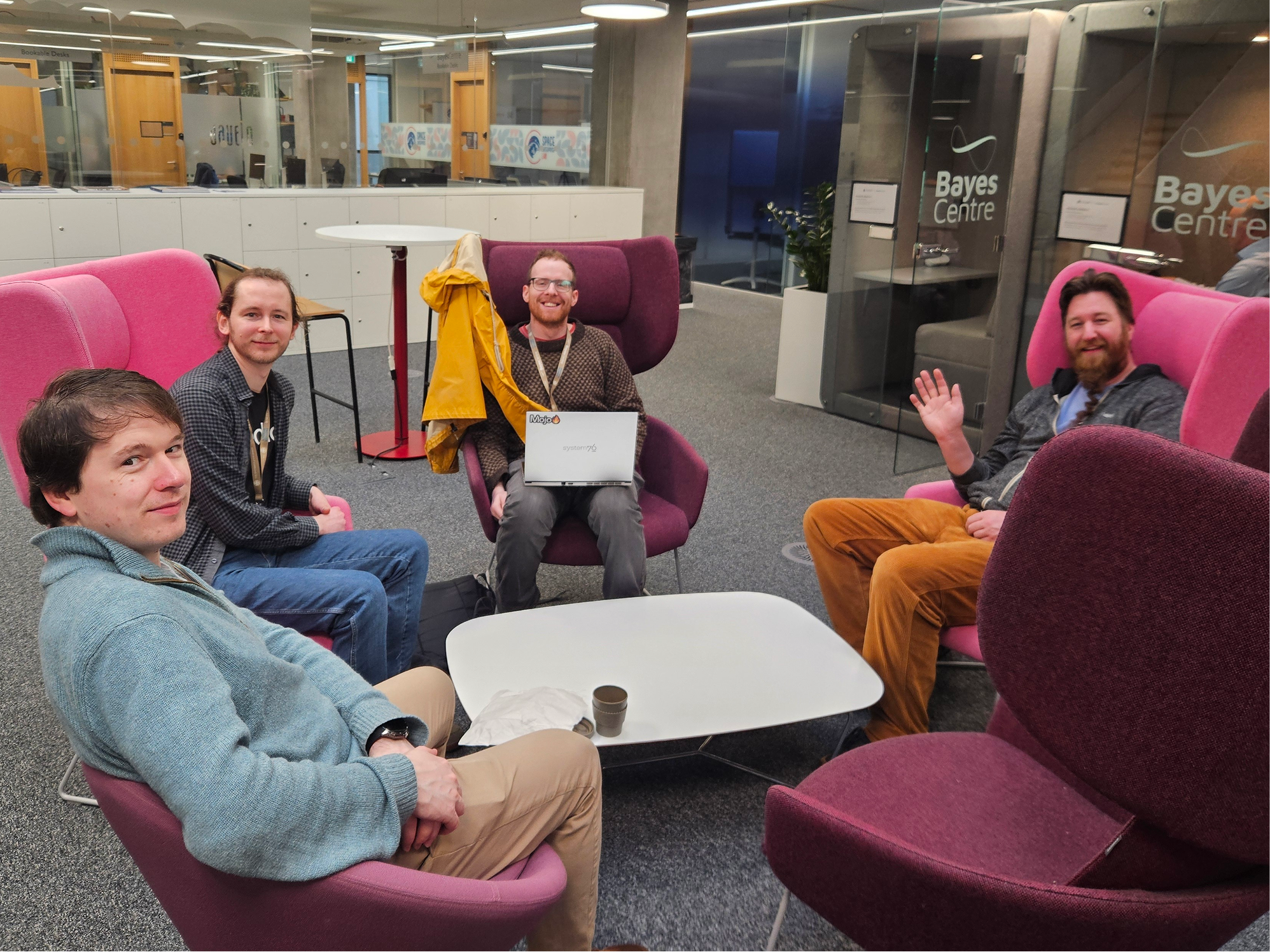
Our Edinburgh team is already growing. Within our first week at the Bayes Centre, we were onboarding new hires and holding cross-team working sessions in person. We're looking forward to being part of the Bayes Centre community: events, collaboration, and the kind of conversations that happen when you share a building with people solving hard, adjacent problems.
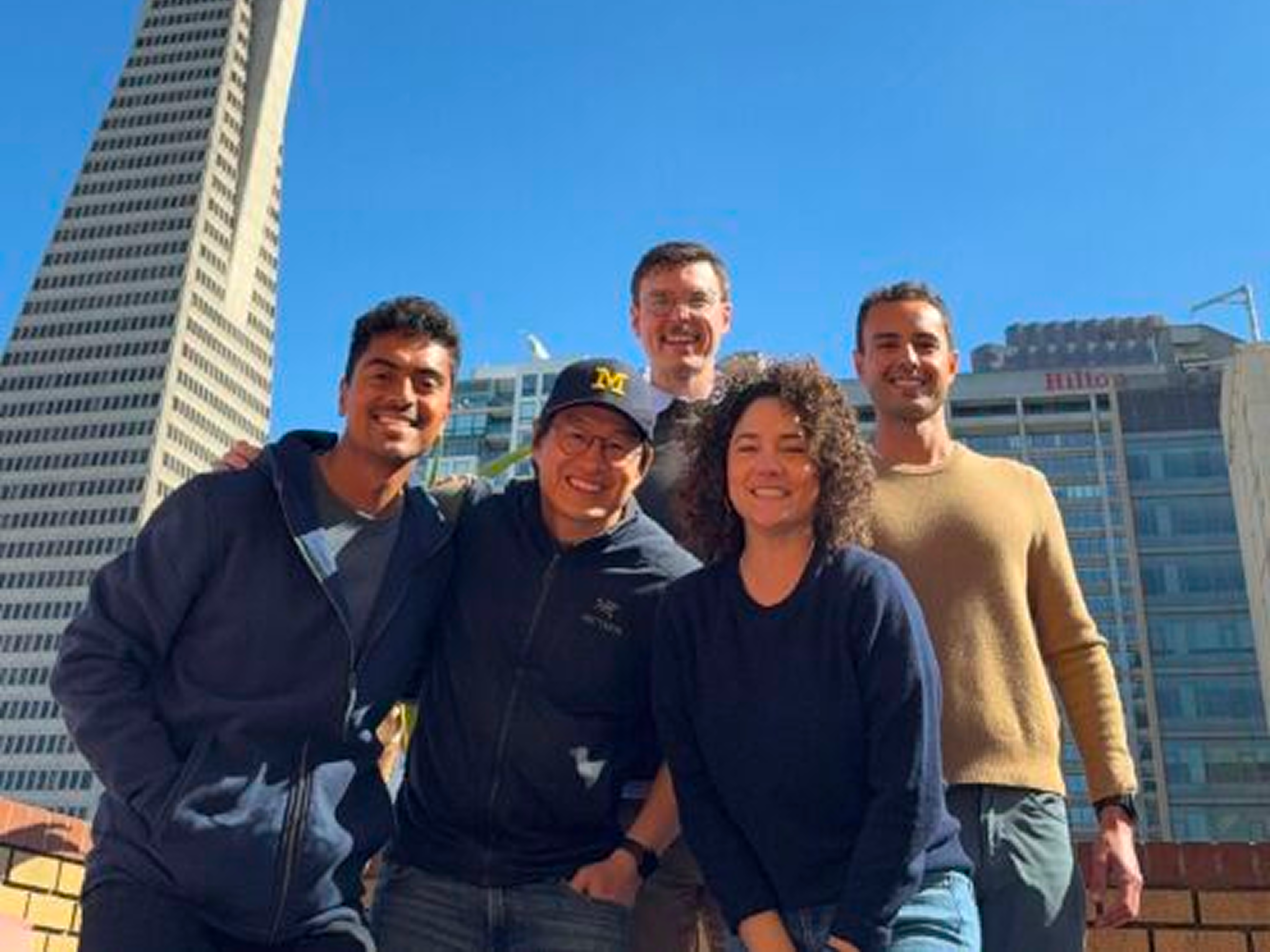
San Francisco: Jackson Square

We've also opened a new office in San Francisco's Jackson Square neighborhood, joining our Los Altos headquarters as our second Bay Area location. SF puts us closer to AI talent, frontier model providers, and the infrastructure companies building what comes next. The space includes room for events and customer meetings. Expect to see us hosting more in the city soon.

What Modular builds

Every AI team hits the same wall. You prototype in Python because it's fast to write, then spend months rewriting in C++ and CUDA to get the performance you need in production. You get locked into one hardware vendor. Scaling means buying more GPUs instead of using the ones you have more efficiently.

Modular was founded by Chris Lattner (the engineer behind LLVM, Clang, Swift, and MLIR) and Tim Davis (who led AI infrastructure at Google Brain, building TensorFlow and the compiler and runtime stack behind it) to solve this problem at the infrastructure layer.

Mojo is our programming language: Python's readability with compiled, bare-metal performance. If you can write Python, you can write Mojo, and your code runs orders of magnitude faster. Mojo is free to use, with hundreds of thousands of lines of open-source code and a community of over 50,000 developers.

MAX is our AI inference platform. It supports hundreds of models out of the box (Llama, DeepSeek, Mistral, FLUX for image generation) with an OpenAI-compatible API. Because MAX uses a compiler-first approach rather than hand-tuned kernels, it runs on NVIDIA, AMD, and CPU hardware without rewriting a single line of code. Teams use MAX to serve billions of tokens in production today.

Why this matters

Hardware is diversifying fast. New GPU architectures, custom accelerators, edge devices. Most AI frameworks still assume you're running NVIDIA GPUs with CUDA, and porting to anything else takes months of engineering.

Modular's compiler infrastructure does that porting for you. As new hardware arrives, the stack adapts. Developers focus on their models and applications instead of low-level hardware plumbing. It's a problem that sits at the intersection of compilers, systems engineering, and AI, exactly the kind of work Edinburgh has been producing top talent for.

Get involved

Mojo and MAX are free to get started with. Our community forum and Discord are open to everyone. If you're working on GPU programming, AI model serving, or hardware-portable computing, we'd love to hear from you.

We're hiring across engineering, infrastructure, and go-to-market roles, including in Edinburgh. Check our careers page for open positions.

Come find us at modular.com, or say hello at the Bayes Centre.